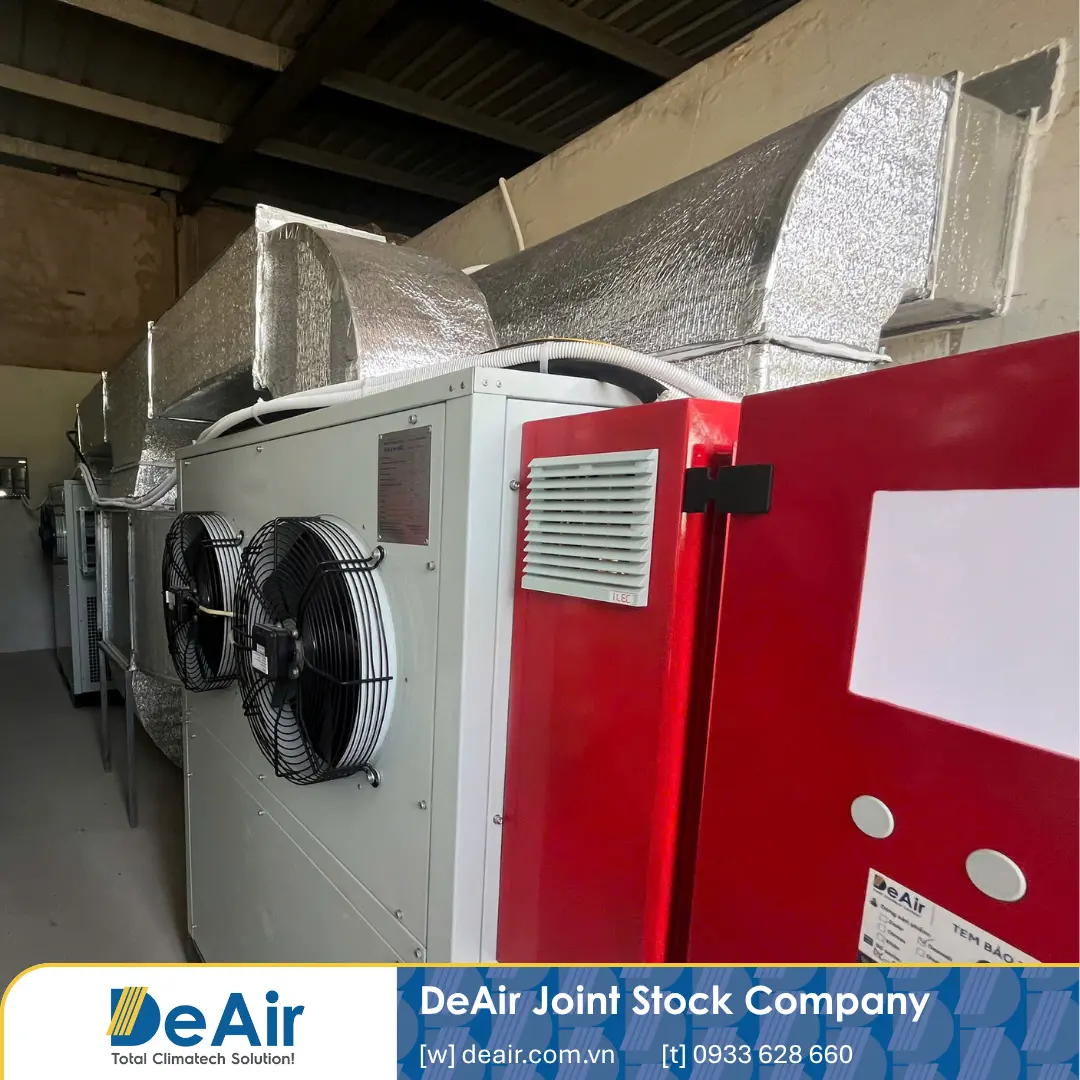
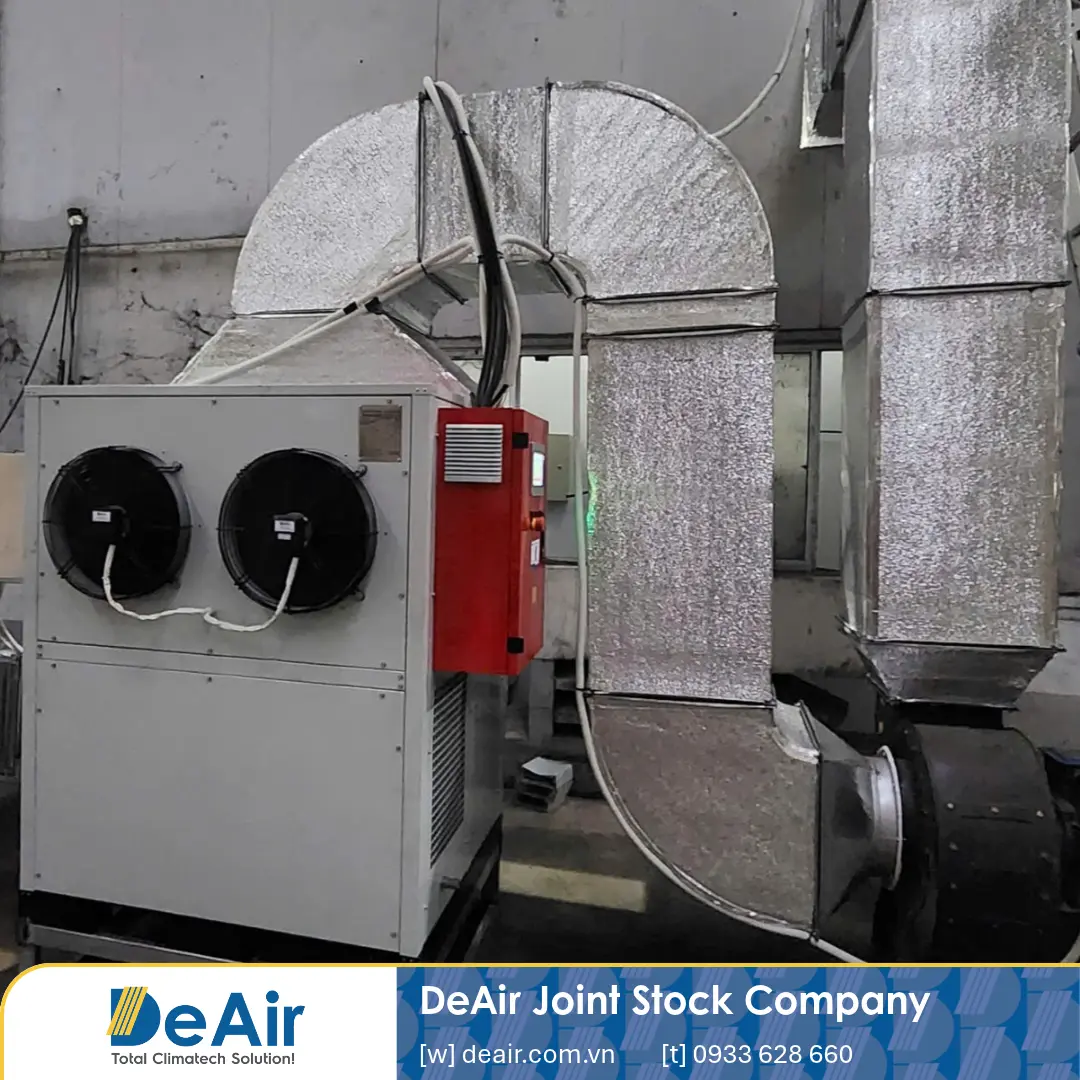
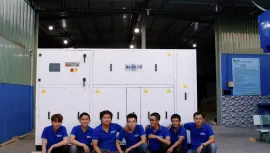
Daxwell DX-600M-SAV heat-pump dryer connected to the drying room at a paper drying company in Tay Ninh
💡 Project Summary
Customer: Paper drying processing company in Tay Ninh – accepting orders for drying various types of paper: paper rolls, paper core tubes, rigid paper trays.
Specific problem: It's not necessary to dry only one type of paper. Each type has a different texture, thickness, glue layer, and final moisture requirement – a single drying method cannot be used for all types.
Solution: The Daxwell DX-600M-SAV heat-pump dryer – based on the DX-600M platform with a temperature range of 50–80°C, a drying capacity of 80–120 m³, and a PLC control panel + HMI screen allowing programming and saving of multiple separate drying schedules.
Results: A single system meets diverse order requirements; paper dries evenly, without warping or brittleness, core tubes maintain rigidity; operating costs are only about half that of other drying solutions.
1. Why is Paper Drying a Much More Difficult Problem Than Many People Think?
1.1. Paper is an extremely sensitive material
Paper is made from cellulose fibers – a material that continuously absorbs and releases moisture according to the environment (hygroscopic). Cellulose fibers swell when they absorb moisture and shrink when they lose it. As a result, moisture content directly determines the size, flatness, strength, and stiffness of the paper product.
1.2. Distinguishing Between Two Commonly Confused Concepts
📐 TWO DIFFERENT PARAMETERS BUT CLOSELY RELATED
Paper moisture content (%): The amount of water contained in the paper sheet, roll, or core tube. This is a parameter subject to customer acceptance.
Ambient air humidity (%RH): The surrounding air conditions determine whether the paper will continue to release or absorb moisture.
In the drying chamber, we use temperature and %RH of the air as tools to control the moisture content of the paper to the correct target. Confusing these two concepts is the cause of many failed drying batches.
1.3. The Goal of Paper Drying Is NOT Absolute Dryness
🚨 THREE TYPICAL FAILURES
Over-drying: The paper becomes brittle, easily torn, generates static electricity, and attracts dust; the core tube loses its toughness and easily cracks under pressure; the paper tray becomes bent and brittle.
Insufficient drying: paper is soft, blocks out, mold forms; core tube has reduced compression stiffness; paper tray does not meet required stiffness.
Uneven drying: warping (curl), waviness (cockle/waviness), incorrect dimensions; paper roll is dry on the outside but damp on the inside.
Expert's conclusion: Paper drying is a problem of controlling moisture to the right point and uniformly, not a problem of high temperature. Increasing the temperature to dry faster is usually the shortest path to a damaged batch.
1.4. Specific Climate of Tay Ninh
During the rainy season, high humidity persists: Natural drying/airing is not feasible. More seriously, freshly dried paper will reabsorb moisture very quickly upon contact with humid air.
Hot, dry season: Risk of sudden surface moisture loss, causing a moisture difference between the surface and the core → warping.
Requirement: A proactive drying system that controls both temperature and humidity, completely independent of weather conditions – to receive orders year-round.
2. Each Paper Product – A Unique Drying "Personality
This is the core problem for customers in Tay Ninh. Using the same drying chamber, the three product groups below have completely different moisture removal mechanisms and acceptance criteria.
2.1. The Paper Roll – The Deep-Seated Moisture Problem
🌀 CHARACTERISTICS & CHALLENGES
Tightly wound multi-layer structure: Moisture must diffuse from the core outwards through hundreds of layers of paper – a very long moisture escape path.
Risk of "dry outside, damp inside": The surface meets requirements, but the core remains damp. During storage, moisture from the core diffuses back out → warping, mold, and post-delivery complaints.
Risk of excessively rapid temperature increase: The outer layer suddenly loses moisture and shrinks while the core remains swollen → internal stress, causing warping and ripples.
Control requirements: Divide into stages, increase temperature in steps, maintain sufficient time for core moisture to escape – prioritize uniformity over speed.
2.2. Paper Core Tubes – The Stiffness and Dimensional Stability Problem
🔧 CHARACTERISTICS & CHALLENGES
There is an adhesive layer between the layers of wrapping paper: The adhesive needs to dry properly to achieve the required compressive strength and bond durability. Excessive heat can denature the adhesive layer, reducing its adhesion.
Crush strength requirement: The core tube must withstand the compressive force when wrapped with film, fabric, or steel. Residual moisture severely reduces this stiffness.
Requirement for stable diameter size: Uneven shrinkage of the core tube will result in incorrect inner diameter, preventing it from fitting the customer's machine shaft.
Control requirements: Even drying along the entire length and thickness of the tube; temperature control to protect the adhesive layer; stopping at the correct point to maintain toughness and prevent brittle cracking.
2.3. Hard Paper Trays – The Problem of Shape and Uniformity
📦 CHARACTERISTICS & CHALLENGES
The three-dimensional structure and uneven thickness: some areas are thick, some are thin, some are ribbed, some are flat → resulting in different moisture release rates within the same product. Risk of warping and geometric deformation: Thin areas dry first and shrink, pulling thicker, still-moist areas → products deviate from the standard shape and cannot be nested together. Risk of cracking at tendons and corners: These geometric transition points experience the greatest shrinkage stress.
Control requirements: Even airflow distribution throughout the tray; control of moisture removal rate so that thick and thin areas dry almost simultaneously; final stabilization phase to balance moisture across the entire product.
A distinctive feature of paper drying businesses is the non-fixed product range. Besides the three main groups, customers can also receive drying services for coated paper (coatings that hinder moisture release, heat-sensitive), thin paper with low weight (loses moisture very quickly, easily brittle), or recycled paper with large variations in input moisture content between batches.
Product Group
Main Risks
Prioritize Control
Paper roll
Dry on the outside, damp on the inside, warped
Core moisture diffusion time, step-by-step temperature increase
Paper core tube
Reduced compressive stiffness, incorrect diameter
Protect the adhesive layer, cure evenly across the thickness, and stop at the correct point
Cardboard tray
Geometric deformation, rib/corner cracking
Even air distribution, balanced thick-thin zones
Coated paper
Peeling/cracking of the coating, discoloration
Temperature limit, extended time
Thin paper
Brittle, static electricity, bending
Control the time precisely, stop accurately
Conclusion: A single drying mode cannot be used for everything. Drying businesses need a system that allows programming and saving multiple drying schedules – and that is why Daxwell was chosen.
3. Why is Daxwell DX-600M-SAV the Solution?
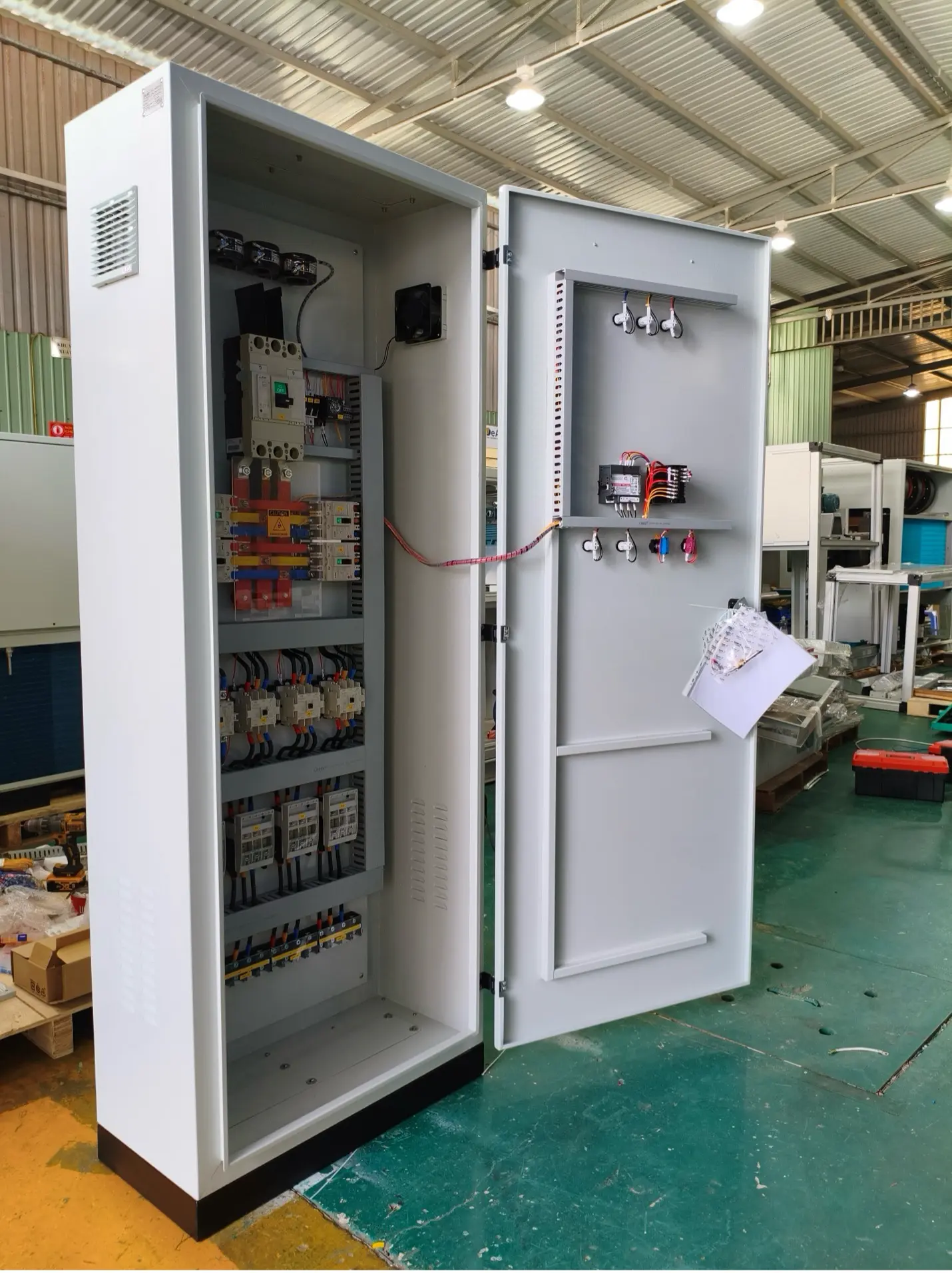
3.1. PLC Control Cabinet + HMI Screen – The Heart of the Solution
The key difference that gives the Daxwell series a significant advantage is its electrical cabinet with PLC controller and HMI screen. For businesses that process and dry many types of products, this is not a "nice to have" feature but a mandatory requirement.
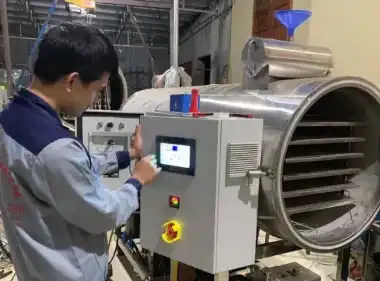
HMI screen on a Daxwell dryer – where you program, save, and select individual drying schedules for each type of paper
✅ FIVE VALUABLE BENEFITS PLC/HMI BRINGS TO PAPER DRYING PROJECTs
Precise control: Each type of paper has its own formula (temperature – time – number of stages). Select the formula and run, regardless of the operator's skill.
Visual monitoring: Monitor temperature and status at each stage directly on the screen, detecting abnormalities early.
Stability and reliability:The 100th batch maintains the same quality as the first batch – a crucial factor when processing orders and maintaining customer trust.
Optimizing performance: Fine-tuning each stage to achieve the target humidity while avoiding excessive energy consumption.
Automation: Reduces the number of machine operators and minimizes operational errors between shifts.
3.2. Temperature Range 50–80°C of the M Series – Suitable for the Paper Industry
Daxwell offers three temperature ranges: DX-xxxS (25–80°C), DX-xxxM (50–80°C), DX-xxxD (40–60°C). The M series was chosen for this project because drying paper – especially paper rolls and core tubes with adhesive – requires a temperature high enough to allow moisture to diffuse from the core, but still within limits that protect the adhesive and coating.
More importantly: the 50–80°C range is a selectable range, not a fixed level. Combined with a PLC/HMI, engineers can set the optimal temperature for the paper roll, core tube, and hard paper tray on the same machine.
3.3. Heat-Pump Technology – Operating Costs Only Half
Daxwell Heat-Pump dryers utilize heat from condensation to reheat dehumidified air, instead of releasing that heat into the environment. According to Daxwell's technical specifications, this design helps save operating costs by approximately half compared to other solutions.
For businesses that continuously process and dry goods according to orders, energy costs are the largest component of processing costs. This is the main source of return on investment.
3.4. Power & Flow Rate Suitable for Processing Scale
Drying range 80–120 m³: Suitable for medium to large-scale processing drying chambers, with enough space for delivery trucks carrying paper rolls or trays.
A flow rate of 6,000/9,000 CMH ensures even air circulation throughout the chamber – a crucial factor for rigid paper trays, where every area on the tray must dry almost simultaneously.
Optional 15.0 kW heating element: Used when rapid heating is required for urgent batches, or the initial stage of large moisture load drying batches.
Daxwell is designed to operate in a synchronized model Daxwell dryer + Panel drying chamber + Stainless steel trolley. This model is particularly important for the paper industry:
Insulated panel drying chamber: retains heat, reduces heat loss, and helps the PLC maintain a stable temperature according to the programmed schedule.
Stainless Steel Cart: Allows for ventilated stacking of paper, ensuring even air circulation between layers/trays; durable stainless steel construction, rust-proof, and prevents dirt from adhering to the paper product.
Connecting the air ducts: guide dry air into the chamber and return humid air to the machine according to the design diagram, ensuring the air distribution meets the technical specifications.
The Daxwell dryer is connected to a supply and return air duct system, ensuring even distribution of dry air in the paper drying chamber
4. DX-600M Platform Specifications
Below are the platform specifications of the Daxwell DX-600M series – the technical basis for the DX-600M-SAV configuration deployed in the Tay Ninh project.
* Noise level measured at a distance of 3m. The DX-600M-SAV configuration for the project was finalized based on the results of a field survey and the requirements for each type of paper. The product is manufactured in Vietnam under the ISO 9001:2015 quality management system.
5. Recommended Temperature and Humidity Thresholds for the Paper Industry
The table below is extracted from the technical document "Recommended ambient temperature and humidity conditions" - DeAir's reference source, based on years of experience in applying integrated environmental control. These are the %RH thresholds of ambient air for each stage of the paper industry.
📊 TEMPERATURE AND HUMIDITY THRESHOLDS FOR PAPER INDUSTRY PROCESSES
Application / Process
Temperature (°C)
Humidity (%RH)
Pulp & Paper (pre-conditioned)
22 – 40°C
10 – 35%
Creating shapes from paper and yarn
26°C
20%
Paper coating
26°C
20%
Paraffin wrap
27 – 29°C
50 – 60%
Paper Archive
23°C
45 – 50%
Storage of parchment
21°C
35%
Printing Area
25°C
35 – 45%
Embossing and offset printing
21 – 24°C
45 – 55%
Gravure printing
25 – 27°C
45%
Print Making
24 – 27°C
43 – 47%
Print in accurate colors
22°C
45 – 55%
Archive books and publications
18 – 24°C
40 – 50%
Film and archival paper
13 – 16°C
45 – 50%
* Source: Document "Recommended Temperature and Humidity Conditions by Environment" (Printing and Paperwork section; Overview - Storage section)
💡 DEAIR EXPERT OPINION: DON'T SKIP THE STABILIZATION PHASE AFTER DRYING
The table above shows a very important point: paper storage requires approximately 45–50%RH at 23°C, while the forming and coating processes require a much lower level (20%RH). This means that dried paper should not be packaged immediately, but needs a conditioning phase in an environment with the appropriate %RH to balance the moisture between the surface and the core.
If freshly dried paper is immediately exposed to the humid environment of the rainy season in Tay Ninh, it will quickly reabsorb moisture – a portion of the drying process is essentially lost. This is why DeAir advises on both post-drying stabilization and storage areas, not just supplying the dryers.
6. Survey – Installation – Handover Process in Tay Ninh
The entire process complies with the ISO 9001:2015 quality management system that DeAir applies, ensuring consistency, transparency, and efficiency.
Step 1: Survey & Gather Requirements for Each Product Type
DeAir catalogs the products customers are processing: paper rolls, paper core tubes, rigid paper trays, and any resulting variations. For each type, the input moisture content, the target output moisture content as required by the end customer, and acceptance criteria (flatness, compressive strength, diameter, etc.) are recorded. Simultaneously, the drying chamber volume is measured, and its airtightness and insulation are assessed.
Step 2: Calculate & Select Configuration
The moisture load is calculated based on the largest batch and the most difficult type – a crucial principle to ensure the system doesn't run out of load when receiving difficult orders. This confirms the DX-600M-SAV configuration with the appropriate temperature range and flow rate, and determines whether or not to use the additional 15.0 kW resistor.
Step 3: Design the Drying Chamber & Cart Layout
Design the airflow to ensure even distribution between the paper layers and trays – a crucial factor for rigid paper trays with inconsistent thickness. Determine the spacing on the stainless steel trolley, avoiding overly tight stacking that creates "dead zones" for moisture. Create a layout drawing of the machine – panel chamber – trolley – air ducts.
Step 4: Installation & Connection
Install the machine, connect the panel drying chamber, connect the power supply with the correct power and wire cross-section according to the technical specifications. Install the condensate drainage line (21 mm pipe). Install and configure the PLC/HMI electrical cabinet.
Step 5: Adjust the Drying Chart for Each Type
🎯 THE MOST IMPORTANT STEP OF THE PROJECT
Test drying of each type in practice: paper rolls, paper core tubes, and rigid paper trays.
Measure the output moisture content at multiple locations (surface and core; thick and thin zones) to assess uniformity.
Evaluate the flatness, compressive strength, core diameter, and shape of the tray after drying.
Adjust temperature, time, and number of stages for each type based on measurement results.
Save them as separate formulas on the HMI, naming them according to their type – for example: PAPER-ROLL, COIL-PIECE, ARCH-TRAY.
Step 6: Training & Handover
Instruct staff on formula selection, startup, monitoring each stage, and handling warnings. Provide guidance on air filter cleaning and periodic maintenance. Hand over technical documentation, the revised drying formula catalog, and a 24-month warranty certificate.
7. Results Achieved
✅ OUTSTANDING RESULTS AT THE TAY NINH PROJECT
Regarding flexibility: A single system handles paper rolls, paper core tubes, rigid paper trays, and various variations. Fast formula switching on the HMI, eliminating the need to re-trace the process every time a new order is received.
Regarding paper roll quality:The moisture content of the core is properly treated, reducing the "dry outside, damp inside" problem, minimizing warping and post-delivery complaints.
Regarding core tube quality: maintains compressive strength and toughness, diameter stability, and the adhesive layer does not denature due to overheating.
Regarding the quality of the rigid paper tray: It dries evenly between thick and thin areas, maintains its shape, and minimizes cracking at the seams and corners.
Regarding stability: Consistent quality across batches and shifts – the foundation for maintaining credibility with outsourcing clients.
Regarding costs: Operating costs are only about half that of other drying solutions thanks to Heat-Pump technology.
Regarding proactive production: We are not dependent on the rainy season in Tay Ninh and accept orders year-round.
Regarding competitiveness:The ability to customize the process allows us to secure challenging orders that competitors using only heat drying chambers cannot fulfill.
Q1: Can one machine dry many types of paper, or do I need to buy multiple machines?
Yes – thanks to the PLC/HMI control panel which allows programming and saving multiple separate drying schedules. The condition is that the types of paper require temperatures within the machine's operating range (50–80°C for the DX-600M) and the volume per batch fits within the drying chamber range (80–120 m³). In the Tay Ninh project, the same machine processed paper rolls, paper core tubes, and hard paper trays with three different formulas.
Q2: Does drying paper need to be done thoroughly?
No. The goal is to bring the paper's moisture content to the customer's specifically required and uniform level. Over-drying causes brittleness, static electricity, and warping; the core tube loses its toughness and is prone to cracking. DeAir adjusts the drying chart to stop at the correct point, based on actual measurements during the trial run.
Q3: Can freshly dried paper be packaged immediately?
A conditioning period in a suitable %RH environment is recommended before packaging. According to recommendations, paper storage requires approximately 45–50%RH at 23°C. Exposing freshly dried paper to the humid environment of the rainy season in Tay Ninh will cause the paper to reabsorb moisture quickly, resulting in a loss of drying effort. DeAir advises on both conditioning and post-drying storage areas.
Q4: Will high drying temperatures damage the core tube's adhesive layer or coating?
There is a risk if the temperature is not selected appropriately. The DX-600M series allows temperature selection within the range of 50–80°C and multiple stages, helping to limit the temperature to protect the adhesive/coating while still allowing moisture to diffuse from the core. Specific parameters are established through drying tests for each type and are not universally applicable.
Q5: With a thick roll of paper, how do you know if the core is dry and not just the surface?
This is the biggest risk when drying paper rolls. During the testing phase, DeAir measured moisture at multiple locations, including the core area, and designed a phased drying schedule with sufficient time for moisture from the core to diffuse outwards. The principle is to prioritize uniformity over speed – increasing the temperature for faster drying often leads to "dry on the outside, wet on the inside".
Q6: Does the machine save drying process data for reference in case of customer complaints?
The PLC/HMI system visually monitors and stores data on the drying process, facilitating quality traceability and comparison by batch. This is a significant advantage for processing businesses when they need to demonstrate that they have followed the agreed-upon procedures with customers.
Q7: What are the investment costs and payback period?
Depending on the drying chamber configuration and capacity. According to Daxwell's technical specifications, operating costs are only about half that of other solutions – this is the main source of return. DeAir provides free surveys and detailed, clear quotes for each item before implementing any work.
Q8: Does DeAir support formula adjustments when we receive a new type of paper?
Yes. DeAir will assist in trial drying and formula development, as well as training staff so that businesses can proactively add formulas later. This is a commitment to technology transfer, not just equipment supply.
🏆 COMMITMENT FROM DEAIR
✅ Free survey, collecting requirements for each type of paper before design.
✅ Full adjustment and transfer of drying formulas for each product type.
✅ Equipment manufactured in Vietnam, ensuring a reliable supply of spare parts and components.
✅ 24-month warranty, service process according to ISO 9001:2015.
✅ Transparency in costs, detailed price quotes for each item before implementation.
✅ 24/7 Technical Support, with a team of technicians covering the entire country.
One Machine – Multiple Paper Types. Don't Reconsider the Process Every Time You Receive a New Order!
Paper rolls, paper core tubes, rigid paper trays – each type requires a separate drying chart. Let DeAir survey, design the system, and deliver the standard drying formula for each type of paper you need.
Contact us now for a free survey and consultation!


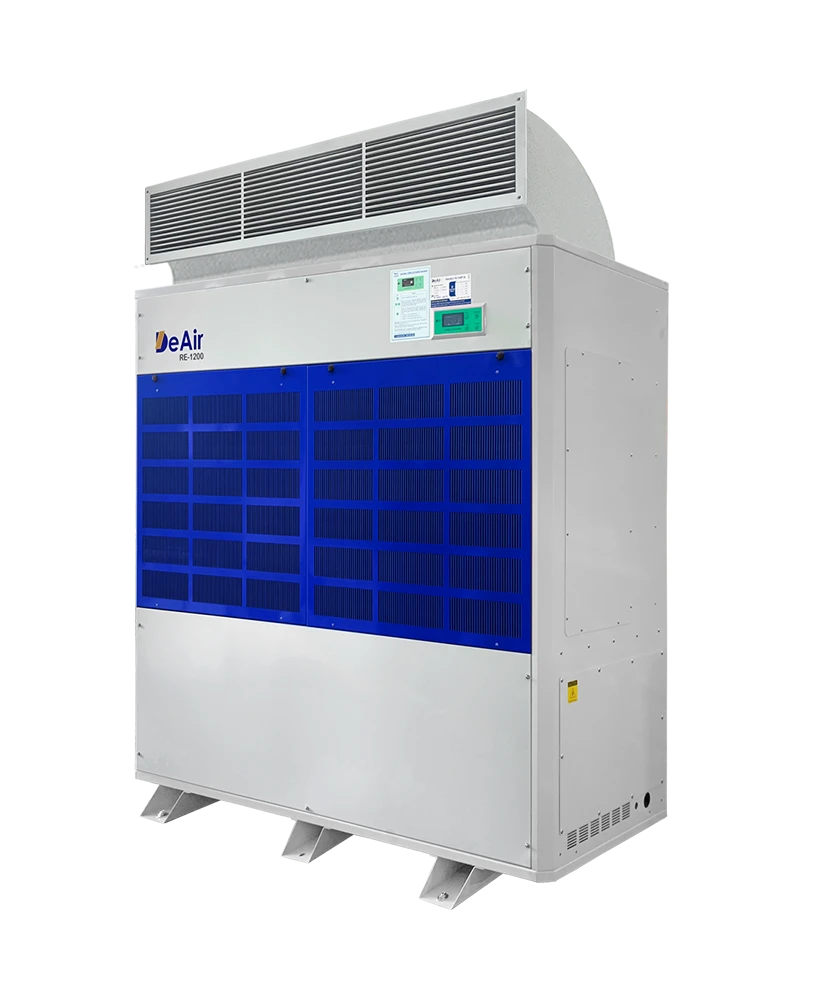 DeAir.RE
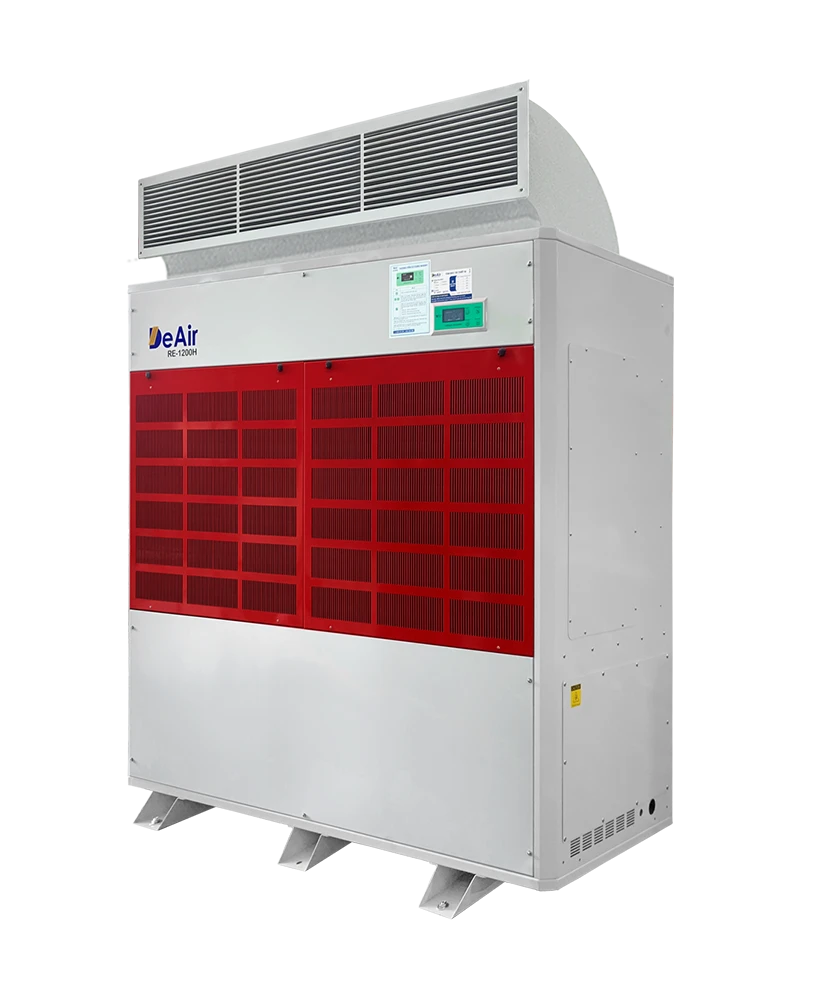 DeAir.RE-H
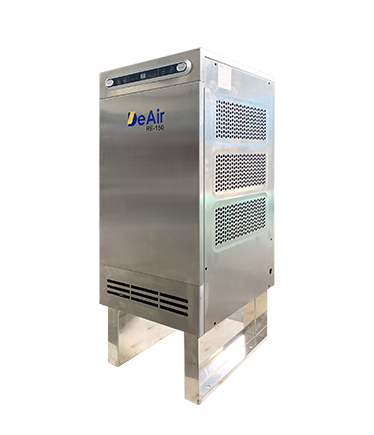 DeAir.RE-INOX
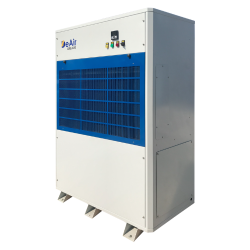 DeAir.CRE
 Dezenno
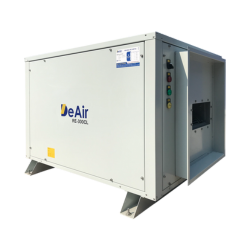 DeAir.RE-CL
 Olmas-OS
 DeAir.HM
 Daxwell
 DeAir.Heat
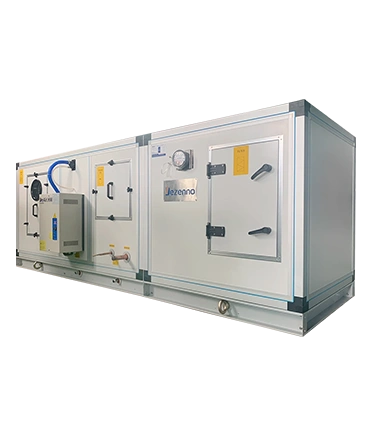 AHU