Technology Comparison for Paper Roll Drying: Traditional Boiler vs. Heat-Pump Dryer
30/03/2026
The Fierce Energy Challenge in the Paper Manufacturing Industry
In the paper and packaging manufacturing industry (paper rolls, paper core tubes, tissue paper, etc.), the drying process is the most energy-intensive link, accounting for 60% to 70% of the total energy consumption of the entire factory. The fluctuation of fuel prices is directly eroding corporate profit margins.
Most factories in Vietnam today still maintain a Boiler drying system. Although familiar, this method is exposing fatal weaknesses in both operating costs and legal barriers. The revolution brought by the Daxwell industrial dry machine is opening a perfect way out, helping optimize costs to an incredible extent.
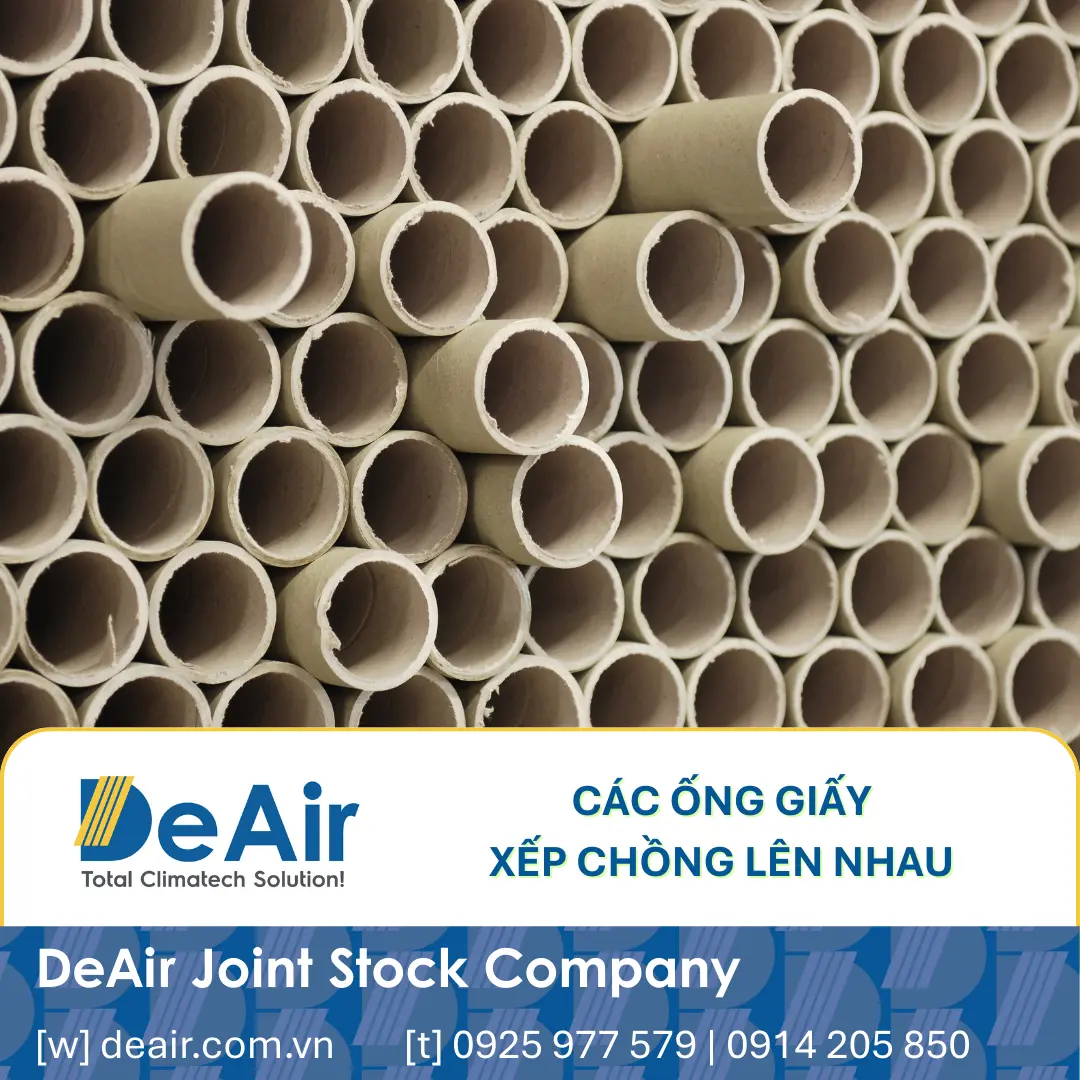
For paper rolls and core tubes to achieve standard hardness, the moisture extraction process using a dryer is a vital factor determining the quality of the finished product.
1. Analyzing the "Pain Points" of Paper Roll Drying Using Boilers
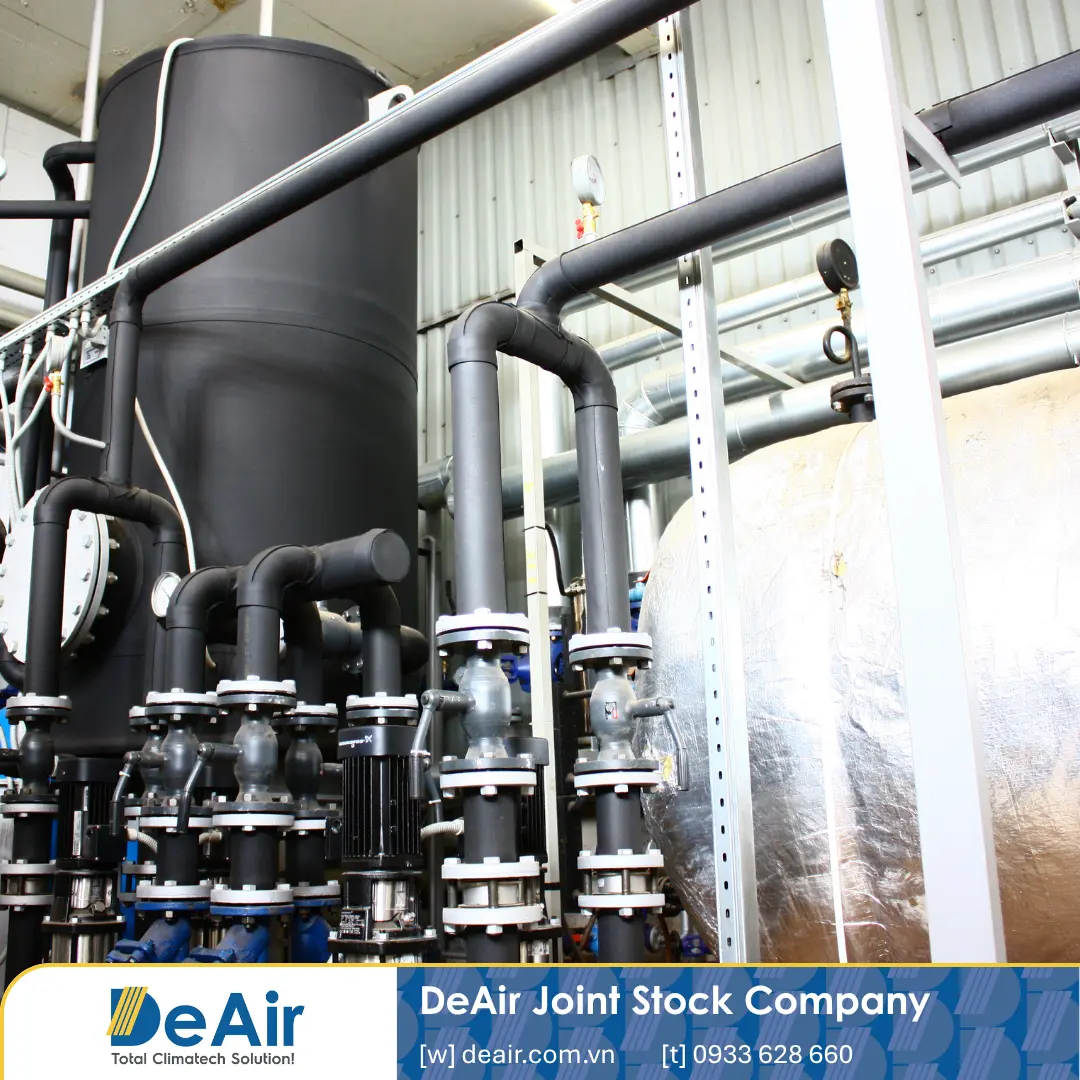
Industrial boilers operate on the mechanism of burning fuel (coal, firewood, husks, oil) to boil water, creating high-pressure saturated steam. This hot steam is conducted through a radiator pipe system or drying cylinders to evaporate the water inside the paper.
According to assessments from research documents on automation control in paper mills, steam drying was a highly effective method in the past but is now outdated and harbors extremely high explosion risks. Factory owners are facing a myriad of troubles:
Complex, bulky boiler systems face increasingly expensive operating and maintenance costs.
Massive energy consumption: Heat loss occurs continuously through the pipeline, exhaust smoke, and condensate discharge systems. The actual thermal efficiency often reaches only 60% - 70%.
Uneven paper quality: Excessively high temperatures on drying cylinders/radiators easily cause the paper surface to become brittle, crack, core to warp, or dry unevenly between the roll layers.
Pressure risks & Fire Safety Licensing: The risk of high-pressure boiler explosion is a constant nightmare. Businesses must face strict inspections, costly maintenance, and must always hire certified boiler operators on duty 24/7.
Environmental barriers: Exhaust smoke from coal and firewood makes it difficult for factories to achieve green production certificates (ESG), losing opportunities to export to the EU and US.
2. The Breakthrough Solution: Paper Roll Drying with Daxwell Heat-Pump
Completely overcoming all the disadvantages of traditional heating drying technologies (such as boilers or electrical resistance), the Daxwell Heat-pump technology from DeAir is the "lifesaver" for paper production facilities. Customers can refer to the cost comparison between resistance and heat-pump paper drying to clearly see the tremendous difference in electricity bills.
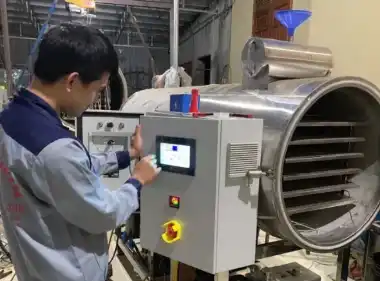
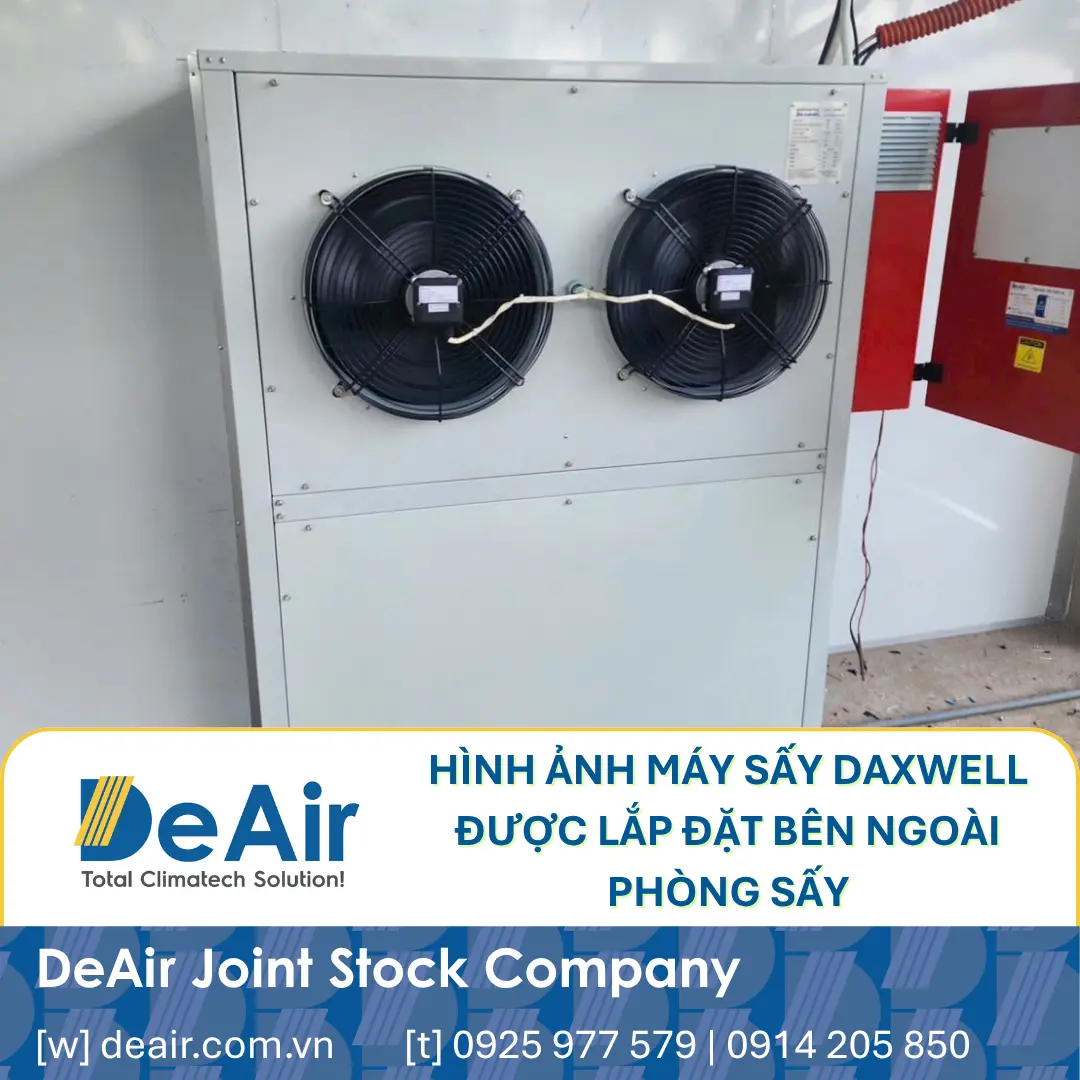
The Daxwell compressor unit system is neatly assembled outside the drying room, operating fully automatically without the need for an on-duty boiler operator.
Superior Operating Mechanism: Instead of heating, the Daxwell dryer uses a compressor to operate a refrigeration cycle, dehumidifying the air and recovering all the latent heat of condensation. The warm, dry air is circulated continuously through the paper rolls, slowly extracting moisture from the core outward.
Perfect paper quality: Drying in a mild temperature range (45°C - 60°C). Water escapes from the paper roll gradually, helping cellulose fibers bond tightly. The paper rolls and core tubes never get dented, crack on the surface, or become brittle like when thermally stressed by a boiler.
Cut 60% - 75% in energy costs: The Coefficient of Performance (COP) reaches 3.0 - 4.0. No heat escapes to the environment thanks to the closed drying cycle in the insulated Panel room.
100% Absolute Safety: No fire, no high pressure. Completely ends the fear of explosion and the pressure of applying for a boiler license. The entire system is fully automated via a PLC control panel.
3. Direct Comparison Table: Boiler vs. Daxwell Heat-Pump
Evaluation Criteria
Drying with Boiler (Traditional)
Drying with Daxwell Heat-Pump (Modern)
1. Safety & Explosion Risk
Very High Risk (Pressure explosion, fire)
100% Absolutely Safe (No fire, no pressure)
2. Legal Requirements (Fire Safety)
Strict pressure testing, complex fire safety licenses.
Installed like an industrial AC system, no boiler legal entanglements.
3. Paper Roll Quality
Paper easily becomes brittle, surface cracks, unevenly dry due to thermal shock.
Tough paper fibers, dry evenly from the core, no warping or tube distortion.
4. Labor Costs
Must have certified boiler operators on duty 24/7.
Fully automated via PLC electrical panel, no guarding required.
5. Environmental Protection (ESG)
Emits large amounts of CO2, toxic smoke, and ash.
Zero Emissions (No smoke, no dust, meets Green Factory standards).
Warm, dry air is evenly distributed to each paper roll through the fan system and insulated Panel walls.
4. Investment Calculation & Return on Investment (ROI) Timeframe
Many Factory Directors hesitate to tear down the old boiler system to build a new Panel drying room equipped with the Daxwell Heat-pump system, fearing high initial costs. However, the investment math reveals a completely different outcome.
Although the installation cost of Heat-pump equipment might be equivalent to or slightly higher than building a new standard boiler with an exhaust treatment system. In return, businesses will cut hundreds of millions of VND in electricity/fuel costs every month, completely eliminating pressure maintenance costs, fire safety fees, and operator salaries.
With that massive saving margin, the Return on Investment (ROI) timeframe usually takes only 1.5 to 2 years. From the 3rd year onwards, the energy savings become pure net profit added directly to the company's financial report.
Drying Technology Transition - Elevate Your Business
Drying paper rolls and paper tubes with a boiler is a technology of the past. Heat-pump is the standard of the future! Let DeAir's engineering team survey your workshop, draw up blueprints, and calculate the energy savings for your factory completely for FREE!


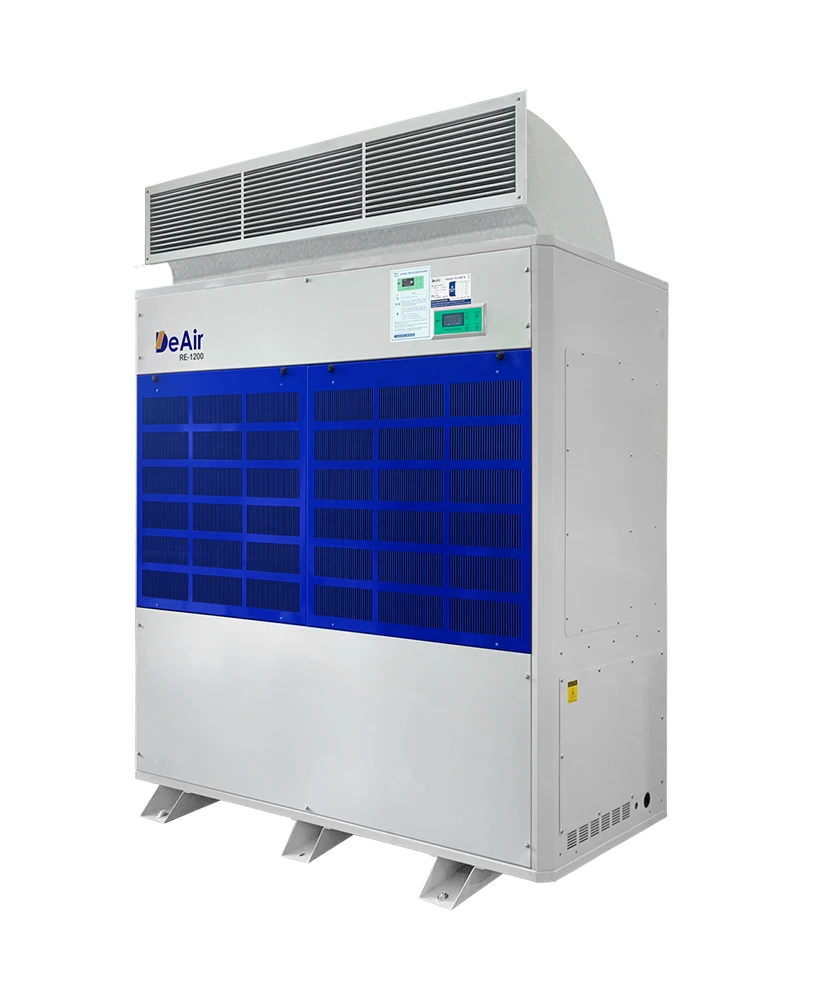 DeAir.RE
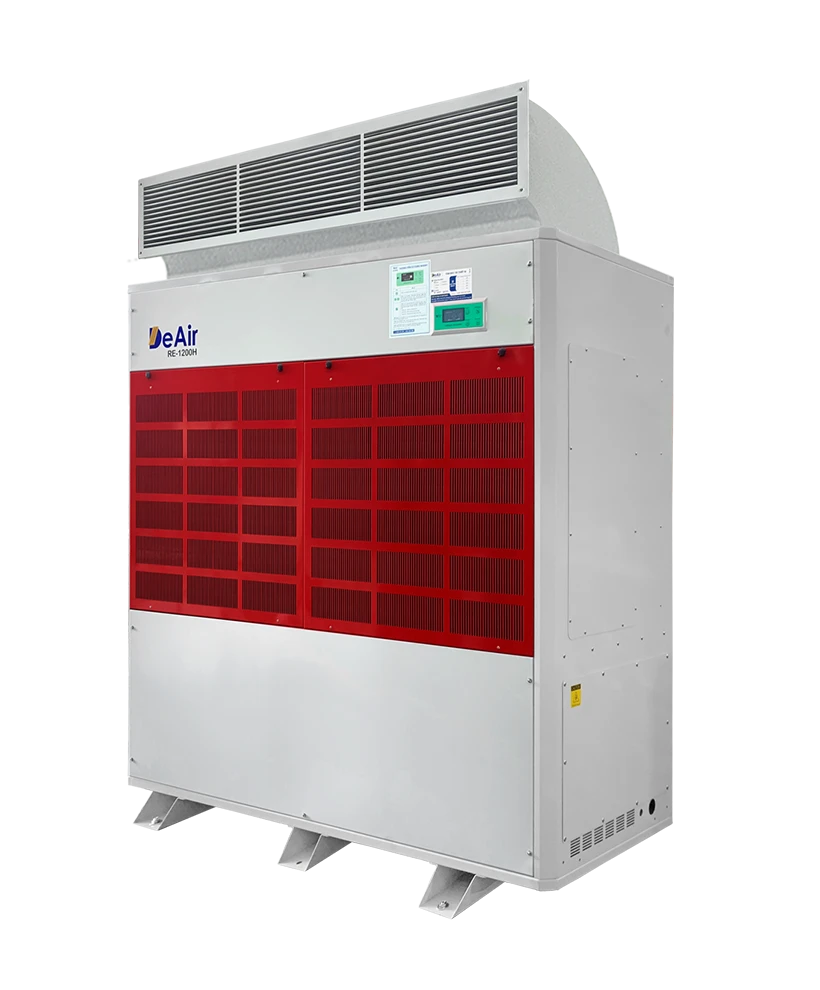 DeAir.RE-H
 DeAir.RE-INOX
 DeAir.CRE
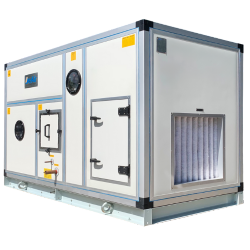 Dezenno
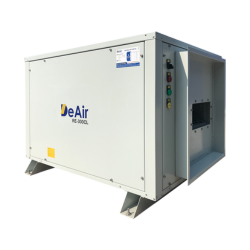 DeAir.RE-CL
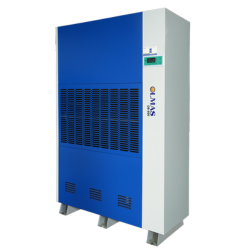 Olmas-OS
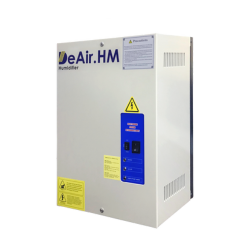 DeAir.HM
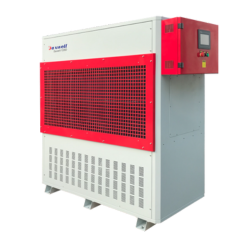 Daxwell
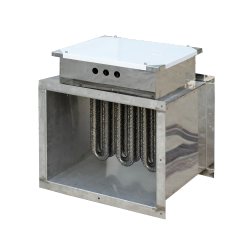 DeAir.Heat
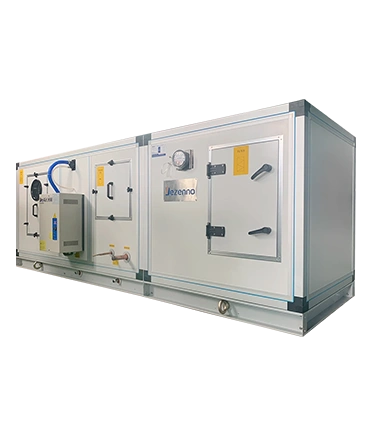 AHU
AHU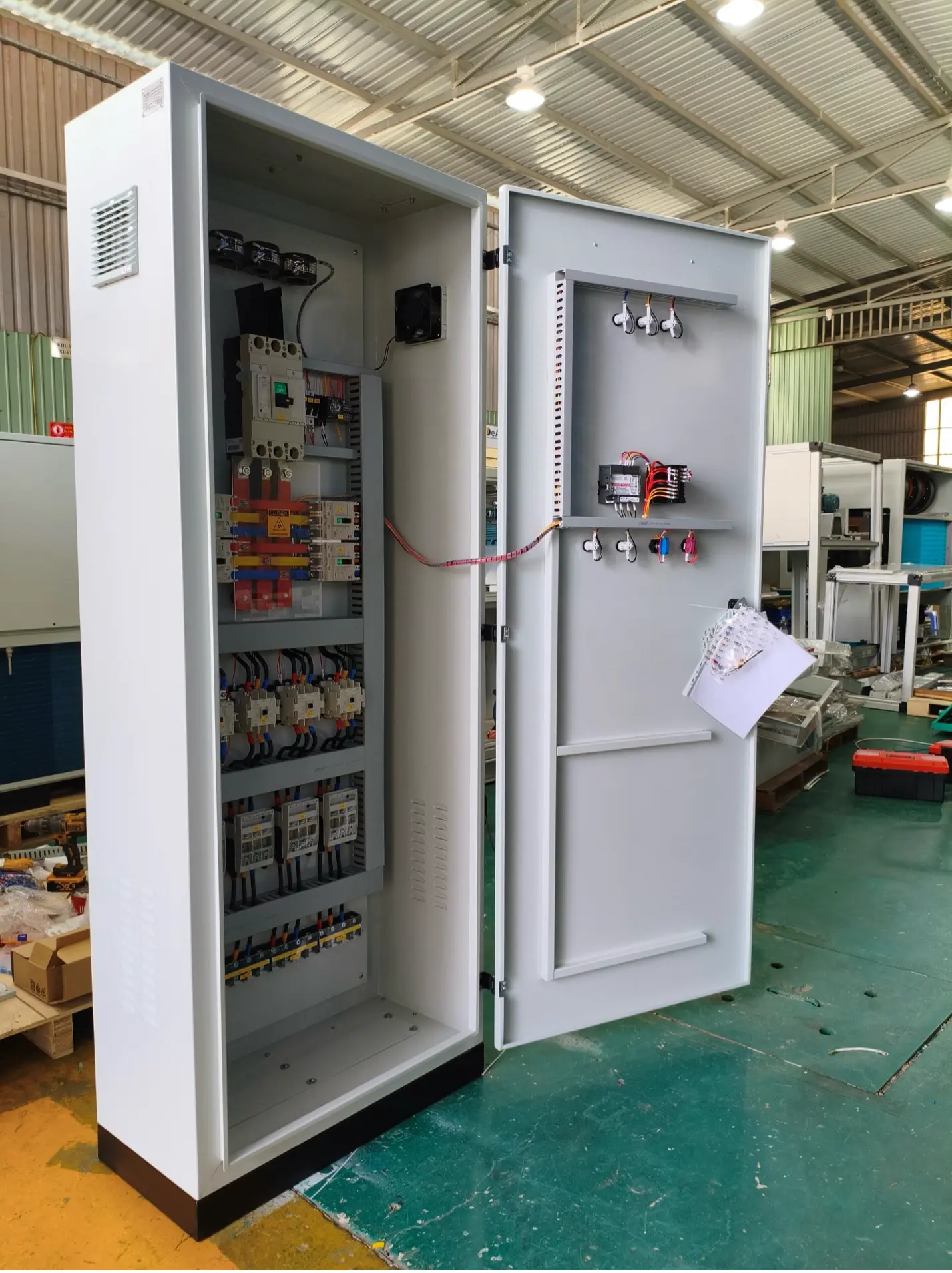







![[Case Study] DeAir Installs DeAir.De Rotor Humidity Control System for Pharmaceutical Plant in Binh Duong](https://deair.com.vn/thumbs/news/2023_04/ban_giao_may_cho_duoc_bd/[270x153-cr]image1-1024x772.jpg__cv.webp "[Case Study] DeAir Installs DeAir.De Rotor Humidity Control System for Pharmaceutical Plant in Binh Duong")

![[Review & Guide] Olmas OS-300: The New Humidity Control "Warrior" for Medium to Large Warehouses](https://deair.com.vn/thumbs/news/huong_dan_su_dung_may_olmas_21/[270x153-cr]vtm06440.png "[Review & Guide] Olmas OS-300: The New Humidity Control \"Warrior\" for Medium to Large Warehouses")