The Vietnamese chemical industry is growing rapidly (12.5%/year), but production environments are harsh, featuring a deadly combination: high humidity + corrosive gases (SO2, H2S, NO2). DeAir provides a comprehensive microclimate control ecosystem (Dezenno Desiccant Rotor, DeAir.RE Heat-Pump, Dezenno.MAX AHU, Dry Scrubber) that meets the ISA 71.04 Class G1 standard, protecting multi-billion VND assets and ensuring 24/7 operational continuity.
Comprehensive humidity control solutions for chemical plants from DeAir - Protecting equipment, preventing corrosion, and ensuring continuous operation.
1. The "Harsh Battlefield": Chemical Plant Environments
1.1. The Context of Vietnam's Chemical Industry
Vietnam's chemical industry is the third-largest in Asia and ranks sixth globally in volume. With an average growth rate of 12.5% per year, the sector is shifting from basic chemicals to specialty chemicals, serving pharmaceuticals, fertilizers, textiles, plastics, and paints.
Every day, chemical plants process thousands of tons of raw materials and finished goods. This entire process is driven by IT systems—from truck weighbridges and logistics invoicing to production process control. If the datacentre goes down, the entire plant may have to halt operations.
1.2. The "Invisible Enemy" - A Deadly Combination
⚠️ THE DESTRUCTION FORMULA: HUMIDITY + CORROSIVE GASES
In chemical plants, electronic equipment and datacentres face a "dual threat":
High Humidity: Creates an environment for electrochemical corrosion and mold growth.
Corrosive Gases: SO2, H2S, NO2, and ozone generated from production processes.
Chemical Dust: Corrosive particulate matter settling on equipment.
Resonance Effect: Humidity + Corrosive Gases = Corrosion rates accelerate by 10 to 100 times!
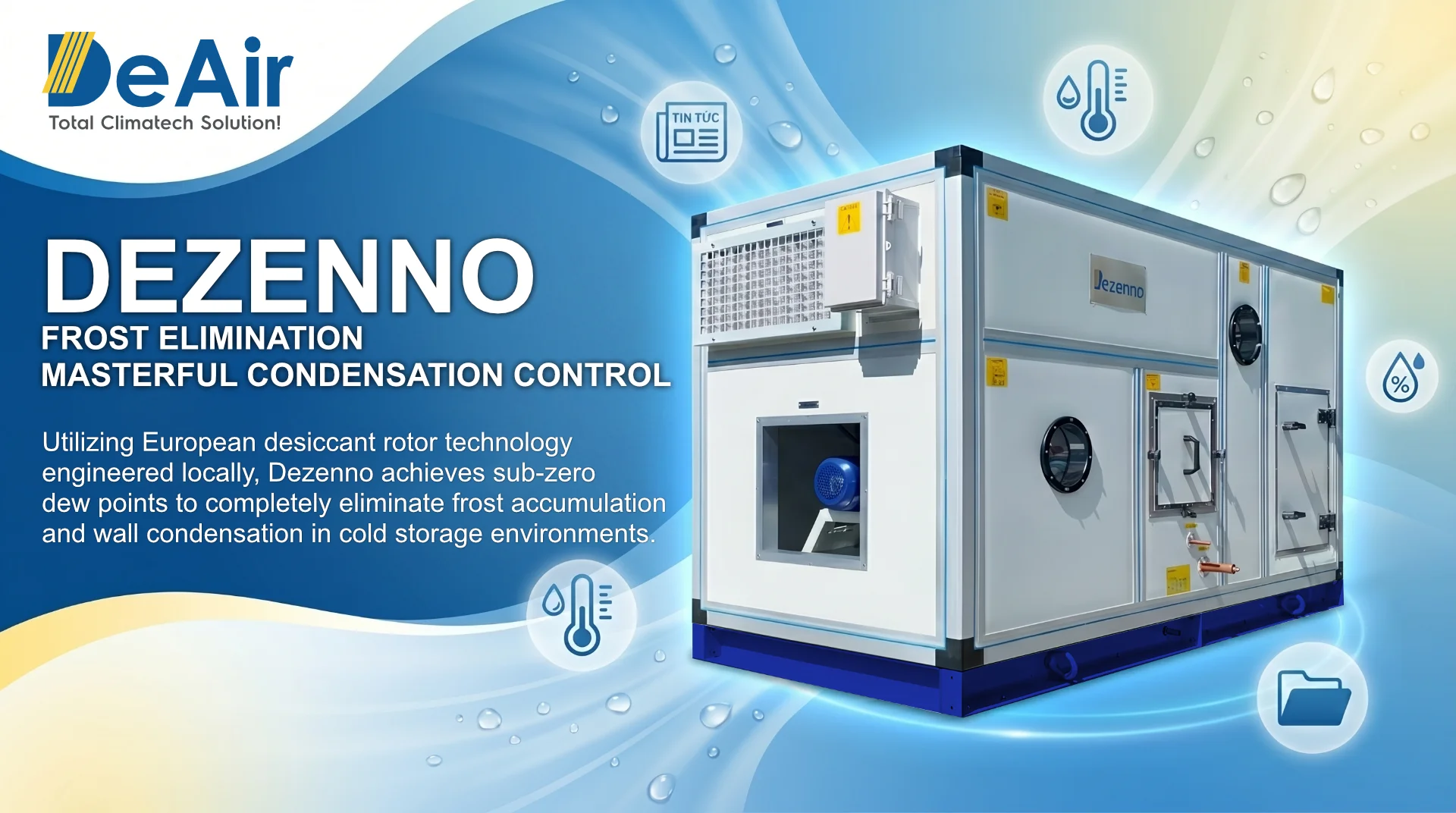
Dezenno desiccant rotor dehumidifiers are typically used in harsh environments, controlling dew points down to -40°C to -70°C.
2. Devastating Effects of Uncontrolled Humidity & Gases
2.1. Corrosion of Electronic Equipment & Datacentres
Following the implementation of the RoHS (Restriction of Hazardous Substances) directive, manufacturers replaced lead with alternative substances. Unfortunately, these lead-free alternatives are much more susceptible to electronic corrosion. As a result, datacentre maintenance costs have skyrocketed due to the need to replace micro-corroded components.
1. COPPER CREEP CORROSION
Corrosion of copper plating to copper sulphide on PCBs, causing short circuits.
➔
2. SILVER CORROSION
Corrosion of silver terminations in miniature SMD components, leading to open circuits.
➔
📉
3. DOWNTIME
Data loss, production halts, and maintenance costs increasing by 300%.
Liquid Raw Materials: Dilution and denaturation due to moisture absorption.
Packaging: Mold growth, tearing, and loss of aesthetic appeal.
Reactive Chemicals: Certain acids and alkali metals react dangerously with water.
2.3. Impact on Safety & Compliance
When electronic equipment in the datacentre corrodes, the consequence is not just repair costs. The entire plant may have to shut down because it cannot generate invoices, weigh trucks, or control production processes. This leads to:
Voiding of electronic equipment warranties (ISA 71.04 G1 non-compliance).
Risk of fire, explosion, or chemical leaks.
Reputational damage and breached client contracts.
3. The Strict "Rules of the Game": ISA 71.04 Standard
The International Society of Automation (ISA) established the ISA 71.04-2013 standard to classify corrosion levels in datacentre environments. This is a mandatory requirement to maintain electronic equipment warranties.
📊 CORROSION SEVERITY CLASSIFICATION PER ISA 71.04
Class
Description
Copper Corrosion Rate
Silver Corrosion Rate
Requirement
G1 (Mild)
Mild
<300 Å/month
<200 Å/month
✓ COMPLIANT
G2 (Moderate)
Moderate
300-1000 Å/month
200-1000 Å/month
⚠️ WARNING
G3 (Harsh)
Harsh
1000-2000 Å/month
1000-2000 Å/month
❌ DANGEROUS
G4 (Severe)
Severe
>2000 Å/month
>2000 Å/month
⛔ CATASTROPHIC
* To maintain electronic equipment warranties, chemical plant datacentres MUST achieve the G1 (mild) level according to the ISA 71.04-2013 standard.
Specific Requirements for Chemical Plant Datacentres
Maintain RH <60% to prevent condensation.
Limit particulate and gaseous contamination to permissible levels.
Continuous monitoring via Reactive Monitoring (copper/silver coupons).
Utilize Dry Scrubbers with Honeycomb Chemical Filters to remove corrosive gases.
4. Microclimate Map: Requirements by Zone
Each area within a chemical plant has distinct microclimate requirements. DeAir provides customized solutions for every application:
🏭 MICROCLIMATE REQUIREMENTS BY CHEMICAL PLANT ZONE
📦 RAW MATERIAL STORAGE
35-45%RH
Stable temperature Prevents caking & denaturation
🏭 PRODUCTION AREA
40-50%RH
Gas control Equipment protection
💻 DATACENTRE
45-55%RH
ISA 71.04 G1 Anti-corrosion
📦 FINISHED GOODS
40-50%RH
Prevent caking Maintain quality
🔬 QC LABORATORY
40-50%RH
Thermal stability High precision
5. DeAir's Comprehensive Solution Ecosystem
To solve the "dual threat" problem in chemical plants, DeAir doesn't just sell dehumidifiers. We provide a comprehensive microclimate control ecosystem, meticulously calculated based on the specific corrosion characteristics of each zone:
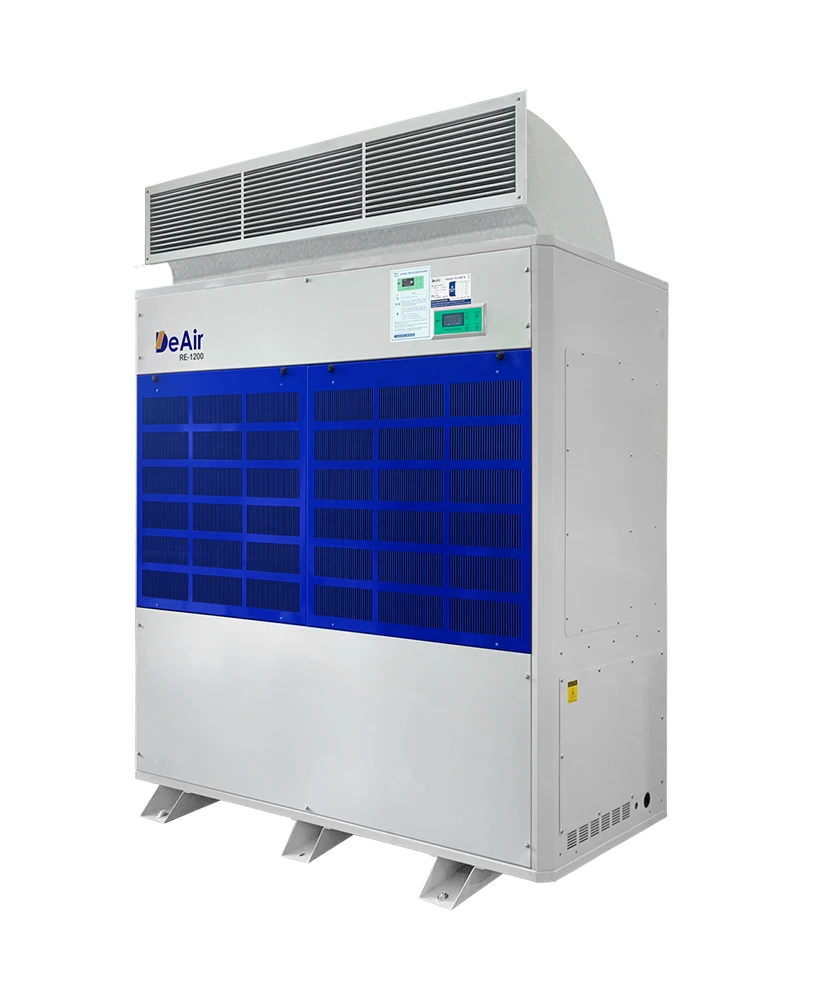
🛡️ DEAIR.RE (HEAT-PUMP)
The "Warrior" for chemical storage & production.
Maintains the golden humidity range: 35-60%RH.
Heat-Pump technology reuses condensation heat, saving 40% on electricity.
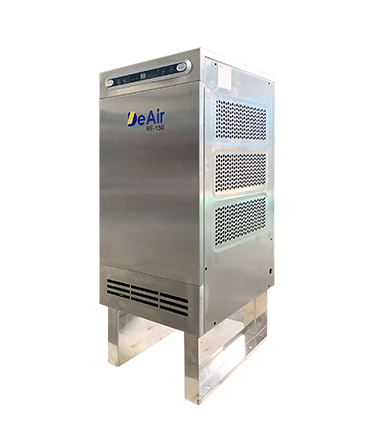
Optional INOX casing for highly corrosive environments.
Small footprint, low pressure drop, high efficiency.
Ensures compliance with ISA 71.04 G1.
Specialized gas filtration solution for datacentres.
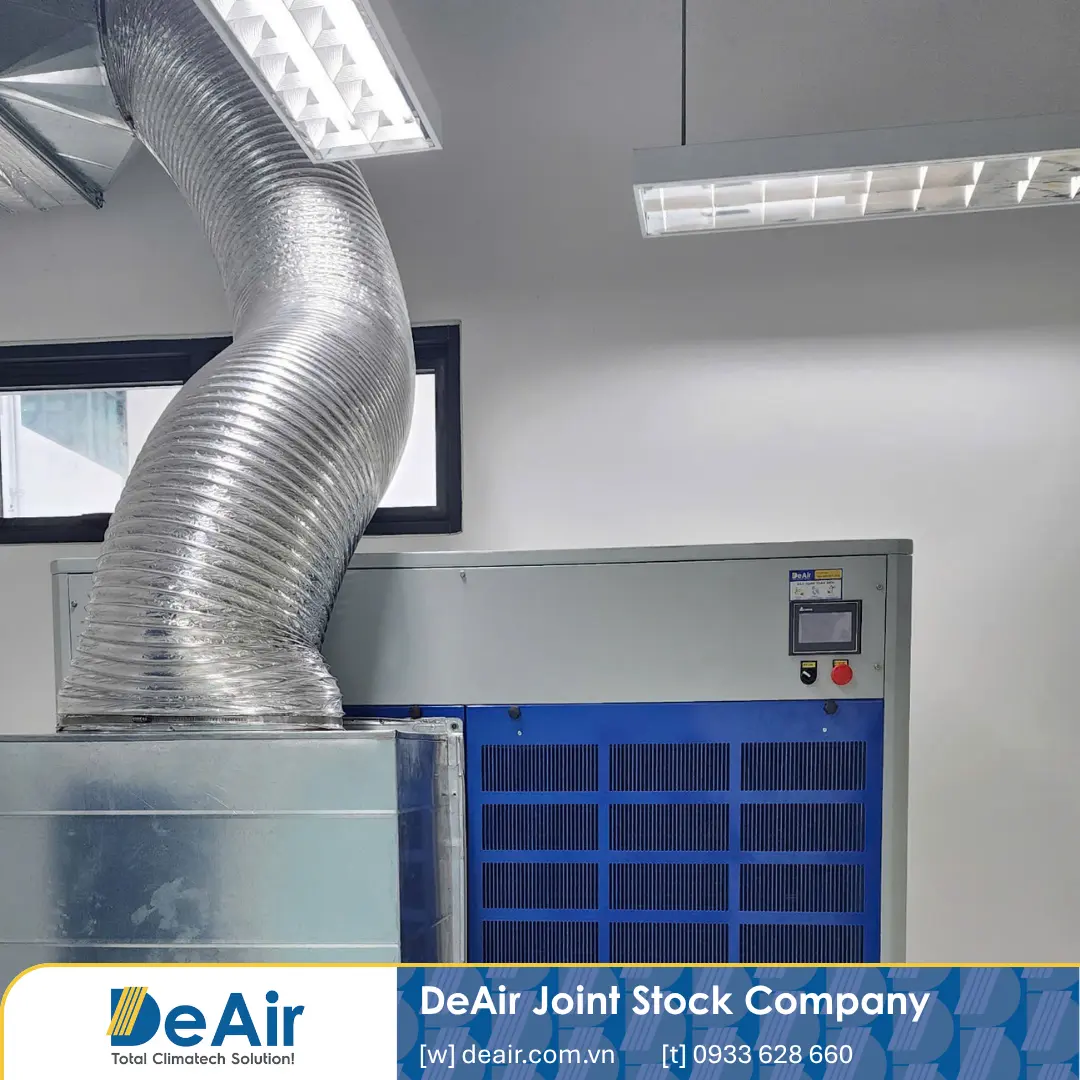
DeAir.RE-1200 dehumidifier connected to ducting - An energy-saving solution for chemical plants.
6. Case Study: Protecting a Chemical Plant Datacentre
🏭 The Problem: Frequent Datacentre Failures & Network Equipment Breakdowns
Context: A major chemical plant faced a severe issue: the datacentre experienced frequent failures, with network and server equipment breaking down due to copper/silver corrosion. Maintenance costs surged by 300%, and production downtime disrupted the entire operational workflow.
Root Causes:
Datacentre humidity fluctuated between 65-75%RH (too high).
Corrosive gases (SO2, H2S) from the production area infiltrated the datacentre.
No specialized gas-phase filtration system was in place.
Failed to meet the ISA 71.04 G1 standard.
DeAir's Solution:
Installed DeAir.RE-1200 dehumidifiers to maintain a stable 50% RH.
Integrated a Dry Scrubber with Honeycomb Chemical Filters to neutralize SO2 and H2S.
Implemented a Reactive Monitoring system (copper/silver coupons) for continuous verification.
Provided comprehensive operational and maintenance staff training.
Results:
Achieved ISA 71.04 G1 (mild corrosion) compliance.
Reduced equipment failures by 90%.
Saved 250 million VND/year in maintenance costs.
Completely eliminated downtime caused by corrosion.
Q1: Why do chemical plants need a different humidity control solution compared to other industries?
Chemical plants face a "dual threat": high humidity combined with corrosive gases (SO2, H2S, NO2). This combination creates a resonance effect, accelerating corrosion rates by 10 to 100 times compared to normal environments. Therefore, an integrated solution is required: dehumidifiers + Dry Scrubbers with Honeycomb Chemical Filters to meet the ISA 71.04 G1 standard.
Q2: What is the ISA 71.04 G1 standard, and why is it important?
ISA 71.04-2013 is the international standard by the International Society of Automation classifying corrosion severity in datacentres. The G1 (Mild) class requires:
Copper corrosion rate: <300 Å/month
Silver corrosion rate: <200 Å/month
Maintaining RH <60%
This is a MANDATORY requirement to maintain electronic equipment warranties. If G1 is not met, manufacturers may void the warranty.
Q3: How does a Dry Scrubber with a Honeycomb Filter differ from traditional granular media?
Honeycomb Chemical Filter technology offers superior advantages:
Dehumidifiers (DeAir.RE, Dezenno Rotor) for precise humidity control.
Dry Scrubbers with Honeycomb Chemical Filters to eliminate corrosive gases.
Reactive Monitoring systems (copper/silver coupons).
Dezenno.MAX AHU systems for large-scale plant integration.
Everything is engineered to ensure strict compliance with ISA 71.04 G1.
“Yes”
Q5: How do you monitor corrosion levels in a datacentre?
DeAir utilizes Reactive Monitoring:
Expose copper and silver foil coupons in the datacentre for 30 days.
Analyze them in a laboratory using coulometric reduction to determine the thickness of corrosion products.
Classify the environment into G1-G4 levels per ISA 71.04.
This is a simple, low-cost, yet highly accurate method to assess datacentre air quality.
Q6: What is the investment cost and ROI period for such a system?
Investment costs depend on plant scale and pollution levels. However, the Return on Investment (ROI) is typically just 12-24 months due to:
90% reduction in electronic equipment maintenance costs.
Elimination of production downtime (which can cost billions of VND).
40% energy savings via Heat-Pump technology.
Preservation of equipment warranties (avoiding massive replacement costs).
DeAir provides a detailed ROI analysis report for every project.
Q7: Does DeAir support maintenance for equipment from other manufacturers?
Yes, DeAir provides consulting and maintenance services for third-party equipment. Our experienced engineering team (formerly working with brands like Bry-Air and Munters) will:
Evaluate the current operational status of your system.
Propose optimal solutions, including recommending suitable replacement equipment.
Provide scheduled maintenance and calibration services.
Ensure maximum efficiency and energy savings.
Humidity Control Solutions for Chemical Plants - Protecting Billion-Dong Assets
Don't let the "invisible enemy" (humidity + corrosive gases) destroy your multi-billion VND datacentre and electronic equipment. DeAir is ready to partner with you, providing a comprehensive microclimate control ecosystem that meets the ISA 71.04 G1 standard.
Is your chemical plant looking for an optimal humidity control solution?
📞 Contact Ms. Hong: 0933 628 660
🌐 Discover more specialized solutions at: deair.com.vn
✓ Free site survey & moisture load calculation ✓ Transparent quotation ✓ 24-month warranty ✓ 24/7 technical support


 DeAir.RE
 DeAir.RE-H
 DeAir.RE-INOX
 DeAir.CRE
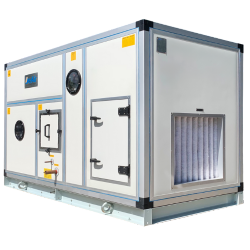 Dezenno
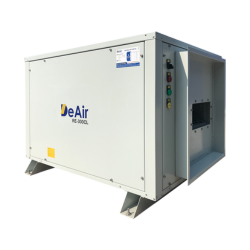 DeAir.RE-CL
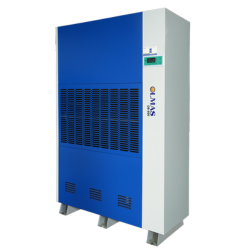 Olmas-OS
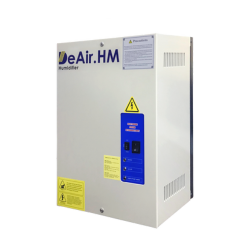 DeAir.HM
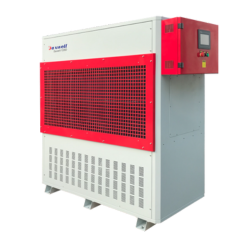 Daxwell
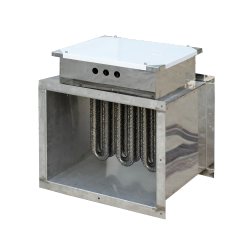 DeAir.Heat
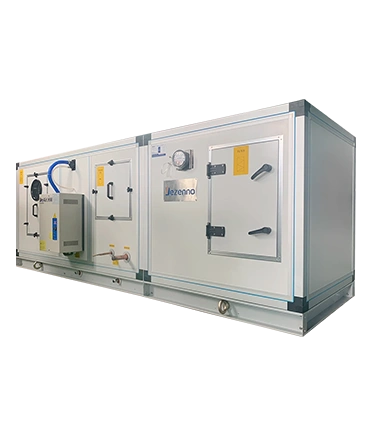 AHU
AHU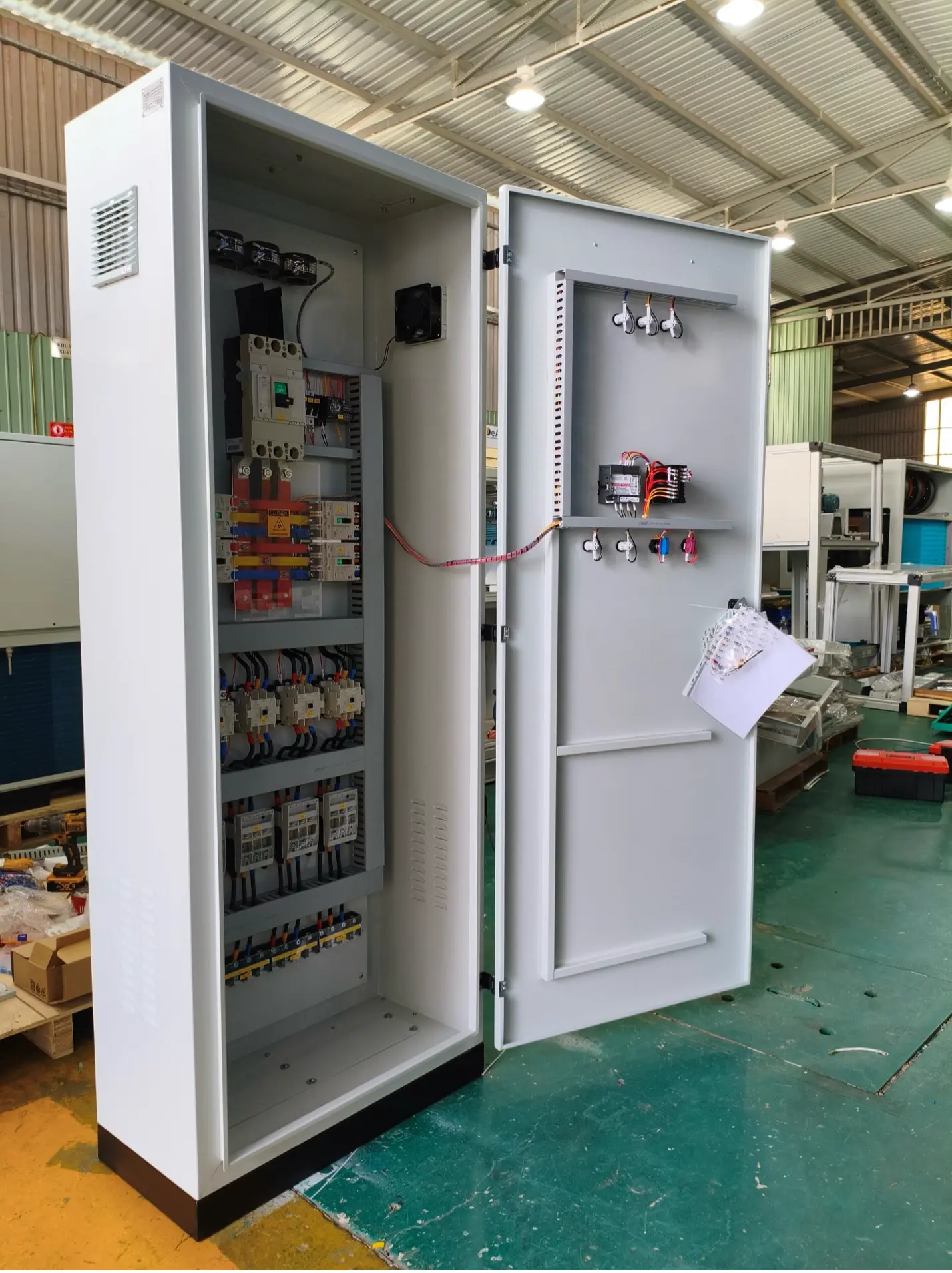






![[Case Study] DeAir Installs DeAir.De Rotor Humidity Control System for Pharmaceutical Plant in Binh Duong](https://deair.com.vn/thumbs/news/2023_04/ban_giao_may_cho_duoc_bd/[270x153-cr]image1-1024x772.jpg__cv.webp "[Case Study] DeAir Installs DeAir.De Rotor Humidity Control System for Pharmaceutical Plant in Binh Duong")

![[Review & Guide] Olmas OS-300: The New Humidity Control "Warrior" for Medium to Large Warehouses](https://deair.com.vn/thumbs/news/huong_dan_su_dung_may_olmas_21/[270x153-cr]vtm06440.png "[Review & Guide] Olmas OS-300: The New Humidity Control \"Warrior\" for Medium to Large Warehouses")