Expert Q&A: 20 Frequently Asked Questions About Humidity Control Systems in GMP Pharmaceutical Plants
23/05/2026
Expert Q&A: 20 Frequently Asked Questions About Humidity Control Systems in GMP Pharmaceutical Plants
Key Takeaways:
In GMP-compliant pharmaceutical manufacturing, controlling temperature and humidity is not merely about preservation; it is a vital factor determining API stability, pill integrity, and legal compliance. This guide complies 20 core questions from QA/QC engineers and Plant Directors, focusing on rigorous formulation lines like effervescent tablets (<25% RH), Dezenno Rotor dehumidification technology, and transparent SCADA operations compliant with FDA standards.
Part 1: Humidity Challenges in Effervescent Tablet Formulation
Q1: Why does effervescent tablet production require extremely strict humidity control?
Answer: The excipients of effervescent tablets always include organic acids (like Citric Acid, Tartaric Acid) and alkali salts (Sodium Bicarbonate). When exposed to humid air, water acts as a catalyst triggering a chemical reaction that releases Carbon Dioxide (CO2), causing the medication to degrade, swell, and spoil right during the production process.
Q2: What fatal technical risks occur in the tablet press room if humidity exceeds the limit?
Answer: When humidity exceeds the threshold, hygroscopic medicinal powders rapidly absorb moisture and become sticky. This causes the phenomenon of punch sticking (or picking), resulting in uneven pressing forces, chipped edges, or broken tablets, forcing a complete halt of the multi-billion VND press line for cleaning.
Q3: What is "internal effervescence" and at what stage does it occur?
Answer: This phenomenon occurs during the blister packaging or tube filling stage when the effervescent tablet room humidity exceeds 25% RH. Moisture entering the tube before capping triggers a silent chemical reaction, causing the tablet to turn yellow, swell, crack, and lose its pharmacological efficacy before reaching the consumer.
Q4: What is the standard temperature and humidity range for the Dispensing & Granulation room according to GMP?
Answer: According to GMP standards, the Dispensing & Granulation area for effervescent tablets must strictly maintain a temperature range of 20°C - 22°C and an ultra-low relative humidity of just 15% - 20% RH to prevent granules from clumping.
Q5: Why are standard central air conditioning systems (AHU/HVAC) "powerless" against effervescent room humidity requirements?
Answer: Standard AHU cooling coils dehumidify using the cold condensation principle and can only lower humidity to the 40% - 50% RH threshold. Attempting to lower the dew point temperature further to extract water will cause the water on the coil to immediately freeze into solid ice blocks, paralyzing the entire clean air system.
Part 2: Decoding Dezenno Desiccant Rotor Technology
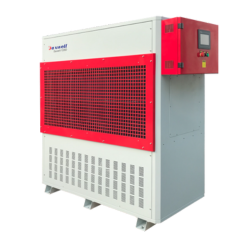
Dezenno Rotor Dehumidifier manufactured in Vietnam, specialized in handling ultra-deep humidity <25% RH for the pharmaceutical industry.
Q6: Which technology is mandatory to achieve an ultra-dry environment below 25% RH in a pharma plant?
Answer: To process humidity for the effervescent tablet press room to extreme thresholds, factories must utilize Desiccant Dehumidification technology, employing physical drying agents instead of the cold condensation method.
Q7: What is the structure and operating principle of the Dezenno desiccant rotor wheel?
Answer: The pharmaceutical rotor wheel consists of a continuously rotating honeycomb ceramic material impregnated with a rapid-absorbing active agent, either Active Silica Gel or Molecular Sieve. As moist air passes through its axial channels, moisture is trapped within the capillaries of the Silica Gel, returning absolutely dry air (down to 5% RH) to the cleanroom.
Q8: How is the regeneration (reactivation) process of the Rotor wheel executed?
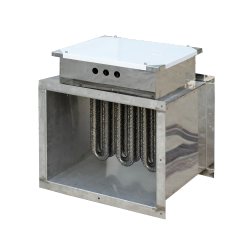
Answer: A stream of regeneration air from the outside environment is heated by electrical resistance to approximately 110°C. This hot air blows through the regeneration sector of the rotor, "baking" the Silica Gel surface dry, and expelling the trapped water vapor outside, ensuring the Rotor wheel remains in its most moisture-hungry state.
Q9: Does the Dezenno Rotor equipment meet GMP cross-contamination cleanroom standards?
Answer: Yes. The equipment is designed with an anti-corrosive 304/316 stainless steel, a double-skin casing to prevent air leakage, and integrates HEPA (H13/H14) fine filters at the supply air outlet, ensuring the dry air blown into the press room is sterile and carries no honeycomb dust.
Q10: What are the benefits of DeAir's integrated "AHU + Rotor" design solution?
Answer: This is an optimized process: Air is pre-cooled via the AHU to condense and separate basic moisture initially (reducing moisture load by >50%), then it passes through the Rotor for deep dehumidification down to 15-20% RH. This sequence drastically cuts the rotor's workload and maximizes energy savings.
Part 3: Heat-Pump Dehumidifier Applications & Specific Zones
The DeAir.RE-INOX Heat-Pump dehumidifier series with a stainless steel casing, specialized for herbal material and packaging warehouses.
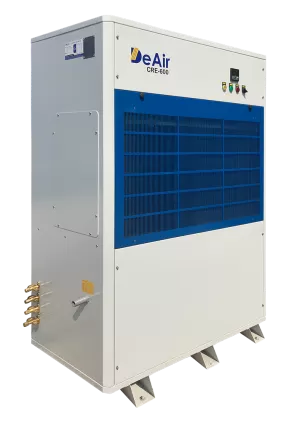
The DeAir.CRE-600 unit featuring an isothermal cooling coil, processing humidity without raising the GSP cool warehouse temperature.
Q11: Which areas in the pharmaceutical sector are suitable for Heat-Pump industrial dehumidifiers?
Answer: Heat-Pump technology is ideal for storage areas, general GSP preservation warehouses, carton packaging warehouses, or standard packaging zones—where the relative humidity control requirement is standard (e.g., below 60% - 70% RH) and room temperatures are above 15°C.
Q12: How does Heat-Pump technology save energy compared to traditional condensation machines?
Answer: Instead of exhausting thermal energy during the condensation cooling process, the Heat-Pump system reuses this exact condensation heat to warm up the dry air stream before it is blown back into the room. This energy recycling mechanism helps the machine save 30% to 50% on power consumption.
Q13: What specific advantages does the DeAir.RE-INOX version offer for pharmaceutical plants?
Answer: The DeAir.RE-INOX series features a casing made entirely of stainless steel (inox), making it particularly suitable for high-humidity traditional medicine processing areas and environments requiring strict hygiene washdowns to resist corrosion and rust, ensuring GMP hygiene standards.
Q14: How rigorous are the microclimate requirements for the tablet film coating room?
Answer: The tablet film coating process requires extremely rigorous environmental control at a temperature of 20°C and a deep humidity of just 15% RH to ensure the coating solvent evaporates as fast as possible.
Q15: What fatal consequences occur if the film coating stage suffers a humidity control failure?
Answer: High humidity prevents the polymer film sprayed on the tablet surface from drying quickly, causing the pills to stick together. This leads to membrane peeling or surface pitting, destroying both the aesthetics and the stability of the product.
Part 4: GMP/GSP Compliance, SCADA Systems, and Maintenance
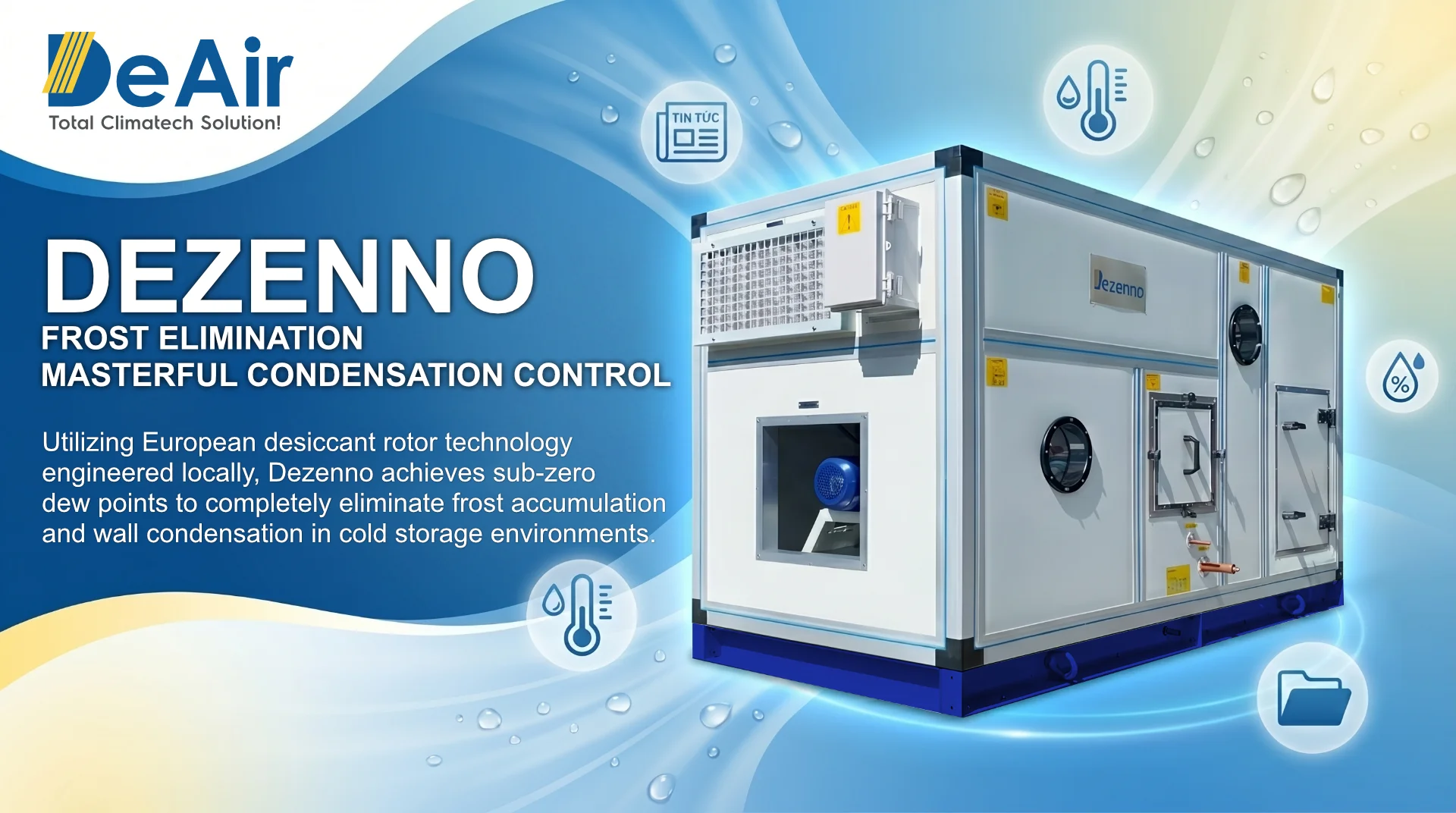
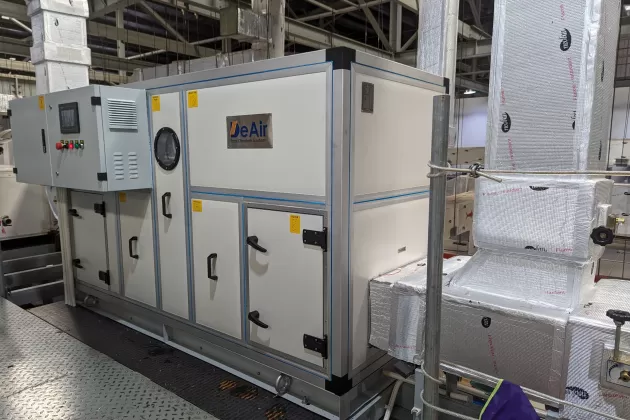
AHU system integrated with Dezenno Rotor extracting humidity <25% RH for an EU-GMP standard Pharmaceutical plant.
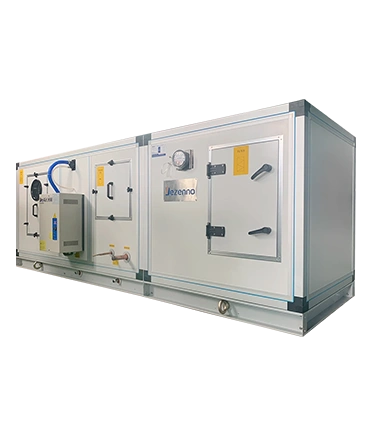
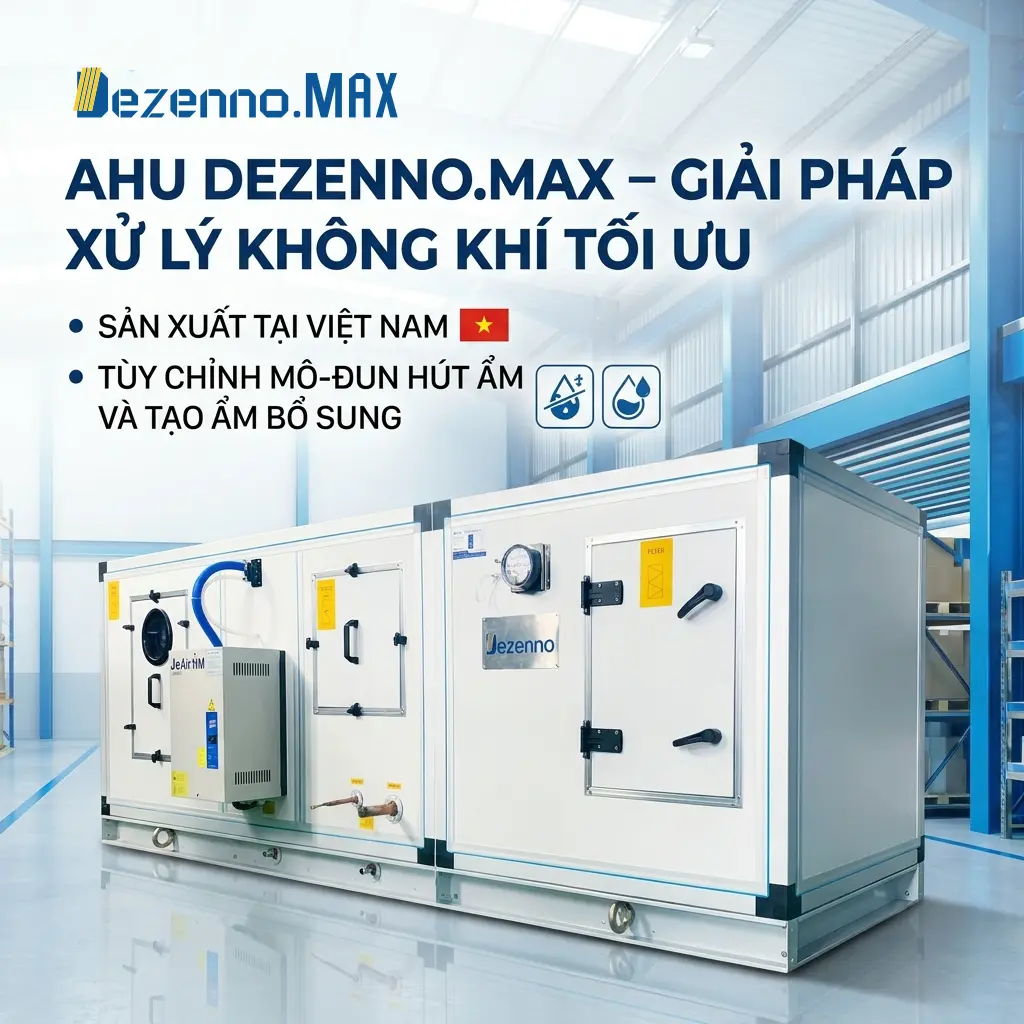
Dezenno.MAX AHU combinations manufactured by DeAir in Vietnam, meeting WHO/EU GMP cleanroom standards.
Q16: What is the required frequency for recording humidity data in GSP-compliant cold/cool storage?
Answer: According to Vietnam GSP standards, drug storage humidity and temperature must be continuously monitored. Automatic monitoring devices must periodically log data with a minimum frequency of 1 to 2 times per hour.
Q17: What humidity is required for the production and packaging of Penicillin antibiotics?
Answer: The Penicillin packaging area demands the most extreme deep humidity control level in the pharmaceutical sector, ranging from 5% – 15% RH, mandating the use of a specialized Dezenno desiccant rotor dehumidifier.
Q18: Which international data transparency standard does DeAir's SCADA management system meet?
Answer: DeAir's automatic SCADA data logging system meets the stringent US FDA Title 21 CFR Part 11 standards for transparency, security, audit trails, and the immutability of electronic microclimate records.
Q19: What is the weekly industrial dehumidifier maintenance checklist for a plant operator?
Answer: The weekly checklist includes: Removing and spray-washing the dust filter (Pre-filter); inspecting the condensate drain pipe for kinks/blockages; and performing a general visual/auditory check to detect strange noises from the compressor/fans or air leaks.
Q20: What abnormal phenomena require the plant to shut down the machine and call professional technicians immediately?
Answer: You must stop the machine and call DeAir technicians immediately if: The machine is not dripping condensate despite high room humidity; the cooling coils are frosted/frozen; the control panel displays an alarm error code; the machine runs continuously without shutting off despite reaching set humidity; or the compressor emits unusually loud roaring noises.
Humidity Control - An "Insurance Policy" for Drug Quality
In GMP-compliant pharmaceutical manufacturing, microclimate control is never an over-investment. Investing in a standard pharmaceutical cleanroom dehumidifier system is the enterprise's highest commitment to active ingredient stability and patient safety.
We invite Businesses and Investors to contact DeAir immediately for in-depth consultation on designing AHU systems integrated with Dezenno Rotors customized for your rigorous formulation lines!


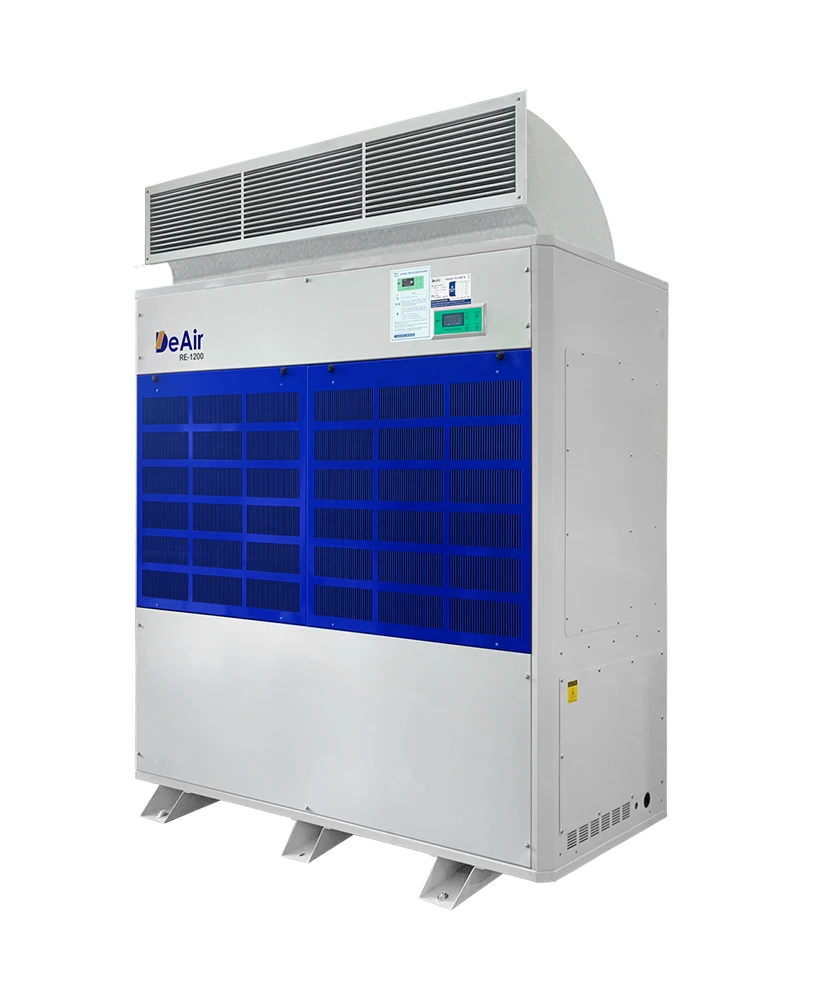 DeAir.RE
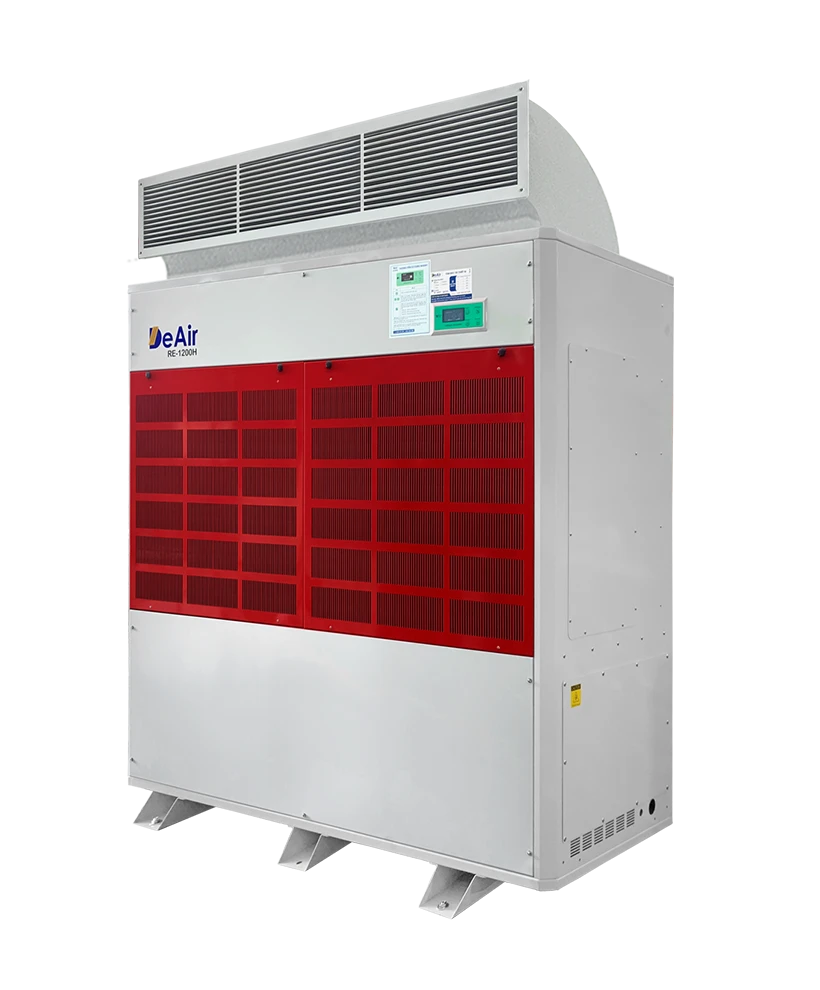 DeAir.RE-H
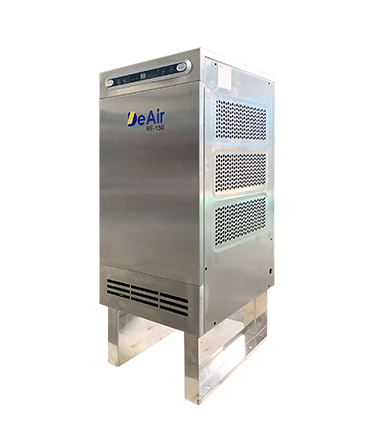 DeAir.RE-INOX
 DeAir.CRE
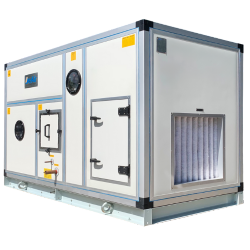 Dezenno
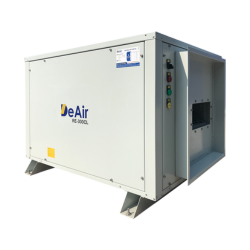 DeAir.RE-CL
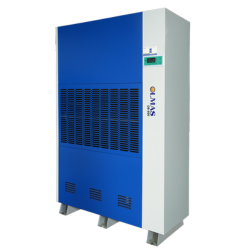 Olmas-OS
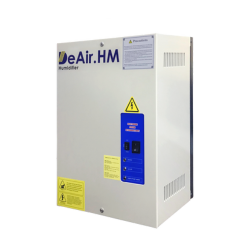 DeAir.HM
 Daxwell
 DeAir.Heat
 AHU
AHU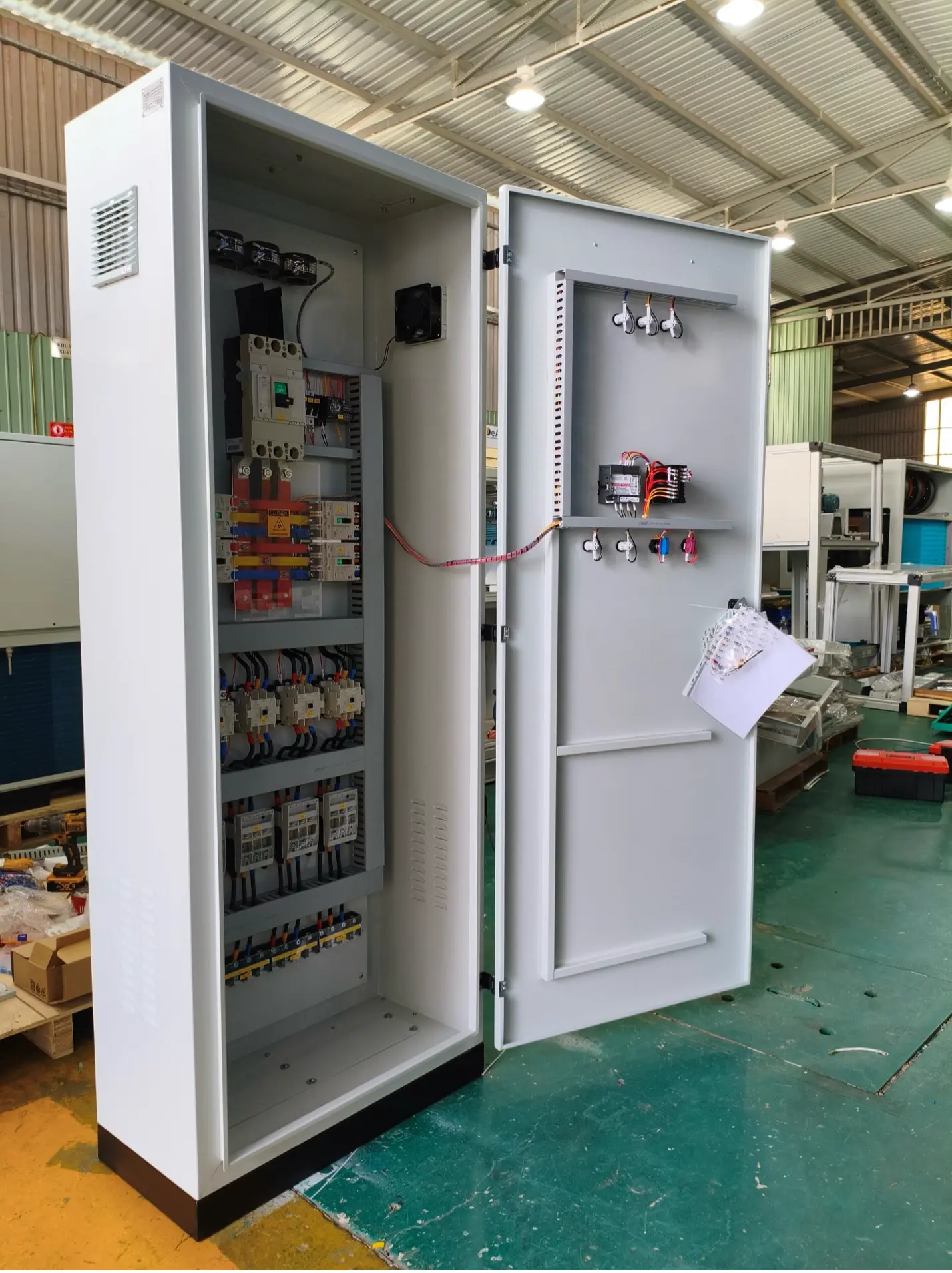






![[Case Study] DeAir Installs DeAir.De Rotor Humidity Control System for Pharmaceutical Plant in Binh Duong](https://deair.com.vn/thumbs/news/2023_04/ban_giao_may_cho_duoc_bd/[270x153-cr]image1-1024x772.jpg__cv.webp "[Case Study] DeAir Installs DeAir.De Rotor Humidity Control System for Pharmaceutical Plant in Binh Duong")
![[Review & Guide] Olmas OS-300: The New Humidity Control "Warrior" for Medium to Large Warehouses](https://deair.com.vn/thumbs/news/huong_dan_su_dung_may_olmas_21/[270x153-cr]vtm06440.png "[Review & Guide] Olmas OS-300: The New Humidity Control \"Warrior\" for Medium to Large Warehouses")