Rescuing Pharmaceutical Cleanroom Microclimate Systems: GMP Compliance Demands Zero Delay!
22/06/2026
Rescuing Pharmaceutical Cleanroom Microclimate Systems: GMP Compliance Demands Zero Delay!
Operational Directive for Plant Directors:
The Audit Vulnerability: Psychrometric fluctuations within localized cleanrooms are the leading root cause of batch degradation and immediate failures during WHO-GMP or EU-GMP re-certification audits.
Temporal Pressures: The latter half of 2026 brings intensive seasonal monsoons, driving ambient latent humidity loads to saturation and forcing AHU/DHU arrays to operate at 200% capacity. Unmaintained assets face imminent downtime risks.
DeAir Engineering Sovereignty: Beyond optimizing native assets, DeAir processes total technical capabilities to diagnostic, overhaul, and replace solid-sorption wheel blocks for ALL THIRD-PARTY DEHUMIDIFIER BRANDS on the market, issuing defensible calibration logs.
Within the pharmaceutical manufacturing landscape, cleanroom microclimate regulation is not merely a matter of factory utility convenience—it is an absolute prerequisite to preserve molecular stability. Modern formulations such as effervescent tablets, soft gel capsules, and dry antibiotic powders possess intense hygroscopic properties. A minor deviation in process Dew Point allowing relative humidity to breach critical limits instantly initiates hydrolysis, denaturing active pharmaceutical ingredients (APIs) and scrapping batches worth hundreds of thousands of dollars.
Crucially, as the industry navigates the high-intensity monsoon periods of late 2026, persistent tropical depressions constantly push ambient atmospheric humidity toward saturation. For Plant Engineers and Maintenance Managers, this represents a high-alert phase. Addressing these stringent psychrometric parameters, DeAir initiates an extensive field operation: Comprehensive Technical Servicing and Optimization for Pharmaceutical Cleanroom Climate Controls Nationwide.
1. The Threat of GMP Decertification and Late-2026 Monsoon Pressures
Regulatory inspectors representing WHO-GMP or EU-GMP frameworks universally position central HVAC layouts and desiccant units at the focal point of validation audits. Historical climate tracking profiles (Data Loggers) within tableting rooms and blister-line enclosures must demonstrate absolute unvarying control. Any systemic instability or psychrometric drift presents inspectors with cause for severe regulatory actions: immediate production halts or total revocation of GMP compliance status.
This risk exposure escalates aggressively during the severe meteorological conditions of late 2026. Saturated make-up air loads relentlessly stress industrial desiccant wheels. Particulate fouling within filter banks, degraded structural capacity of thermal reactivation heaters, or relaxed electrical lugs driven by mechanical vibrations will cause configurations to collapse during peak external loads. Preemptive Preventive Maintenance represents the sole path to eliminate catastrophic, unscheduled system downtime.
❌ Audit Vulnerability: Erratic Data Logger logs leading to immediate WHO/EU-GMP decertification threats.
❌ Energy Overhead Escalation: Clogged pre-filters and fouled reactivation modules drive up utility power draw by 40%.
🛡️ STATE AFTER DEAIR VALIDATED SERVICING
⭐ Anchored Process Parameters: Deep process dew points maintained flawlessly 24/7.
⭐ Compliant Audit Defensibility: Issuance of comprehensive technical Logbooks ready for medical inspectors.
⭐ OPEX Efficiency Optimization: Rebalanced mass flows and restored desiccant matrix, reducing utility loads.
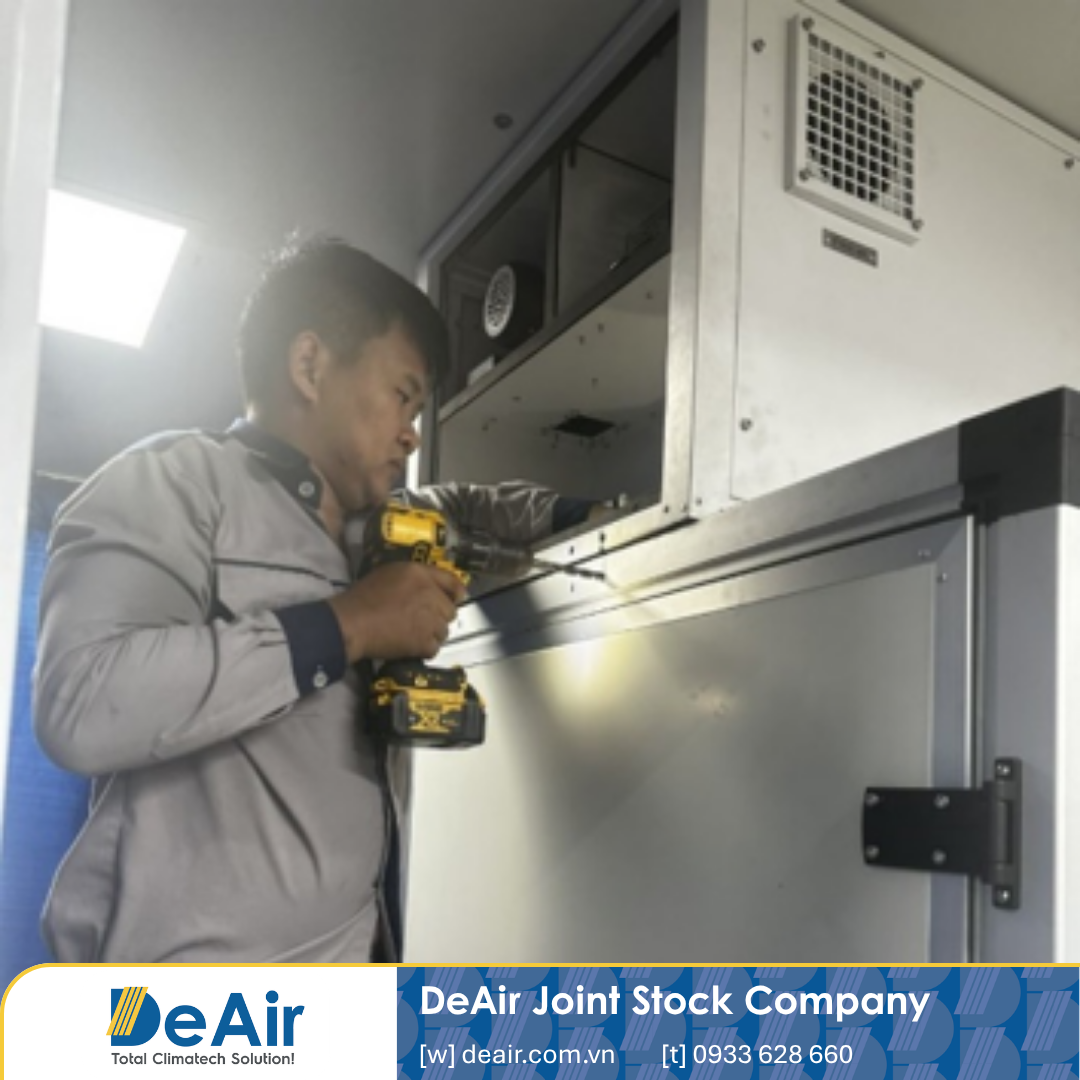
DeAir field specialists conducting operational diagnostics and baseline thermodynamic calculations within a central factory AHU mechanical room.
2. Cross-Platform Mastery: Servicing and Re-engineering Multi-Brand Desiccant Rotors
A common bottleneck within domestic pharmaceutical factories is their historical reliance on imported desiccant matrices manufactured in Europe, the United States, or Japan. When these specialized systems encounter structural failures—particularly the chemical desorptive degradation of the active silica-gel matrix—enterprises routinely face severe logistical gridlocks, waiting 3 to 5 months for overseas field engineers or long import lead times for specialized components at exorbitant price premiums.
Leveraging our position as a native mechanical manufacturer mastering core thermodynamic technologies, DeAir possesses specific strategic competencies to execute total field maintenance, custom PLC reprogramming, and core matrix replacement for ALL COMMERCIAL DRYER BRANDS worldwide. We maintain extensive technical data covering diverse international reactivation thermal cycles and hold a deep inventory of premium Silica Gel and Zeolite wheel blocks at our domestic hub. This allows us to complete rapid on-site rigging, structural retrofitting, and core replacement, saving plants from catastrophic supply chain stoppages.
To satisfy the rigorous environment constraints of medical cleanrooms, DeAir implements a standardized, closed-loop 4-stage technical protocol:
Tier 1: Power Distribution Auditing & Terminal Re-Torqueing
Electrical engineers deploy high-accuracy multi-meters and thermographic arrays to profile the main electrical controls. Field teams map inrush currents, check contactor contact resistance, and execute 100% terminal lug torque re-tightening. This proactive overhauling mitigates high-resistance arcing and terminal hot-spots caused by sustained massive power draws from thermal reactivation heaters.
Systematic inspection and validation of high-amperage lines, securing thermal relays for uninterrupted full-load factory operation.
The solid-sorption wheel matrix must rotate continuously at a precise, ultra-low velocity (8-12 revolutions per hour). Technicians inspect belt tension profiles, verify structural pulley alignment, inject specialized high-temperature synthetic grease into primary bearings, and calibrate the gearmotor assemblies to eliminate mechanical binding or slip.
Our team removes baked carbon and fine particulates accumulated within the heater bank. Simultaneously, we swap out saturated air filters (incorporating G4 coarse, F8 fine, and ultra-critical H14 HEPA absolute filters). This action fully restores rated volumetric mass flows (CMH) while preventing microbial contamination of the cleanroom envelope.
Interfacing diagnostic software directly with the central PLC microcontroller, DeAir automation engineers re-tune localized PID software blocks. Optimizing the thermophysical balance between thermal regeneration temperatures and process mass airflows ensures the system reaches the required dew point metrics.
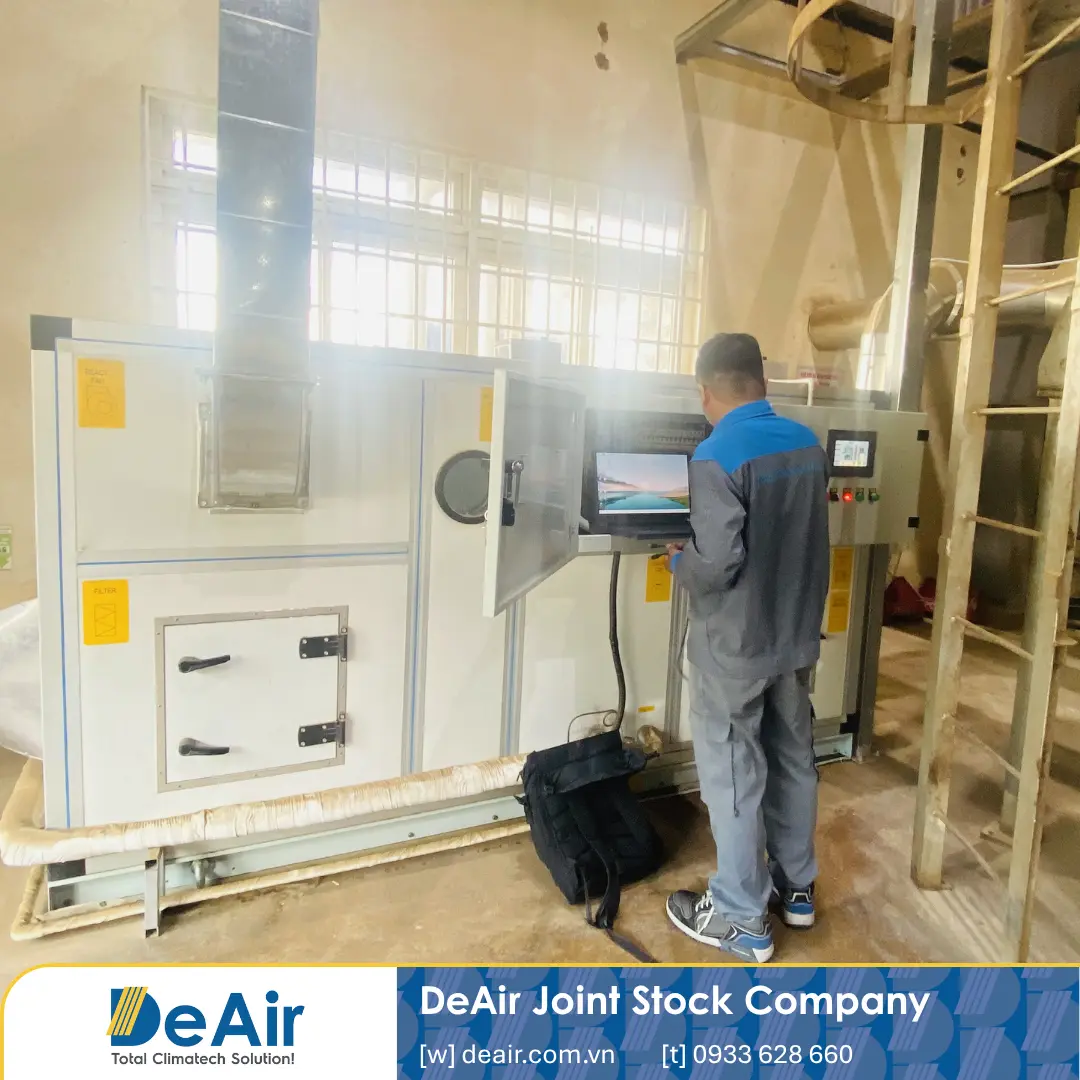
A DeAir specialist fine-tuning automated PID parameters directly via the intelligent HMI interface of a running desiccant system.
4. Transparent Calibration: Providing Traceable Logbooks for Validation Audits
Following the completion of all electro-mechanical parameters, field teams deploy laboratory-grade, calibrated chilled-mirror dew point sensors to analyze the dry process supply air streams. DeAir hands over a fully detailed Technical Diagnosis Report and a transparent Maintenance Logbook to factory operations.
This comprehensive folder documents all pressure drops, motor currents, sensor deltas, and real-world moisture removal efficiencies. This dossier provides the factory's QA/QC team with robust documentation to clear stringent regulatory scrutinies, defending the plant's valuable GMP status.
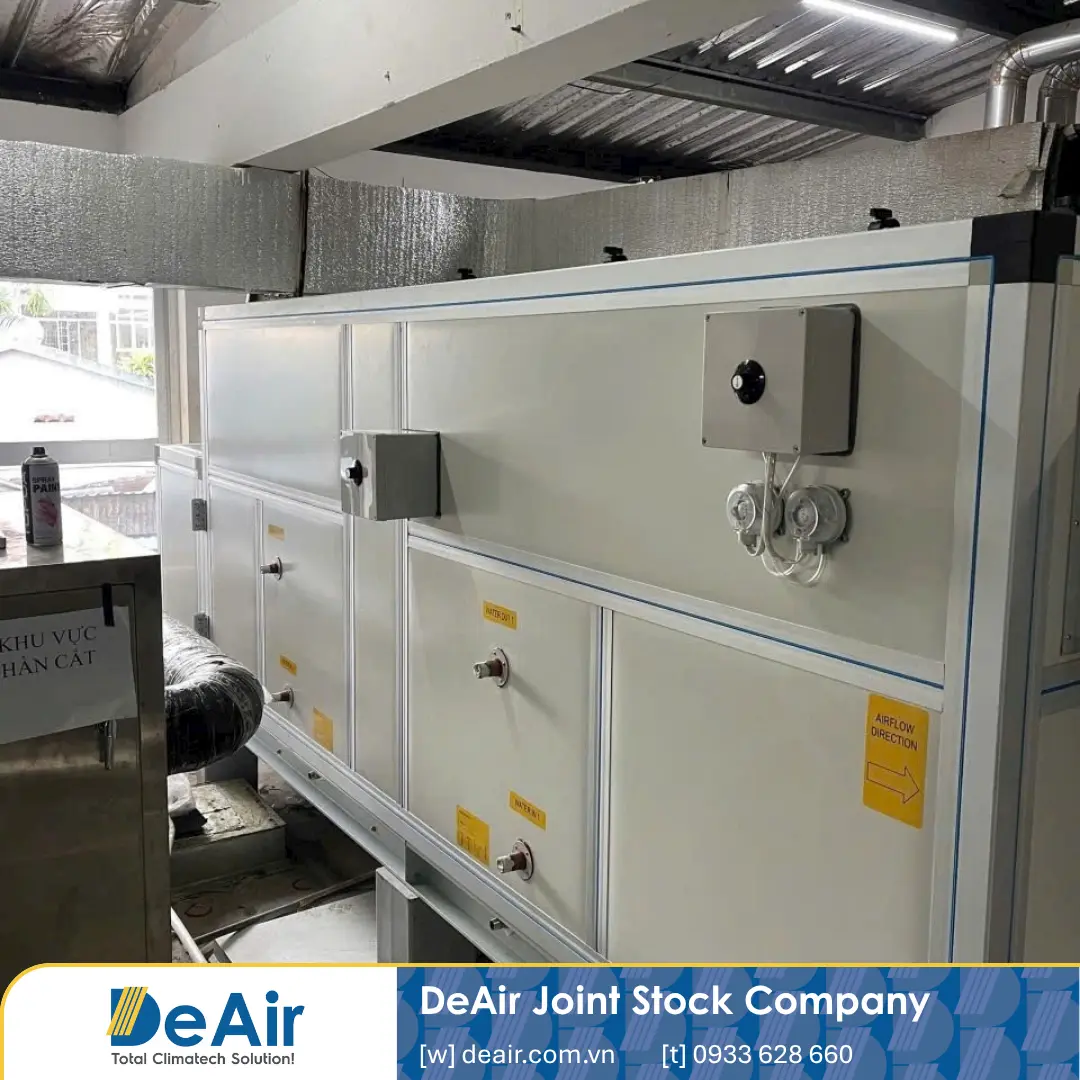
A large-capacity DeAir industrial desiccant system seamlessly integrated into a centralized AHU plant room infrastructure.
Post-servicing operational run: the desiccant wheel aggressively strips air moisture, locking tableting area humidity safely below critical parameters.
👉 Explore our extensive catalog of heavy-duty solid-sorption arrays engineered explicitly for medical cleanrooms at our main product index: Dezenno rotor dehumidifier 1500cmh-18000cmh.
5. Engineering FAQ: Core Practical Queries from QA/QC Inspectors
Q1: What is the optimal maintenance frequency for industrial desiccant rotors operating inside pharmaceutical facilities?
Answer: For facilities running continuous shifts, DeAir mandates a 3-month periodic check for pre-filter replacement and electrical load charting. A comprehensive system-wide overhaul (measuring desiccant structural integrity, trace sensor calibration, and full power connection terminal re-torqueing) must be executed every 6 months to guarantee zero psychrometric drift during GMP audits.
Q2: When a third-party desiccant wheel suffers from chemical degradation, how does DeAir execute the fix? Is a full unit replacement required?
Answer: Absolutely not. DeAir maintains advanced custom mechanical retrofitting capabilities. We assess the precise physical degradation of the old silica matrix. If the main casing structural paneling and regeneration module remain sound, we custom-engineer and replace only the active wheel block, matching the exact dimensional layout of the original OEM. This framework saves the facility up to 60% compared to purchasing a new machine.
Q3: Are imported desiccant brands such as Bry-Air, Munters, or DST covered under DeAir’s technical maintenance framework?
Answer: Yes. DeAir's R&D division has extensive training covering global HVAC manufacturing standards. We routinely perform technical diagnostics, PLC software re-programming, inverter tuning, and component sourcing for Bry-Air, Munters, DST, and Alnor systems. Because critical components are managed within our domestic logistics pipeline, emergency support response times are remarkably brief.
Proactively Secure Your Factory's GMP Standards Ahead of Severe Monsoons!
Even the most technologically advanced climate matrix cannot maintain precise tolerances without expert engineering care. Do not let a single relaxed terminal connection or a saturated desiccant core jeopardize your entire pharmaceutical output.
Regardless of the hardware brand running in your plant room, contact DeAir Projects today. Our cleanroom microclimate specialists will deploy directly to your site to trace process dew points, audit floor space parameters, and outline a tailored technical maintenance roadmap—100% free of charge!


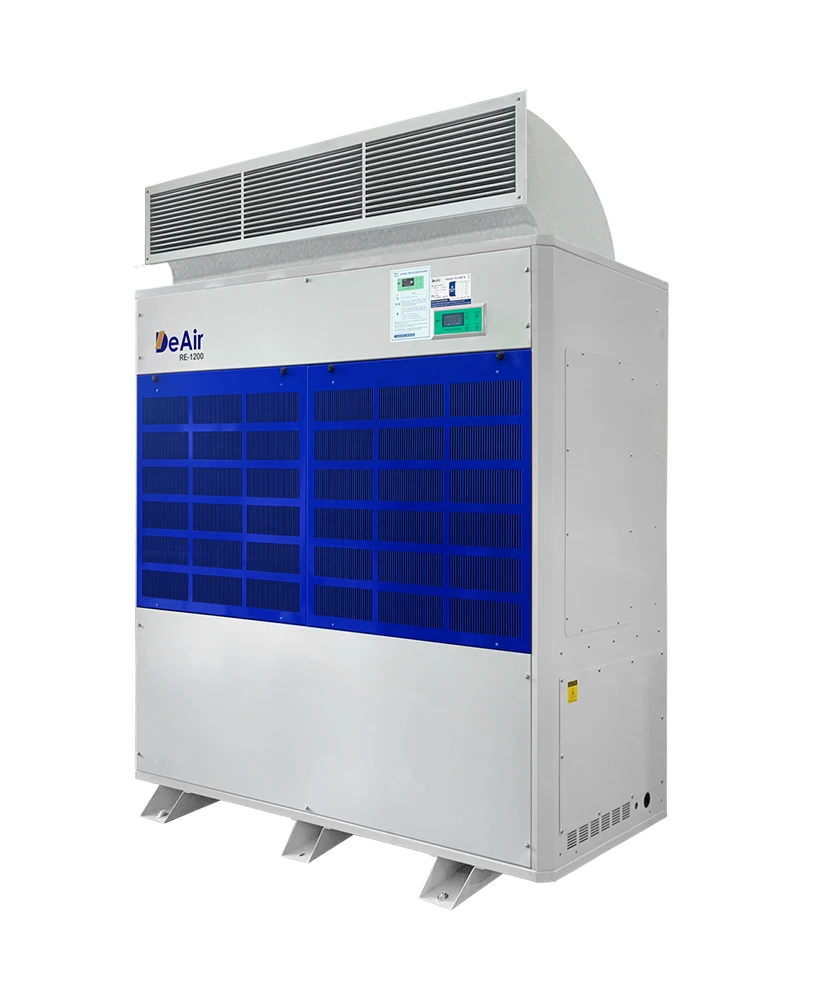 DeAir.RE
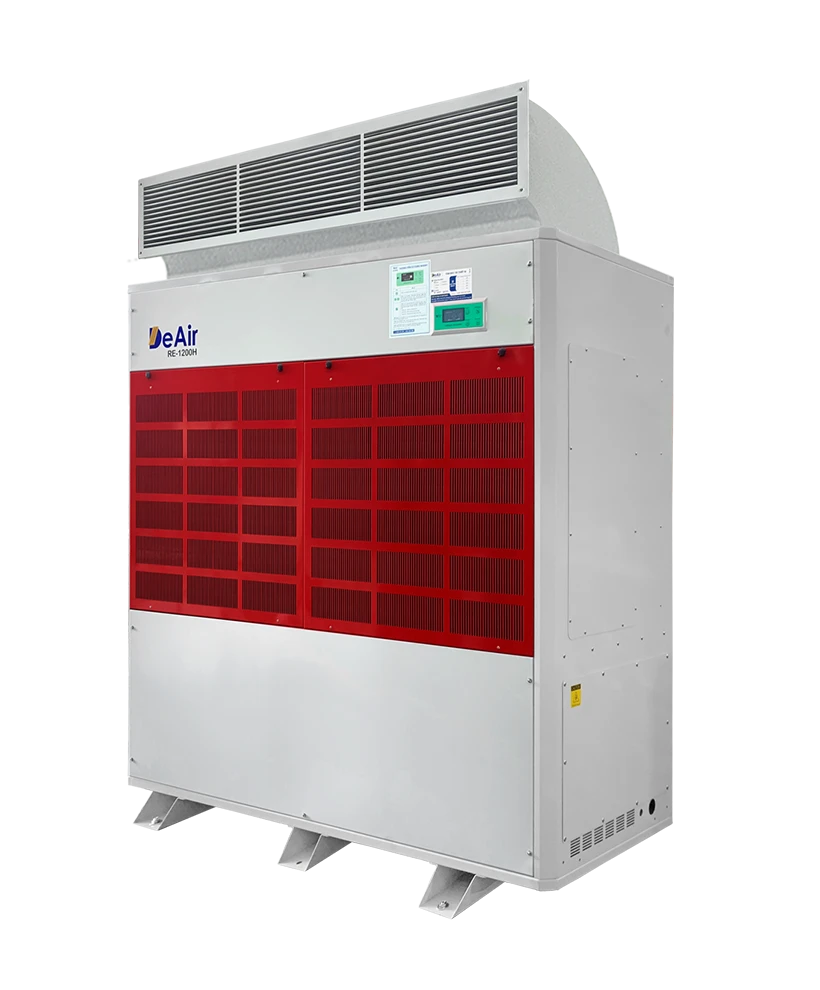 DeAir.RE-H
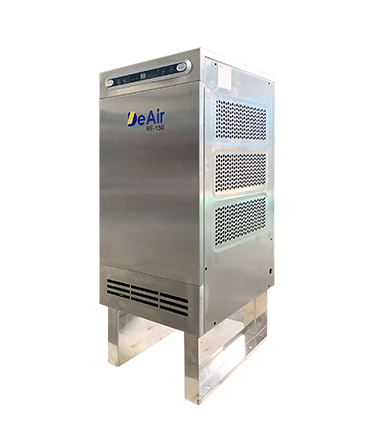 DeAir.RE-INOX
 DeAir.CRE
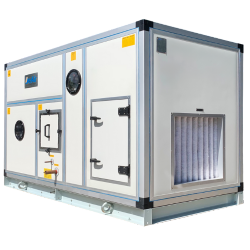 Dezenno
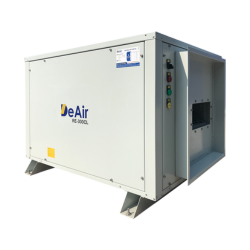 DeAir.RE-CL
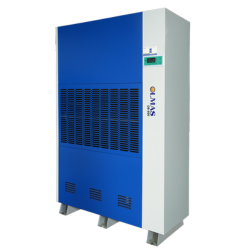 Olmas-OS
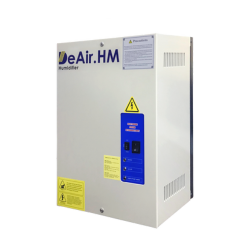 DeAir.HM
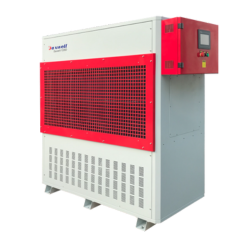 Daxwell
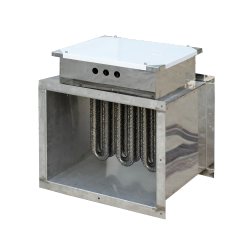 DeAir.Heat
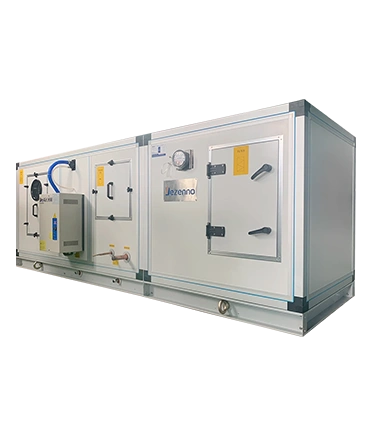 AHU
AHU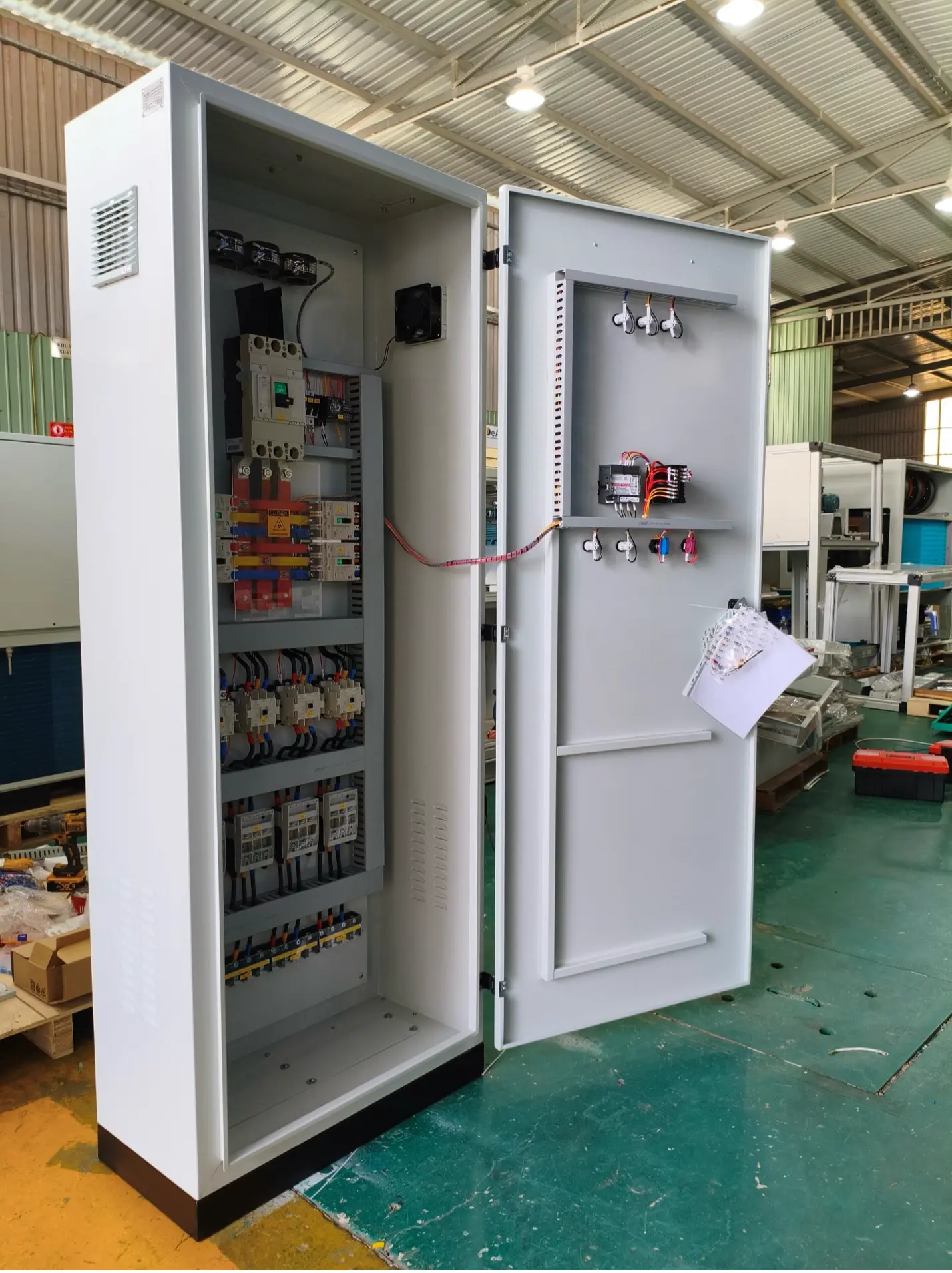








![[Case Study] DeAir Installs DeAir.De Rotor Humidity Control System for Pharmaceutical Plant in Binh Duong](https://deair.com.vn/thumbs/news/2023_04/ban_giao_may_cho_duoc_bd/[270x153-cr]image1-1024x772.jpg__cv.webp "[Case Study] DeAir Installs DeAir.De Rotor Humidity Control System for Pharmaceutical Plant in Binh Duong")

![[Review & Guide] Olmas OS-300: The New Humidity Control "Warrior" for Medium to Large Warehouses](https://deair.com.vn/thumbs/news/huong_dan_su_dung_may_olmas_21/[270x153-cr]vtm06440.png "[Review & Guide] Olmas OS-300: The New Humidity Control \"Warrior\" for Medium to Large Warehouses")