Laboratory Humidity Control: Choosing The Right Dehumidifier
29/10/2026
Laboratory Humidity Control: Solutions For A Precise Research Environment Laboratories are where scientific research, analysis and testing take place across many fields such as healthcare, chemistry, biology and technology. Air humidity directly affects the accuracy of test results, the durability of equipment and the safety of staff. That is why laboratory humidity control is always a must, and a dedicated dehumidifier is the solution that keeps the research environment stable and reliable.
When laboratory humidity exceeds the permitted level, a range of risks appears:
Equipment corrosion: Instruments and lab tools oxidize and wear out faster.
Altered samples: The properties of test samples and chemicals change unexpectedly.
Microbial growth: Higher risk of unwanted microorganisms in the research space.
Inaccurate results: Sensors and measuring devices are affected, leading to unreliable data.
⚠️ THE HUMIDITY RANGE TO MAINTAIN
Laboratory humidity should be kept stable between 30% and 50%. This is key to ensuring the quality and reliability of all research and analysis activities.
Strict humidity control is essential in every laboratory
2. Benefits Of Dehumidifiers In Laboratories
A dedicated laboratory dehumidifier delivers practical benefits:
Stable humidity: Ideal conditions for chemical and biological reactions.
Equipment protection: Prevents instruments and tools from mold and corrosion damage.
Clean and safe environment: Limits the growth of microorganisms.
Cost savings: Lower maintenance and replacement costs caused by humidity damage.
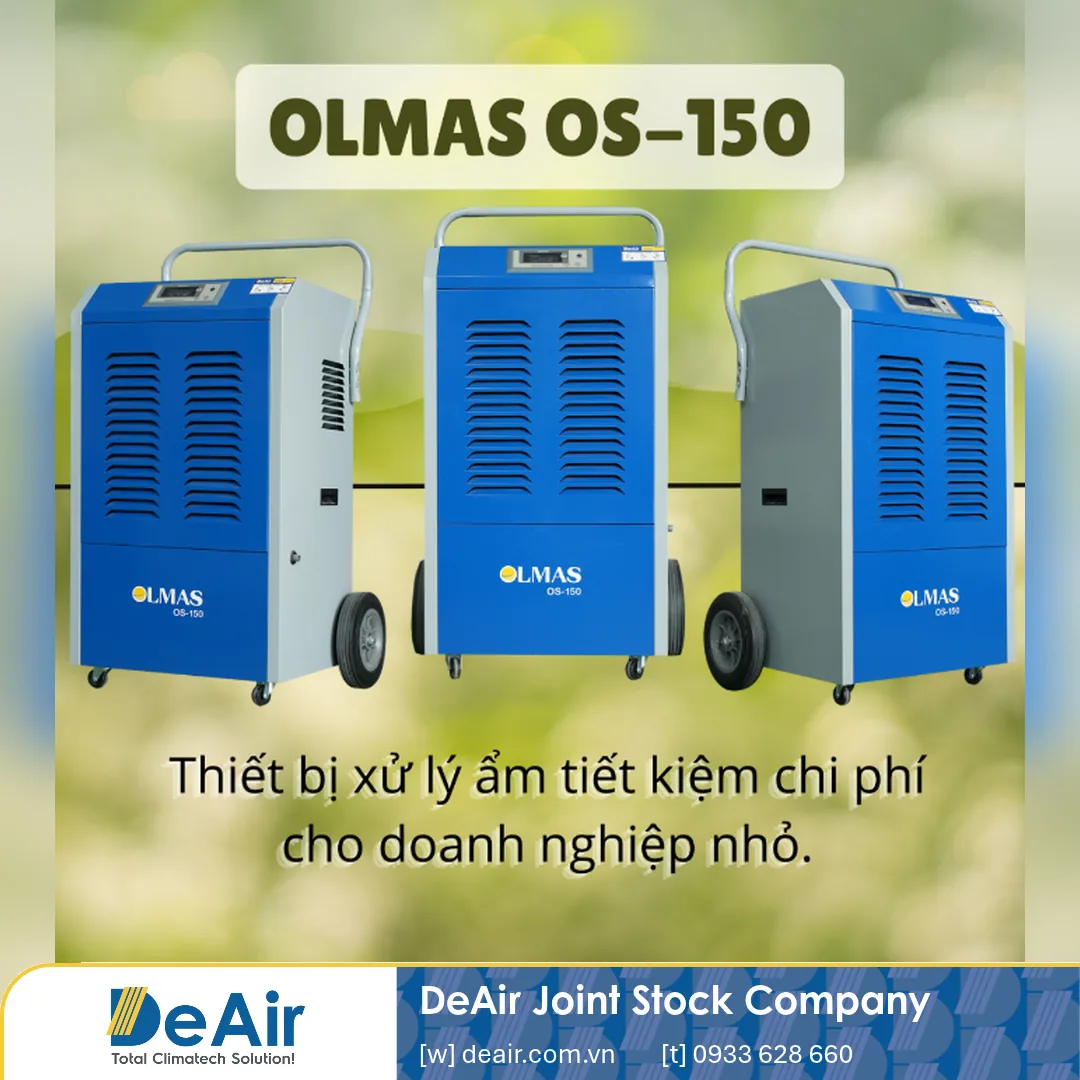
Key features: Three operating modes (automatic, drying, custom humidity), timer, operating history memory, automatic defrost.
The Olmas OS-150 delivers efficient and precise humidity control
4.3. Olmas OS-210 Dehumidifier
Dehumidifying capacity: 210 liters/day.
Coverage area: 250 – 350 m².
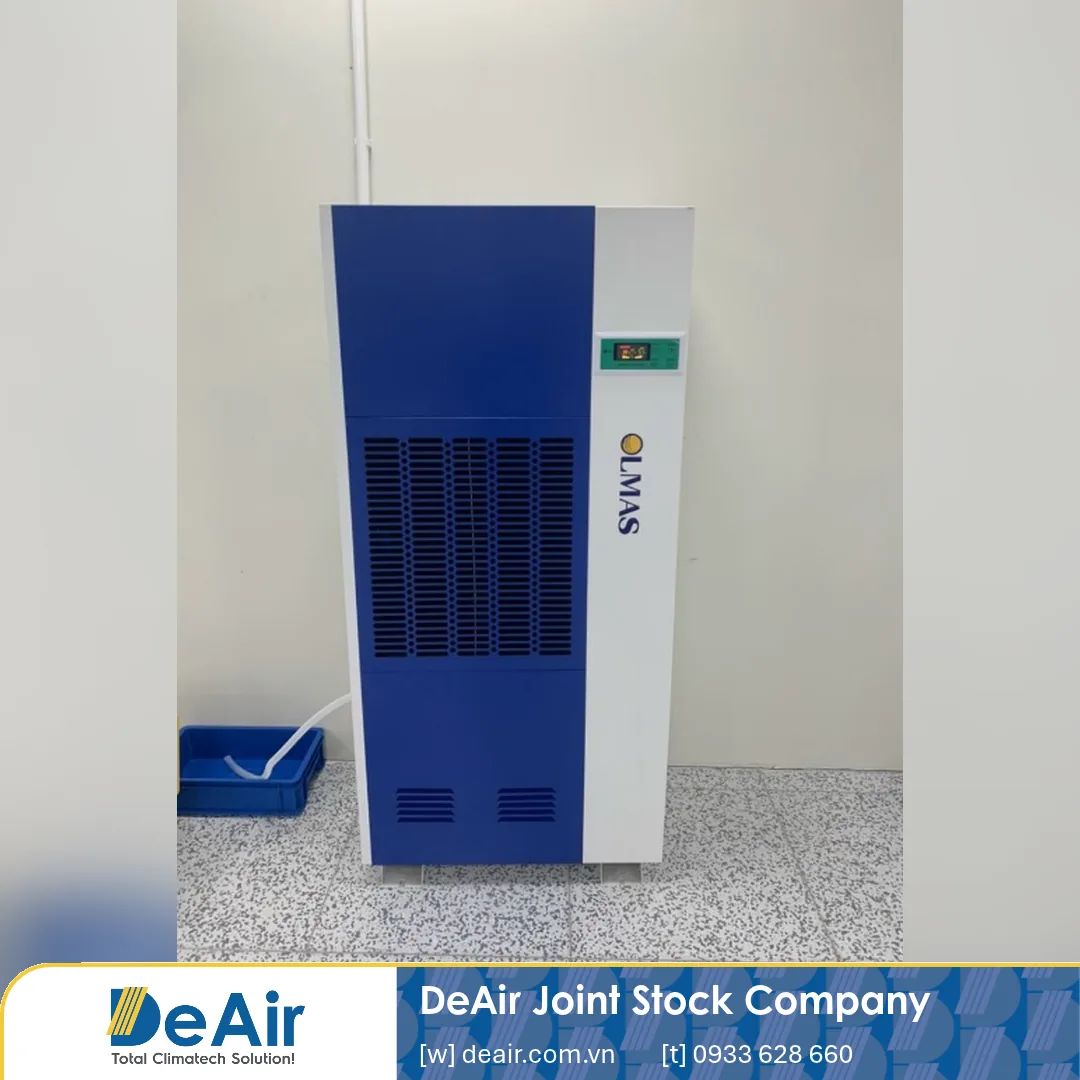
Key features: High capacity, suitable for large-scale laboratories, stable and durable operation.
The Olmas OS-210 removes up to 210 liters/day and covers 250 – 350 m²
✅ CONCLUSION: Laboratory humidity control is essential to ensure the quality and accuracy of research activities. A dedicated dehumidifier keeps the environment stable, protects equipment and ensures staff safety. Choose the model that matches your laboratory's needs and size for the best results.
5. Frequently Asked Questions (FAQ)
Q1: What is the ideal humidity level in a laboratory?
Laboratory humidity should be kept stable between 30% and 50% to ensure accurate results and protect equipment.
Q2: Which dehumidifier suits a laboratory of about 80 m²?
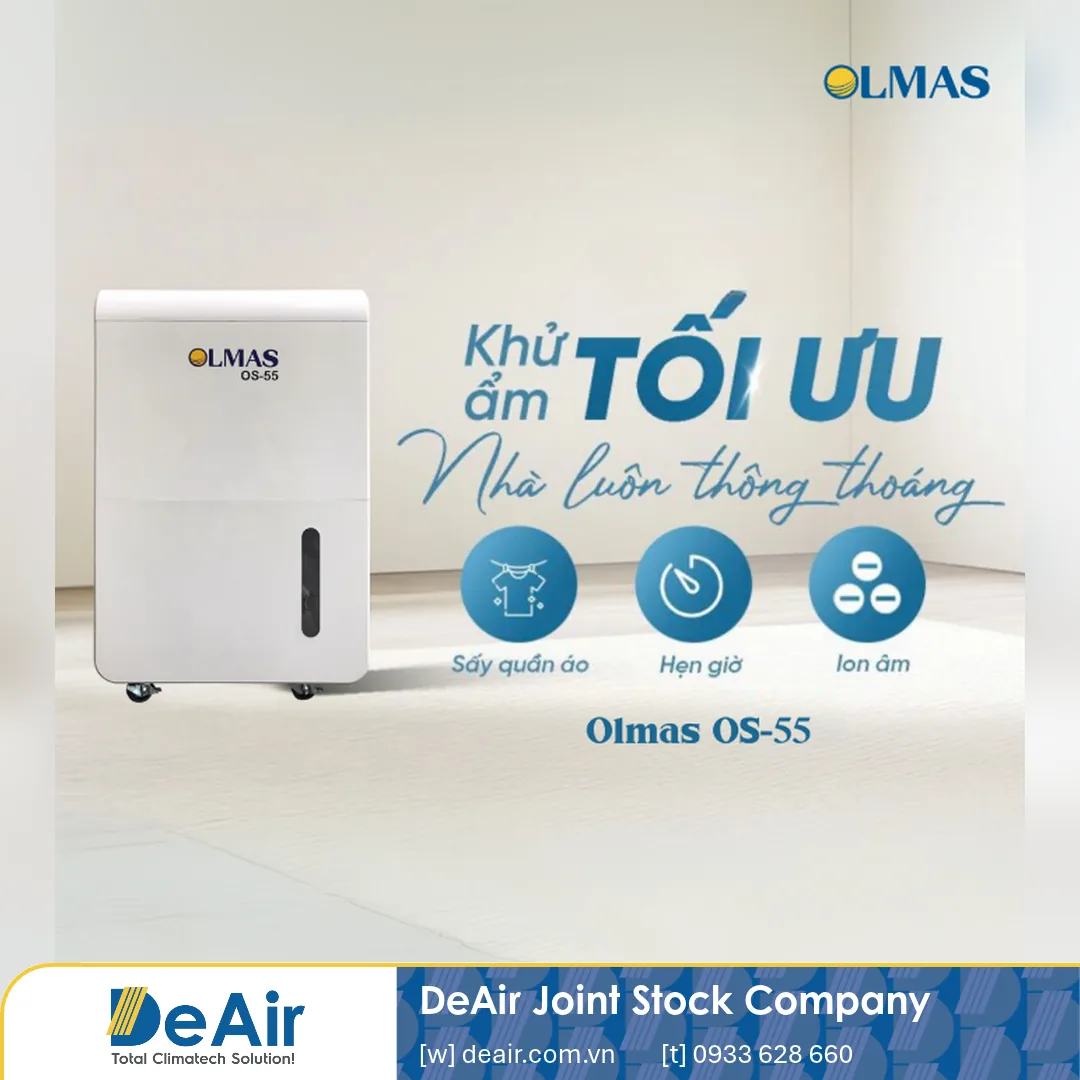
For around 80 m², the Olmas OS-55 (55 liters/day, 60 – 100 m² coverage) is a good fit. Rooms of 120 – 200 m² should use the OS-150, and rooms of 250 – 350 m² the OS-210.
Q3: Why does high humidity distort laboratory test results?
High humidity alters the properties of samples and chemicals and affects sensors and measuring devices, making the collected data inaccurate.
Get Expert Advice On Laboratory Humidity Control
DeAir engineers are ready to survey your site and recommend the right dehumidifier for your laboratory's size, humidity requirements and budget.


 DeAir.RE
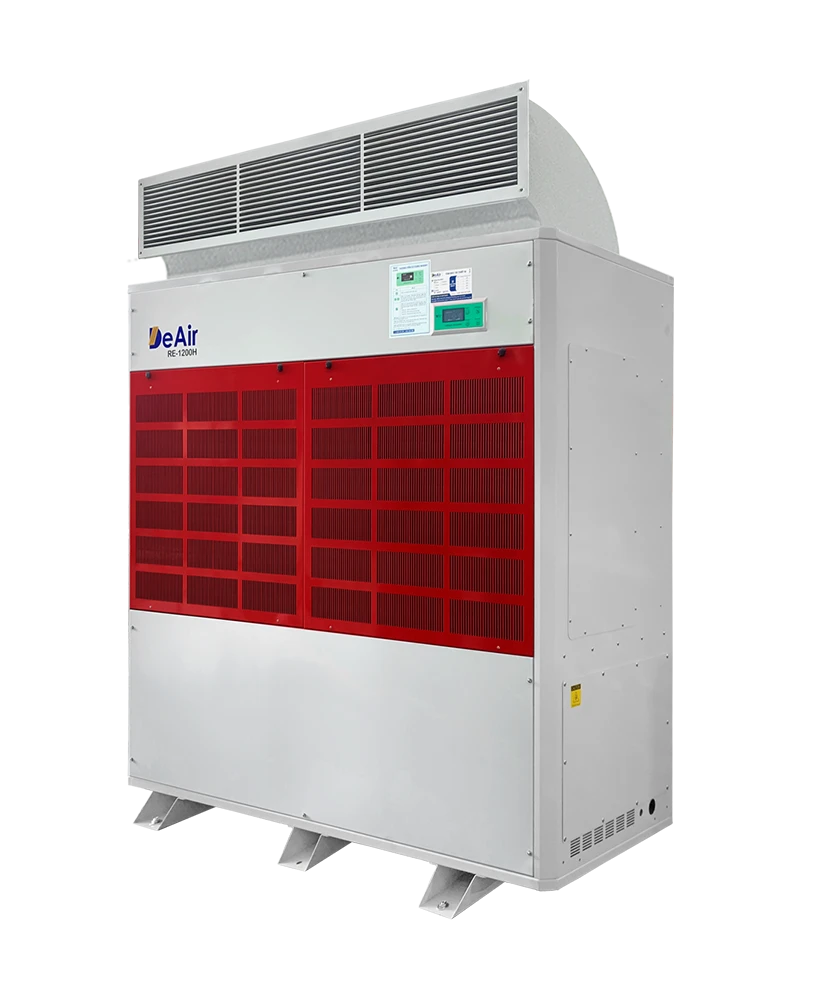 DeAir.RE-H
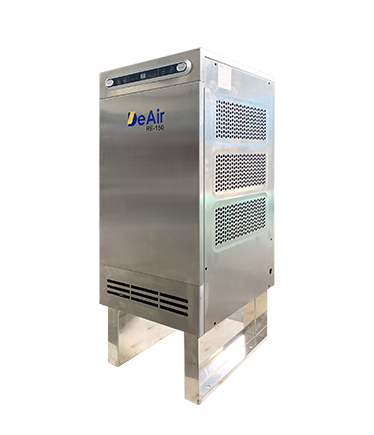 DeAir.RE-INOX
 DeAir.CRE
 Dezenno
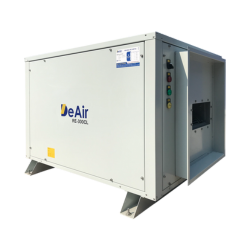 DeAir.RE-CL
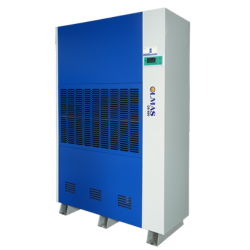 Olmas-OS
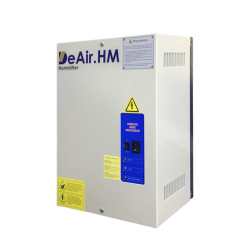 DeAir.HM
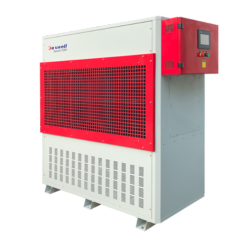 Daxwell
 DeAir.Heat
 AHU