Which Industrial Dehumidifier is Suitable for Seafood Processing Plants?
15/06/2026
WHICH INDUSTRIAL DEHUMIDIFIER IS SUITABLE FOR SEAFOOD PROCESSING PLANTS?
Dehumidifiers for the export seafood industry 2026.
The seafood processing industry, especially in key regions like the Mekong Delta, plays a crucial role in Vietnam's economy. To ensure product quality, meet strict export standards, and optimize production processes, controlling humidity in seafood processing plants is a mandatory requirement. DeAir, with extensive experience in providing condensation treatment and humidity control solutions for numerous seafood factories, will analyze the essential factors so businesses can make optimal choices, ensuring efficiency and cost savings.
Criteria for choosing dehumidifiers for cold storage and fish/shrimp packaging rooms
Selecting an industrial dehumidifier for specialized areas in a seafood processing plant, such as cold storage and fish or shrimp packaging rooms, requires careful consideration of technical criteria to ensure efficiency and durability.
1. Ability to operate at low temperatures: This is the most critical criterion, especially for cold storage and freezing rooms. The dehumidifier must operate stably and efficiently at low, even sub-zero temperatures, without frosting or losing capacity. Desiccant rotor dehumidifiers are highly preferred for this environment.
2. Appropriate dehumidification capacity: Capacity must be calculated based on space volume, initial humidity level, desired humidity, door opening frequency, product volume, and number of workers. DeAir Vietnam can assist with accurate calculations.
3. Construction materials: The machine must be made of highly corrosion-resistant materials (such as 304, 316 stainless steel or special powder-coated steel) because the environment in seafood plants is highly corrosive due to salt, water, and cleaning chemicals.
4. Reliability and durability: Prioritize machines designed for continuous 24/7 industrial operation, featuring high-quality components and long lifespans.
5. Ease of cleaning and maintenance: The machine's design should facilitate regular cleaning to meet food safety and hygiene standards.
6. Precise humidity control: The machine requires an accurate humidity sensor and controller, allowing operators to set and maintain desired humidity levels.
7. Energy efficiency: Choose advanced dehumidification technologies, such as rotor dehumidifiers with efficient thermal regeneration systems, to reduce operating costs.
Comparing dehumidifier capacities: 150L, 210L, 500L for each scale
Choosing the dehumidifier capacity (usually measured in liters of water extracted per 24 hours - L/day) must be based on the scale and characteristics of each area in the seafood processing plant.
150L/day dehumidifiers: Suitable for smaller spaces such as high-value product packaging rooms with limited area, quality testing rooms, or small storage rooms needing precise humidity control. For example, an export tiger prawn packaging room of about 120-200m² with low humidity requirements might consider this capacity.
210L/day dehumidifiers: This is a medium capacity level, which can accommodate preliminary processing rooms, product sorting rooms, or medium-sized warehouses (e.g., 250-350m²). The volume of humid air to be processed in these areas is often larger due to human activity and products. DeAir can provide more specific advice.
500L/day (or larger) dehumidifiers: Designed for large spaces like massive finished goods warehouses, pre-freezing areas, or continuous production lines where a lot of moisture is released. Large-scale manufacturing plants and warehouses storing thousands of tons of products often require high-capacity dehumidifier systems or a combination of multiple machines.
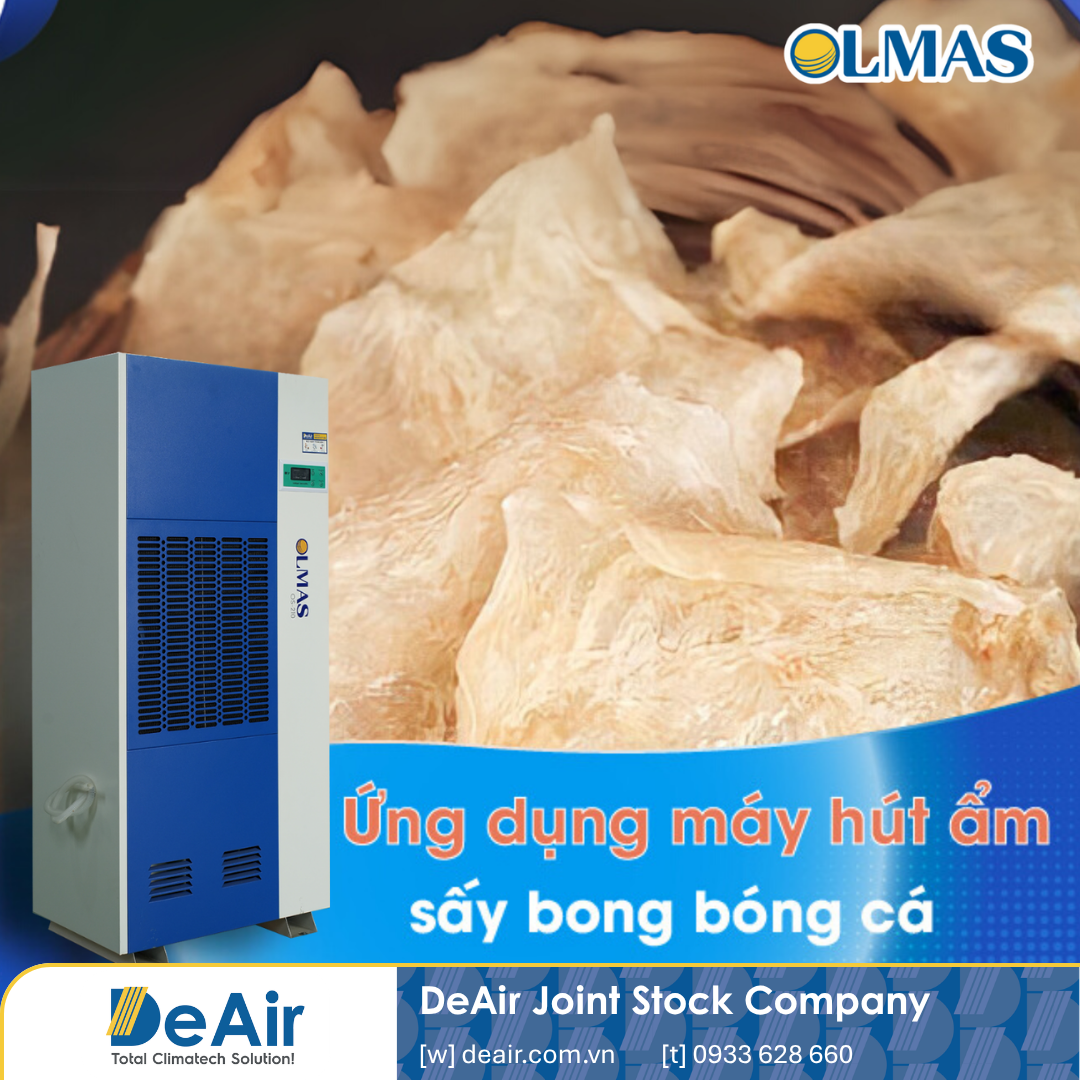
Olmas OS-210 dehumidifier applied in fish maw drying.
More important than the nominal capacity number is the machine's actual working ability under the specific temperature and humidity conditions of the factory. Expert consultation is needed to accurately calculate the moisture load and select the appropriate capacity, avoiding waste or inefficiency.
Practical applications in factories in Bac Lieu, Ca Mau, Mekong Delta
The Mekong Delta, with key provinces in aquaculture and seafood processing like Bac Lieu, Ca Mau, Soc Trang, An Giang, and Kien Giang, has a massive demand for humidity control solutions. The hot and humid climate year-round, especially during the rainy season, poses many challenges.
In shrimp, pangasius, and basa fish processing plants in this region, seafood industry dehumidifiers are widely applied:
1. Raw material receiving and preliminary processing rooms: Reducing humidity helps limit microorganism growth right from the input stage, keeping raw materials fresher.
2. Filleting and sorting rooms: Maintaining a dry, clean environment ensures hygiene and reduces the risk of cross-contamination.
3. IQF (Individual Quick Freezing) lines: Controlling humidity in the air before entering the freezer chamber helps reduce frost buildup on the cooling coils, increasing freezing efficiency and saving energy.
4. Packaging rooms: Low humidity prevents packaging (cartons, PE bags) from becoming soft or moldy, ensuring aesthetics and safety for export products.
5. Frozen finished goods warehouses: Prevents condensation on products when there is a temperature difference, keeps packaging dry, avoids spoilage, and ensures product quality throughout the storage process.
DeAir has experience deploying many dehumidification systems for factories in the Mekong Delta.
DeAir has vast experience in deploying dehumidification systems for factories in the Mekong Delta, fully understanding the specific climate and industry requirements to provide optimal solutions.
Guide to setting the ideal humidity from 55% to 65% in cold storage
Maintaining ideal relative humidity (RH) in frozen seafood storage is crucial. This humidity level needs to be balanced to protect products and packaging without over-drying the product (causing weight loss).
According to expert recommendations and DeAir's practical experience, the ideal relative humidity for most frozen seafood storage should be maintained between 55% and 65% RH.
If humidity is below 55% RH (too dry): It can increase water sublimation from the surface of unsealed products, leading to "freezer burn" and weight loss. However, for some specific products or sensitive packaging, lower humidity may be required.
If humidity is above 65% RH (too humid): The risk of condensation and frost/ice formation on products and cooling coils increases, packaging is easily damaged, and conditions may favor the growth of cold-tolerant microorganisms.
To set and maintain this humidity:
1. Install a specialized dehumidifier: Use a seafood industry dehumidifier capable of operating effectively at low temperatures, such as a desiccant rotor dehumidifier.
2. Use accurate humidity sensors: Place the sensor in a representative location within the warehouse, avoiding proximity to doors or cooling coils.
3. Configure the setpoint on the controller: Set the desired RH between 55-65%.
4. Monitor and adjust: Regularly monitor the hygrometer and dehumidifier performance, adjusting settings if necessary.
5. Ensure warehouse airtightness: Minimize humid air infiltration from the outside by using high-quality doors, cold room curtains, and rapid loading/unloading procedures.
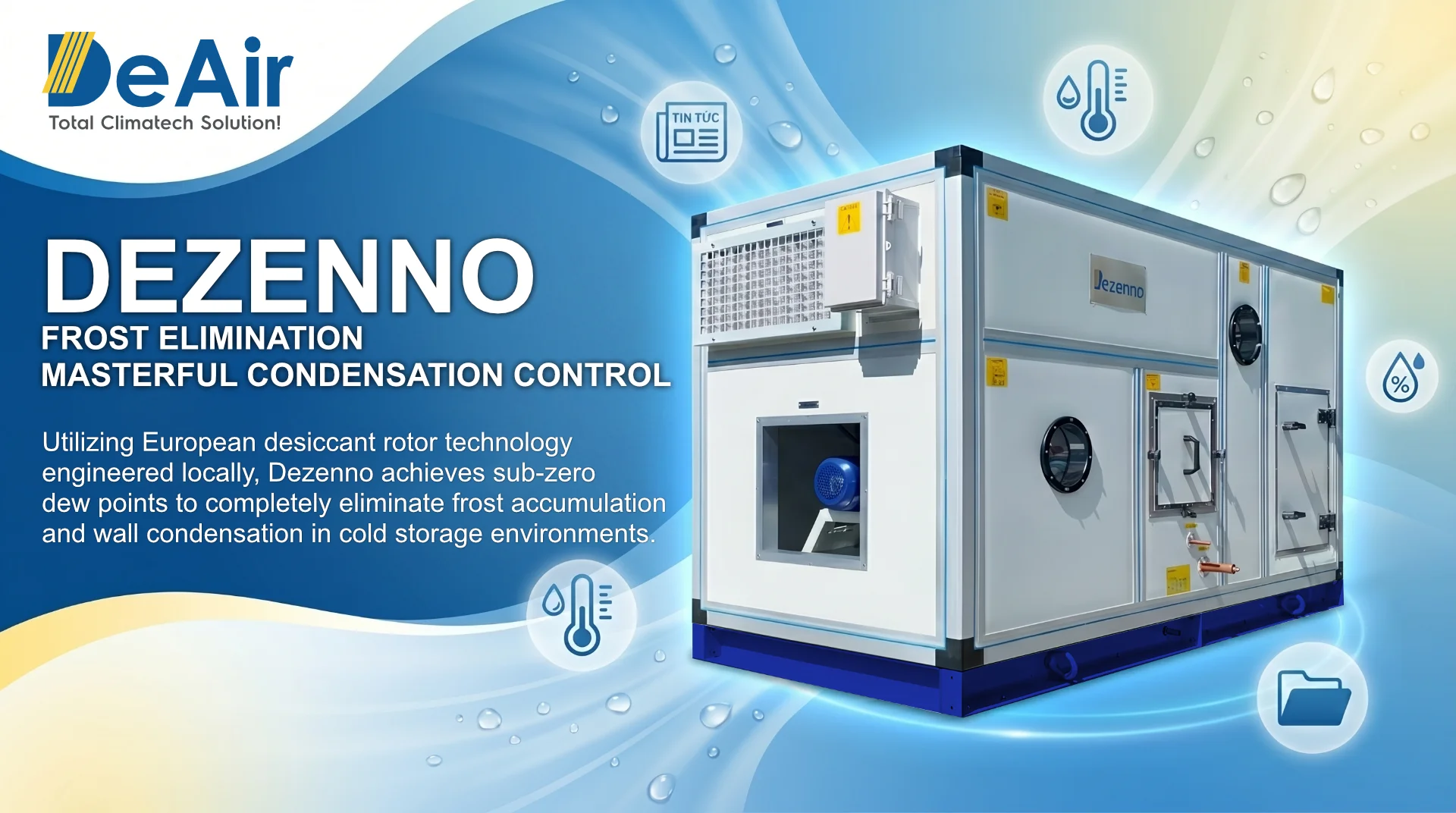
The Dezenno industrial rotor dehumidifier operates effectively at low temperatures.
DeAir, Olmas Dehumidifiers – Specialized solutions for the refrigeration industry
In the humidity control equipment market for the seafood industry, particularly for cold environment applications, several brands have established their positions through specialized technology and effective solutions.
DeAir: Proud to be a pioneer in providing comprehensive and specialized humidity control solutions for the industry, focusing on seafood industry dehumidifiers that utilize advanced technology, are capable of efficient operation at low temperatures, use high corrosion-resistant materials (typically SUS304/316 stainless steel), and have designs meeting food safety standards. DeAir's solutions go beyond supplying equipment; they include consultation, system design, installation, and professional after-sales service, ensuring optimal investment efficiency for customers. With practical experience at many large seafood factories, DeAir clearly understands the industry's challenges and specific requirements.
Olmas: A brand that provides moisture treatment solutions, including industrial dehumidifiers. Olmas has product lines applicable in the seafood industry; however, businesses should thoroughly research specialized models for low-temperature environments and corrosion resistance.
We hope this detailed information helps businesses in the seafood processing industry choose the right seafood dehumidification solution, contributing to improved product quality and production efficiency. For specific consultations, please contact DeAir.
ENSURE SEAFOOD QUALITY WITH PROFESSIONAL DEHUMIDIFICATION SOLUTIONS
Don't let excess humidity affect your productivity and product quality. Contact our team of experts today for a site survey, consultation, and a detailed quote to design the most suitable industrial dehumidification system for your factory!


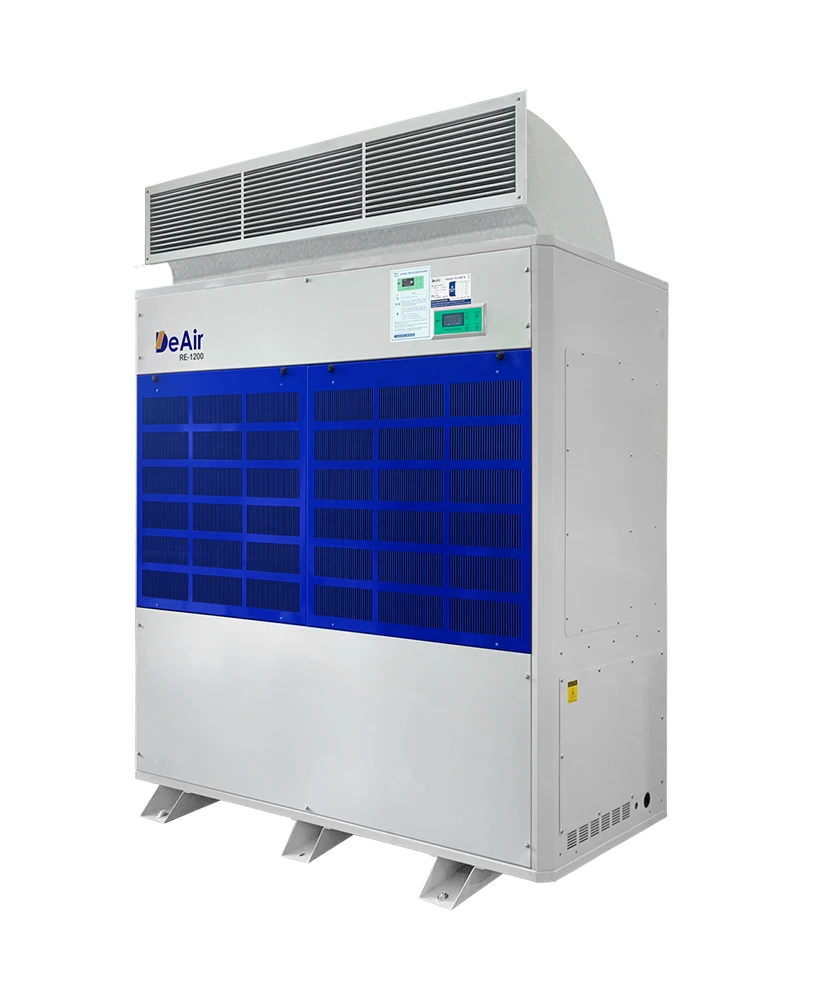 DeAir.RE
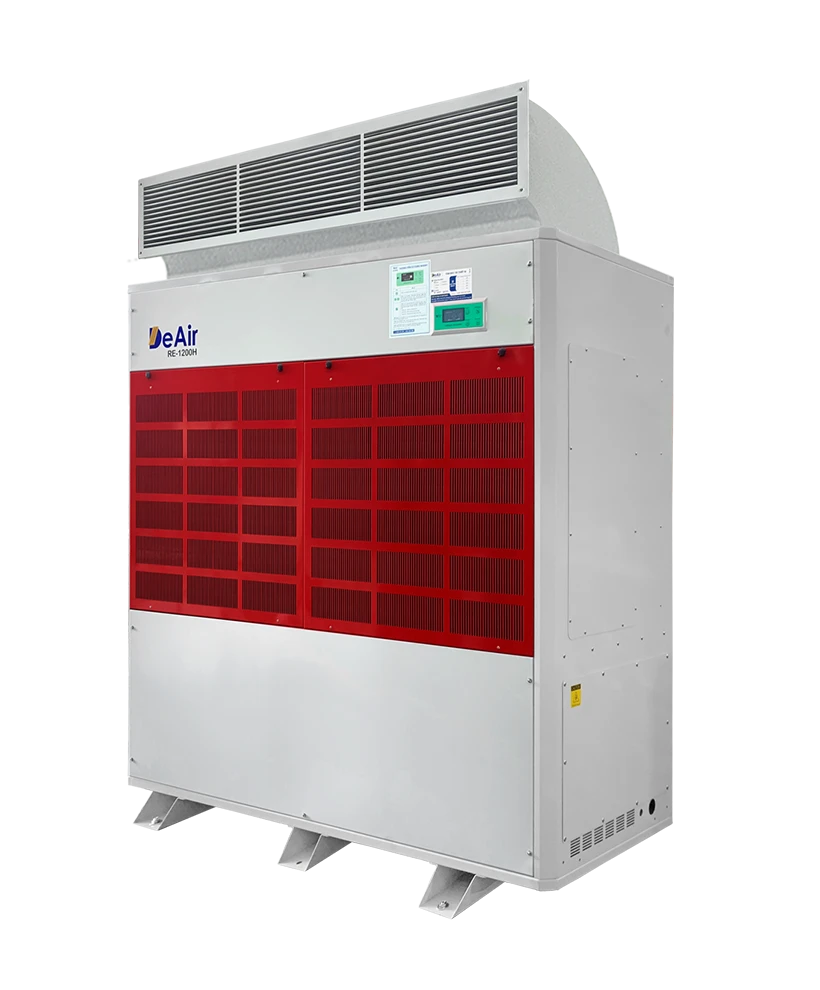 DeAir.RE-H
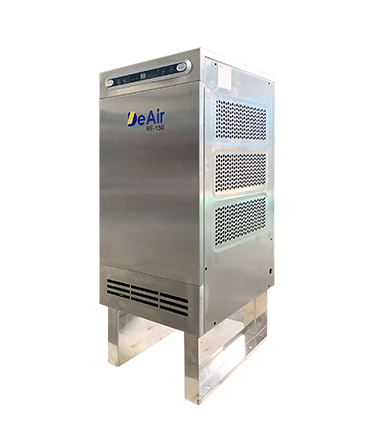 DeAir.RE-INOX
 DeAir.CRE
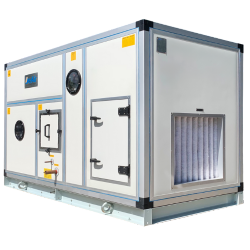 Dezenno
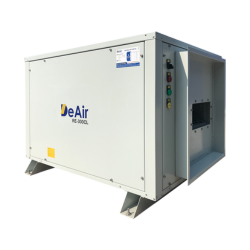 DeAir.RE-CL
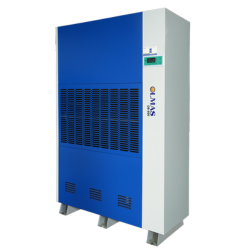 Olmas-OS
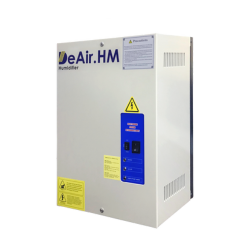 DeAir.HM
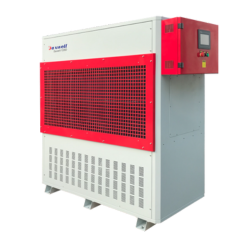 Daxwell
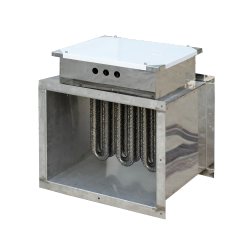 DeAir.Heat
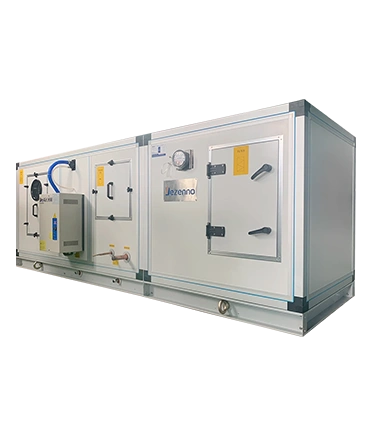 AHU
AHU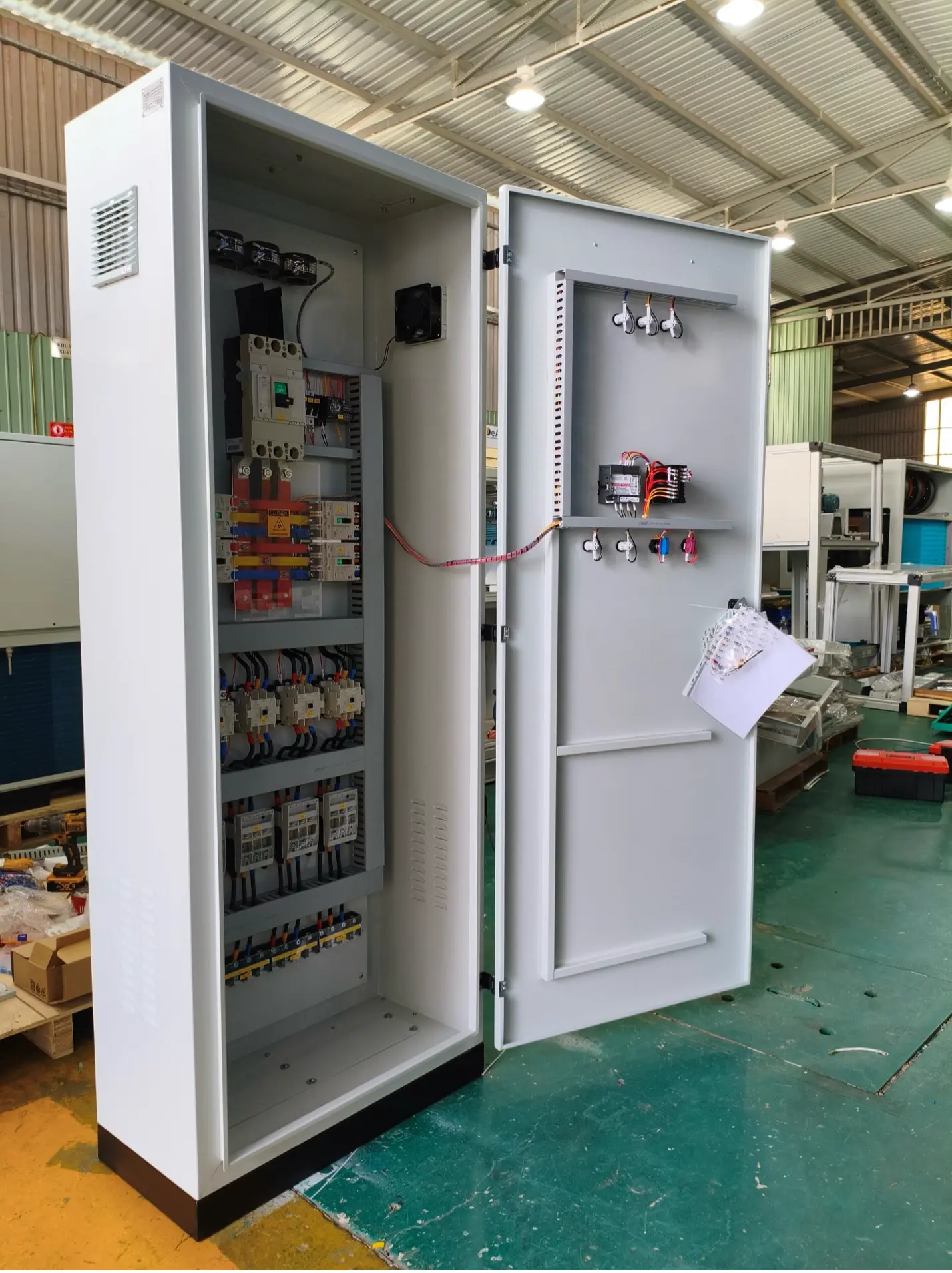








![[Case Study] DeAir Installs DeAir.De Rotor Humidity Control System for Pharmaceutical Plant in Binh Duong](https://deair.com.vn/thumbs/news/2023_04/ban_giao_may_cho_duoc_bd/[270x153-cr]image1-1024x772.jpg__cv.webp "[Case Study] DeAir Installs DeAir.De Rotor Humidity Control System for Pharmaceutical Plant in Binh Duong")
![[Review & Guide] Olmas OS-300: The New Humidity Control "Warrior" for Medium to Large Warehouses](https://deair.com.vn/thumbs/news/huong_dan_su_dung_may_olmas_21/[270x153-cr]vtm06440.png "[Review & Guide] Olmas OS-300: The New Humidity Control \"Warrior\" for Medium to Large Warehouses")