Industrial Cold Storage Dehumidification: Preventing Ice Build-up & Optimizing Energy
13/05/2026
Industrial Cold Storage Dehumidification: Preventing Ice Build-up & Optimizing Energy
Key Takeaways:
The Persistent Challenge: The infiltration of humid air every time cold room doors open causes severe condensation and ice build-up on evaporators, ceilings, and floors.
Severe Consequences: This leads to slippery and unsafe floors, reduced visibility due to fog, crushed packaging cartons, and massive energy consumption for defrost cycles.
The Ultimate Solution: Applying Desiccant Dehumidifiers (Rotor) from DeAir helps control the dew point, effectively extracting moisture even at sub-zero temperatures (-30°C).
In the industrial cold chain supply sector, merely maintaining storage temperature is not enough. Moisture infiltrating the cold room creates significant challenges for operational safety and energy costs. Applying the right dehumidification technology is the "key" to optimizing the efficiency of the entire refrigeration system.
To determine the correct humidity control solution, we first need to classify cold storage based on operating temperature ranges. Here are the 3 main types used in the industry:
Chiller / Cooling Room: Operating between 2°C and 10°C. Typically used for storing vegetables, fruits, dairy products, agricultural goods, and fresh flowers.
Freezer Room: Operating between -18°C and -25°C. Designed for long-term storage of meat, seafood, and frozen foods.
Deep Freezer: Extremely low temperatures ranging from -30°C to -50°C. Applied in quick-freezing seafood, medical industries, and pharmaceuticals.
Regardless of the temperature range, the thermal shock occurring when hot, humid air from the outside rushes in will instantly cause condensation issues.
2. The Necessity of Dehumidifiers in Cold Storage (Operational Pain Points)
Many businesses mistakenly believe that refrigeration systems inherently act as dryers. However, at low temperatures, the cooling system cannot handle the massive volume of moisture entering the room, leading to severe "pain points":
The DeAir team conducting a site survey of severe condensation and fog caused by high humidity at a seafood processing plant.
Preventing Evaporator Ice Build-up: Infiltrating moisture clings to the evaporator coils and forms a thick layer of ice. An ice-covered evaporator loses its heat exchange capacity, forcing the compressor to overwork and causing rapid equipment wear.
Minimizing Defrost Cycles: To melt the ice, the system must frequently stop to perform electrical defrosting. This process not only consumes enormous amounts of electricity but also raises the room's temperature, compromising product quality.
Ensuring Workplace Safety: Humid air hitting cold air suddenly creates a thick fog, obstructing the vision of forklift drivers. Simultaneously, water condensing and freezing on the floor causes a slip hazard, leading to unfortunate workplace accidents.
Protecting Packaging & Product Quality: High humidity softens and crushes cardboard cartons, causing barcodes and labels to peel off. More dangerously, "freezer burn" alters the texture and color of the stored food.
3. Which Dehumidification Technology Truly Works for Cold Rooms?
Here is a common mistake that 80% of users make: Using a refrigerant (compressor) dehumidifier for a cold room. Refrigerant dehumidifiers only operate efficiently at ambient temperatures above 15°C. When placed in a cold room, the condensed water on the machine's cooling coils will immediately freeze, causing the unit to stop working or damaging the compressor.
The Dezenno desiccant dehumidification system is the perfect choice for controlling moisture in sub-zero environments.
DeAir's desiccant dehumidifiers utilize a slowly rotating wheel (rotor) impregnated with premium moisture-absorbing materials (Silica Gel or Zeolite). The machine operates on a physical adsorption principle, offering absolute advantages:
Powerful dehumidification capability, maintaining high efficiency even at sub-zero temperatures (-20°C to -30°C).
Produces absolutely no liquid condensate inside the cold room. Humid air is adsorbed and exhausted directly to the outside environment as water vapor.
Lowers the dew point of the air inside the storage, 100% preventing the formation of frost and ice.
4. Infographic: How a Desiccant Dehumidifier Works
THE 4-STEP MECHANISM OF DEAIR'S DESICCANT ROTOR SYSTEM
Step
Technical Description
Step 1: Moisture Intake
The process fan draws cold, humid air from inside the cold room (or the ante-room) through a filter and into the desiccant rotor.
Step 2: Adsorption
The Silica gel material on the rotor surface (occupying 3/4 of the area) directly traps and absorbs all the water molecules.
Step 3: Dry Air Supply
The air exiting the rotor becomes extremely dry (low dew point) and is blown back to protect the cold room.
Step 4: Reactivation
The rotor turns the saturated portion into the reactivation zone (1/4 of the area). Hot air dries the rotor, purging the vaporized moisture completely out of the facility.
5. Design and Installation: Where to Place the Dehumidifier?
The installation design plays a decisive role in the protection efficiency of the warehouse. Typically, DeAir's engineers do not place the dehumidifier directly inside the deep freezer room to save space and facilitate easy maintenance.
The dehumidifier is strategically placed, utilizing a ducting system to deliver dry air precisely where needed.
The Optimal Solution: Install the unit in the ante-room or outside the cold storage entirely. Use a ducting system to draw humid air from near the cold room doors and blow a stream of ultra-dry air directly into the air lock area. This method creates a "dry air curtain," completely neutralizing moisture infiltration whenever the cold room doors are opened.
6. Frequently Asked Questions (FAQs)
Q1: Will installing a desiccant dehumidifier increase the temperature inside the cold room?
The dry air discharged from a desiccant machine usually has a slightly higher temperature than the inlet air due to the release of latent heat. However, this heat load is minuscule compared to the massive thermal load the refrigeration system would endure trying to cool and freeze the huge volume of moisture infiltrating the room. Overall, the refrigeration system operates with a lighter load and much higher efficiency.
Q2: How does the operating cost of the dehumidifier compare to the evaporator's defrosting costs?
Electrical defrosting on evaporator coils consumes a tremendous amount of energy. By using a desiccant dehumidifier, the frequency of defrost cycles is drastically reduced (often to near zero). The electricity savings from fewer defrosts and increased compressor efficiency are generally much higher than the power required to run the dehumidifier. Consequently, the Return on Investment (ROI) is highly compelling.
Eliminate Cold Room Icing Worries with DeAir Experts
Investing in a DeAir desiccant dehumidification system is not just a safety measure; it's a profitable investment through significant operational energy savings.
Every cold storage facility has a different "Moisture Load". Contact our engineers today for an on-site survey and an in-depth, customized capacity calculation for your plant!


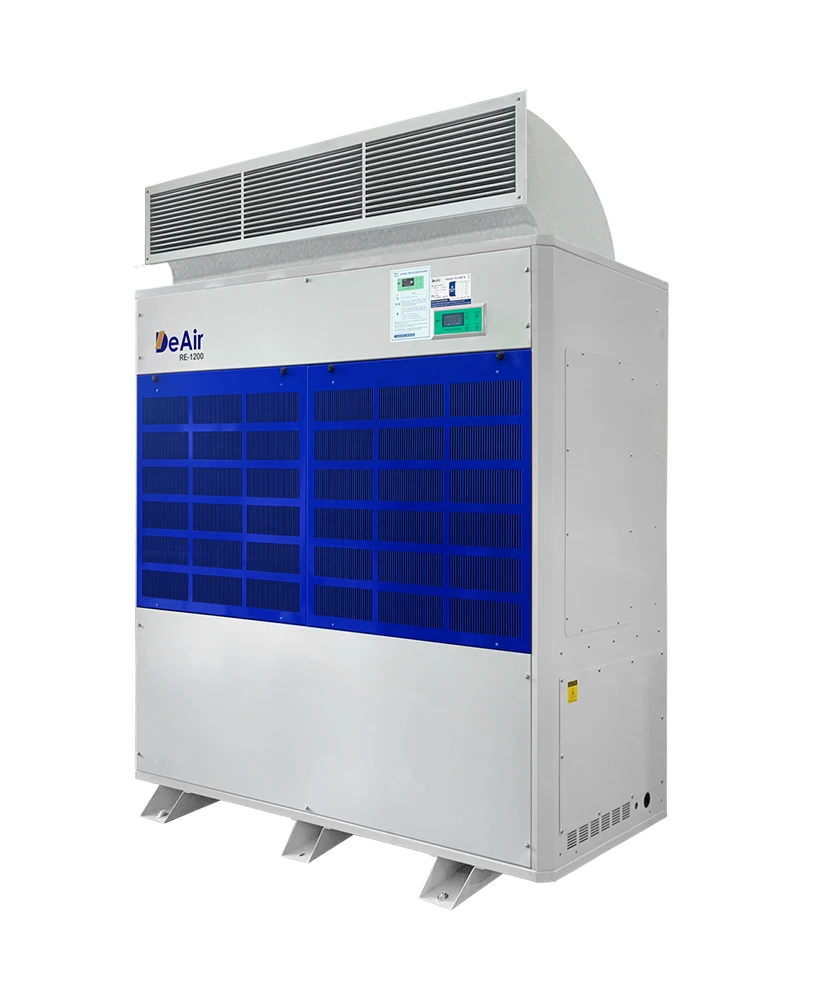 DeAir.RE
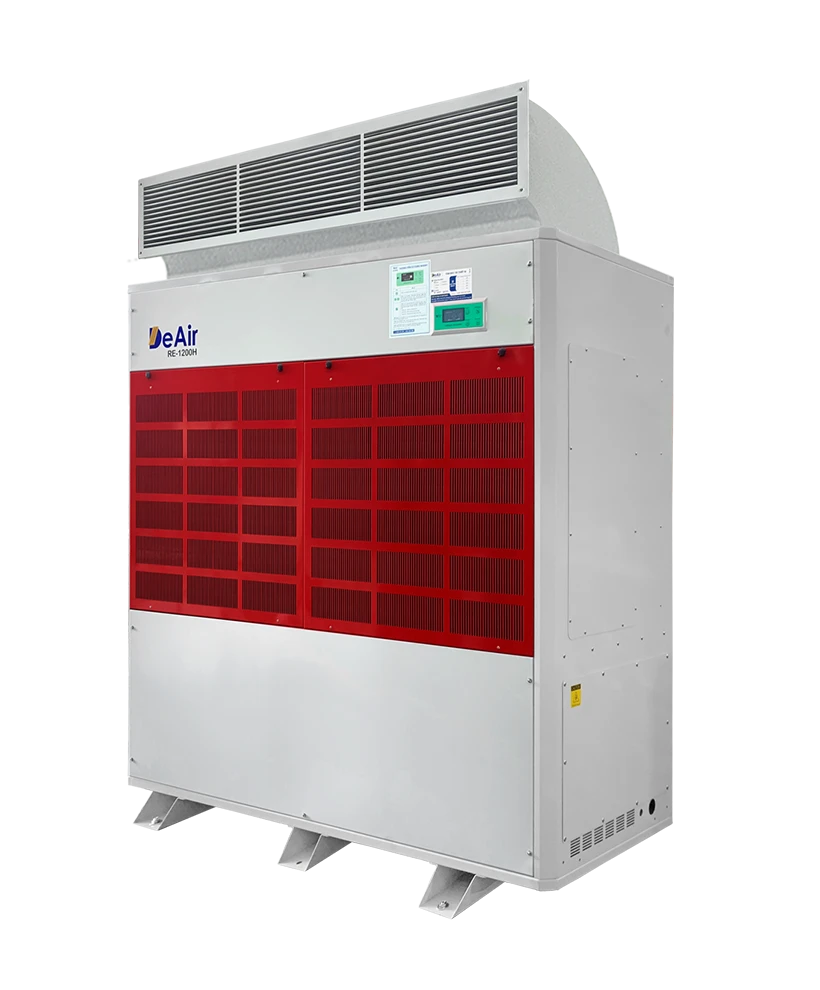 DeAir.RE-H
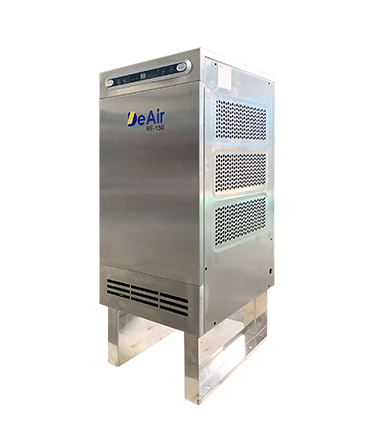 DeAir.RE-INOX
 DeAir.CRE
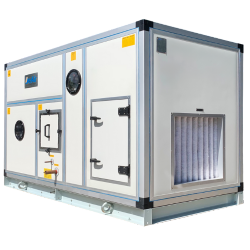 Dezenno
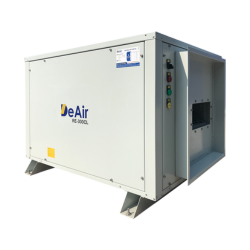 DeAir.RE-CL
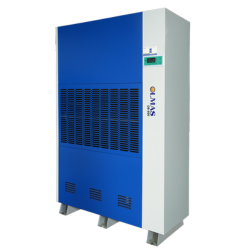 Olmas-OS
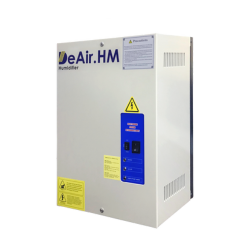 DeAir.HM
 Daxwell
 DeAir.Heat
 AHU
AHU









![[Case Study] DeAir Installs DeAir.De Rotor Humidity Control System for Pharmaceutical Plant in Binh Duong](https://deair.com.vn/thumbs/news/2023_04/ban_giao_may_cho_duoc_bd/[270x153-cr]image1-1024x772.jpg__cv.webp "[Case Study] DeAir Installs DeAir.De Rotor Humidity Control System for Pharmaceutical Plant in Binh Duong")

![[Review & Guide] Olmas OS-300: The New Humidity Control "Warrior" for Medium to Large Warehouses](https://deair.com.vn/thumbs/news/huong_dan_su_dung_may_olmas_21/[270x153-cr]vtm06440.png "[Review & Guide] Olmas OS-300: The New Humidity Control \"Warrior\" for Medium to Large Warehouses")