Humidity Control In Food Factories: Ideal Levels & Dehumidifiers
28/10/2026
Humidity Control In Food Factories: Ideal Humidity Levels And How To Choose A Dehumidifier In the food industry, humidity control in food factories is a key factor that determines product quality, food safety and operational efficiency. In a hot and humid tropical climate like Vietnam, food production and processing plants constantly face the risk of mold, bacteria and raw material loss when humidity is not properly controlled. That is why investing in a dedicated industrial dehumidifier has become the preferred solution for many manufacturers.
1. Why Is Humidity Control Essential In Food Processing?
Excessive air humidity causes a series of problems across the food production line:
Degraded food quality: Confectionery, flour, grains and agricultural products easily clump and grow mold, reducing their commercial value.
Higher risk of bacterial contamination and toxic mold: A humid environment encourages microorganisms to thrive, directly affecting food safety and hygiene.
Damage to equipment and production lines: Electronic components, motors and conveyors are prone to rust, shortening their service life and raising maintenance costs.
Damaged packaging and labels: Condensation causes labels to peel off and packaging to lose its appearance, weakening brand value.
⚠️ WARNING: CONDENSATION IN FOOD FACTORIES
Condensation on ceilings, walls and pipes is a source of microbial contamination that is hard to control and often overlooked. Learn more about the anti-condensation solution for food processing plants to tackle the problem at its root.
High humidity in production and processing areas makes food highly susceptible to mold
2. Factory Areas That Require Strict Humidity Control
Humidity control should not be applied as a one-size-fits-all measure. It needs to be tailored to each area, because every stage of production has its own ideal humidity range:
📊 IDEAL HUMIDITY LEVELS BY FOOD FACTORY AREA
Area
Ideal Humidity (%RH)
Impact If Uncontrolled
Raw material warehouse
50 – 60%
Mold growth, clumping of raw materials
Processing room
40 – 55%
Higher contamination risk, product deterioration
Finished goods warehouse
45 – 55%
Damaged packaging, poor storage conditions
Packaging area
40 – 50%
Labels fail to stick and peel off easily
3. The Optimal Solution: Installing Industrial Dehumidifiers
To keep humidity stable 24/7 and suited to each production area, using a dehumidifier for the food industry is a strategic choice. The industrial dehumidifiers supplied by DeAir offer outstanding advantages:
Powerful and stable operation in demanding production environments.
Easy-maintenance design and high durability, built for continuous operation.
Smart control: optional humidity sensors and automatic run scheduling.
BMS integration for centralized control across the entire factory.
Heat-Pump compressor technology for energy savings.
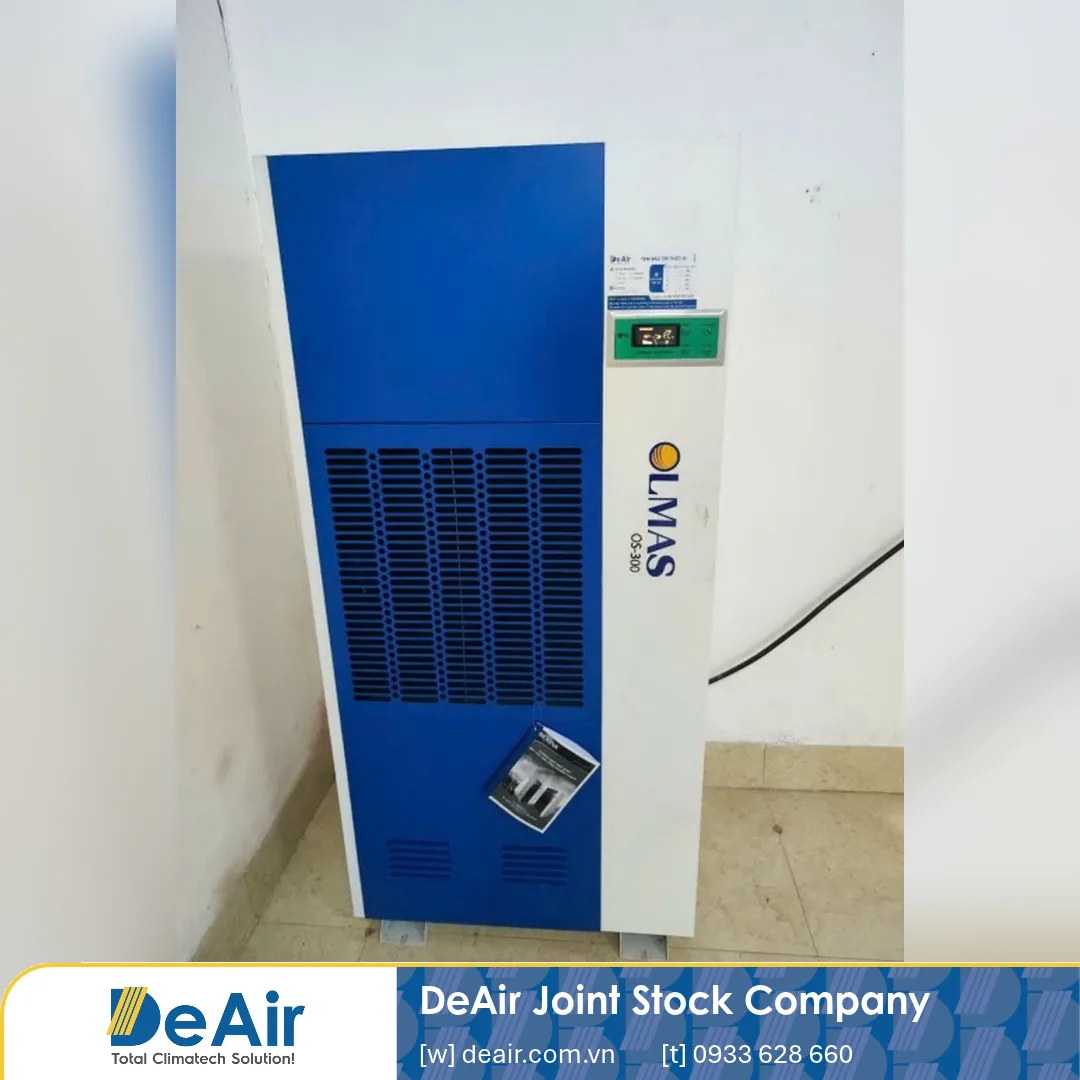
Olmas industrial dehumidifier – an optimal humidity control solution for food processing
4. Choosing The Right Capacity And Model For The Food Industry
Choosing the right capacity ensures efficient operation and saves on both investment and running costs. Below are two models commonly selected for food factories:
4.1. Olmas OS-150 Dehumidifier – For Small To Medium Warehouses And Packaging Rooms
Capacity: 150 liters/day.
Smart control system with digital touch panel and LED display.
Full-tank indicator with automatic shut-off, on/off timer, adjustable target humidity, and operating history memory.
3 automatic programs: dehumidifying, continuous drying, and maintaining the required humidity level.
Low noise, energy saving, automatic defrost, overload protection.
24-month on-site warranty.
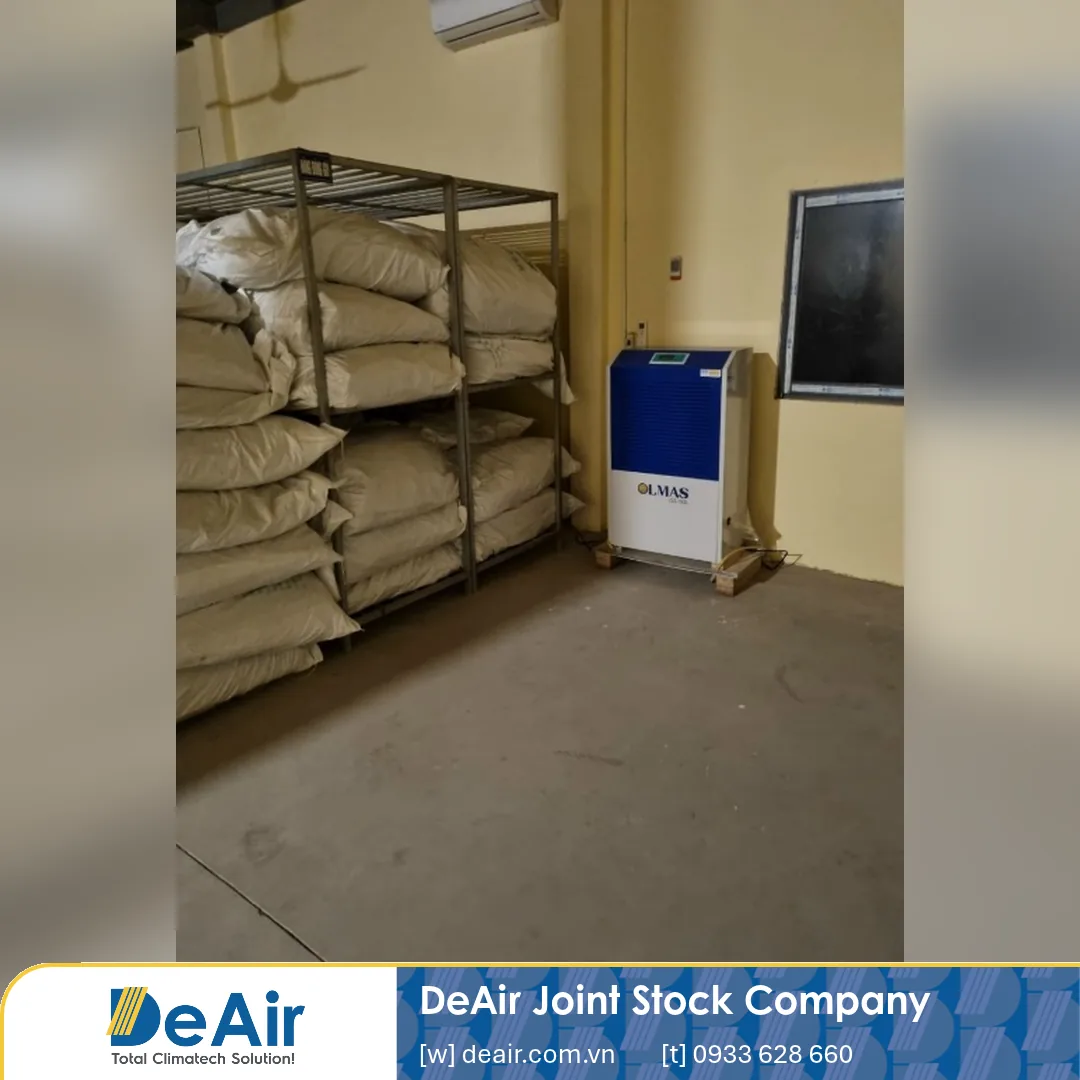
The Olmas OS-150 dehumidifier controls humidity in small to medium raw material warehouses
4.2. Olmas OS-500 Dehumidifier – For Large Factories And Raw Material Warehouses
Capacity: 500 liters/day.
Smart control system with digital touch panel and LED display.
Timer, adjustable target humidity, and operating history memory.
3 automatic programs: dehumidifying, continuous drying, and maintaining the required humidity level.
Noise level below 58dB, energy saving, automatic defrost, overload protection.
24-month on-site warranty.
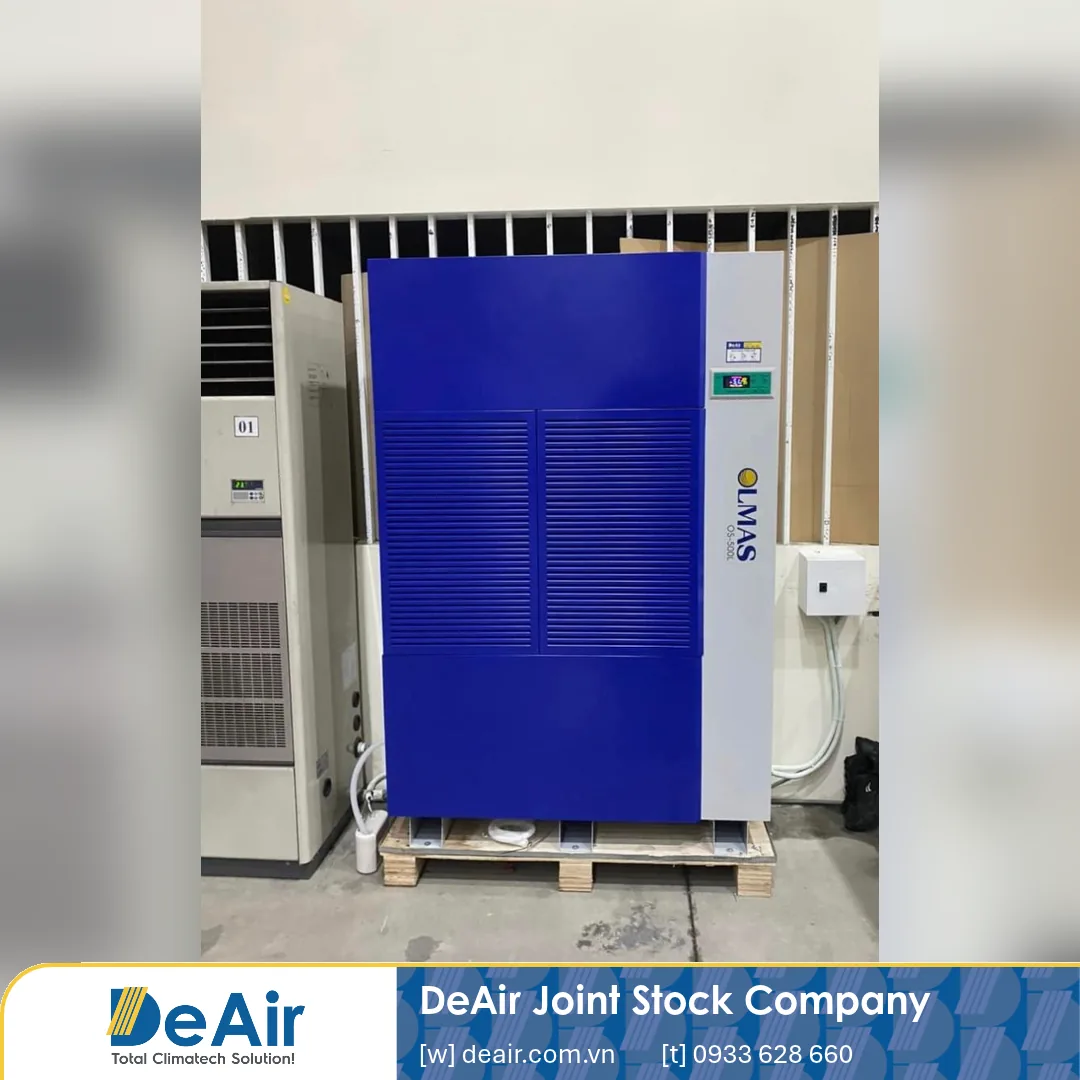
The Olmas OS-500 dehumidifier is ideal for large-scale factories and raw material warehouses
📊 QUICK COMPARISON: OLMAS OS-150 VS OLMAS OS-500
Criteria
Olmas OS-150
Olmas OS-500
Dehumidifying capacity
150 liters/day
500 liters/day
Suitable areas
Small to medium warehouses, packaging rooms
Large factories, large raw material warehouses
Automatic modes
Dehumidifying, drying, humidity maintenance
Dehumidifying, drying, humidity maintenance
Warranty
24 months on-site
24 months on-site
💡 Expert Advice
For factories with multiple areas requiring different temperature and humidity conditions, dehumidifiers should be designed together with the air handling system. See the AHU system installation project for a food factory that DeAir has completed and handed over.
5. Benefits Of Investing In Humidity Control In Food Factories
Consistent product quality that strengthens brand reputation.
Less product loss and spoilage, saving costs.
Longer service life for machinery, equipment and production lines.
Higher production efficiency, supporting ISO, HACCP and GMP compliance.
✅ CONCLUSION: Humidity control in food factories not only protects raw materials, finished products and equipment, but also lays the foundation for meeting ISO, HACCP and GMP standards. Choosing the right industrial dehumidifier is an investment in your company's sustainable growth.
6. Frequently Asked Questions (FAQ)
Q1: What is the ideal humidity level in a food processing factory?
It depends on the area: 50 – 60% for raw material warehouses, 40 – 55% for processing rooms, 45 – 55% for finished goods warehouses, and 40 – 50% for packaging areas.
Q2: Should I choose the Olmas OS-150 or OS-500 for a food factory?
The OS-150 (150 liters/day) suits small to medium warehouses and packaging rooms. The OS-500 (500 liters/day) is designed for large factories and large raw material warehouses. DeAir engineers will survey your site to calculate the exact capacity required.
Q3: Can industrial dehumidifiers be connected to a BMS?
Yes. The industrial dehumidifiers supplied by DeAir can be integrated with a BMS for centralized control, and also support humidity sensors and automatic run scheduling.
Free Consultation On Complete Dehumidification Solutions For Food Factories
DeAir supplies genuine industrial dehumidifiers for factories, cold storage facilities and food production plants. Our engineers are ready to survey your site and design a solution that optimizes both space and cost for your business.


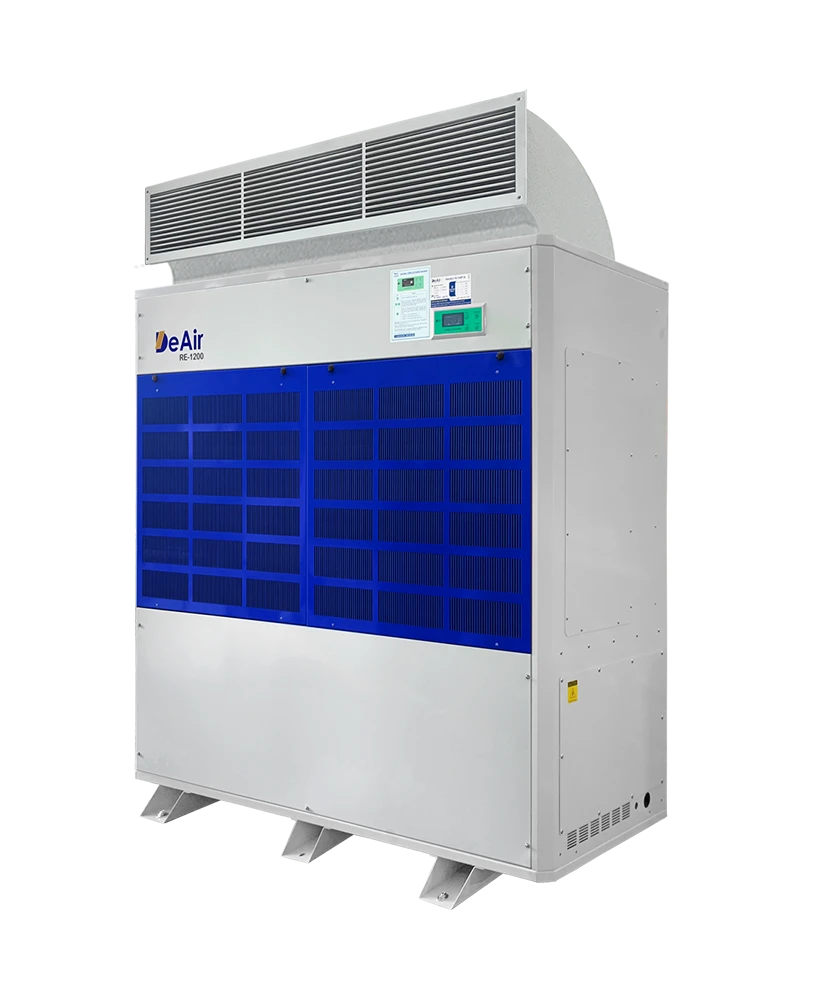 DeAir.RE
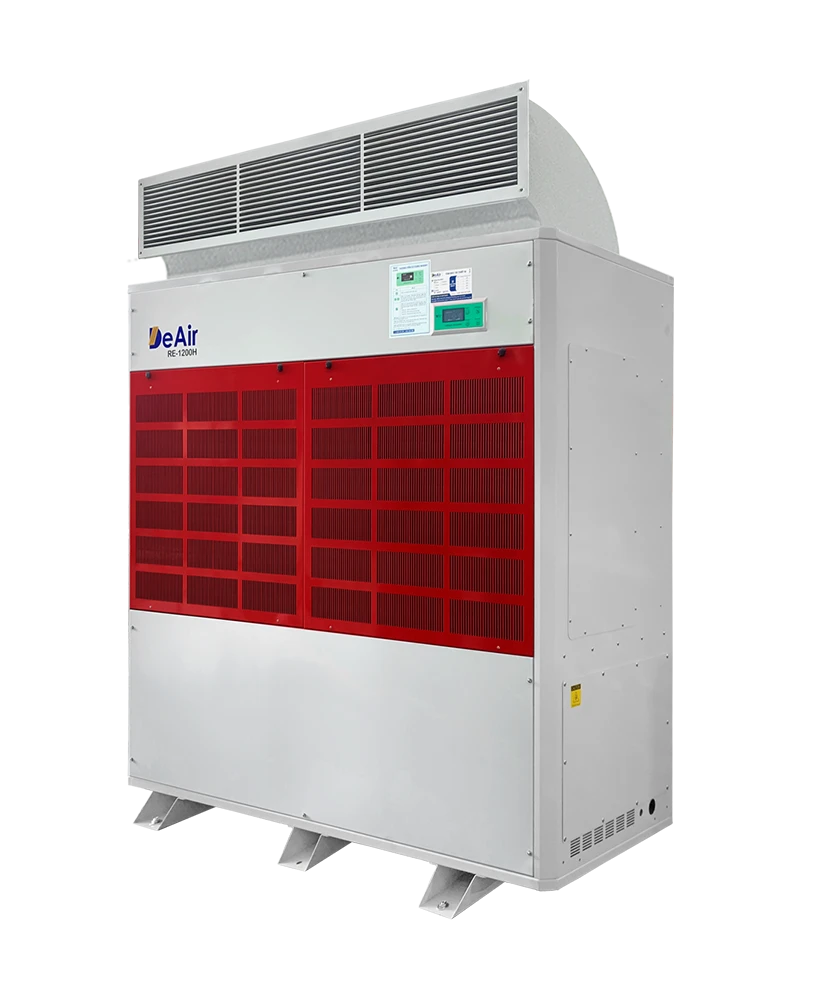 DeAir.RE-H
 DeAir.RE-INOX
 DeAir.CRE
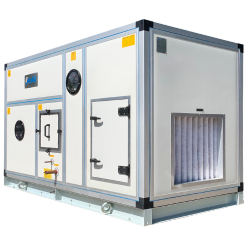 Dezenno
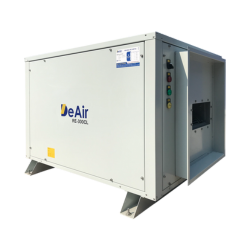 DeAir.RE-CL
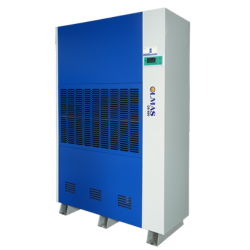 Olmas-OS
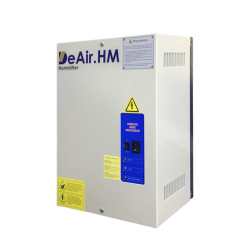 DeAir.HM
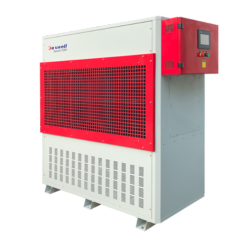 Daxwell
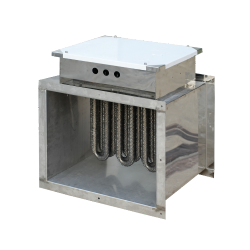 DeAir.Heat
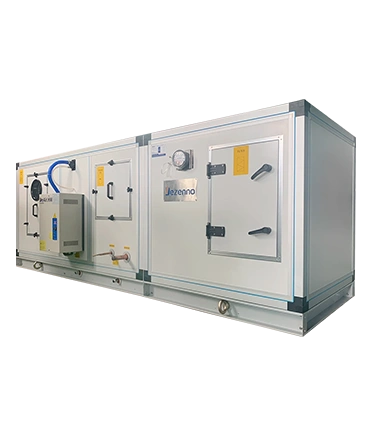 AHU