The "Invisible Enemy" in Food Processing Plants & The Ultimate Anti-Condensation Solution
04/12/2025
The "Invisible Enemy" in Food Processing Plants & The Ultimate Anti-Condensation Solution
Vietnam is asserting its position as a powerhouse in seafood and fruit exports on the world map. However, behind the billion-dollar orders, many factories are facing the risk of returned goods or failing strict hygiene standards due to a seemingly simple but incredibly difficult cause: Condensation. The phenomenon of ceilings and walls "sweating," with water dripping onto the production line, causes not only food hygiene issues but also potential risks to labor safety and equipment longevity.
1. Condensation: A Double Threat to the Seafood and Fruit Industry
In food processing plants, especially for seafood and vegetables, the production environment must often be maintained at low temperatures (from 10°C to 15°C, or even lower) to ensure the freshness of raw materials. Conversely, Vietnam's climate is tropical monsoon, hot and humid, with air humidity frequently exceeding 80%.
This temperature difference creates a physical "battle." When hot, humid air from outside intrudes (through doors, gaps) or moisture arises from washing and blanching processes and contacts cold surfaces like panel ceilings, air ducts, walls, or floors, condensation occurs instantly.
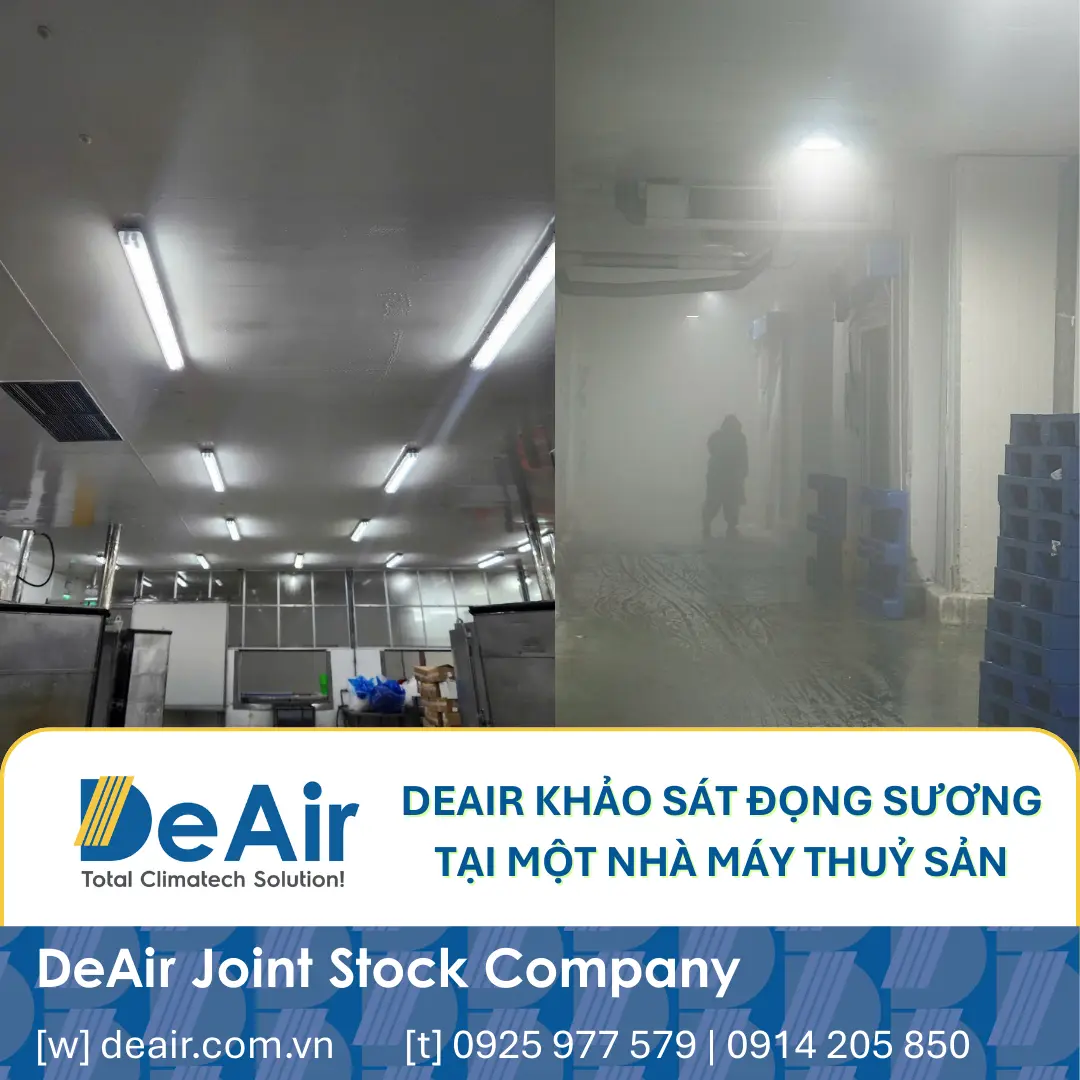
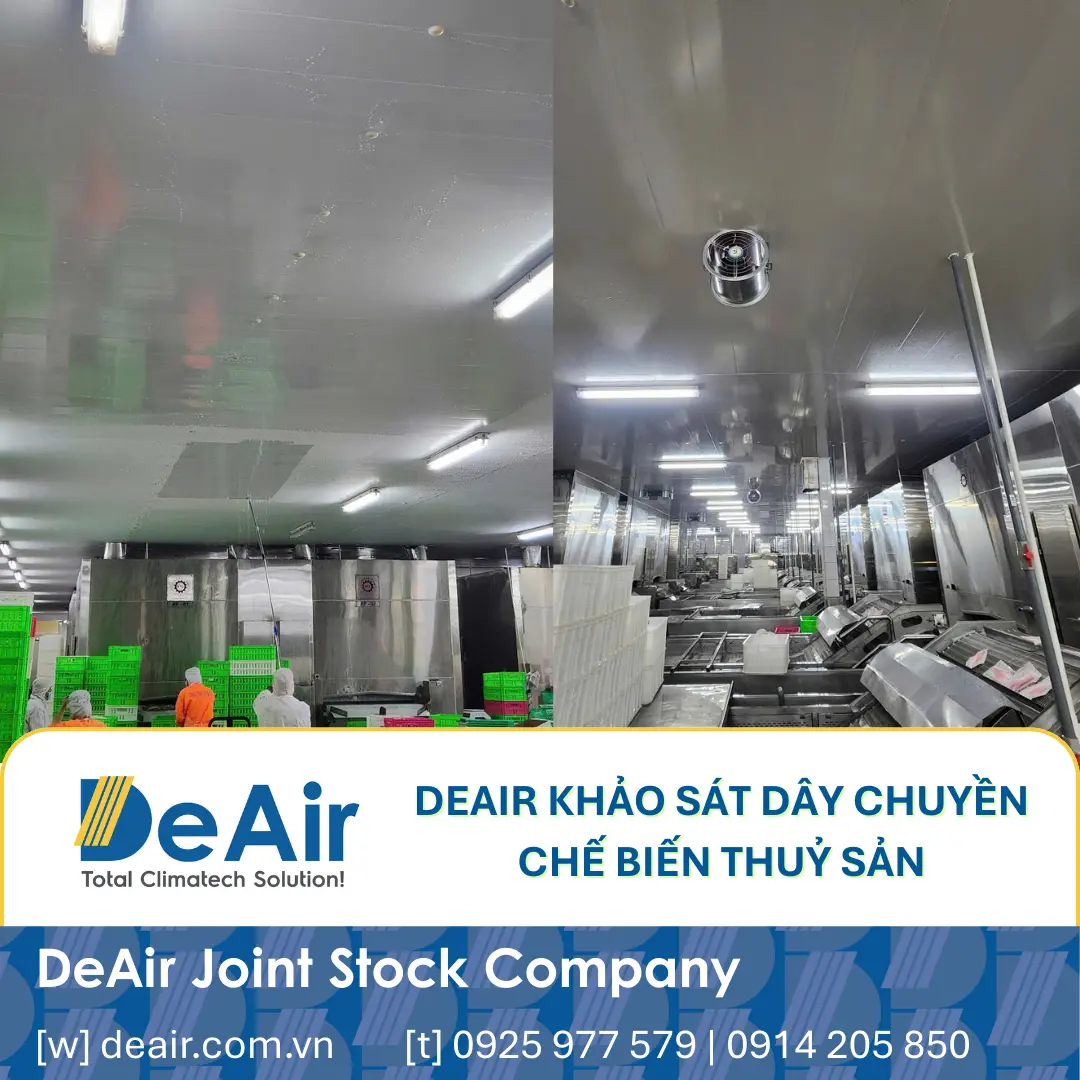
Condensation and dripping water from the ceiling are a nightmare in many food processing plants, causing cross-contamination risks.
The consequences of condensation are far more serious than its "wet" appearance:
Microbiological Risk: Stagnant water is an ideal environment for mold and dangerous bacteria like Listeria monocytogenes or Salmonella to grow. If these contaminated drops fall onto the shrimp, fish, or vegetables being processed below, that batch will certainly suffer cross-contamination, leading to the risk of return or destruction in strict markets like the EU, USA, and Japan.
Infrastructure Damage: High humidity and condensation cause rapid rusting of steel structures and machinery, damage electrical systems, and soften/collapse cardboard boxes in storage.
Safety Hazards: Wet, slippery floors increase the risk of accidents for workers and reduce labor productivity.
2. Why Do Conventional Solutions Often Fail?
Many factories have tried applying remedial measures but have not achieved the desired effect, or have even made the situation worse.
A common mistake is using exhaust fans in hopes of drying the floor. However, this inadvertently draws in large volumes of hot, humid air from the outside environment into the cold area, causing even more condensation.
Ventilation solutions or increasing AC capacity often do not thoroughly solve humidity issues in cold processing environments.
Increasing the capacity of the air conditioning (AC) system is also often considered. However, ACs are designed primarily to reduce temperature (handling sensible load); their ability to dehumidify (latent load) is very limited. According to thermodynamic principles, when air temperature decreases but the amount of water vapor remains constant, the relative humidity (%RH) increases, making the air reach saturation point and condense water even faster.
3. The Technological Key: Controlling "Dew Point"
To thoroughly solve the condensation problem, technical experts from DeAir state that the key lies not in temperature, but in controlling the "Dew Point".
Dew point is the temperature at which water vapor in the air begins to condense into liquid. To prevent condensation, the air handling system must ensure the dew point of the air in the room is always lower than the surface temperature of the coldest object (ceiling, wall, product).
The only and most effective way to achieve this is to use a specialized Industrial Dehumidifier System to proactively remove water vapor from the air, lowering the dew point to a safe level.
4. Equipment Selection: Condensing or Desiccant Rotor?
Depending on the temperature conditions of each area in the factory, businesses need to choose the appropriate dehumidification technology to optimize costs and efficiency:
1. Desiccant Rotor Dehumidifier (Dezenno Series)
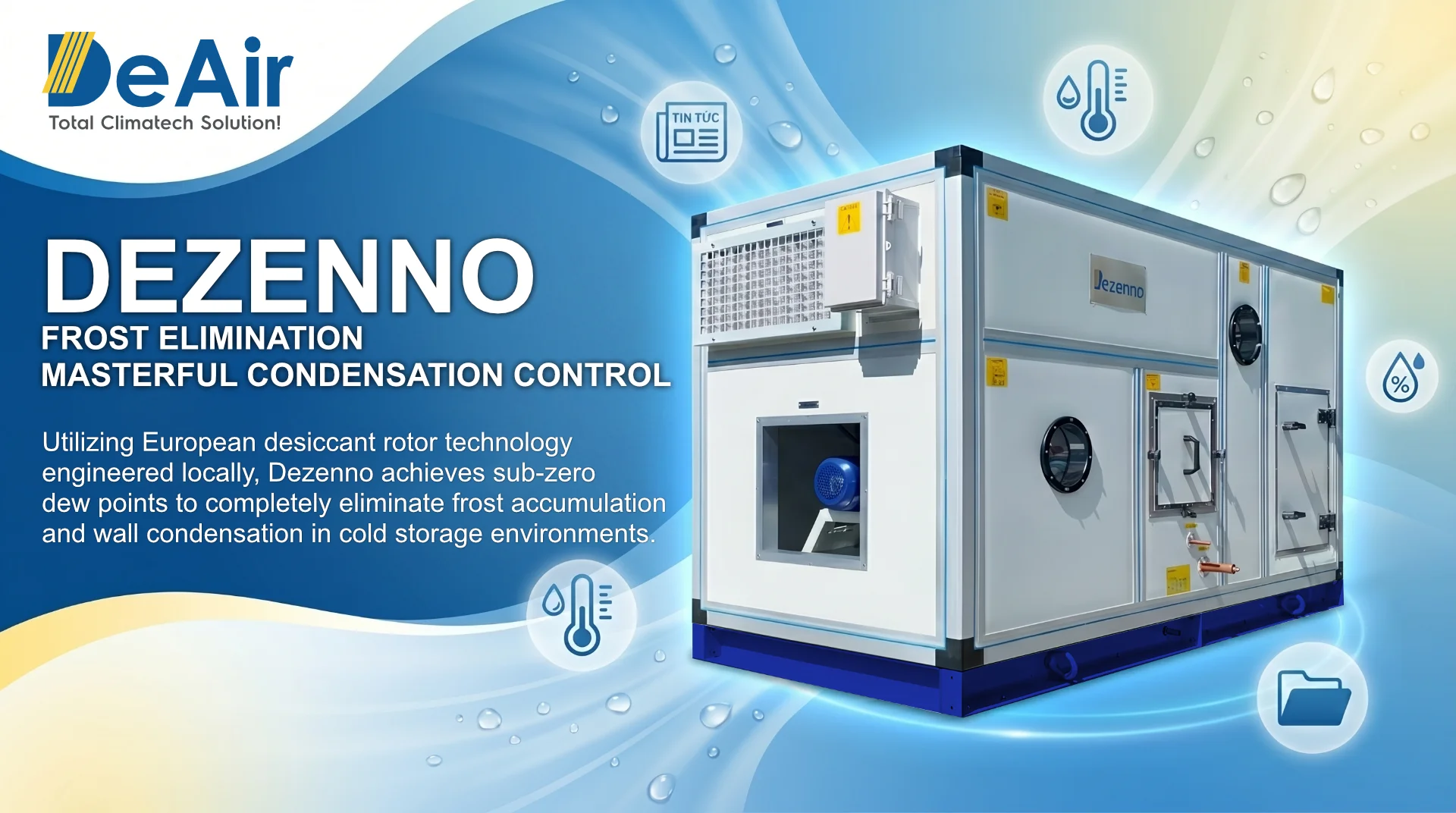
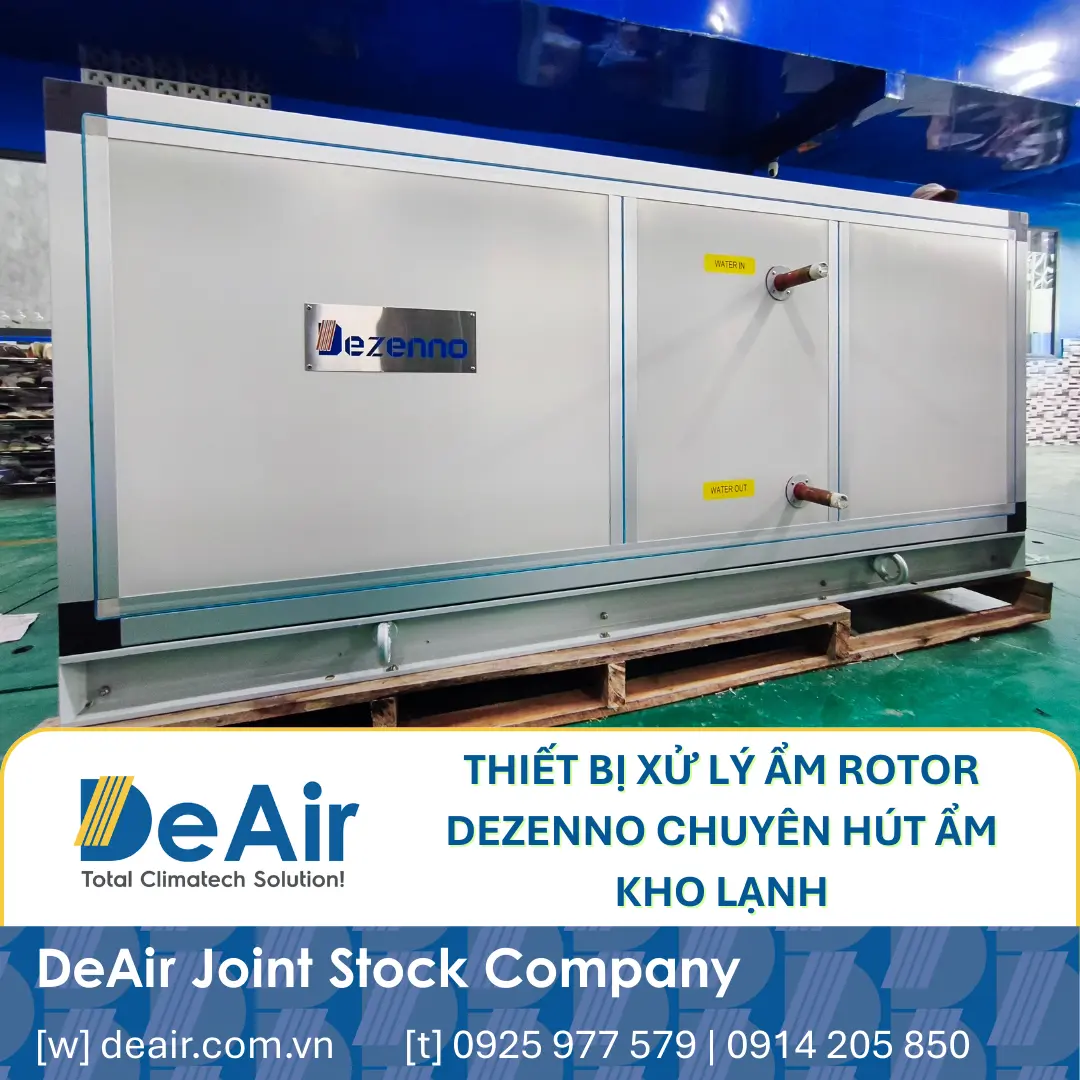
This is a mandatory solution for areas with low temperatures (below 10°C) such as deep processing rooms, freezing rooms, cold storage, or anterooms. Rotor dehumidifiers use a honeycomb wheel containing desiccant (Silica gel) to absorb water vapor directly without relying on ambient temperature. DeAir's Dezenno series can operate stably even at sub-zero temperatures, controlling the dew point to very low levels (-10°C to -40°C), ensuring condensation or icing never occurs.
The Dezenno Rotor Dehumidifier is the main "weapon" for handling humidity in low-temperature environments where condensing units cannot operate.
2. Condensing Dehumidifier (DeAir.RE Series)
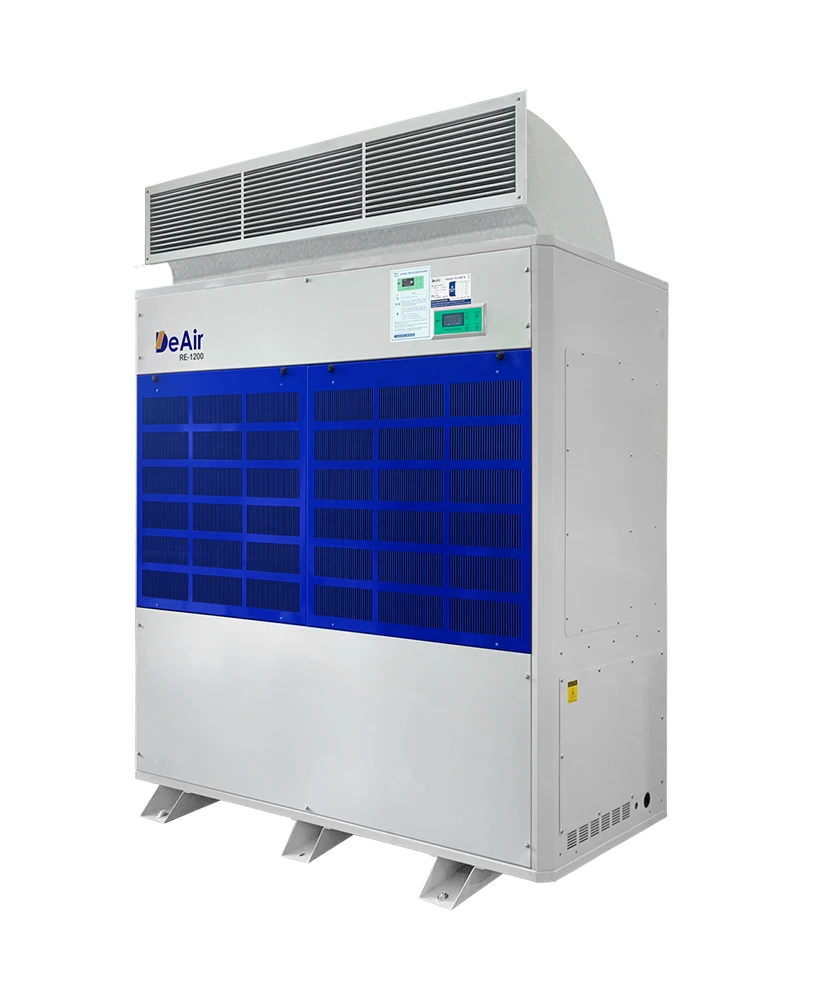
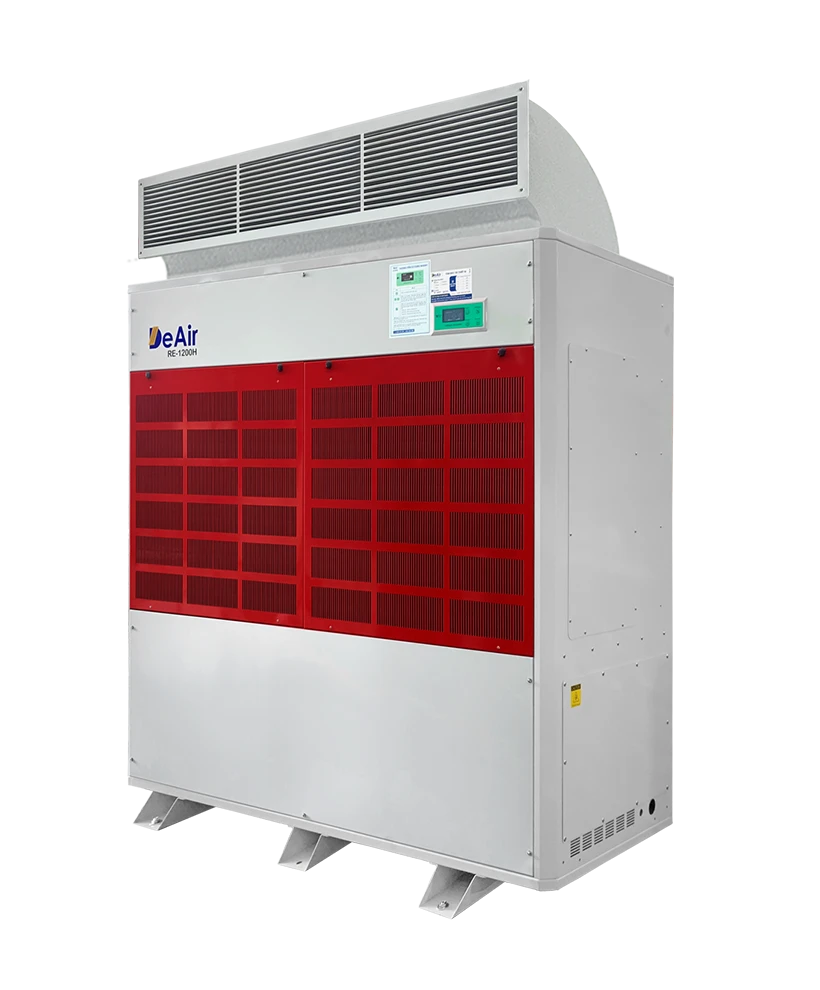
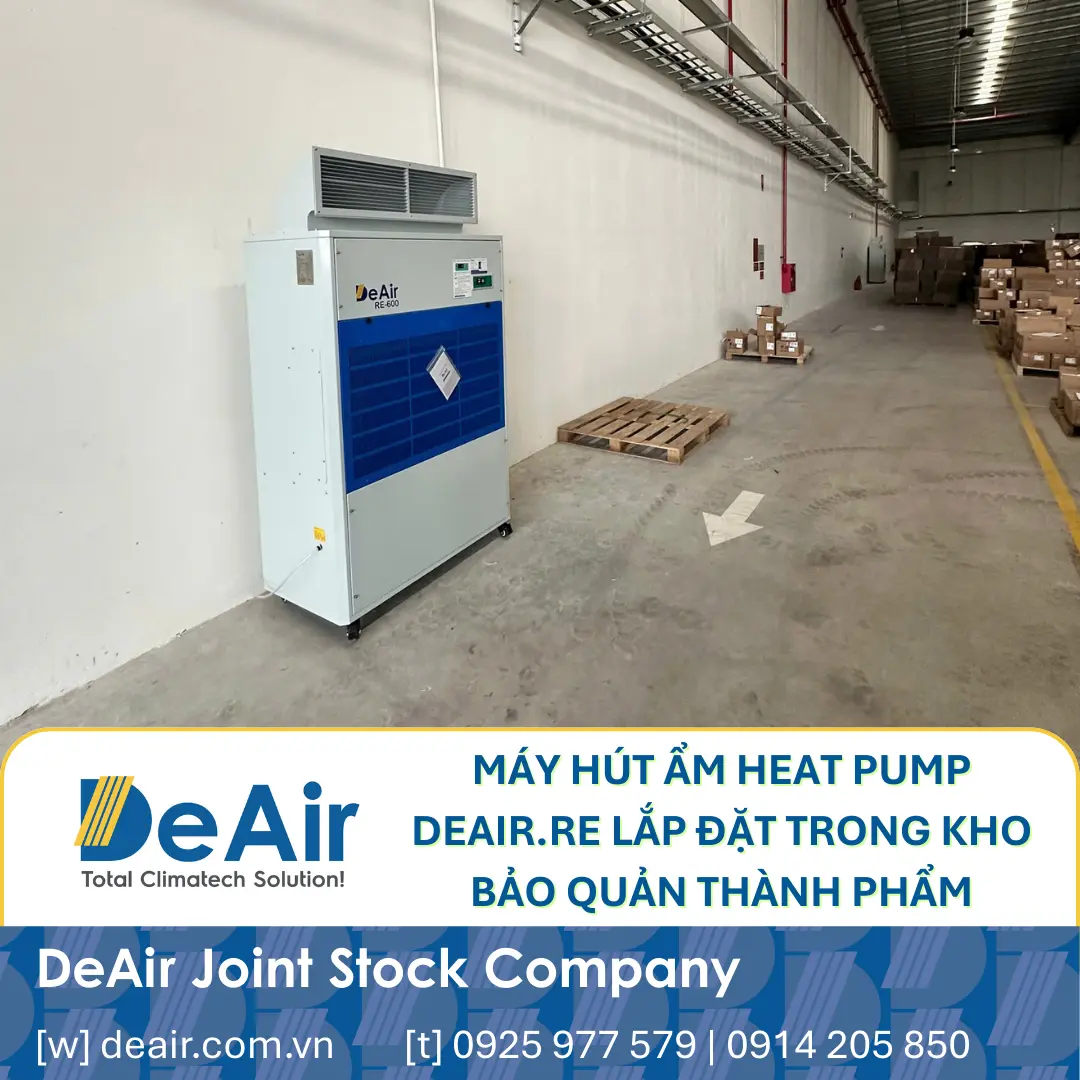
Suitable for areas with medium temperatures (from 15°C to 35°C) such as finished product storage warehouses, packaging areas, and dry ingredient warehouses. The DeAir.RE series uses advanced Heat-Pump technology, helping to dehumidify effectively with lower investment and operating costs compared to the Rotor series. Keeping the finished product warehouse dry (humidity < 60%) is key to protecting cardboard packaging from softening and preventing mold growth on products.
In finished product warehouses, DeAir.RE dehumidifiers keep packaging dry, sturdy, and prevent mold.
5. DeAir - The Humidity Control Partner for Clean Food Supply Chains
As a pioneer in the field of heat and humidity treatment in Vietnam, DeAir not only provides equipment but also brings a "tailor-made" overall solution for each factory. DeAir's working process starts with a site survey, measuring temperature and humidity parameters, and calculating the moisture load generated from washing/blanching processes or from personnel, to design the most precise humidity treatment system.
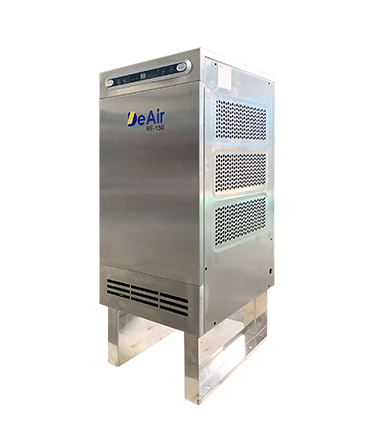
DeAir's equipment, such as the Rotor Dezenno or Heat-Pump DeAir.RE series, is manufactured to high industrial standards, using corrosion-resistant materials (like Stainless Steel 304), suitable for the harsh environments of seafood and fruit factories.
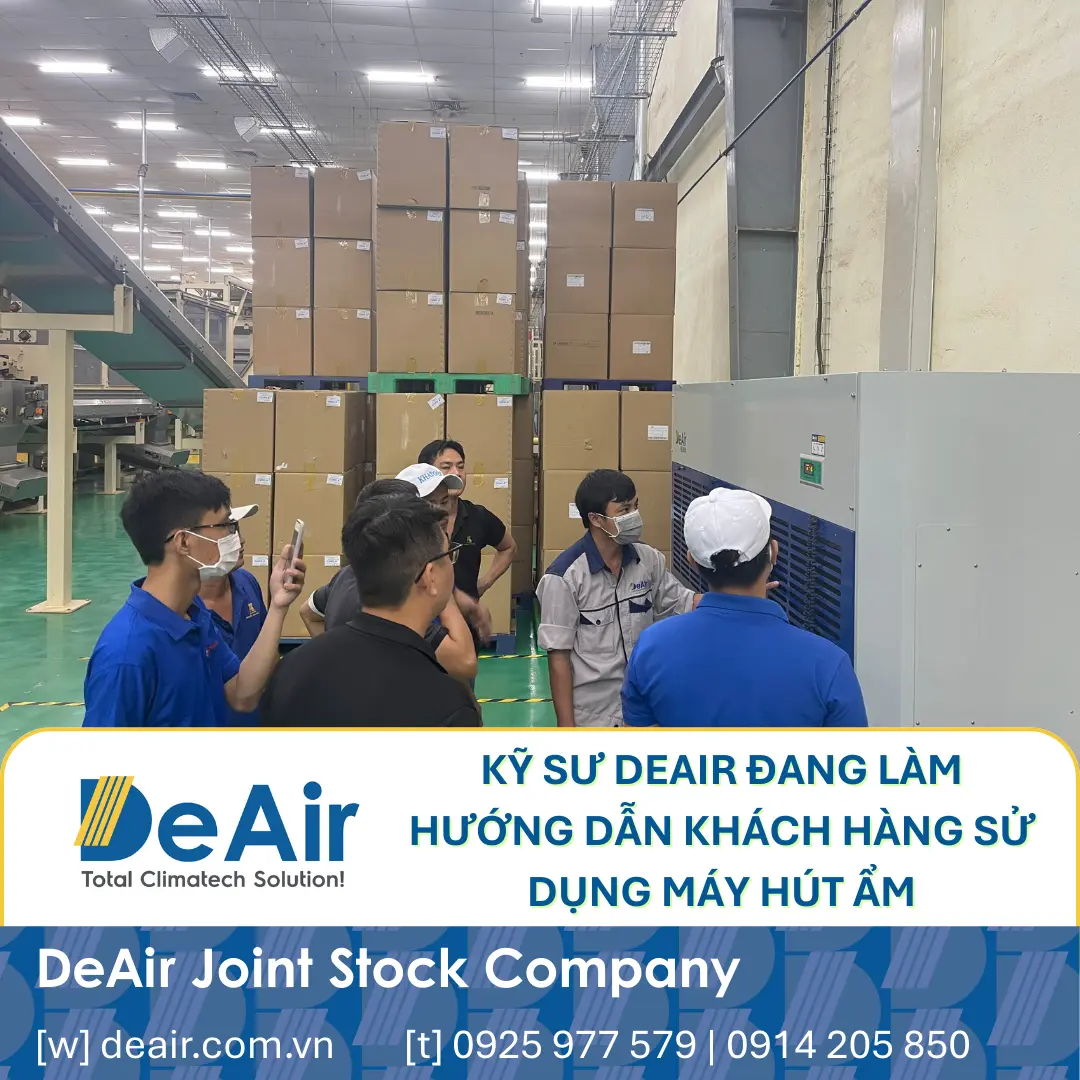
The DeAir technical team always accompanies businesses from survey and installation to periodic maintenance.
Investing in a humidity control system should not be seen as a cost, but as a smart investment to protect the brand. A dry, standard production environment not only helps businesses overcome technical barriers when exporting but also enhances product quality reputation in the eyes of international partners.


 DeAir.RE
 DeAir.RE-H
 DeAir.RE-INOX
 DeAir.CRE
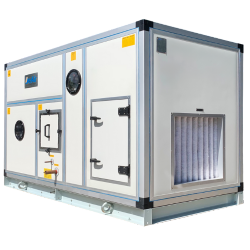 Dezenno
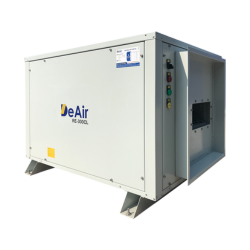 DeAir.RE-CL
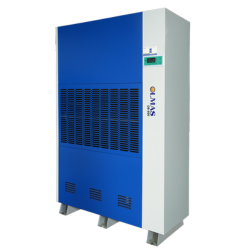 Olmas-OS
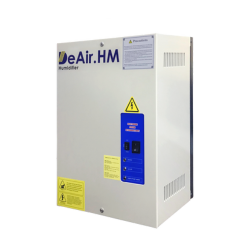 DeAir.HM
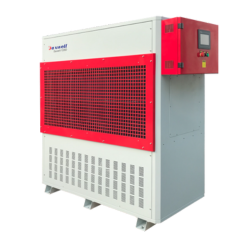 Daxwell
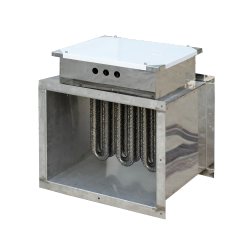 DeAir.Heat
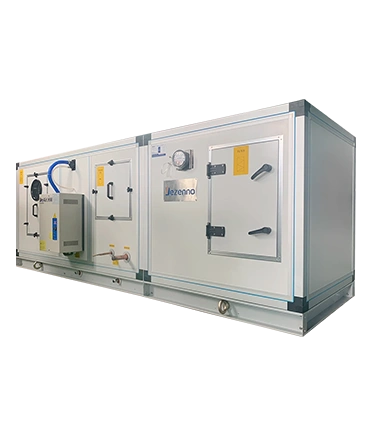 AHU
AHU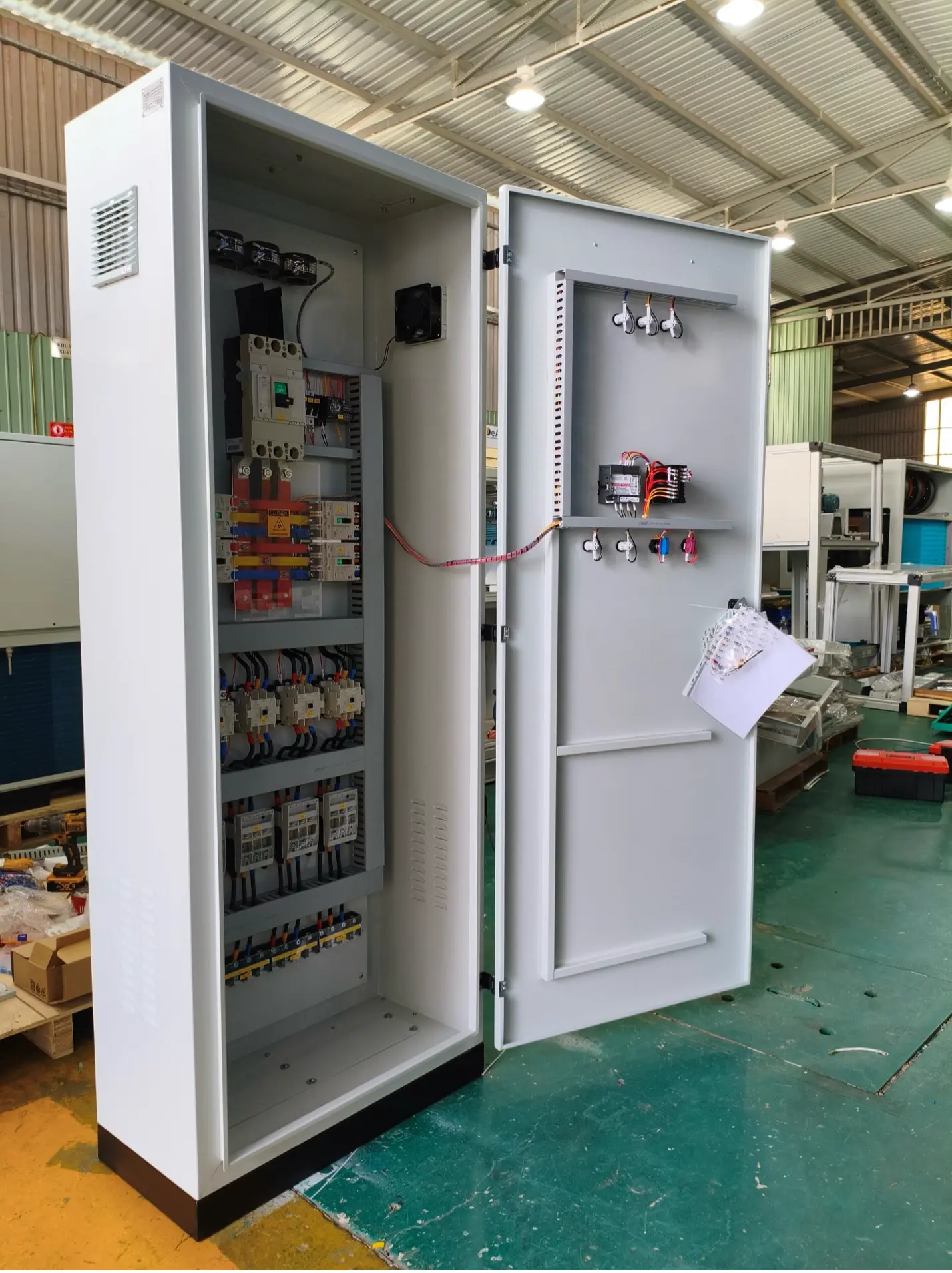





![[Case Study] DeAir Installs DeAir.De Rotor Humidity Control System for Pharmaceutical Plant in Binh Duong](https://deair.com.vn/thumbs/news/2023_04/ban_giao_may_cho_duoc_bd/[270x153-cr]image1-1024x772.jpg__cv.webp "[Case Study] DeAir Installs DeAir.De Rotor Humidity Control System for Pharmaceutical Plant in Binh Duong")

![[Review & Guide] Olmas OS-300: The New Humidity Control "Warrior" for Medium to Large Warehouses](https://deair.com.vn/thumbs/news/huong_dan_su_dung_may_olmas_21/[270x153-cr]vtm06440.png "[Review & Guide] Olmas OS-300: The New Humidity Control \"Warrior\" for Medium to Large Warehouses")