Humidity Control for Gelatin Capsule Filling Rooms: The Key to Preventing Deformation and Sticking
23/05/2026
Humidity Control for Gelatin Capsule Filling Rooms: The Key to Preventing Deformation and Sticking
Key Takeaways:
Physical Nature of Gelatin: Capsule shells are extremely sensitive to air humidity. Humidity above 40% makes the shell soft and sticky; whereas humidity below 30% causes it to shrink, become brittle, and crack.
The "Goldilocks Zone": The encapsulation / capsule filling room must maintain a strict golden humidity threshold of 35% - 40%.
HVAC Limitations: Standard air conditioning cannot lower humidity to 35% at 20°C without freezing the cooling coils. Intervention with desiccant rotor technology is mandatory.
In the pharmaceutical industry, hard capsules (containing powder/granules) and soft capsules (Softgels - containing liquids like fish oil or vitamins) are the most popular dosage forms due to their convenience. The core component of this protective shell is Gelatin (extracted from collagen). However, gelatin is naturally highly "hygroscopic" (water-attracting). Controlling the environment in the capsule filling room is considered by engineers to be the most rigorous balancing act—because "too dry destroys it, and too humid ruins it."
1. Decoding the Pain: Why is Gelatin "Mushy when Humid, Brittle when Dry"?
The gelatin shell protects the active ingredients but is extremely sensitive to fluctuations in air humidity.
Unlike effervescent tablets which only fear high humidity, Gelatin capsule shells require absolute balance to maintain their physical-mechanical properties (elasticity and compressive strength):
When Humidity > 40% (Too Humid): Gelatin rapidly absorbs water from the air. The shell becomes mushy and sticky. Consequently, capsules stick together in the hopper, jam the rotary press molds, or stick to the aluminum foil during blister packaging, distorting the standard capsule shape of the medication.
When Humidity < 30% (Too Dry): Water within the gelatin structure evaporates back into the environment, causing the shell membrane to shrink and completely lose its elastic toughness. The capsules become brittle and are highly prone to cracking during blister pressing or transportation vibration. This causes active ingredient leakage—a particularly severe disaster for softgels containing liquid fish oil or vitamins.
2. Specialized Humidity Standards for Gelatin Lines
According to Pharmacopeia recommendations and GMP experts, capsule production lines must strictly adhere to the following parameter ranges:
Production Area
Temperature (T)
Relative Humidity (RH)
Gelatin Preparation / Melting Room
20°C - 22°C
40% - 45%
Capsule Filling / Encapsulation Room
20°C - 22°C
35% - 40% (Goldilocks Zone)
Softgel Drying Tunnel
18°C - 20°C
20% - 25%
3. Why are standard HVAC systems powerless?
To maintain 35% humidity in a 20°C environment, the dew point temperature must be dropped significantly low. If a chiller/VRV system is used to force condensation, the cooling coil surface will freeze solid, halting operation. If this is mitigated by using electrical resistance to heat the air and reduce relative humidity, the heat will melt the gelatin shells. The intervention of specialized desiccant rotor technology is absolutely mandatory!
4. 2 DeAir Solutions: Meeting all infrastructure and budget needs
Understanding that every pharmaceutical plant has different infrastructure conditions and budgets (between retrofitting old workshops and building new plants), DeAir engineers provide 2 customizable options:
Option 1: Stand-alone Rotor Dehumidifier
A separate unit that operates by circulating air on-site, drawing room air through a Silica Gel rotor wheel for deep moisture extraction, and blowing 35% dry air back into the production room.
✅ Pros:
Low Investment Cost: Ideal for small encapsulation rooms or limited retrofitting budgets.
Simple Maintenance: Easy to dismantle, clean filters, and service.
❌ Cons:
Uneven humidity distribution compared to a central system (especially in large or partitioned rooms).
Lacks fresh air supply and deep filtration integration.
Compact standalone rotor units, easily installed directly in the production room.
Option 2: Centralized AHU with Integrated Rotor
An "All-in-one" central air handling system integrating Cooling + HEPA Filtration + Deep Desiccant Rotor, distributing conditioned air via insulated ductwork.
✅ Pros:
Absolute PID Control: Steadfastly maintains standard 35% humidity in every corner of the space.
GMP Cleanroom Standards: Integrated HEPA (H13/H14) filters provide sterile fresh air meeting Class C/D standards.
Space Saving: The unit is placed on the roof or in a mechanical room, completely freeing up space in the capsule filling room.
❌ Cons:
Higher initial investment cost.
Requires synchronized ductwork design and installation with the plant's infrastructure.
Premium Dezenno.MAX AHU combinations, 100% manufactured in Vietnam.
Real-world video of the specialized Dezenno Rotor Dehumidifier system for pharmaceutical plants:
5. Frequently Asked Questions (FAQ)
Q1: If the factory uses vegetarian capsules (HPMC) instead of Gelatin, do the humidity standards differ?
Answer: Yes. Vegetarian capsules (HPMC) have a slightly broader humidity tolerance than Gelatin due to their lower structural water content. However, to ensure optimal blister packaging and preservation of the active ingredients inside, the HPMC encapsulation room is still recommended to maintain stable humidity around 40% - 45%.
Q2: Does the standalone Rotor dehumidifier generate noise and discharge heat into the production room?
Answer: New generation Dezenno units are equipped with acoustic insulation materials and low-noise centrifugal fans, operating smoothly inside the workshop. Regarding heat, the hot, moist air generated from the rotor's regeneration process (Regeneration air) is ducted and exhausted directly outdoors, ensuring it does not affect the production room's temperature.
Completely Eliminate Formulation Scrap Risks
Investing in a specialized dehumidification solution for the Gelatin capsule filling room is the only way to optimize the yield rate and completely eradicate the phenomena of blister sticking, cracking, and active ingredient leakage.
Depending on whether it's a renovation or a new build, we invite Plant Directors and MEP Engineers to contact DeAir's Project Department immediately for specialized HVAC design drawings and consulting on the most optimal solution for your encapsulation line!
Medical & Pharmacopeia References: [1] ISPE (International Society for Pharmaceutical Engineering) - HVAC Design Guidelines for Pharmaceutical Facilities. [2] USP (United States Pharmacopeia) - Analysis of physical-mechanical properties of hard Gelatin capsule shells and Softgels under the influence of relative humidity.


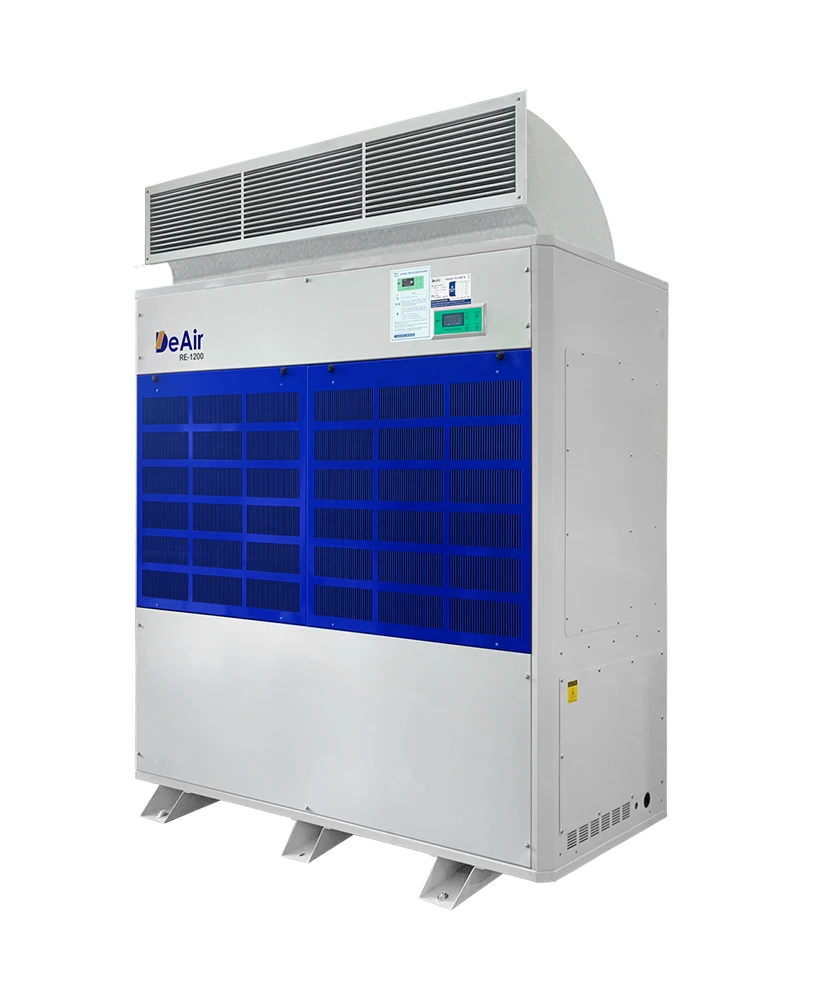 DeAir.RE
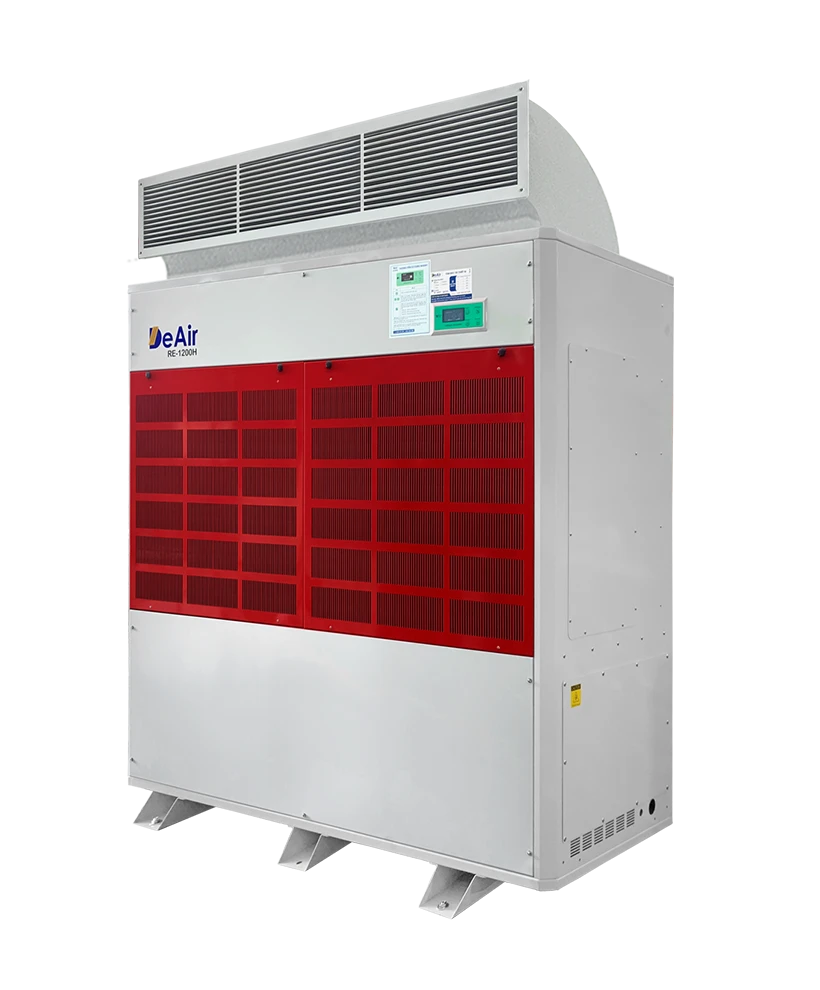 DeAir.RE-H
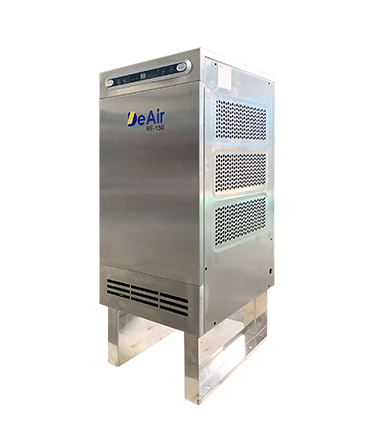 DeAir.RE-INOX
 DeAir.CRE
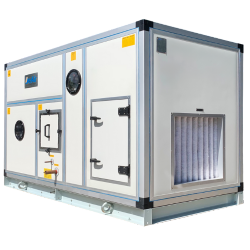 Dezenno
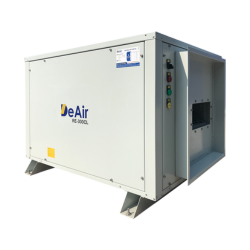 DeAir.RE-CL
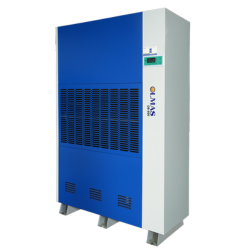 Olmas-OS
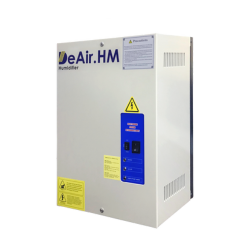 DeAir.HM
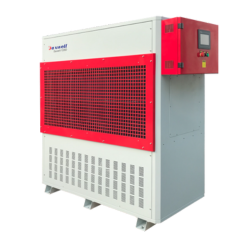 Daxwell
 DeAir.Heat
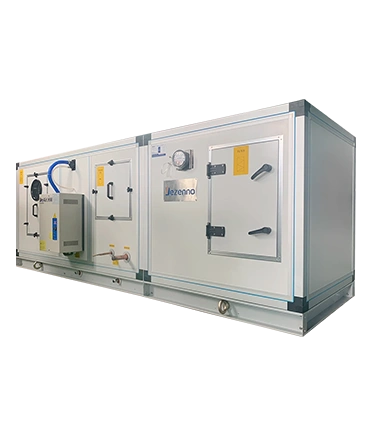 AHU
AHU




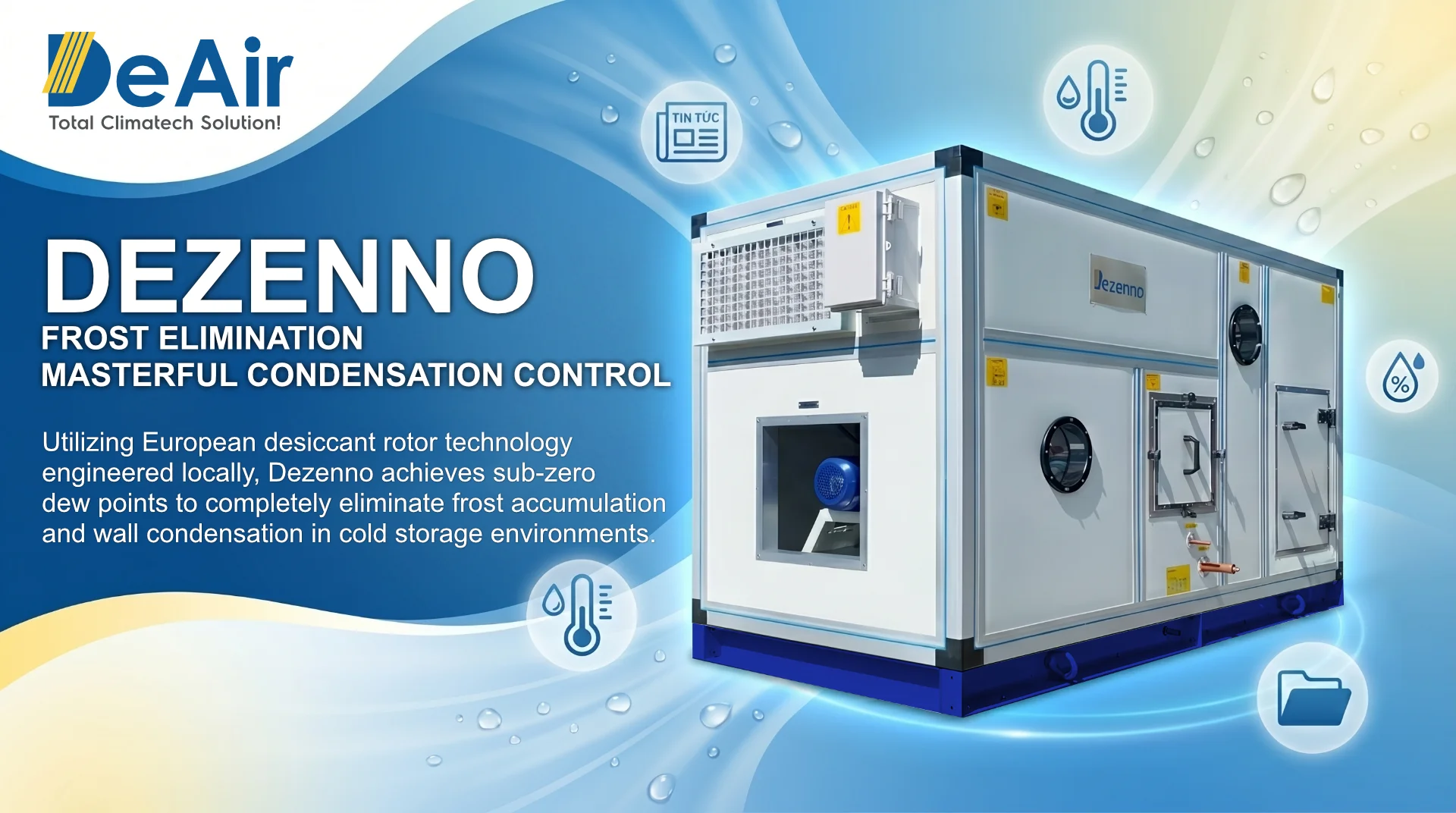
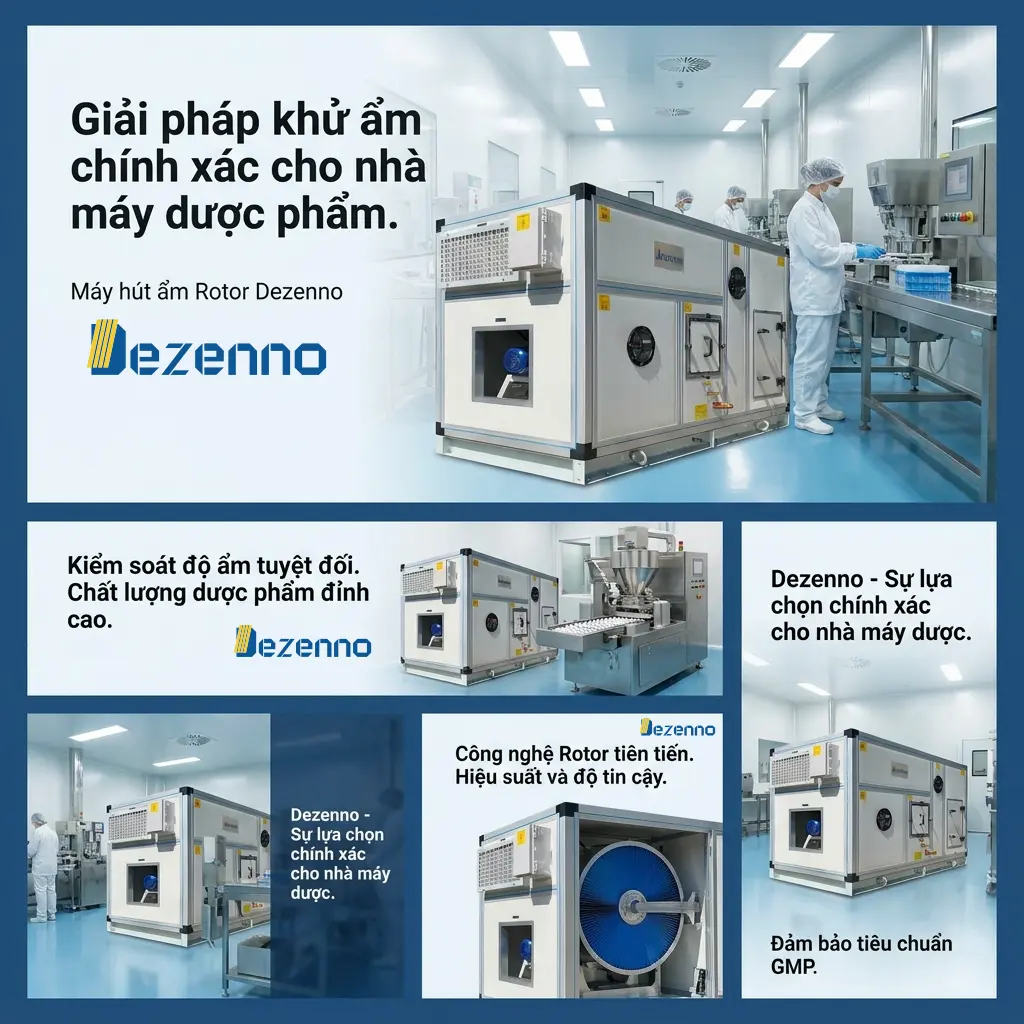 Compact standalone rotor units, easily installed directly in the production room.
 Premium Dezenno.MAX AHU combinations, 100% manufactured in Vietnam.
![[Case Study] DeAir Installs DeAir.De Rotor Humidity Control System for Pharmaceutical Plant in Binh Duong](https://deair.com.vn/thumbs/news/2023_04/ban_giao_may_cho_duoc_bd/[270x153-cr]image1-1024x772.jpg__cv.webp "[Case Study] DeAir Installs DeAir.De Rotor Humidity Control System for Pharmaceutical Plant in Binh Duong")
![[Review & Guide] Olmas OS-300: The New Humidity Control "Warrior" for Medium to Large Warehouses](https://deair.com.vn/thumbs/news/huong_dan_su_dung_may_olmas_21/[270x153-cr]vtm06440.png "[Review & Guide] Olmas OS-300: The New Humidity Control \"Warrior\" for Medium to Large Warehouses")