Client: Bitis - A leading footwear brand in Vietnam.
The Problem: High humidity (75-85%RH) severely impacted production processes and product quality.
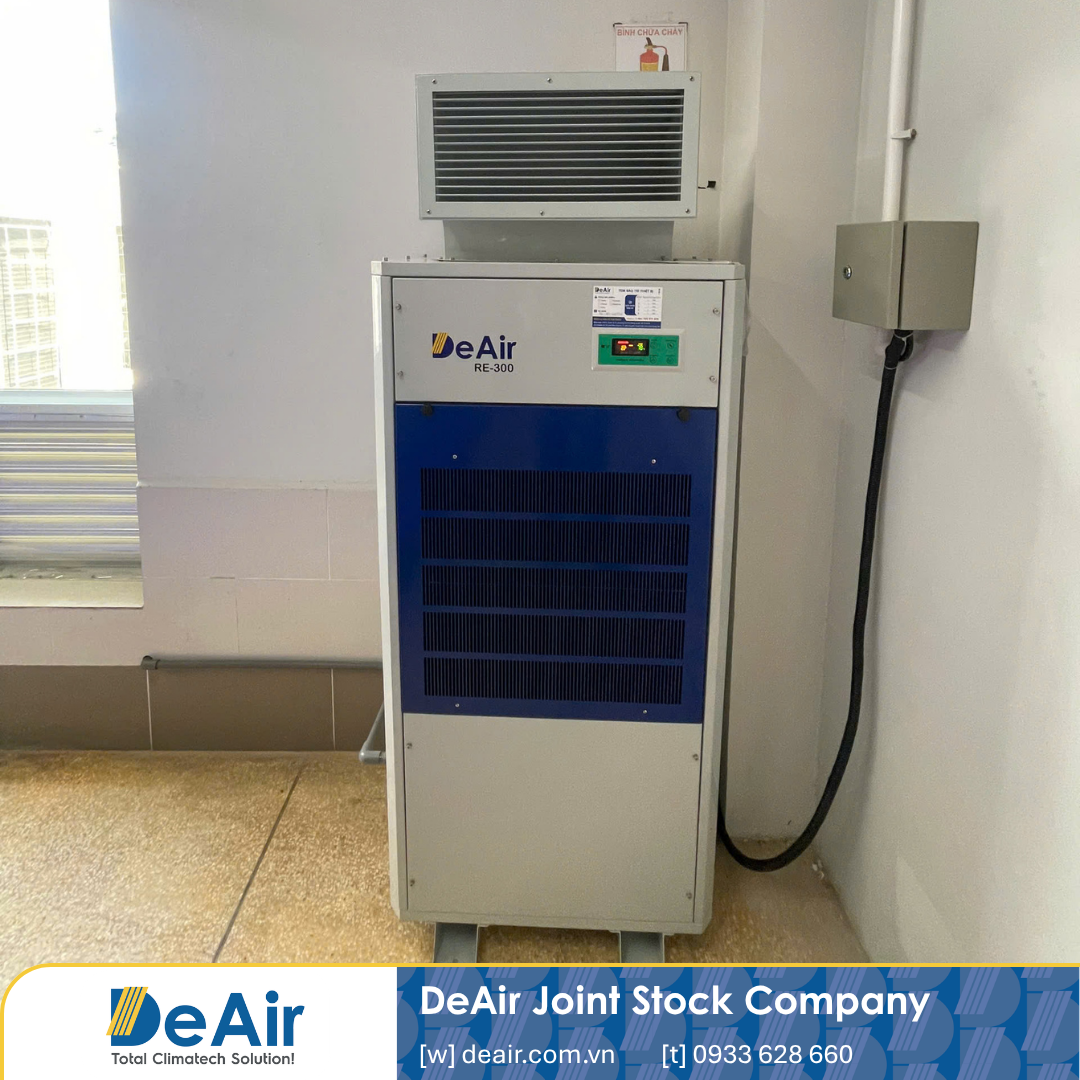
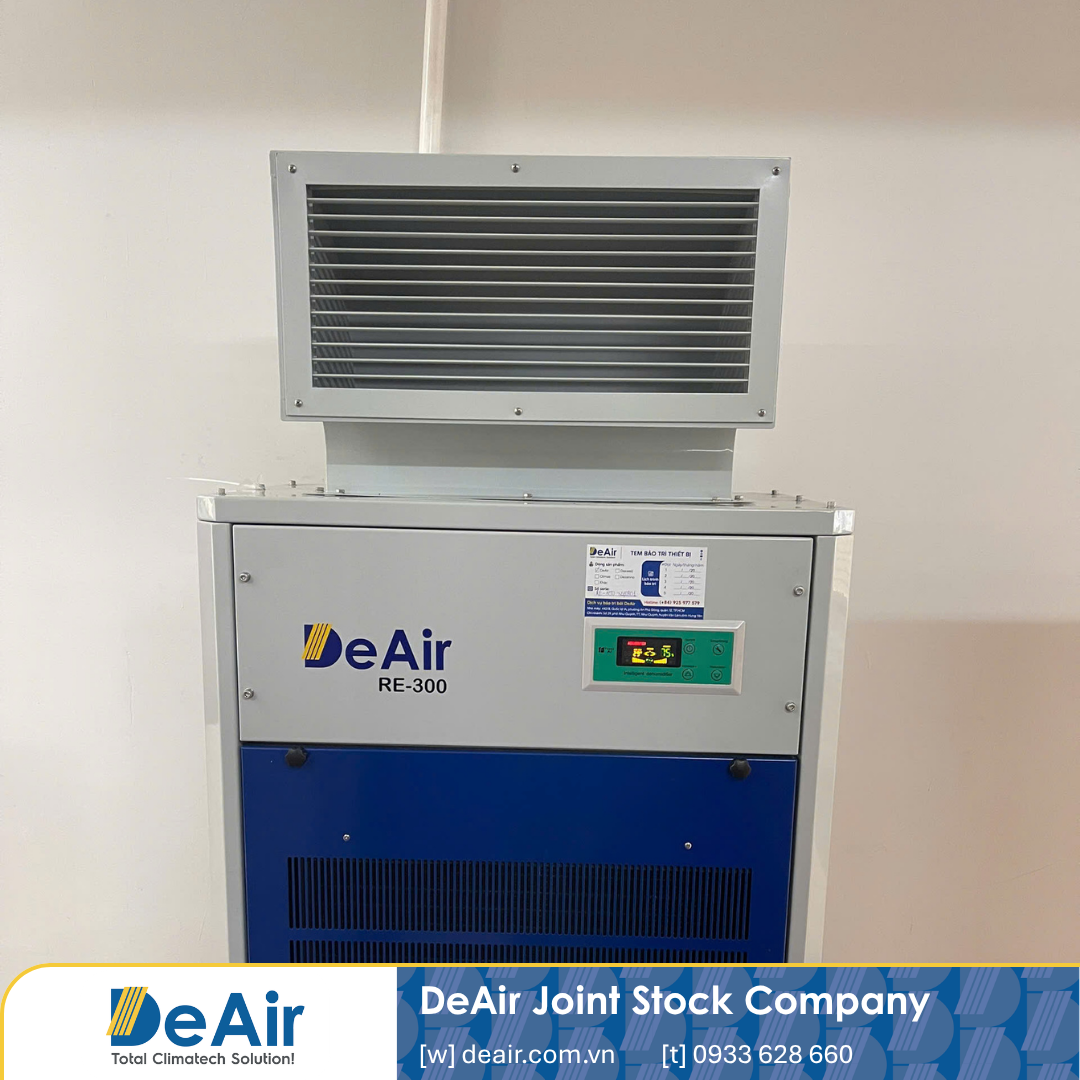
The Solution: DeAir delivered and installed DeAir.RE-300 Heat-Pump Dehumidifiers.
The Results:
Stable humidity control at 45-55%RH.
Glue drying time reduced by 30-40%.
Defect rate dropped from 5-8% to <1%.
ROI: Full payback within 12-18 months.
1. Challenges in the Vietnamese Footwear Industry
1.1. The Tropical Monsoon Climate
Vietnam's tropical monsoon climate brings an average humidity of 70-90%RH year-round. This is the "arch-nemesis" of the footwear manufacturing industry, especially during the rainy season from May to October.
High humidity doesn't just disrupt production; it directly attacks product quality, causing a cascade of technical issues that manufacturers face daily.
1.2. Technical Issues in Production
⚠️ Glue Not Drying / Poor Adhesion
Shoe glue requires low humidity to dry properly and achieve optimal bonding. When humidity exceeds 60%RH:
Glue drying time extends from 4-6 hours to 8-10 hours.
Adhesion weakens, causing delamination and open toe gaps.
Product defect rates spike to 5-8%.
🦠 Leather & Synthetic Materials Mold
Real leather and shoe lining fabrics have high moisture absorption rates:
Leather absorbs moisture, leading to rapid mold growth.
Fabrics and linings become damp, causing unpleasant odors.
Product lifespan decreases, leading to customer complaints.
⏱️ Drying & Bonding Process Disruptions
High humidity disrupts the entire production line:
Extended drying times reduce productivity by 15-20%.
Raw material inventory piles up due to longer waiting times.
Labor and electricity costs increase significantly.
1.3. Humidity Requirements by Production Stage
📋 HUMIDITY REQUIREMENTS IN FOOTWEAR MANUFACTURING
📦 LEATHER STORAGE
35%RH
Temperature: 24°C
Prevents leather mold and deformation.
🏭 RUBBER PRODUCTION
45-60%RH
Temperature: 32°C
Ensures proper vulcanization.
🧵 TEXTILE STORAGE
45-60%RH
Temperature: 20-27°C
Prevents fabric dampness and mold.
🔧 GLUE APPLICATION AREA
40-50%RH
Optimal for fast glue drying.
Maximizes bonding strength.
📦 FINISHED GOODS WAREHOUSE
40-50%RH
Pre-shipment storage.
Prevents mold during the rainy season.
2. Case Study: DeAir Hands Over DeAir.RE-300 to Bitis
2.1. Introducing Bitis
Bitis is one of Vietnam's most reputable footwear brands, featuring large-scale production and a diverse product range from sports shoes and dress shoes to sandals. With the motto "Quality creates the brand," Bitis always prioritizes quality, serving not only the domestic market but also aiming for export standards.
2.2. The Real-World Problem at the Bitis Factory
❌ Before Installation
Factory humidity: 75-85%RH (far too high for production).
Glue drying issues: Waiting time increased from 4-6 hours to 8-10 hours.
Fewer customer complaints: Higher satisfaction with product durability.
4. Infographic: Before & After Comparison
📊 BEFORE & AFTER DEAIR.RE-300 INSTALLATION
Criteria
Before (75-85%RH)
After (45-55%RH)
Improvement
Glue Drying Time
8-10 hours
4-6 hours
↓ 30-40%
Delamination Rate
5-8%
<1%
↓ 85%
Leather/Fabric Mold
Frequent
Eliminated
100%
Productivity
100%
115-120%
↑ 15-20%
Raw Material Inventory
High
Reduced by 30%
↓ 30%
Cost Savings
0
200-300M VND/year
✓ Significant
5. Why Choose DeAir.RE Heat-Pump Dehumidifiers for Footwear?
5.1. Tailored for the Industry
Stable operation at 15-60°C: Perfectly suited for footwear factory environments.
Minimal ambient temperature change: Prevents thermal shock to sensitive leather and fabric materials.
Precise humidity control (±3%RH): Ensures glue dries exactly on time, achieving maximum bonding strength.
5.2. Unmatched Energy Efficiency
Heat-Pump technology reuses the condensation heat to reheat the dehumidified air, saving 40% on electricity compared to conventional condensation dehumidifiers. This is the key factor helping Bitis drastically reduce monthly operational costs.
5.3. Scalable Capacity Range
The DeAir.RE series offers multiple models from DeAir.RE-60 to DeAir.RE-1200, suitable for everything from small workshops to massive factories like Bitis. When production scales up, additional units can be seamlessly integrated without replacing the entire system.
5.4. Comprehensive Support
24-month warranty: Peace of mind in operation.
24/7 technical support: Always ready to resolve any issues promptly.
Spare parts available in Vietnam: No waiting for international imports.
Experienced technical team: Professional survey, consultation, and installation.
6. Frequently Asked Questions (FAQ)
Q1: What is the ideal humidity for footwear manufacturing?
The ideal humidity depends on the specific production stage:
Leather storage: 35%RH
Glue application area: 40-50%RH (most optimal)
Rubber production: 45-60%RH
Finished goods warehouse: 40-50%RH
Generally, maintaining 40-60%RH is suitable for most footwear manufacturing processes.
Q2: What area size is the DeAir.RE-300 suitable for?
With a capacity of 300 kg/day and an airflow of 3,000 CMH, the DeAir.RE-300 is suitable for:
Factory spaces with a volume of approximately 500-1,000 m³.
Or an area of 150-300 m² (with a ceiling height of 3-3.5m).
This varies based on the actual moisture load (number of workers, raw materials, initial humidity).
DeAir will conduct a survey and calculate the exact requirements before proposing the optimal number of units.
Q3: How long does installation and commissioning take?
The process typically takes 3-5 working days:
Days 1-2: Survey, calculation, and equipment preparation.
Days 3-4: Installation of the unit and ducting system.
Day 5: Testing, calibration, and staff training.
DeAir commits to not disrupting the client's ongoing production during installation.
Q4: What is the operating cost of the DeAir.RE-300?
With a power consumption of 4.6 kW, running 10 hours/day:
Monthly cost (26 working days): ~3.6 million VND/month.
However, thanks to Heat-Pump technology saving 40% on electricity, the actual cost is only about 2.2 million VND/month. Compared to the savings from reduced defective goods (200-300 million VND/year), this is a highly efficient investment.
Q5: Does DeAir provide solutions for large-scale factories?
Integrated Dezenno.MAX AHU systems: Airflow from 1,000 to 100,000 CMH.
Customized solutions: Combining multiple units, integrating BMS/PLC for centralized monitoring.
DeAir has successfully deployed systems for major factories like Samsung, LG, VinGroup, and May Duc Giang.
Q6: How do you calculate the required number of machines?
DeAir uses professional software to calculate based on:
The volume of the space to be treated (m³).
Target humidity vs. current humidity.
Moisture load from raw materials (leather, fabric, glue).
Number of workers (each person releases 100-150g of moisture/hour).
Required air exchange rates.
DeAir provides free survey and calculation services to ensure the right capacity and quantity are selected, preventing investment waste.
Humidity Control Solutions for Footwear - Efficient, Effective, Sustainable
Don't let high humidity reduce your product quality and increase your defect rates. DeAir is ready to partner with you, providing Heat-Pump dehumidifier solutions that save 40% on electricity and pay for themselves in just 12-18 months.
Is your footwear factory looking for an optimal humidity control solution?


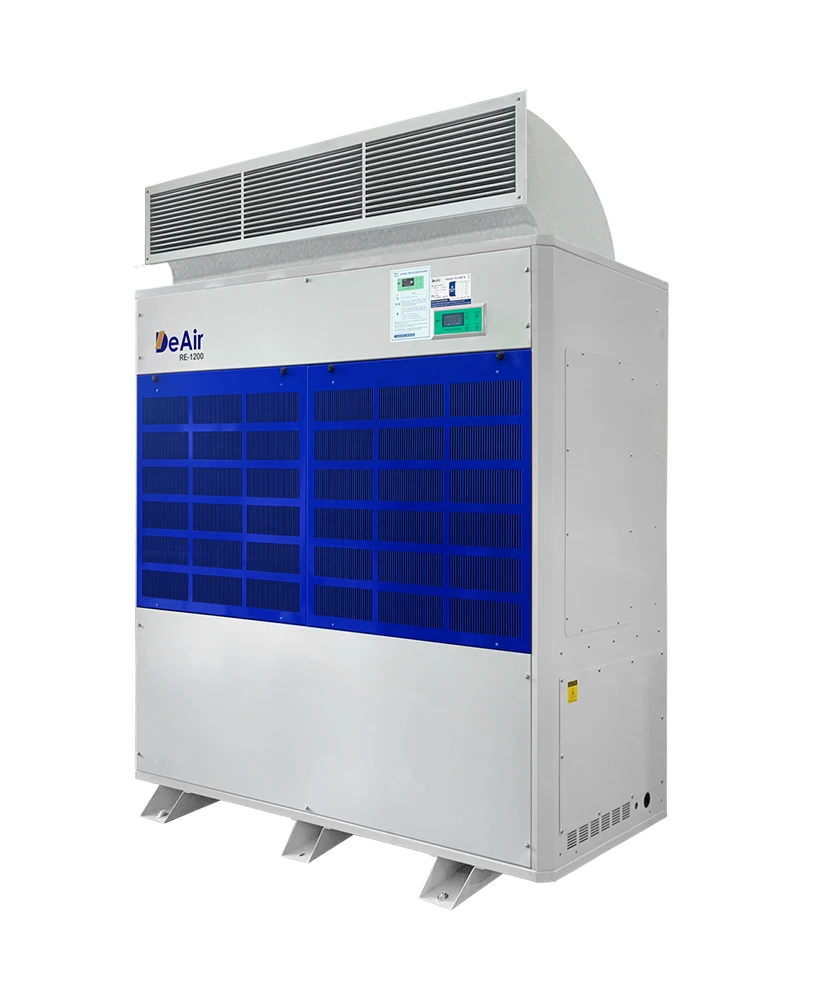 DeAir.RE
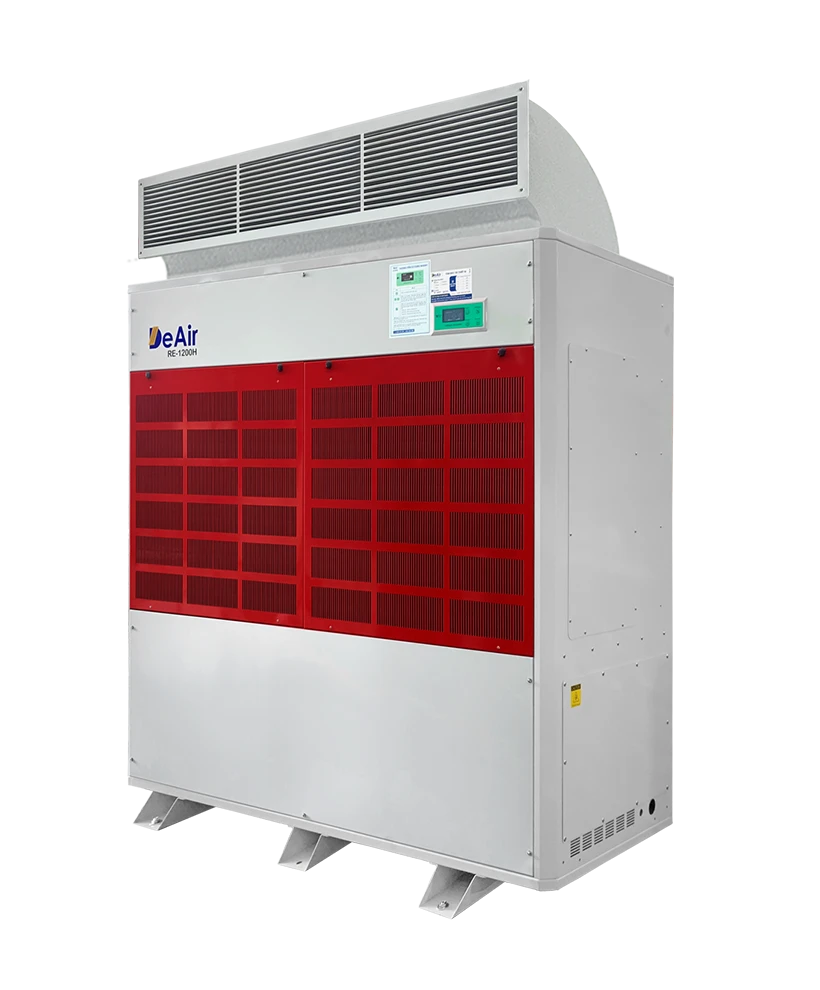 DeAir.RE-H
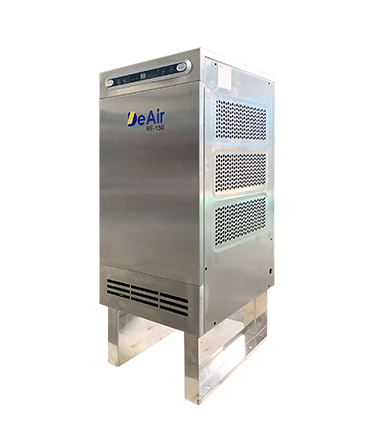 DeAir.RE-INOX
 DeAir.CRE
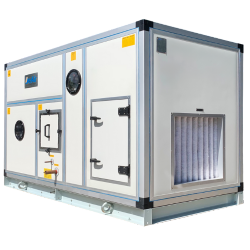 Dezenno
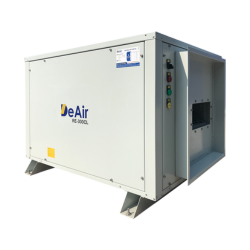 DeAir.RE-CL
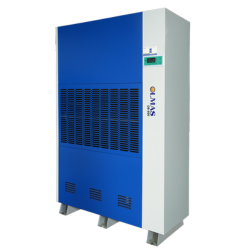 Olmas-OS
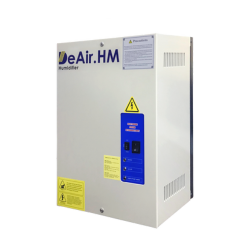 DeAir.HM
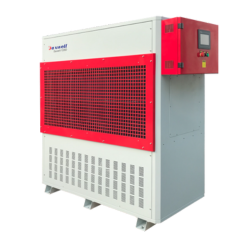 Daxwell
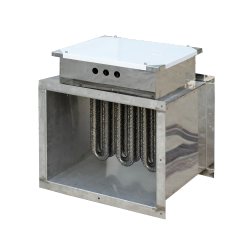 DeAir.Heat
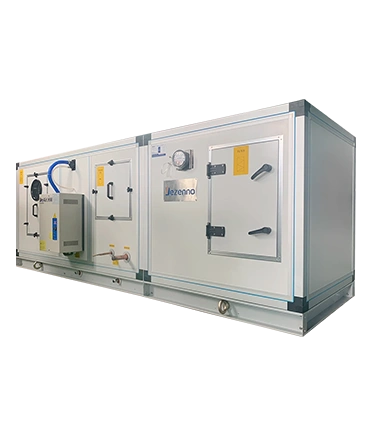 AHU
AHU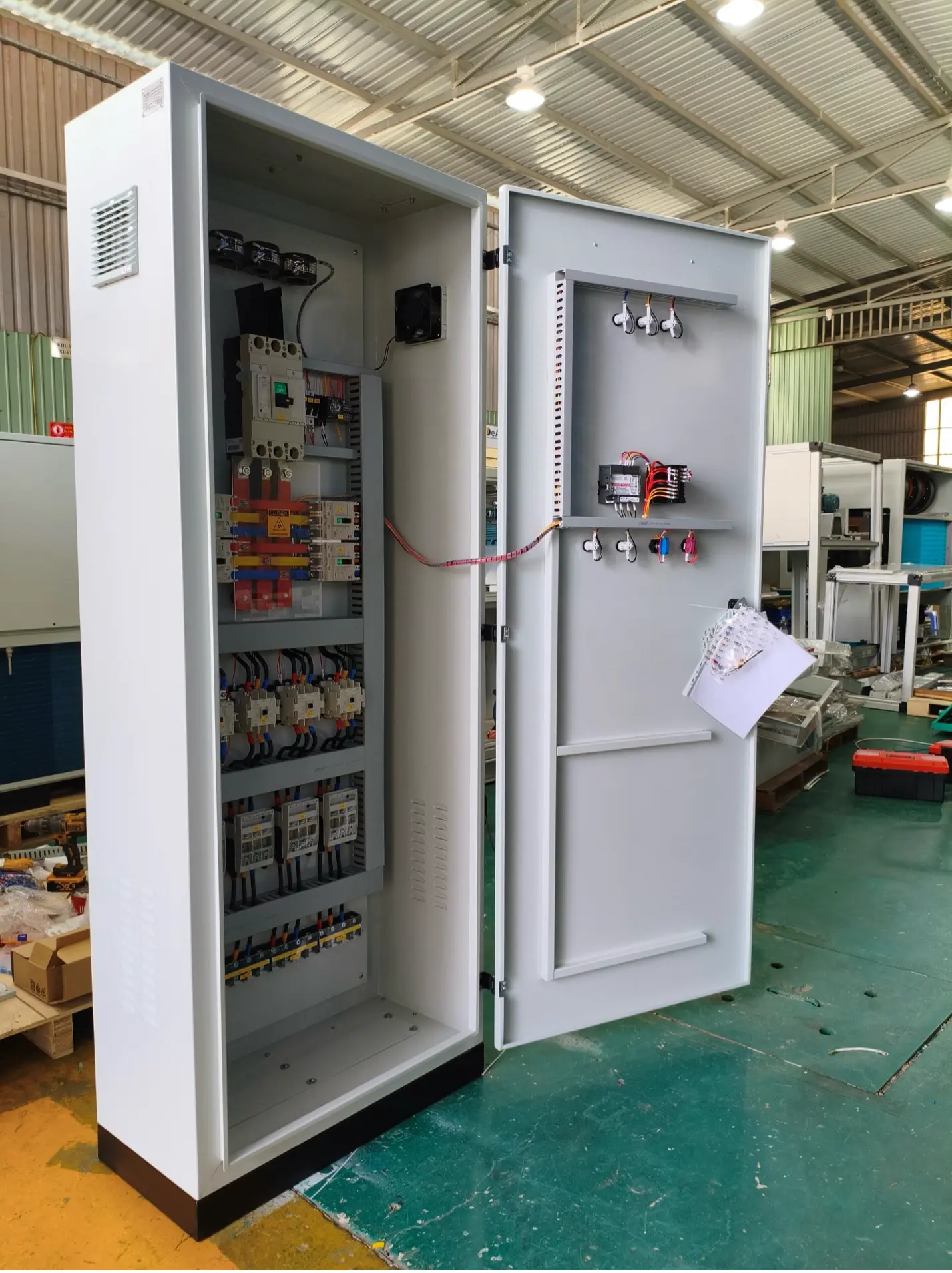







![[Case Study] DeAir Installs DeAir.De Rotor Humidity Control System for Pharmaceutical Plant in Binh Duong](https://deair.com.vn/thumbs/news/2023_04/ban_giao_may_cho_duoc_bd/[270x153-cr]image1-1024x772.jpg__cv.webp "[Case Study] DeAir Installs DeAir.De Rotor Humidity Control System for Pharmaceutical Plant in Binh Duong")

![[Review & Guide] Olmas OS-300: The New Humidity Control "Warrior" for Medium to Large Warehouses](https://deair.com.vn/thumbs/news/huong_dan_su_dung_may_olmas_21/[270x153-cr]vtm06440.png "[Review & Guide] Olmas OS-300: The New Humidity Control \"Warrior\" for Medium to Large Warehouses")