10+ Effective Ways to Reduce Room Humidity & Case Study: Conquering "Nom" Moisture in Nghe An Sweet Potato Storage
02/02/2026
When Humidity Is Public Enemy No. 1 for Living and Production Spaces
The tropical monsoon climate in Vietnam, especially in the North Central region (such as Nghe An and Ha Tinh), always presents a difficult problem regarding humidity. During the "Nom" season (humid season), air humidity frequently exceeds 90%, causing floors to "sweat", clothes to mold, and bacteria to proliferate.
While high humidity in a household causes discomfort, in the food industry, it is a "death sentence" for goods. This article will provide you with the most comprehensive view: From 10 ways to reduce humidity in residential rooms to an in-depth analysis of a real-world Case Study at a sweet potato processing plant in Nghe An - where DeAir deployed a "dual" solution to completely conquer the humid weather.
1. Understanding Relative Humidity (RH) & Dew Point
Before trying to reduce humidity, you need to understand what you are facing. Relative Humidity (%RH) is the ratio of the current water vapor in the air to the maximum amount of water vapor the air can hold at that temperature.
The higher the temperature, the more water the air can hold.
When the temperature drops to the Dew Point, water vapor condenses into liquid (dew).
According to recommendations from the EPA (United States Environmental Protection Agency), indoor humidity should be maintained between 30% - 50% to prevent mold growth and allergens. When humidity exceeds 60%, bacterial proliferation increases exponentially.
Therefore, the goal of "reducing humidity" is not just lowering the %RH index, but removing the actual water mass from the air or raising the room temperature to avoid condensation.
2. 10 Ways to Reduce Room Humidity (From Basic to Advanced)
Group 1: Natural & Manual Methods
1. Proper Ventilation: Many people mistakenly believe that when it's humid, windows should be opened for ventilation. This is a mistake! When outdoor humidity > indoor humidity, you must keep windows closed. Only open them when it's sunny or outdoor humidity is lower.
2. Use Natural Absorbents: Activated charcoal, quicklime, or coffee grounds have mild moisture-absorbing capabilities. However, this method is only effective for very small spaces like wardrobes or shoe cabinets.
3. Grow Plants: Some plants like Boston Ferns, Peace Lilies, and Spider Plants can absorb moisture through their leaves. This is a "green" solution but not highly effective for industrial humidity levels.
Group 2: Using Household Electrical Appliances
4. Air Conditioner Dry Mode: This mode dehumidifies by cooling the air to condense water. The downside is that it lowers the room temperature (making it cold in winter) and consumes significant electricity.
5. Exhaust Fans: Helps air convection, pushing humid air from bathrooms/kitchens outside. But if the outside air is also humid, this method is counterproductive.
6. Heat Drying (Heaters/Clothes Dryers): Heating the air lowers relative humidity, creating a dry feeling. However, the water vapor remains in the room; once the device is off, humidity returns immediately.
Group 3: Specialized Solutions (Most Effective)
7. Home Dehumidifier: Specialized equipment for condensing water. The Olmas OS-25 or OS-55 series is the perfect choice for bedrooms and living rooms.
8. Industrial Dehumidifier: Designed for large warehouses and factories. This is the solution we will analyze in depth later.
9. Insulated Warehouse Design: Using thermal insulation panels (PU/EPS) to block moisture intrusion from the outside environment.
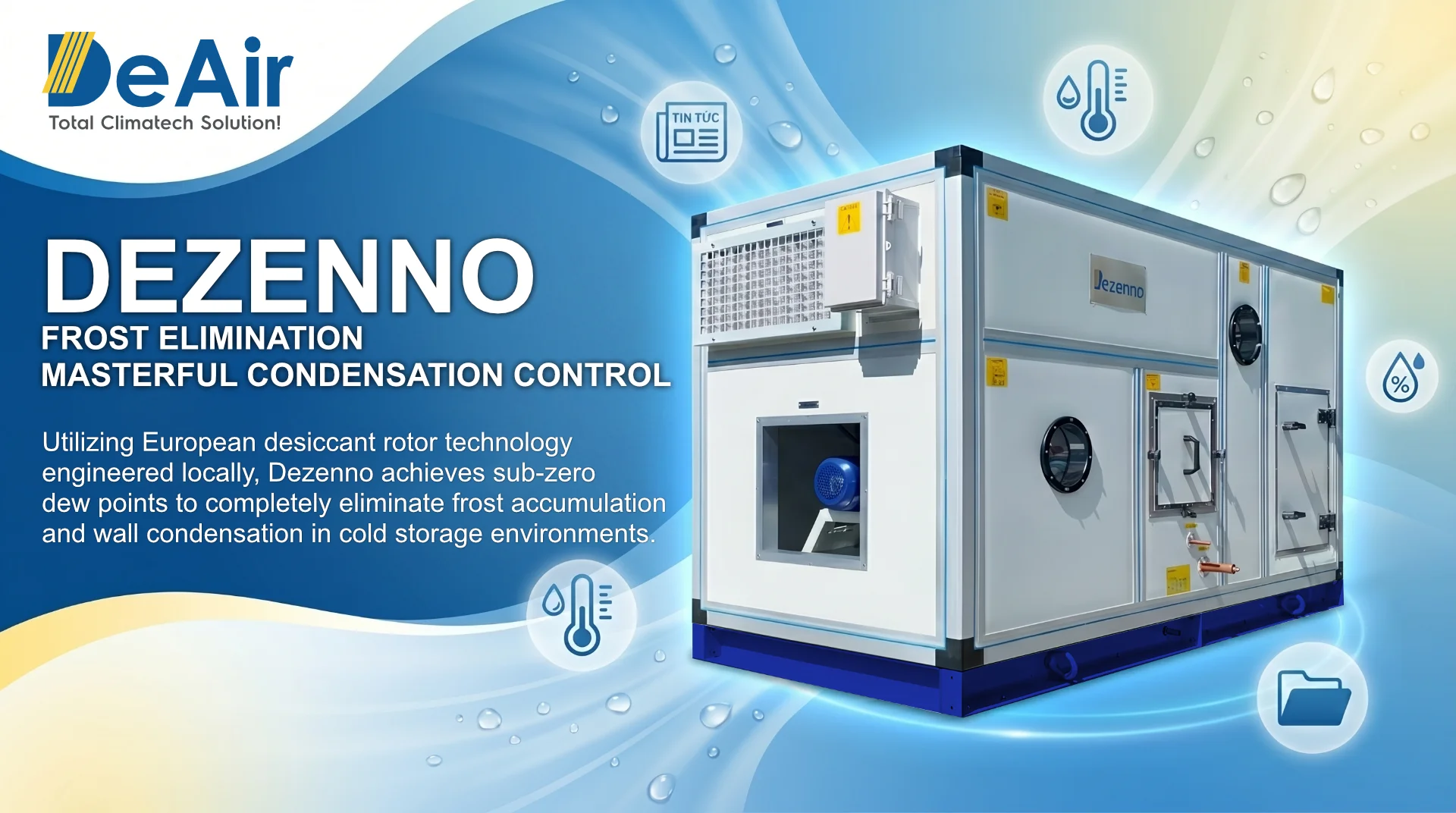
10. Rotor Dehumidification Technology (Desiccant): For ultra-low humidity requirements (< 40%) or low temperatures where condensing machines cannot operate effectively.
3. Case Study: The Challenge of Sweet Potato Storage in Nghe An
To demonstrate practical effectiveness, let's look at a project DeAir recently implemented at a Large Food Company in Nghe An - specializing in producing dried sweet potatoes for export.
The Specifics of Nghe An's "Frying Pan & Rain Pocket" Climate
Nghe An has an extremely harsh climate. The humid season lasts long with humidity often > 90%. For a food factory, this is a disaster as walls and warehouse floors frequently "sweat" (condensation), creating conditions for mold growth.
Hygroscopic Nature of Dried Sweet Potato
Sweet potatoes contain high sugar and starch. After drying, the finished product becomes extremely Hygroscopic. According to food preservation documents from FAO (Food and Agriculture Organization of the United Nations), if dried food is not stored in an environment with suitable Equilibrium Relative Humidity (ERH), usually below 60%, the product will re-absorb moisture, become soggy, lose crispness, and ferment within 24-48 hours.
4. The "Dual" Solution: Combining DeAir.RE-1200 & DeAir.RE-1200H
To solve this problem, DeAir did not just install one type of machine. We advised and deployed a system combining 2 machine series in the same curing warehouse to complement each other.
"DUAL" HUMIDITY CONTROL PROCESS AT NGHE AN SWEET POTATO WAREHOUSE
Result: Sweet potatoes retain crispness and golden color, without mold even when outside humidity is 95%.
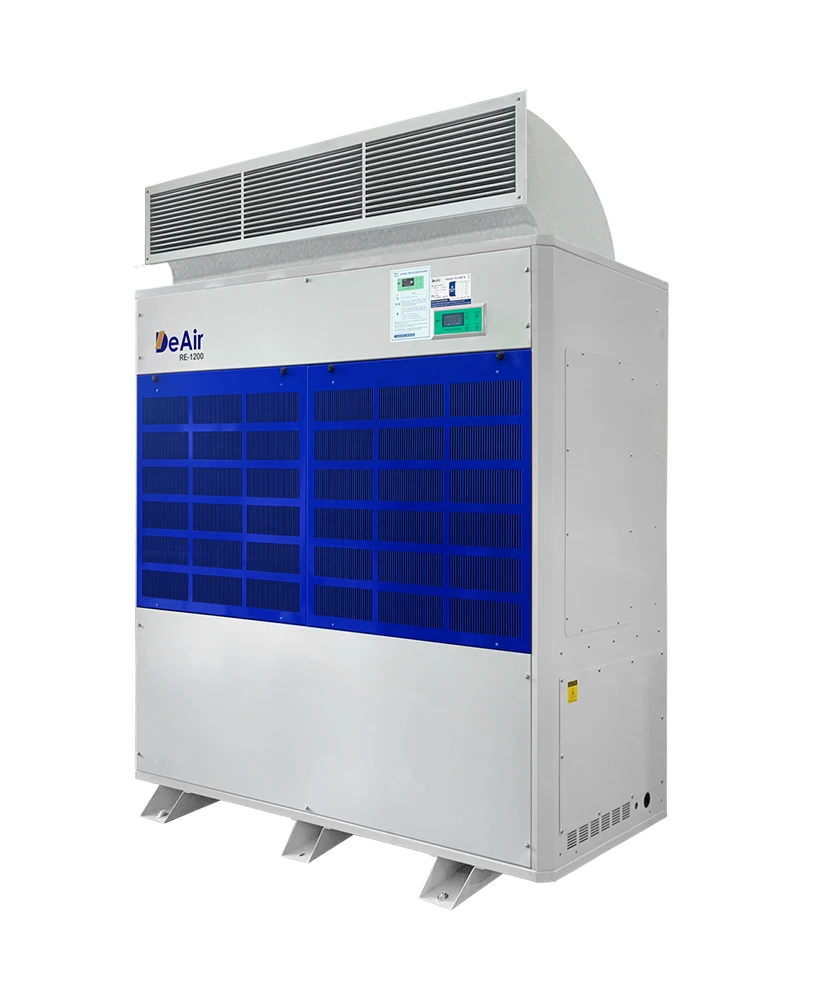
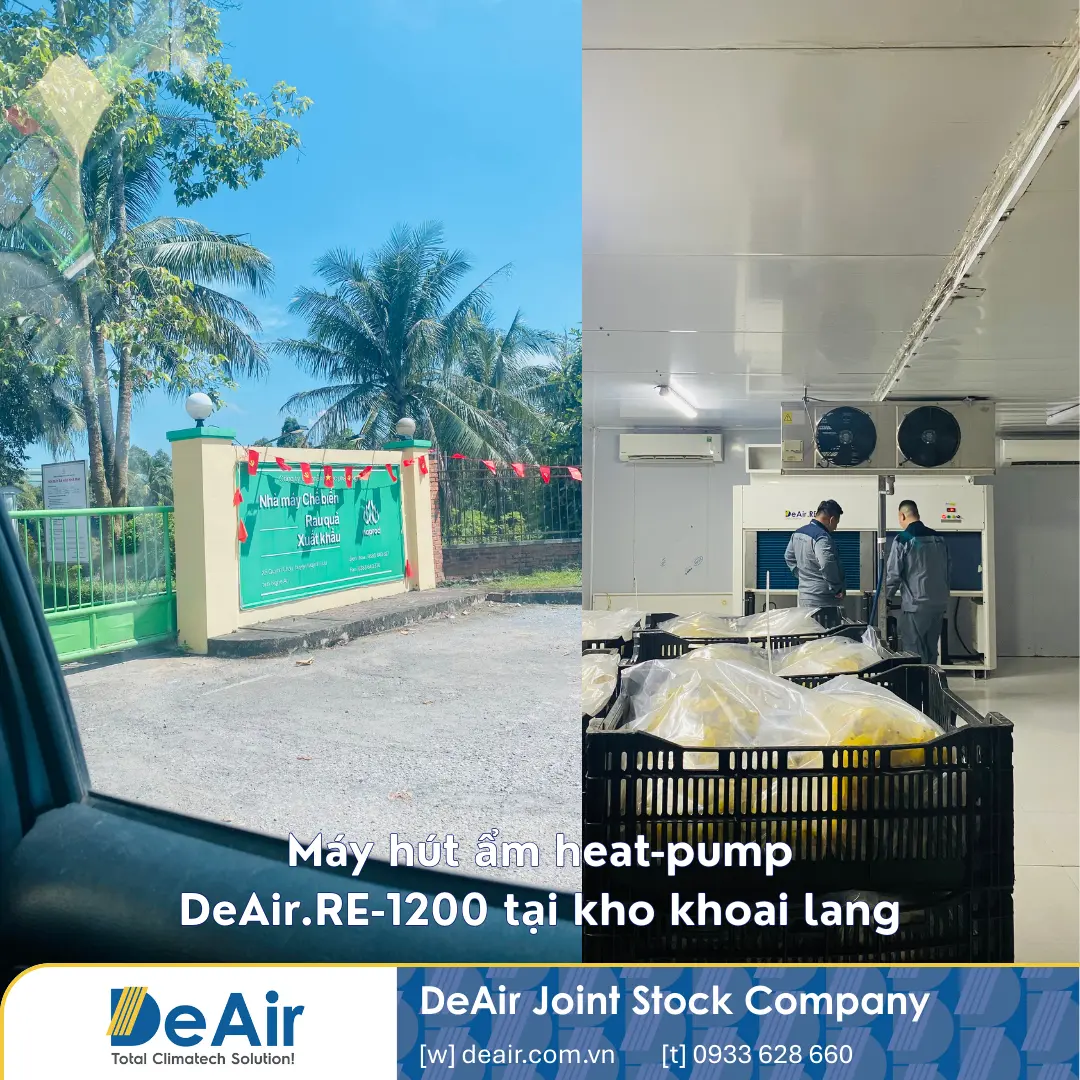
DeAir.RE-1200 Dehumidifier plays the role of "gatekeeper", handling continuous base moisture load for the warehouse.
Role of DeAir.RE-1200 Industrial Dehumidifier
This is a large capacity industrial dehumidifier (1200 Liters/day). Its main task is Base Humidity Control. The machine operates on the principle of cold condensation, separating water vapor from the air and draining it out, maintaining warehouse humidity at a safe level (40-50%).
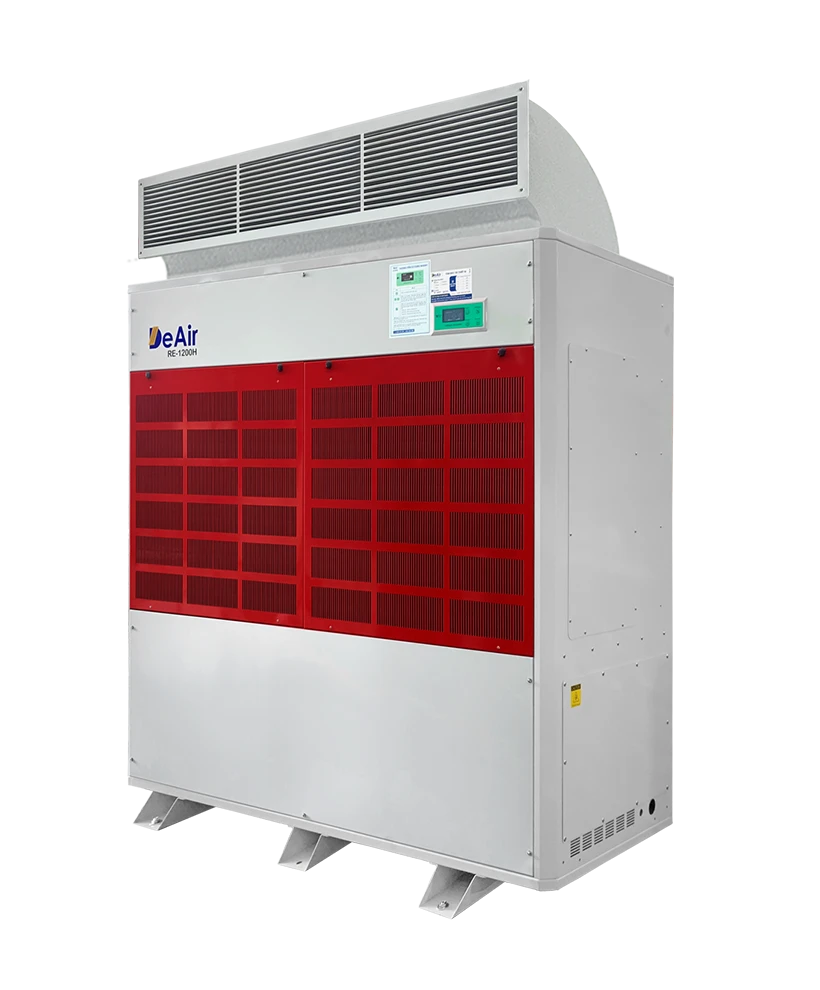
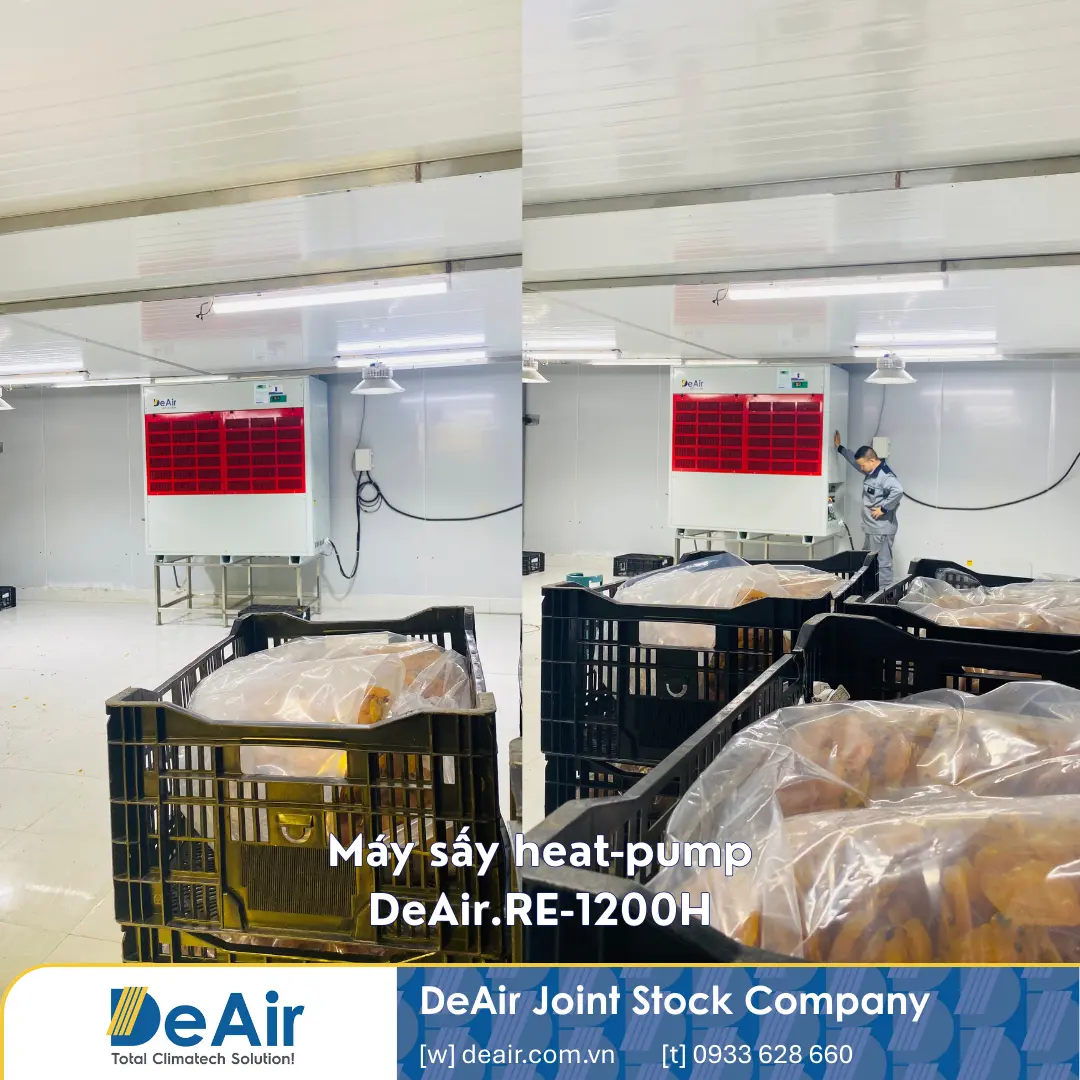
DeAir.RE-1200H: The "secret weapon" helping to maintain warm temperature, preventing condensation.
Why Add the Heat-Resistant DeAir.RE-1200H?
Adding the DeAir.RE-1200H (H series - Heating/High Temp) to the curing warehouse is a deep technical calculation:
Absolute Anti-Condensation: Normal dehumidifiers blow out dry air but the temperature is not very high. The RE-1200H series helps raise the warehouse temperature slightly higher than the ambient temperature (about 25-30°C in winter). This temperature difference ensures the sweet potato surface remains dry, never "sweating".
Peak Load Support: When warehouse doors open for loading/unloading, a large amount of moisture enters. Both machines running in parallel help bring humidity back to the set level fastest.
Retaining Crispness: The mild warmth from the RE-1200H helps dried sweet potatoes retain their crispness longer compared to just cold storage.
5. Periodic Maintenance: The Key to Durability
In food factory environments, especially starch processing like sweet potatoes, the air often contains a lot of fine organic dust. Without maintenance, dust will clog the cold coil and filter, reducing dehumidification efficiency and causing the machine to overheat.
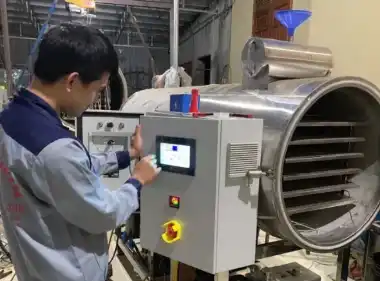
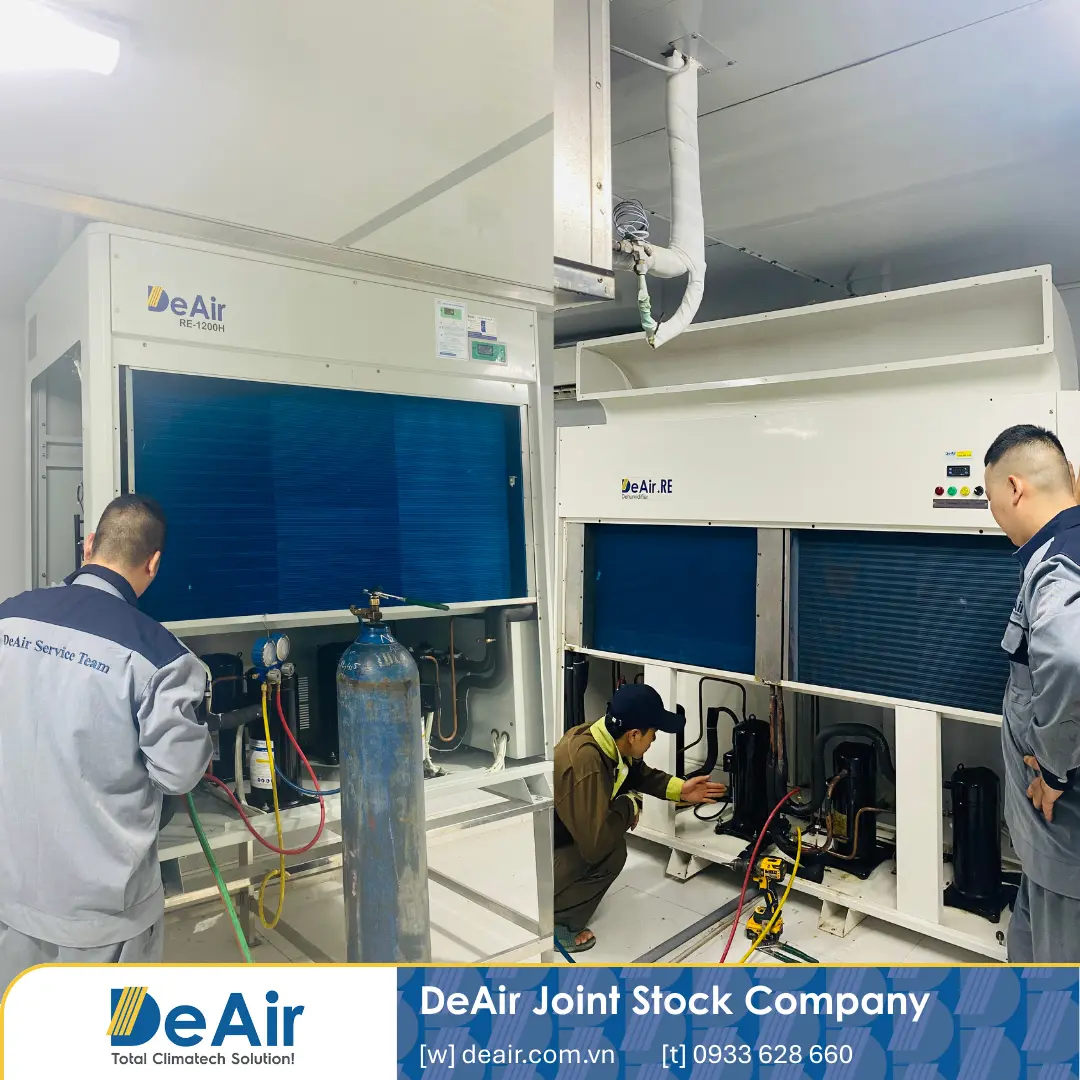
DeAir technical team performing periodic maintenance: Cleaning the heat exchanger and checking operating parameters.
The image above captures 2 DeAir technicians performing standard maintenance procedures in Nghe An:
Deep cleaning of the condenser and evaporator coils with specialized solutions.
Measuring gas pressure and compressor current.
Calibrating the humidity sensor to ensure precise switching according to strict sweet potato requirements.
According to medical experts, the ideal humidity for human health is between 40% - 60%. Below 40%, skin and nasal membranes will dry out. Above 60%, mold and bacteria will grow, causing respiratory diseases.
Does AC Dry mode save more electricity than a dehumidifier?
No. Air conditioners are primarily designed for cooling; dehumidification is secondary. When Dry mode is on, the AC still has to run a high-capacity compressor to cool the coil, consuming 2-3 times more electricity than a specialized dehumidifier with the same moisture removal capacity.
Why do dried sweet potatoes in sealed bags still get soggy?
There are 2 reasons: 1. Packaging bags do not absolutely prevent moisture (thin PE bags still have water vapor permeability). 2. More importantly, if the packaging environment has high humidity, humid air is trapped with the sweet potatoes inside the bag from the start. Therefore, humidity control is needed for both the storage space and the packaging room.
Conclusion: Reducing room humidity is not just about buying a machine and plugging it in. For high-value industrial warehouses, it is a matter of designing a comprehensive solution (like combining RE-1200 and RE-1200H). Don't wait until damage occurs; contact DeAir for humidity treatment consultation right from the warehouse design stage.
Agricultural Curing Warehouse Solutions
Thoroughly solve humidity issues - Protect the quality of export goods.


 DeAir.RE
 DeAir.RE-H
 DeAir.RE-INOX
 DeAir.CRE
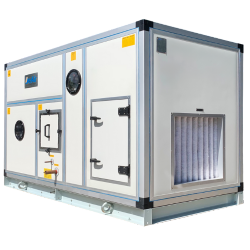 Dezenno
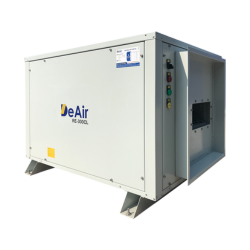 DeAir.RE-CL
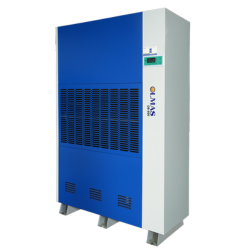 Olmas-OS
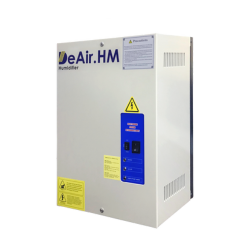 DeAir.HM
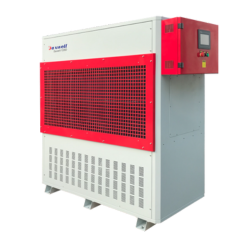 Daxwell
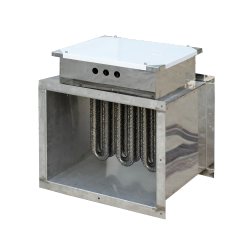 DeAir.Heat
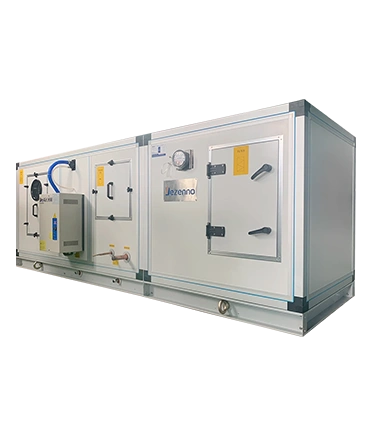 AHU
AHU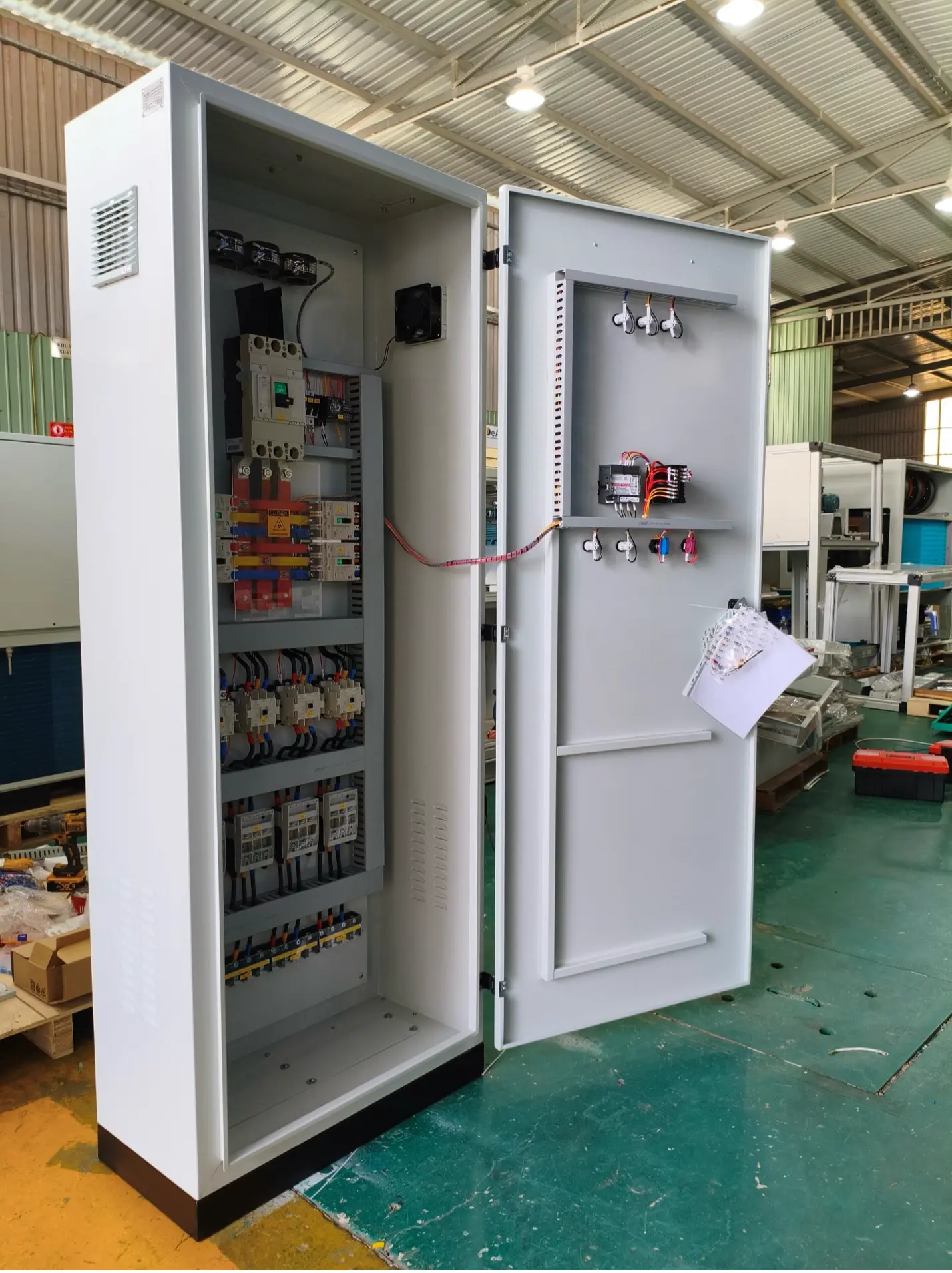





![[Case Study] DeAir Installs DeAir.De Rotor Humidity Control System for Pharmaceutical Plant in Binh Duong](https://deair.com.vn/thumbs/news/2023_04/ban_giao_may_cho_duoc_bd/[270x153-cr]image1-1024x772.jpg__cv.webp "[Case Study] DeAir Installs DeAir.De Rotor Humidity Control System for Pharmaceutical Plant in Binh Duong")
![[Review & Guide] Olmas OS-300: The New Humidity Control "Warrior" for Medium to Large Warehouses](https://deair.com.vn/thumbs/news/huong_dan_su_dung_may_olmas_21/[270x153-cr]vtm06440.png "[Review & Guide] Olmas OS-300: The New Humidity Control \"Warrior\" for Medium to Large Warehouses")