Challenges of Rice Paper Production During the Rainy Season in Binh Dinh
Finding a proactive method to control humidity and dry products is an inevitable path to maintaining and developing traditional craft villages. The solution does not lie in changing the heirloom recipe, but in improving the final stage: the drying process.
Weather Impacts on Productivity and Quality
The rainy season weather directly and negatively impacts two core factors: productivity and quality. Regarding productivity, the decline is most obvious. An average household can make and dry thousands of rice papers per day during the sunny season. When the rain comes, this number drops to almost zero. No sun, no rice paper. The production process comes to a complete halt.
In terms of quality, even on dry days without sunshine, high air humidity remains the enemy of rice paper. Rice paper dried in these conditions will dry very slowly. The slow drying process makes the rice paper "stiff", chewy, and unable to achieve the necessary crispness. The surface of the rice paper can stick back to the drying rack, causing tears and damage when peeled off. The defect rate skyrockets. Uneven quality affects the reputation of traditional village products. Regular customers might be sympathetic, but major partners and the export market will not be.
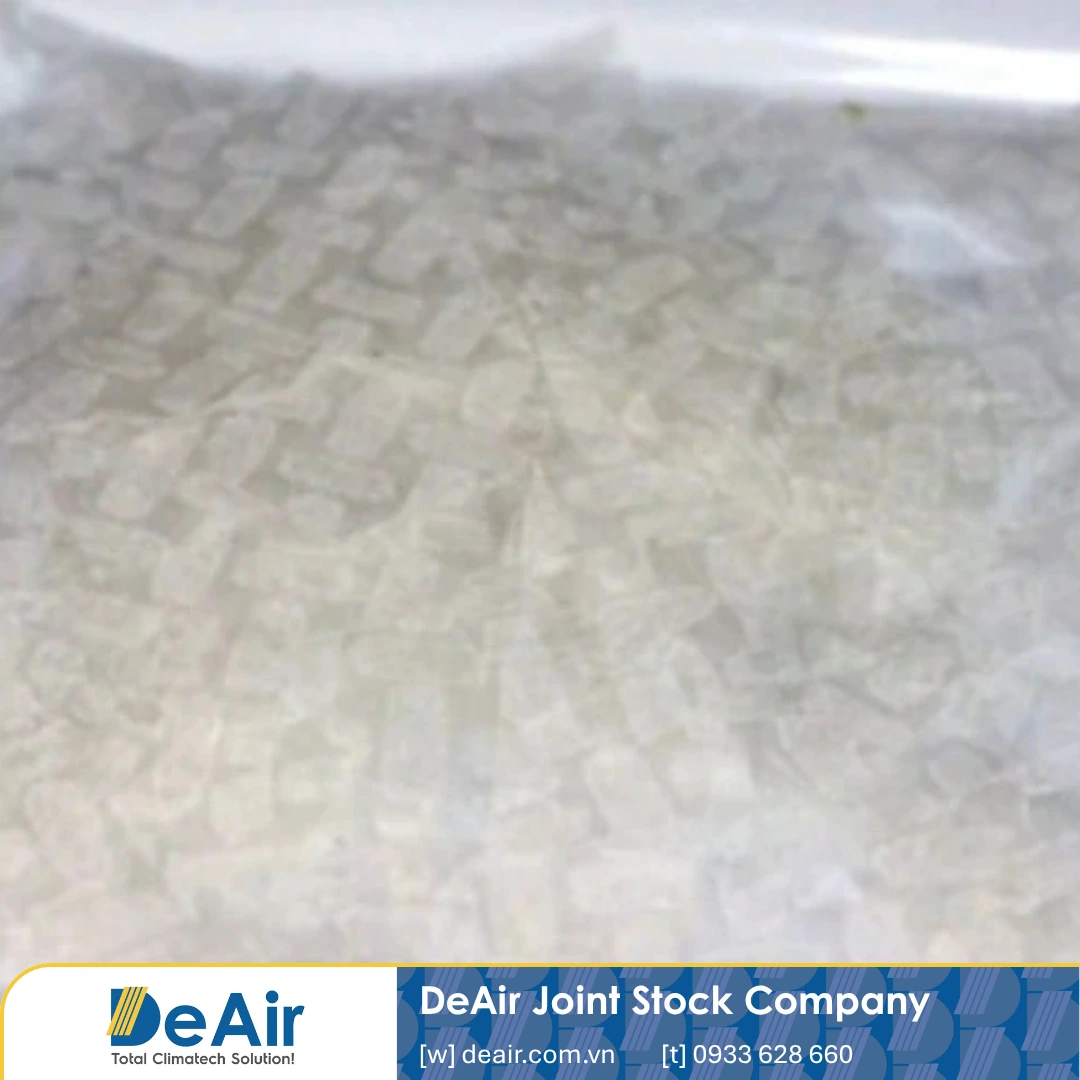 During prolonged rainy days, the quality of manually sun-dried rice paper is not guaranteed
Mold, Warping, and Prolonged Production Halts
The consequences of drying rice paper in high humidity conditions do not stop at poor quality. It also leads to more serious problems. Mold is a leading risk. Rice papers that are not completely dried, when stacked together, will develop green and black mold spots after just one or two days. This is not only an economic loss but also a food safety issue.
Next is the warping phenomenon. When the rice paper dries unevenly, different parts shrink at different rates, creating internal tension that causes the rice paper to bend and warp. Warped rice paper is very difficult to package and transport, and it loses its aesthetic appeal.
Impact on Export Orders and Households' Livelihoods
The impact of the rainy season is not confined to the village level. It spreads to the market, especially export orders. Binh Dinh rice paper is increasingly known in international markets such as the US, Australia, and Japan. Export contracts demand strict accuracy in quantity, uniform quality, and delivery times. The rainy season shatters all these requirements. Production halts mean that households and cooperatives cannot meet orders on time. Unstable quality also fails to meet strict foreign inspection standards. The dream of exporting hometown products is therefore left unfinished.
Daxwell DX-300D Rice Paper Dryer – The Ideal Choice for the Rainy Season
To completely solve the weather problem, the only solution is to proactively create an ideal drying environment, independent of nature. A modern technology rice paper dryer is the answer. Among the options on the market, the Daxwell DX-300D convective heat pump dryer emerges as a suitable choice for production households in Binh Dinh. This is a technological turning point, transforming the drying of Binh Dinh rice paper during the rainy season from an impossible task into a stable and efficient production process. DeAir supplies and provides installation consulting for this solution.
Outstanding Technical Specifications
To understand why the Daxwell DX-300D is an optimal technical choice, we need to examine its specifications.
- Drying technology: Simultaneous heating and dehumidifying. This technology ensures that hot, dry air is blown evenly to every position in the drying chamber, ensuring all rice papers on the trays dry uniformly.
- Drying temperature range: 40°C - 60°C. The wide temperature range allows users to customize the temperature to suit each type of rice paper. Thin rice paper requires low temperatures to avoid becoming brittle and breaking, while thicker types may require slightly higher temperatures.
- Power consumption: 4.75 kWh. This is a low power consumption rate compared to traditional electrical resistance dryers. Heat pump technology has energy recovery capabilities, helping to save operating costs.
- Control system: Smart LCD screen, allowing precise setting of temperature and drying time. The system will automatically shut off when the time is up, ensuring safety without the need for constant supervision.
These specifications show that the Daxwell DX-300D is specially designed for the food industry, focusing on efficiency, economy, and safety.
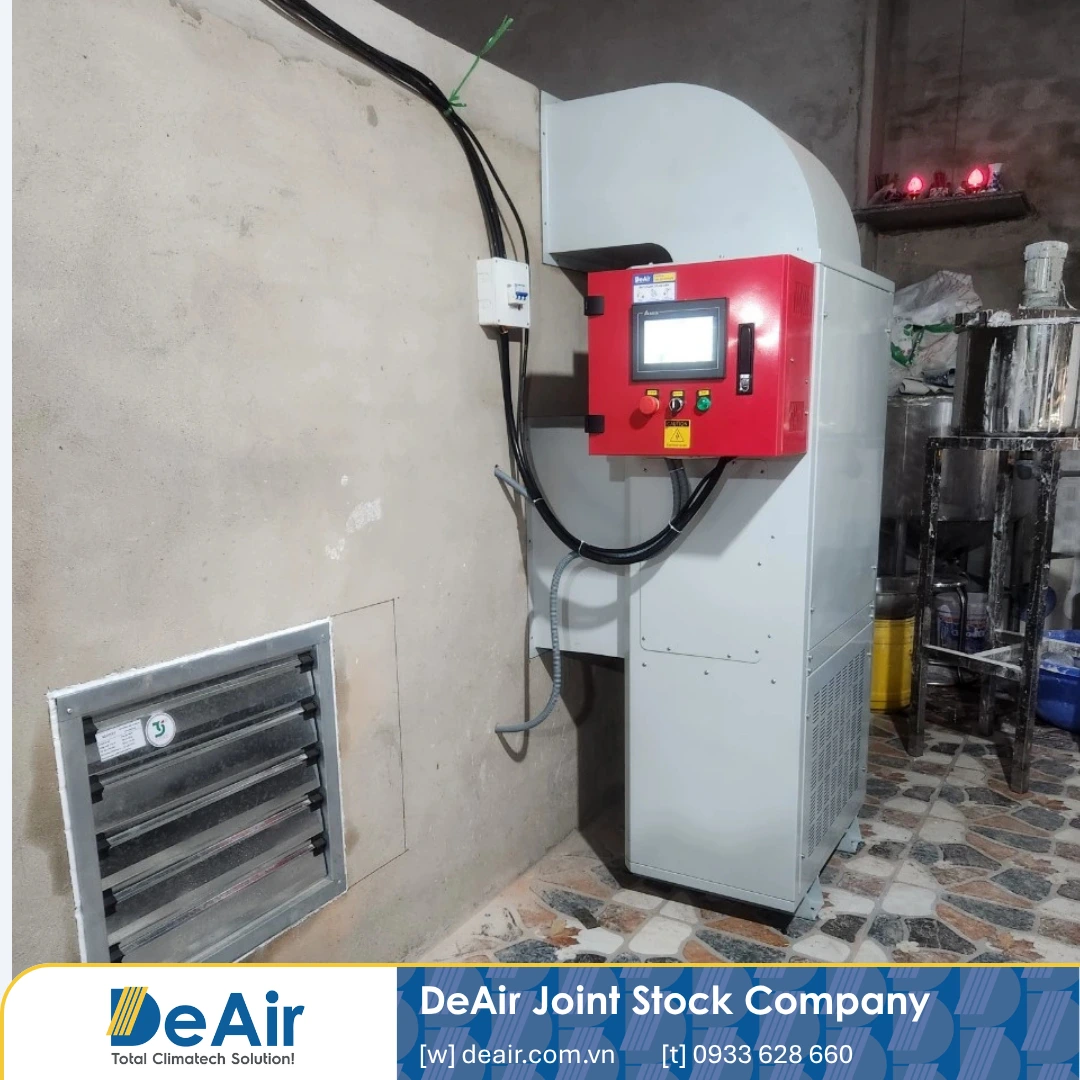 The Daxwell DX-300D dryer is the optimal choice, perfectly meeting the requirements for drying rice paper
Advantages in Energy Savings and Quality Stability
The two biggest concerns for people when investing in industrial equipment are operating costs and effectiveness. The Daxwell DX-300D dryer solves both of these problems well. Regarding energy saving, heat pump technology is the key. Instead of using electricity to heat a resistor and radiate heat (a highly energy-consuming process), the heat pump acts like an air conditioner running in reverse. It extracts moisture from the drying chamber, condenses it into water to be discharged outside, and simultaneously recovers heat during that process to warm up the new dry airflow. This closed-loop cycle saves up to 60-70% of electricity compared to resistance drying. The electricity cost per drying batch is minimized, preventing the product cost from being pushed too high.
Regarding quality stability, this is an outstanding advantage compared to sun drying. The dryer creates a constant environment. Rice paper dried at 50°C for 4 hours today will have the exact same quality as a batch dried in the same mode tomorrow, regardless of the weather outside. 100% uniform quality. Mold and warping are completely eliminated. The final product has a beautiful color and standard crispness, meeting all strict market requirements, including export. This stability helps build a brand and trust with customers.
Suitability for Household and Cooperative Production Models
For family production models, the machine's size is not too large and can be installed in a moderate space. The machine can use standard 1-phase (220V) residential electricity, eliminating the need to install complex 3-phase industrial power lines. This allows for continuous production, even at night, to meet large orders.
For cooperative models, multiple DX-300D machines can be installed in parallel to create a larger-scale industrial drying room. This allows the cooperative to standardize product quality for all members. All rice paper from the cooperative will have the same output quality standard, helping to build a strong common brand for the craft village. The cooperative can undertake large contracts and export orders, then distribute the rice paper making process to households and centralize the drying and packaging stages in one location. This model preserves the traditional handcrafted nature of each home while applying technology to guarantee the output.
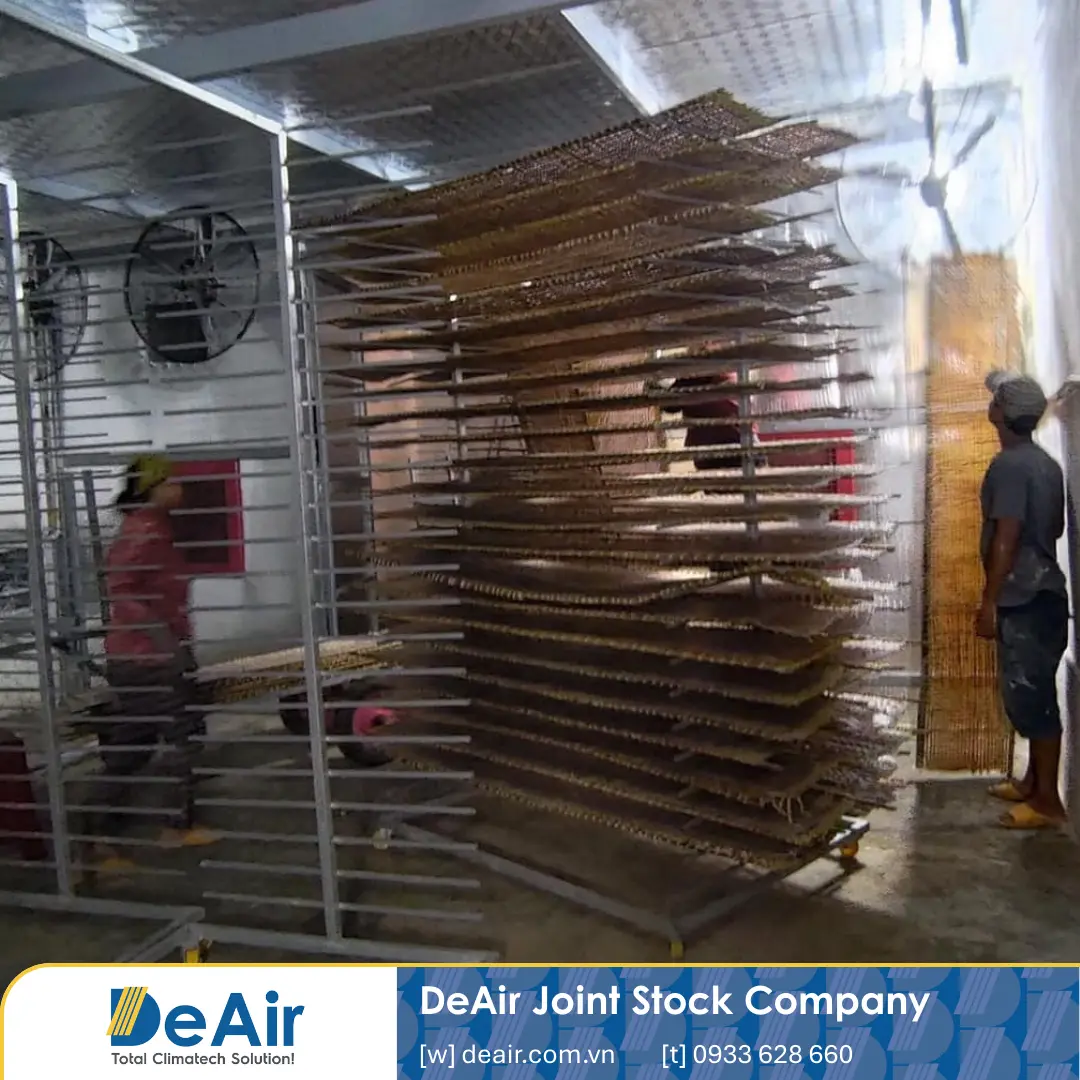 A closed drying room model with the Daxwell Heat-Pump dryer is extremely suitable for Cooperatives
Practical Application in Binh Dinh Craft Villages: The Transition from Tradition to Technology
Theory and technical specifications need to be proven in practice. The successful application of rice paper dryers in Hoai Nhon District, Binh Dinh is the clearest evidence of this solution's effectiveness. Previously, craft villages in Binh Dinh also faced situations similar to other places in the province. The rainy season meant "hanging the pots" (stopping work). Recognizing this problem, several pioneering production households, along with consulting from DeAir, decided to invest in Daxwell dryers. This is not just buying a machine, but a transformation in production mindset.
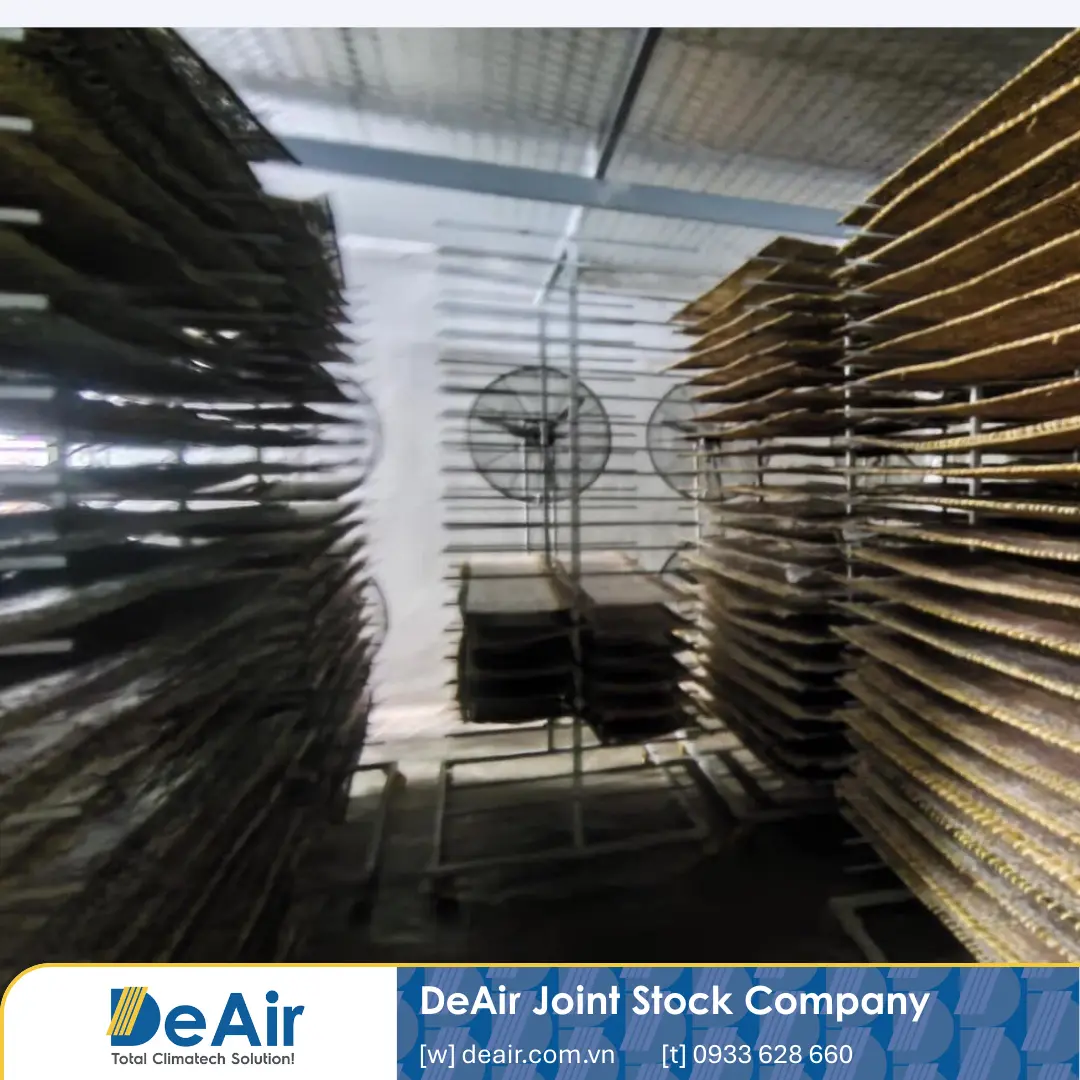 Thousands of batches of rice paper are dried evenly, proving a successful technological transformation
Model Deployed in Binh Dinh
The process of implementing the machine-based rice paper drying model in Binh Dinh is carried out according to a detailed procedure, ensuring anyone can understand and apply it. Here are the specific steps:
- Survey and Consulting (Step 1): We survey the space, power source, current workflow, and daily capacity. Based on that, we advise on the suitable machine model (DX-300D for households or larger models for cooperatives) and the optimal installation location to avoid disrupting the production line.
- Installation and Operation (Step 2): The machine is transported and installed on-site. Technicians connect the power and check the machine's operation. The installation process is quick, usually taking only a few hours.
- Detailed User Manual (Step 3): This is the most important step. Technicians will directly instruct the facility owner on how to operate the machine.
- Stacking rice paper on trays: Instructions on how to arrange rice paper on Stainless Steel trays to leave gaps for air circulation, ensuring even drying.
- Setting parameters: Clearly show how to use the control panel to set the temperature (usually 45-55°C for rice paper) and drying time (usually 3-5 hours depending on thickness). Explain the meaning of each parameter.
- Operating the machine: Press the start button and monitor the machine's operation. The machine will automatically run the full cycle and shut off.
- Maintenance and cleaning: Instructions on how to clean the drying trays and chamber after each use to ensure food safety and hygiene.
- Post-installation Support (Step 4): DeAir commits to providing technical support whenever users have questions or need to tweak the drying process for optimal results.
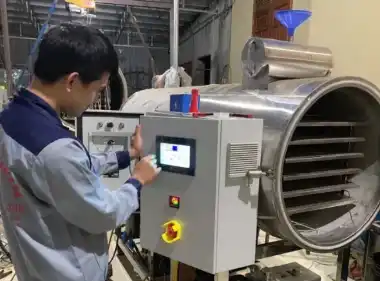
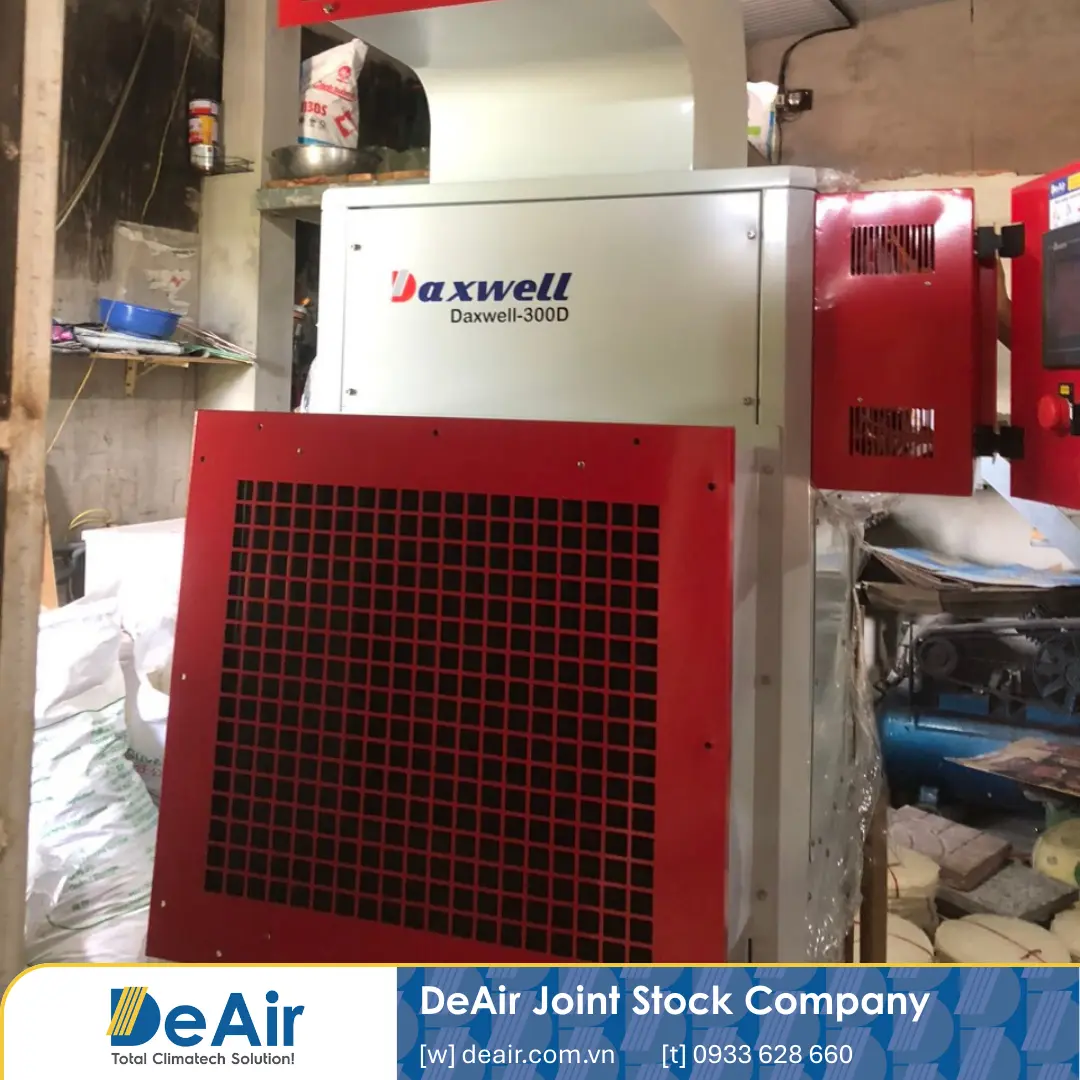 The technical team hands over and instructs the operation of the Daxwell DX-300D dryer directly at the customer's workshop
Efficiency Compared to Before Using the Machine
A comparison of efficiency before and after using the dryer shows a clear difference, demonstrated through specific numbers.
- Regarding productivity:
- Before using the machine: During the 4 months of the rainy season, productivity is almost 0. Production depends entirely on the rare sunny days.
- After using the machine: Productivity reaches 100% of design capacity, 24/7, independent of the weather. Households can work all year round, even at night, to meet order deadlines.
- Regarding defect rate:
- Before using the machine: The defect rate due to mold, warping, and tearing in the rainy season can reach 30-50%, even 100% if it rains continuously.
- After using the machine: The defect rate drops to below 1%. The produced products are dried evenly, flat, beautiful, and meet the highest quality standards.
- Regarding market opportunities:
- Before using the machine: Only daring to serve the domestic market, not daring to accept export orders due to weather risks.
- After using the machine: Confidently producing products that meet closed-room drying standards, satisfying the strict standards of the international market. The door to exporting hometown products has truly opened.
Conclusion
Investing in a rice paper dryer is not a cost, but an investment in the stability and future of the craft village. It is a necessary transformation to bring hometown traditional products to the global market.
Don't let the rainy season dictate your income and future. Take proactive control of your production process. For detailed consulting on the most suitable solution for your model, contact us today.


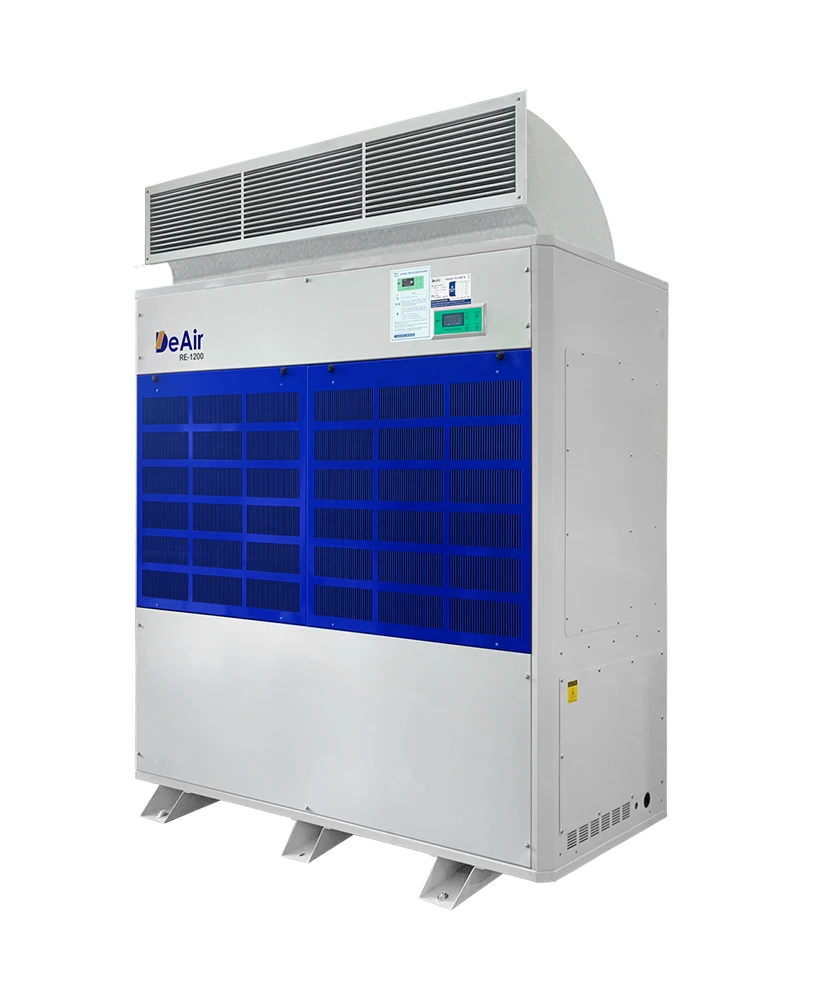 DeAir.RE
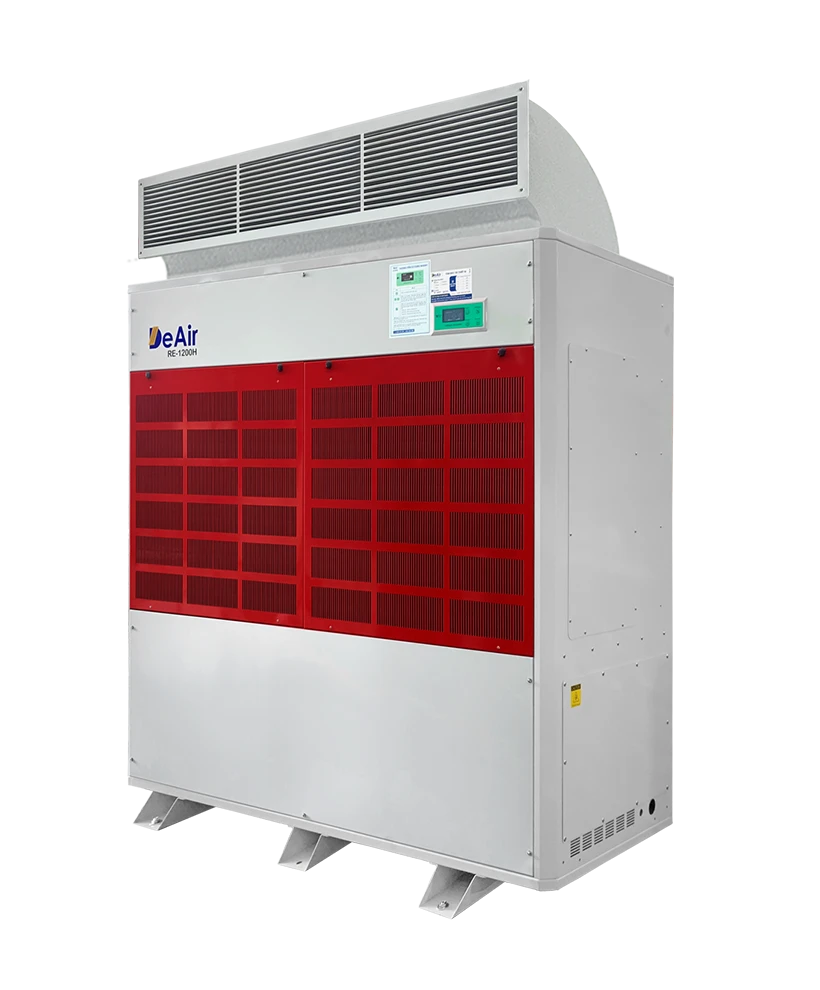 DeAir.RE-H
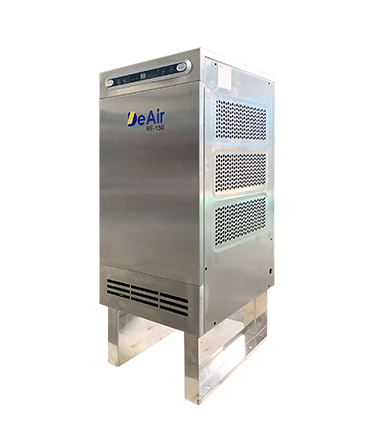 DeAir.RE-INOX
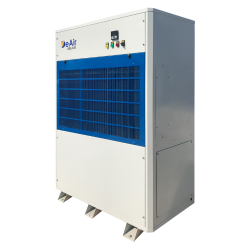 DeAir.CRE
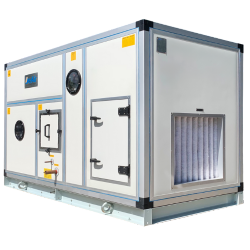 Dezenno
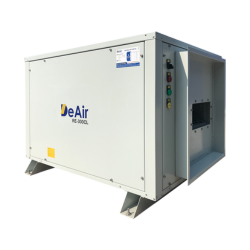 DeAir.RE-CL
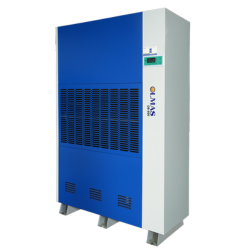 Olmas-OS
 DeAir.HM
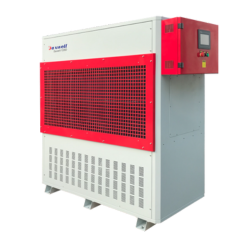 Daxwell
 DeAir.Heat
 AHU
AHU





![[Case Study] DeAir Installs DeAir.De Rotor Humidity Control System for Pharmaceutical Plant in Binh Duong](https://deair.com.vn/thumbs/news/2023_04/ban_giao_may_cho_duoc_bd/[270x153-cr]image1-1024x772.jpg__cv.webp "[Case Study] DeAir Installs DeAir.De Rotor Humidity Control System for Pharmaceutical Plant in Binh Duong")

![[Review & Guide] Olmas OS-300: The New Humidity Control "Warrior" for Medium to Large Warehouses](https://deair.com.vn/thumbs/news/huong_dan_su_dung_may_olmas_21/[270x153-cr]vtm06440.png "[Review & Guide] Olmas OS-300: The New Humidity Control \"Warrior\" for Medium to Large Warehouses")