The Problem: All materials corrode, and moisture acts as a catalyst that accelerates this destructive chemical process exponentially.
Historical Context: Since the 1950s, the US and European militaries have used dry air storage to protect weapons and ships, saving millions in preservation costs.
Modern Challenge: The threat has shifted from "macro" rusting to "microscopic-level" corrosion affecting electronic circuits, lithium batteries, and telecom gear.
DeAir's Solution: A strategic combination of Heat-Pump dehumidifiers (for warehouses and machinery) and Desiccant Rotor systems (for cleanrooms and electronics) to provide comprehensive asset protection.
1. Corrosion: The Silent Enemy and the Role of Moisture
1.1. The Nature of Corrosion
All materials eventually change from one form to another through chemical reactions, particularly oxidation. Moisture acts as a powerful catalyst, accelerating these degradation processes by tens of times.
1.2. Beyond Just Iron and Steel
️ AFFECTED MATERIALS
Ferrous metals (iron, steel): Obvious and rapid rusting when exposed to moisture.
Glass: Corrodes and cracks at rates directly proportional to the moisture on its surface.
Pure crystals (e.g., Sodium Iodide, Lithium Fluoride): Absorb ambient moisture and degrade into oxides and hydroxides.
Electronic components: Microscopic corrosion leads to severe system failures.
Dehumidification applications in military equipment storage—a problem solved since the 1950s.
2. The Evolution of Corrosion Prevention: From "Macro" to "Micro"
2.1. The 1950s - The Macro Military Problem
In the 1950s, after the Korean War, the U.S. military pioneered the use of dry air storage for the long-term protection of inactive ships, machinery, and weapons, saving millions in preservation costs. By the 1970s, European military groups, notably in Sweden and Denmark, adopted desiccant equipment to protect active-duty military material, drastically cutting maintenance costs and increasing combat readiness.
2.2. The Present - The Challenge of Microscopic Corrosion
Modern society depends increasingly on light equipment like computers, telecommunications gear, lightweight composite materials, and high-energy batteries. While less subject to gross rusting, these devices are highly sensitive to microscopic-level corrosion. These circuits have very little material to begin with, so even minute amounts of corrosion create disproportionately large problems.
✅ THE MODERN SOLUTION
Advanced desiccant (rotor) dehumidification systems save owners literally hundreds of millions of dollars each year by preventing both gross and microscopic corrosion.
DeAir showcasing both Heat-Pump and Rotor dehumidifier models at a recent industry exhibition.
3. Comprehensive Corrosion Prevention Solutions from DeAir
3.1. Mechanical, Metal & Marine Preservation (30-45% RH)
Applications: Storage of bearings, galvanized steel, precision tools, automotive metal stamping, ships, and offshore rigs.
🔧 DEAIR SOLUTIONS
DeAir.RE (Heat-Pump): Energy-efficient, ideal for standard warehouses and workshops.
DeAir.RE-CL (Ceiling-Mounted): Optimizes floor space for large aircraft hangars and shipyards.
Olmas (Industrial): Cost-effective solution for medium-sized storage facilities.
DeAir.RE-2400H installed at a marine painting facility – a robust anti-corrosion solution for the maritime industry.
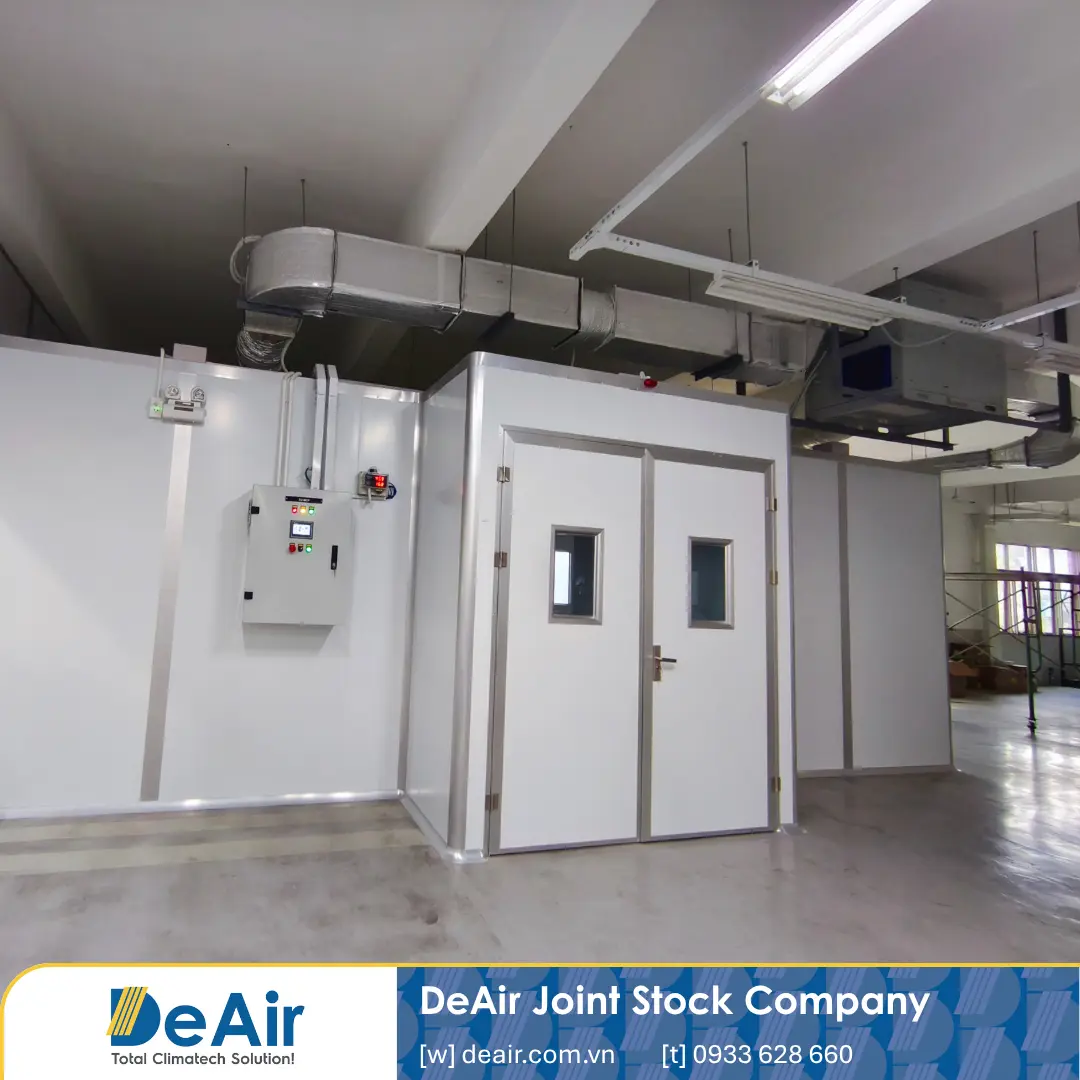
Cleanroom storage for electronic components with precise temperature and humidity control systems.
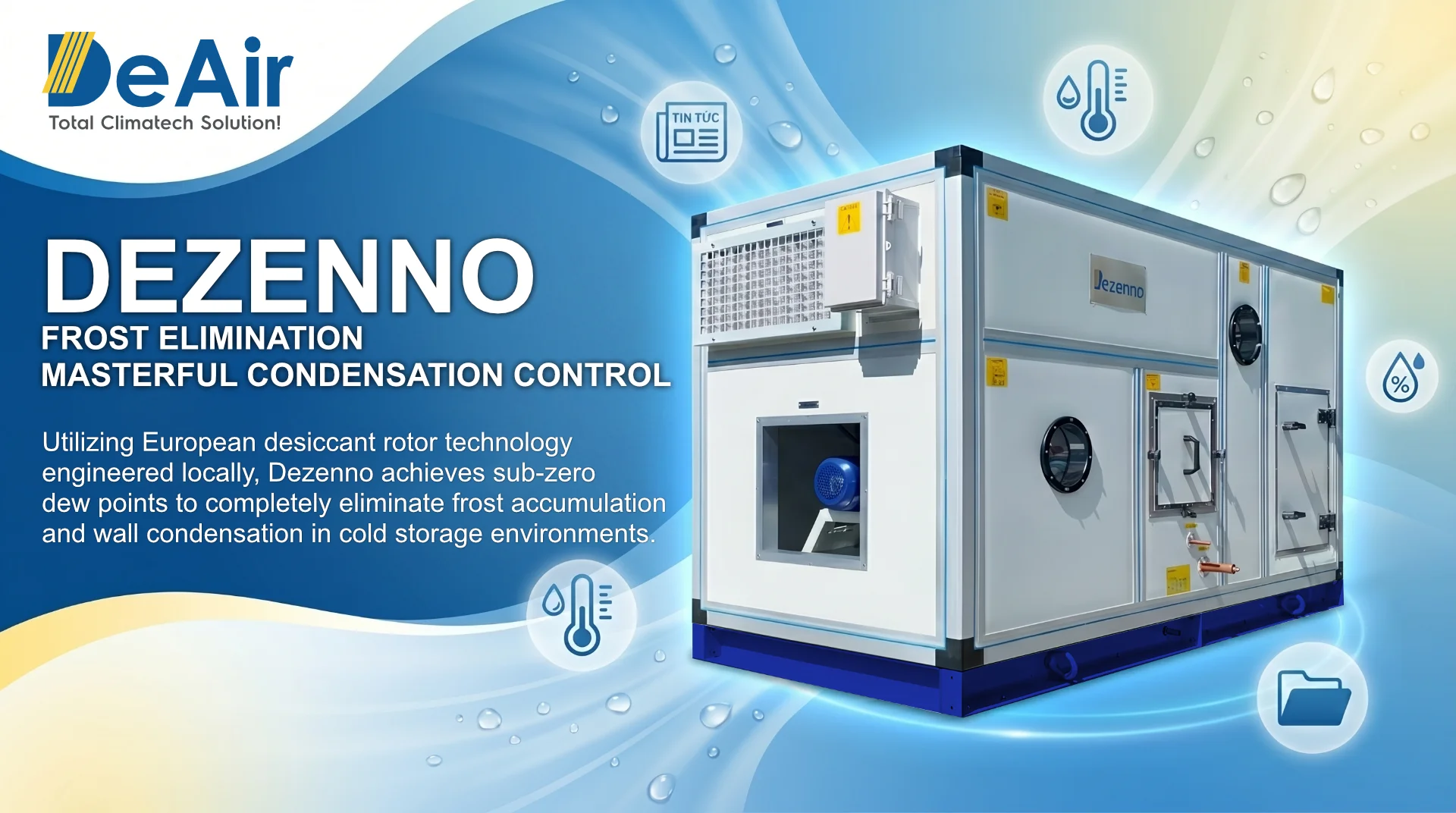
Dezenno Desiccant Rotor Equipment: Capable of lowering humidity to 15-20% RH without coil freezing, Dezenno provides the perfect "shield" against microscopic corrosion.
3.3. High-Energy Battery & Special Material Production (<1-5% RH)
Applications: Lithium battery rooms, calcium metal fabrication, and solid propellants.
🔧 DEAIR SOLUTIONS
Dezenno.MAX AHU: Integrated with ultra-adsorption desiccant rotors to control extremely low dew points, ensuring explosion safety and battery cell quality.
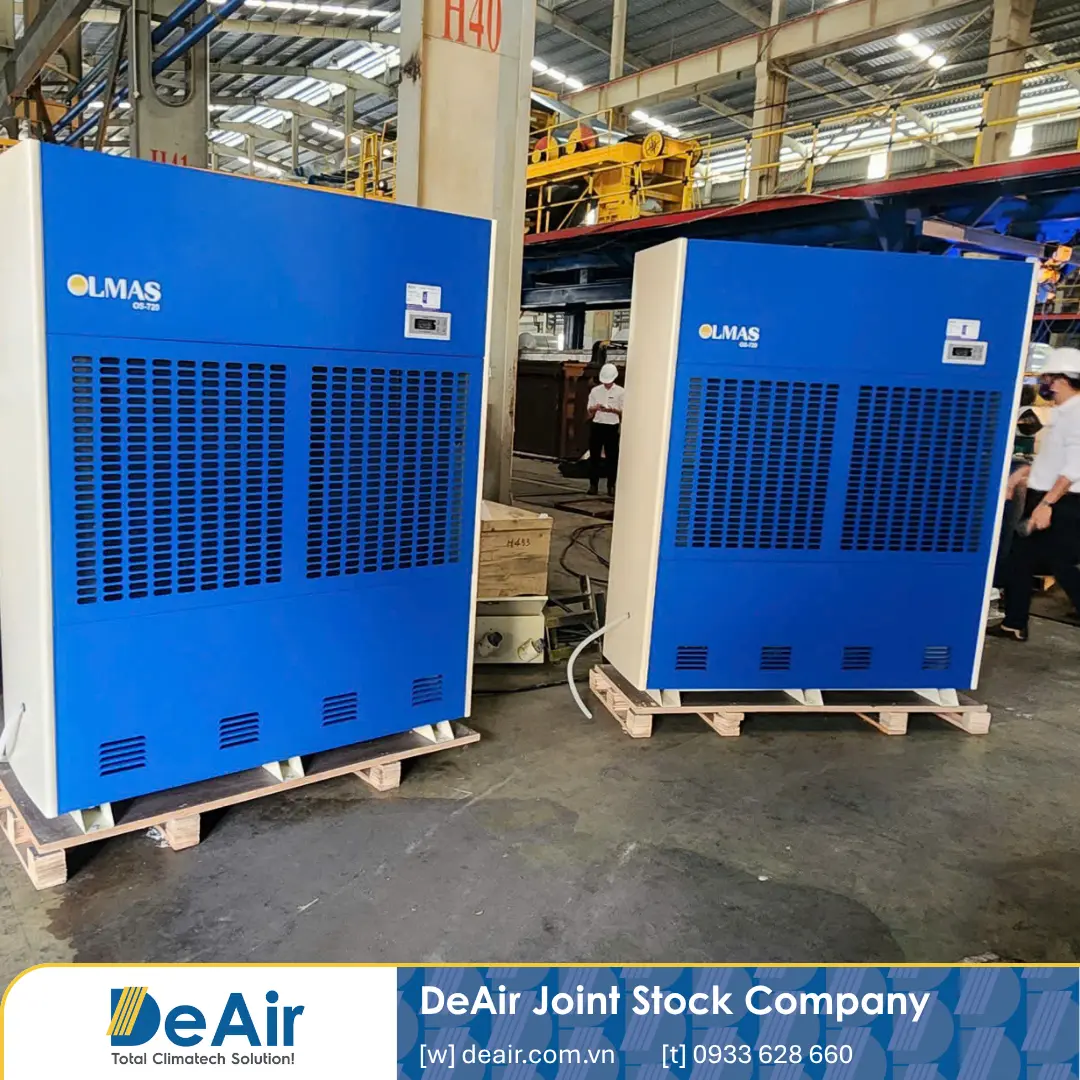
Olmas dehumidifier for corrugated metal roof warehouses – an effective solution against mold and corrosion.
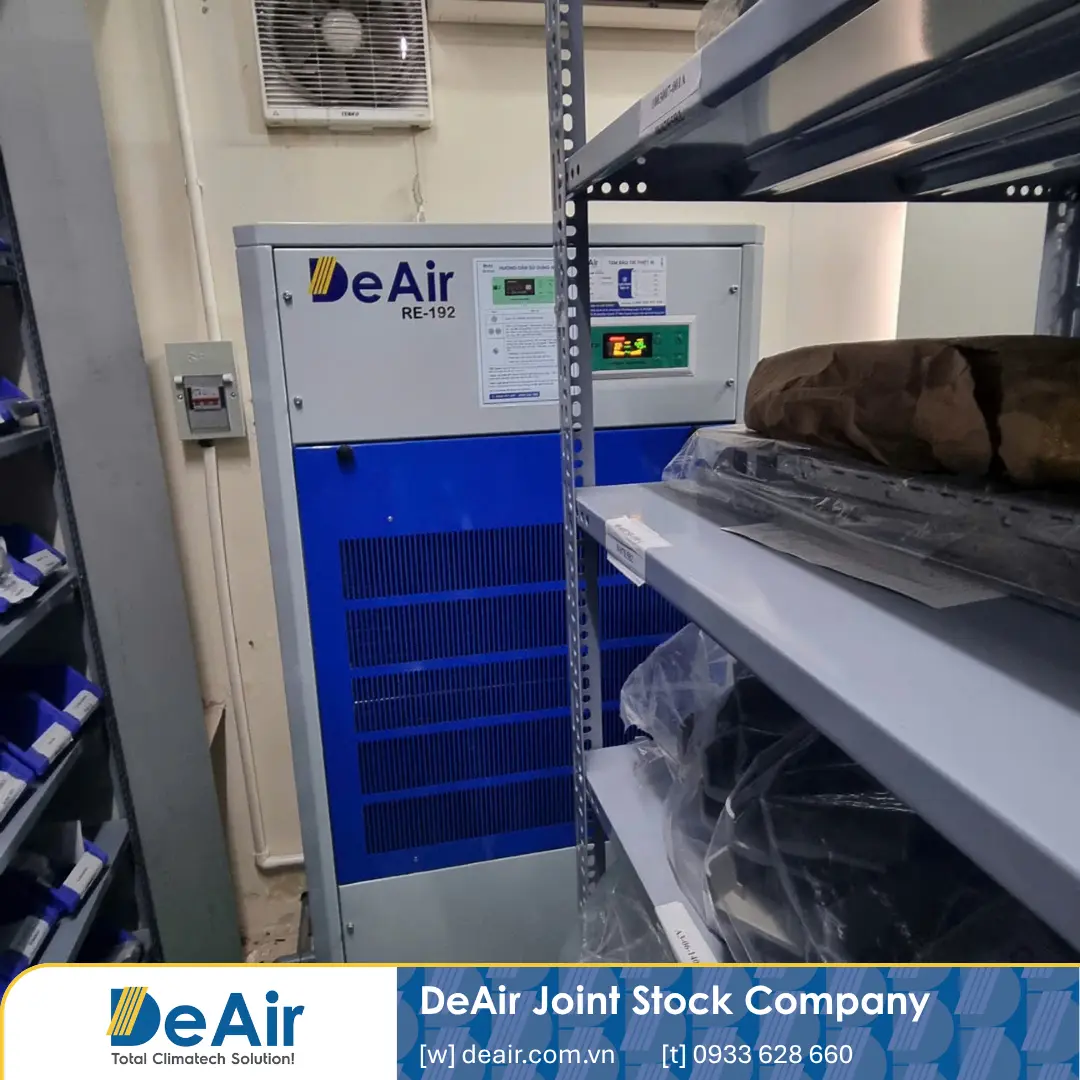
DeAir.RE-192 industrial dehumidifier in a warehouse – protecting goods from mold and oxidation.
4. Infographic: "Golden" Humidity Thresholds for Corrosion Prevention
RECOMMENDED HUMIDITY THRESHOLDS BY APPLICATION
Application
Recommended RH
DeAir Solution
Bearing Storage
30-40% RH
DeAir.RE, Olmas
Galvanized Steel Storage
35-40% RH
DeAir.RE, DeAir.RE-CL
Precision Tools
35% RH
DeAir.RE, DeAir.CRE
Electronic Equipment Assembly
20-35% RH
Dezenno Rotor
Windshield Glass Production
20% RH
Dezenno Rotor
Lithium Battery Rooms
0.5-1% RH
Dezenno Rotor
Calcium Metal Fabrication
1-5% RH
Dezenno Rotor
Ships & Offshore Rigs
35-45% RH
DeAir.RE-2400H, DeAir.RE-CL
5. Frequently Asked Questions (FAQ)
Q1: Why can't standard condensation dehumidifiers protect high-end electronic equipment?
Standard condensation dehumidifiers are only effective at humidity levels >45% RH. To achieve the <20% RH required for electronics, the cooling coil temperature must drop drastically, causing ice formation and a complete loss of efficiency. Desiccant Rotor dehumidifiers (like Dezenno) use silica gel adsorption, capable of reaching <1% RH without any freezing issues.
Q2: How do we prevent rust on massive steel structures like ships or bridges?
The solution is to maintain the surrounding environment at 30-40% RH. DeAir provides high-capacity models like the DeAir.RE-2400H (2400 kg/day) or ceiling-mounted DeAir.RE-CL for large spaces like shipyards and hangars, completely halting the oxidation and rusting process.
Q3: Is the investment in a Rotor dehumidification system more expensive than the damage caused by corrosion?
Statistics show that technology corporations save hundreds of millions of dollars annually by preventing microscopic corrosion. The initial investment in a dehumidification system is typically recouped within 12-24 months through reduced maintenance, fewer replaced components, and lower defect rates. It is a profitable investment, not just an expense.
Q4: Does DeAir offer solutions for warehouses without large 3-phase power supplies?
Yes. DeAir offers a diverse product range from residential to industrial scales: Olmas (residential/small industrial, single-phase), DeAir.RE (medium industrial, single or 3-phase), and Dezenno Rotor (large industrial, 3-phase). We will survey your site and recommend the best solution matching your existing electrical infrastructure.
Do Not Let Moisture Silently Destroy Your Assets and Corporate Reputation!
With over 20 years of expertise in thermal and humidity control, and a team of experts deeply knowledgeable about material corrosion, DeAir commits to delivering the most optimal solution for your specific applications.
Contact us now for a free survey and consultation!


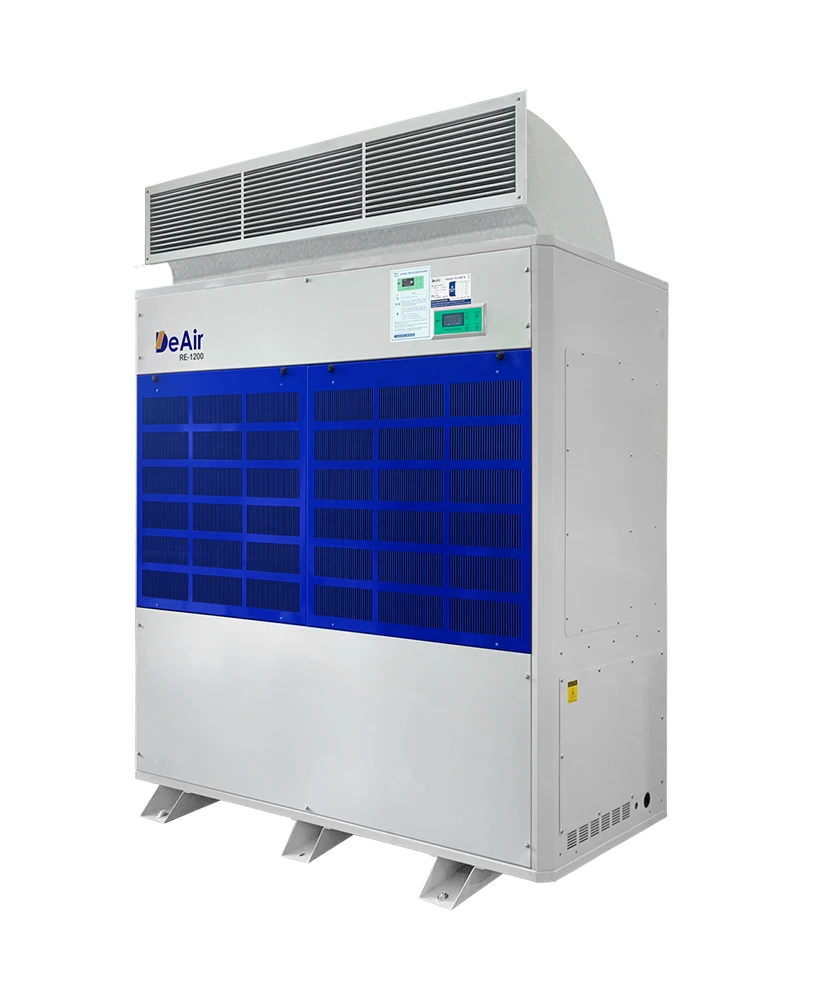 DeAir.RE
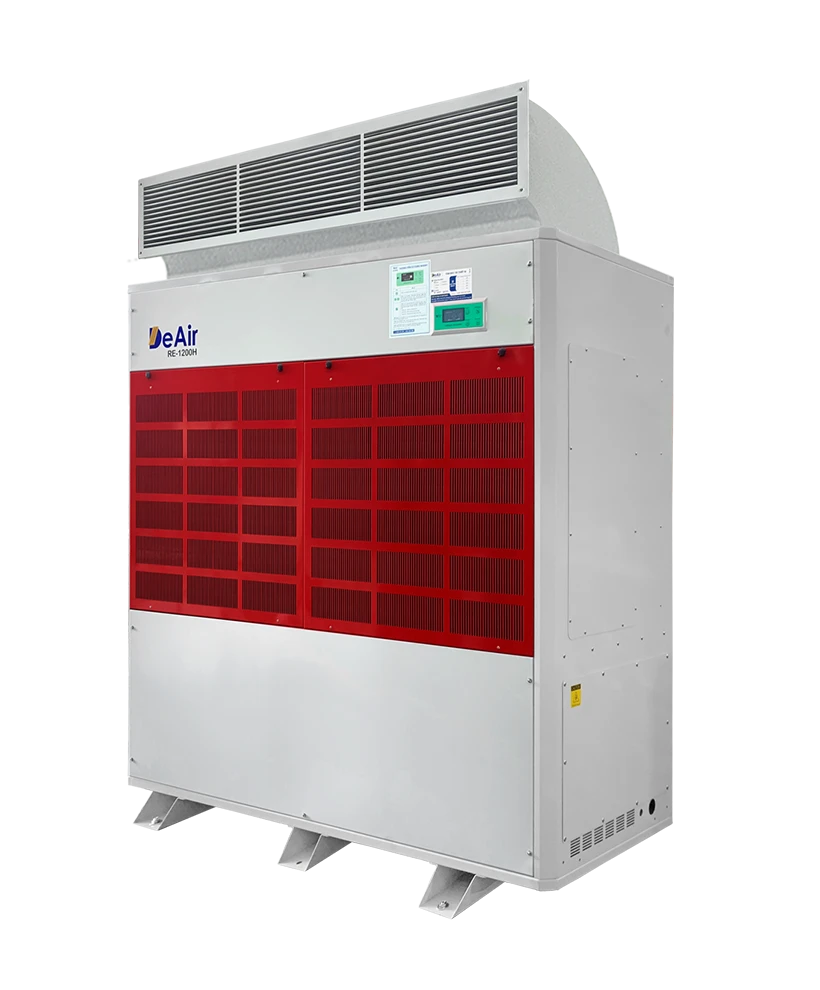 DeAir.RE-H
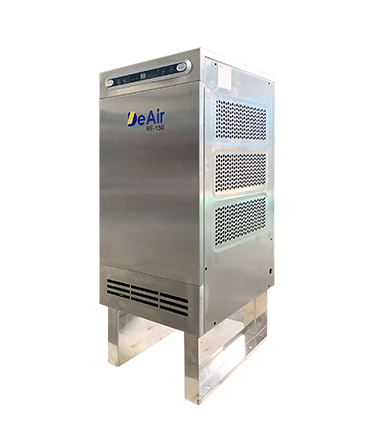 DeAir.RE-INOX
 DeAir.CRE
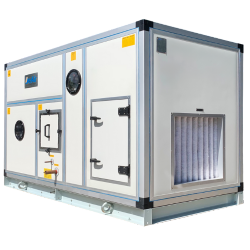 Dezenno
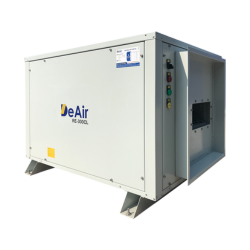 DeAir.RE-CL
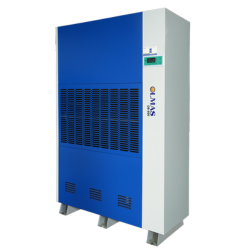 Olmas-OS
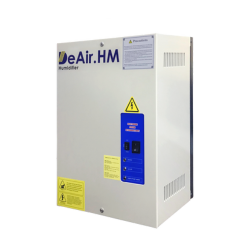 DeAir.HM
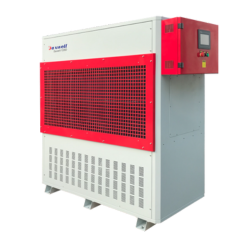 Daxwell
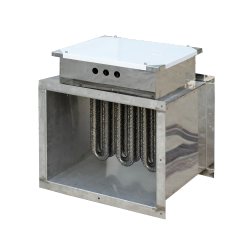 DeAir.Heat
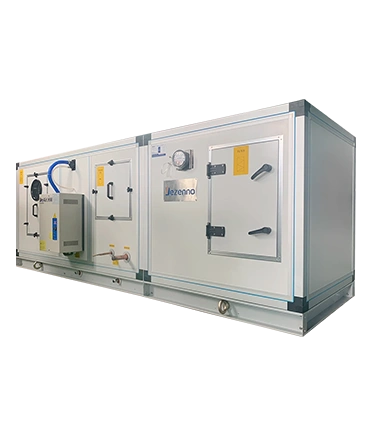 AHU
AHU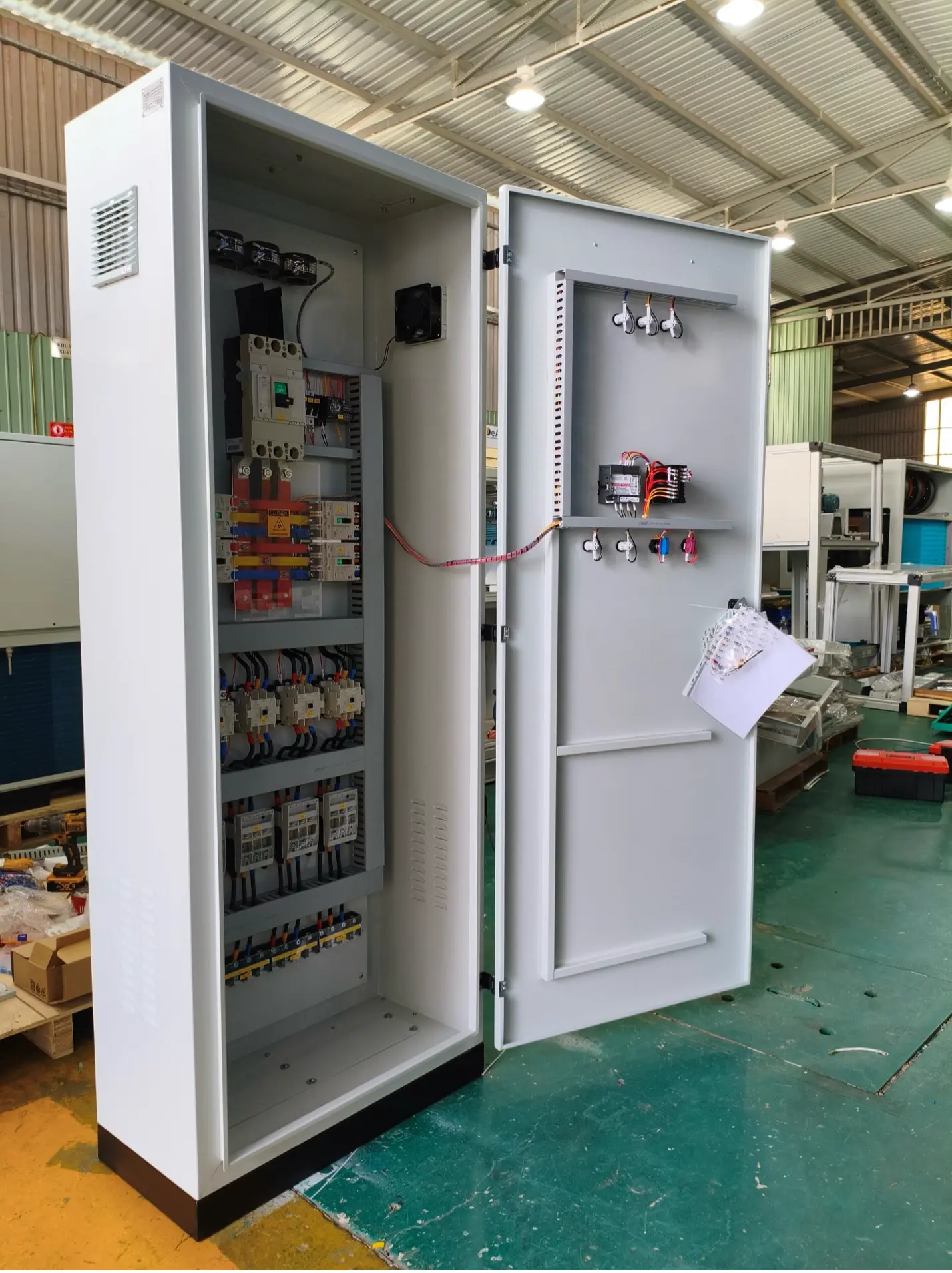






![[Case Study] DeAir Installs DeAir.De Rotor Humidity Control System for Pharmaceutical Plant in Binh Duong](https://deair.com.vn/thumbs/news/2023_04/ban_giao_may_cho_duoc_bd/[270x153-cr]image1-1024x772.jpg__cv.webp "[Case Study] DeAir Installs DeAir.De Rotor Humidity Control System for Pharmaceutical Plant in Binh Duong")

![[Review & Guide] Olmas OS-300: The New Humidity Control "Warrior" for Medium to Large Warehouses](https://deair.com.vn/thumbs/news/huong_dan_su_dung_may_olmas_21/[270x153-cr]vtm06440.png "[Review & Guide] Olmas OS-300: The New Humidity Control \"Warrior\" for Medium to Large Warehouses")