Conquering the Mekong Delta Microclimate: Installing Dezenno Desiccant Rotor Dehumidifiers for a GMP-Compliant Pharmaceutical Plant
23/06/2026
Conquering the Mekong Delta Microclimate: Installing Dezenno Desiccant Rotor Dehumidifiers for a GMP-Compliant Pharmaceutical Plant
Technical Project Brief:
Project Scope: Comprehensive engineering, supply, installation, and integration of an advanced process air dehumidification loop serving high-sterile cleanrooms (compounding, tableting, blister packaging) at a flagship pharmaceutical manufacturing facility.
Geographical Context: Located in the Mekong Delta region, a high-humidity river topography where baseline ambient humidity constantly exceeds 85% RH.
Target Parameters: Stringent regulatory parameters requiring the cleanroom microclimate to anchor stably under 30% RH for international quality audits.
Solution Matrix: Deployment of a custom industrial-grade Dezenno Desiccant Rotor Dehumidifier array, seamlessly retrofitted into an existing tight Air Handling Unit (AHU) space.
In the Southern Vietnam economic zone, the Mekong Delta region is celebrated for its sprawling network of interlocking waterways and rivers. However, this specific geographical attribute introduces an intense engineering hurdle for the pharmaceutical sector: a crushing latent moisture load in the ambient air that triggers constant red alerts for HVAC infrastructure. Securing stable, defensible relative humidity baselines compliant with WHO-GMP or EU-GMP criteria demands mechanical electrical (MEP) contractors with unparalleled system integration mastery.
Recently, DeAir's specialized field engineering division finalized the commissioning of a complex microclimate control matrix at a primary pharmaceutical plant in this region. This case study details how we utilized core Dezenno Rotor technology to transform a high-moisture cleanroom suite into a structurally stabilized, sterile, bone-dry process environment.
1. The Harsh Psychrometric Challenge of the Mekong Delta Waterway Topography
Initial engineering site audits recorded ambient relative humidity levels fluctuating erratically between 85% and 95% RH. This massive moisture mass continuously forced its way into the building envelope via the dedicated make-up air handling units (MAUs). Conversely, GMP manufacturing validation criteria dictated that compounding suites, effervescent compression rooms, and blister packing zones lock their process environment strictly under 30% RH to eliminate API hydrolysis and product sweating.
The facility's historical setup relied on traditional direct-expansion (DX) mechanical refrigeration coils. However, when trying to force process air to a deep dew point, the coil surface temperature regularly breached sub-zero thresholds, leading to massive evaporator ice accumulation that entirely choked off volumetric mass flow. The plant required an alternative thermodynamic strategy capable of aggressively stripping water molecules at deep dew points without freeze-up limitations.
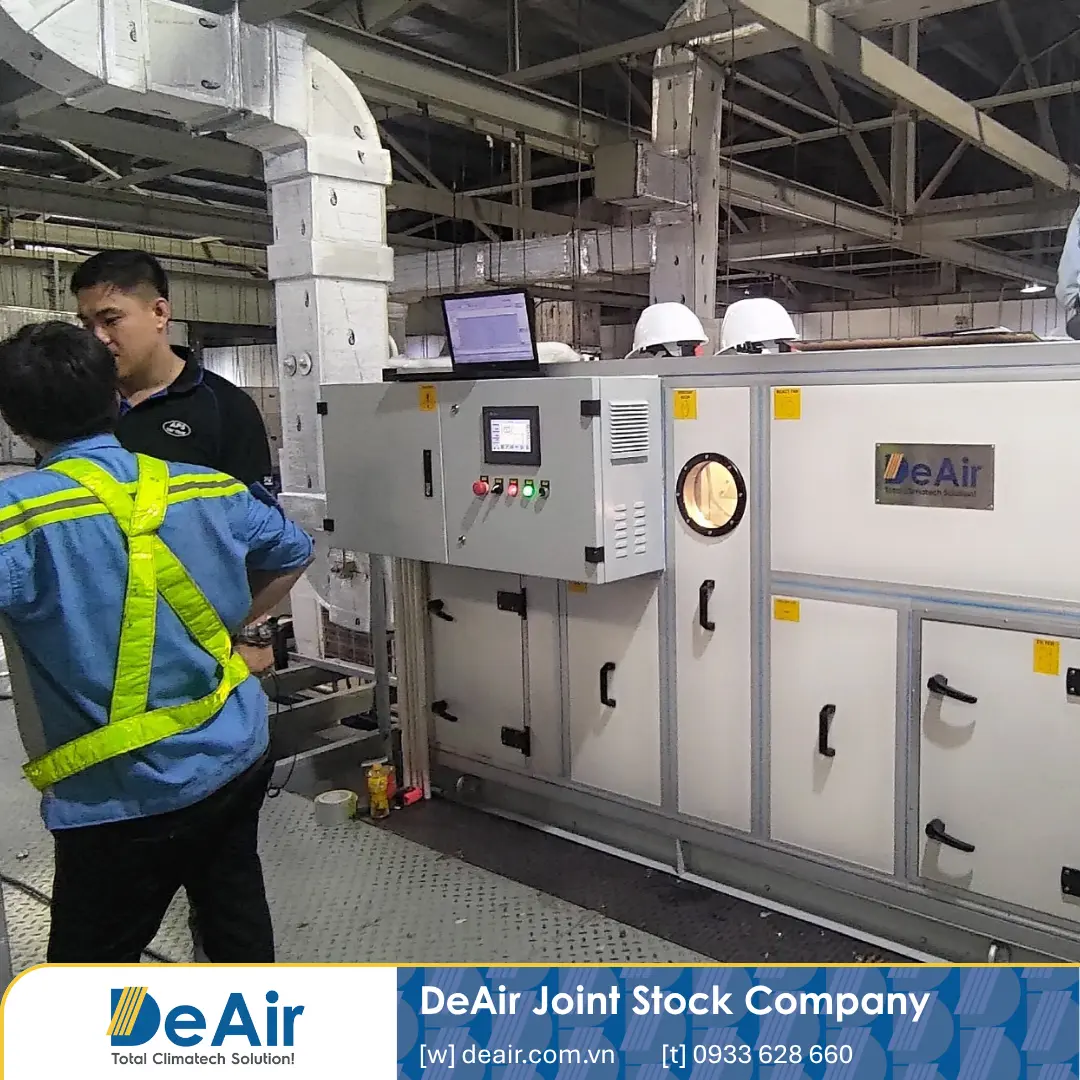
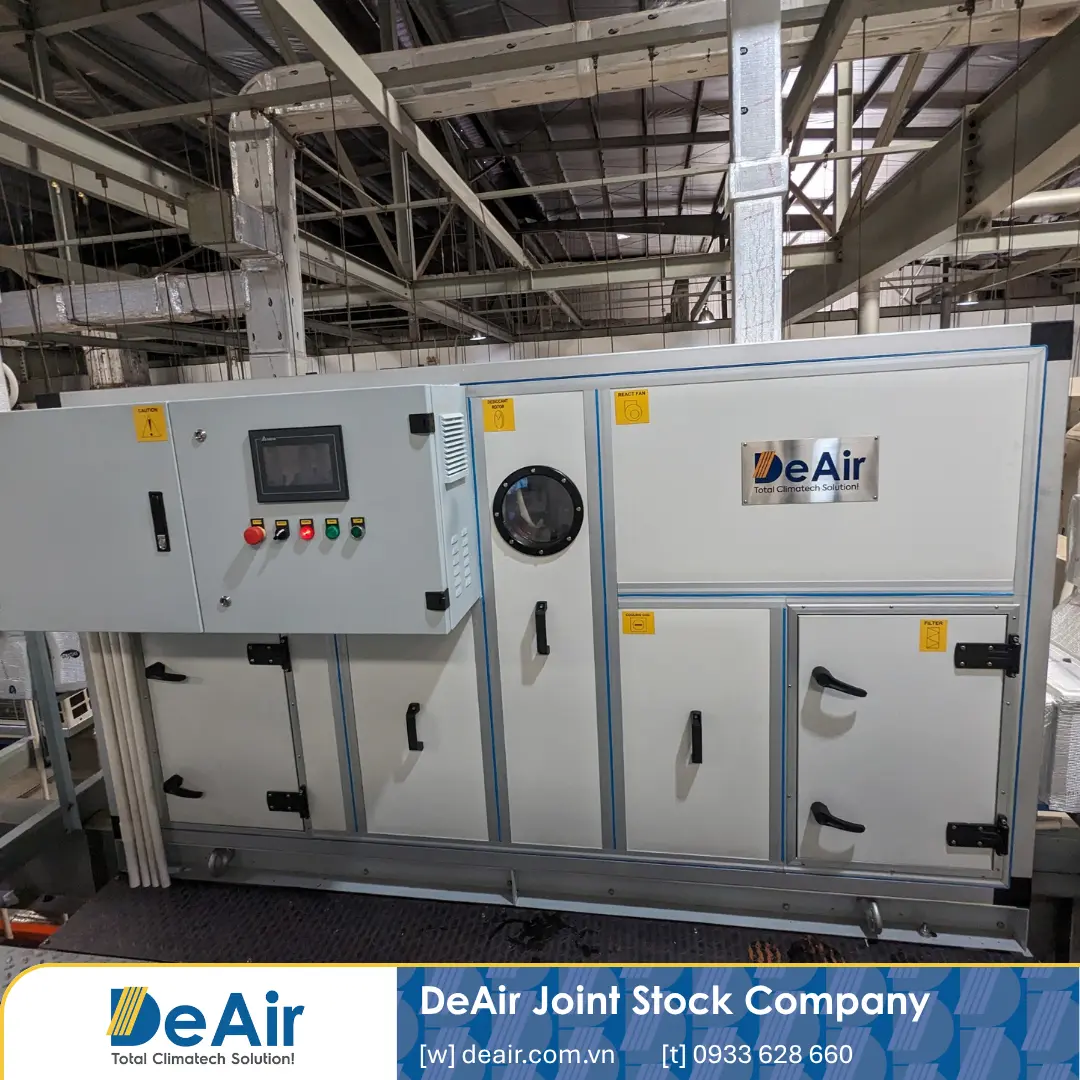
The modular industrial Dezenno dehumidification block safely transported and staged within the plant's mechanical loading bay.
DeAir project engineers auditing the AHU room spatial footprint and piping elevations prior to structural rigging sequences.
2. The Definitive Engineering Answer: Dezenno Solid-Sorption Desiccant Wheels
DeAir's HVAC engineering division developed and proposed a complete solution centering on the Dezenno Industrial Desiccant Rotor Dehumidifier. Rather than utilizing sub-cooling condensation mechanics, Dezenno leverages a continuously rotating, structural honeycomb wheel impregnated with highly active solid desiccant substrate—specifically, synthesized Molecular Sieve and Silica Gel matrices.
As the humid incoming air mass passes through the process sector of the rotor, the immense microscopic pore volume of the desiccant captures and binds water molecules via physical adsorption. Concurrently, the matrix slow-rotates into a separate reactivation sector heated via structured electrical arrays (120°C to 150°C), driving out the collected vapor into an external exhaust stream. This continuous thermal reclaim loop effortlessly forces process air dew points to ultra-low coordinates, stabilizing the tableting suite safely under 30% RH regardless of outdoor tropical rain downpours.
3. Mechanical Integration: Interlocking Core Dehumidifiers with Existing HVAC Loops
Delivering premium equipment handles only half of a complex project's success parameters; the remaining half hinges on expert field execution. The facility's primary AHU plant room presented severe geometric limits, densely packed with existing chilled water piping (Chiller loops) and intricate galvanised steel duct networks.
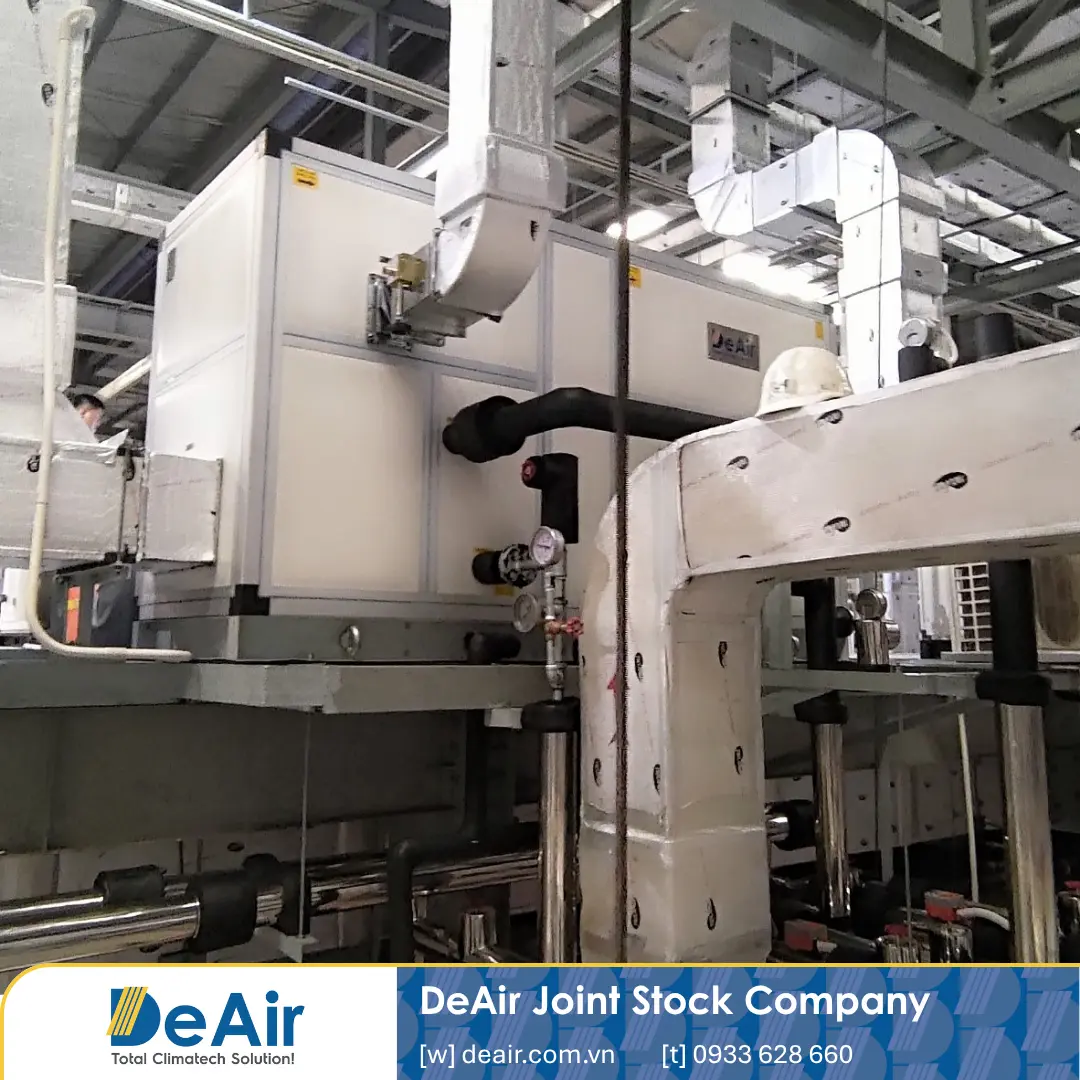
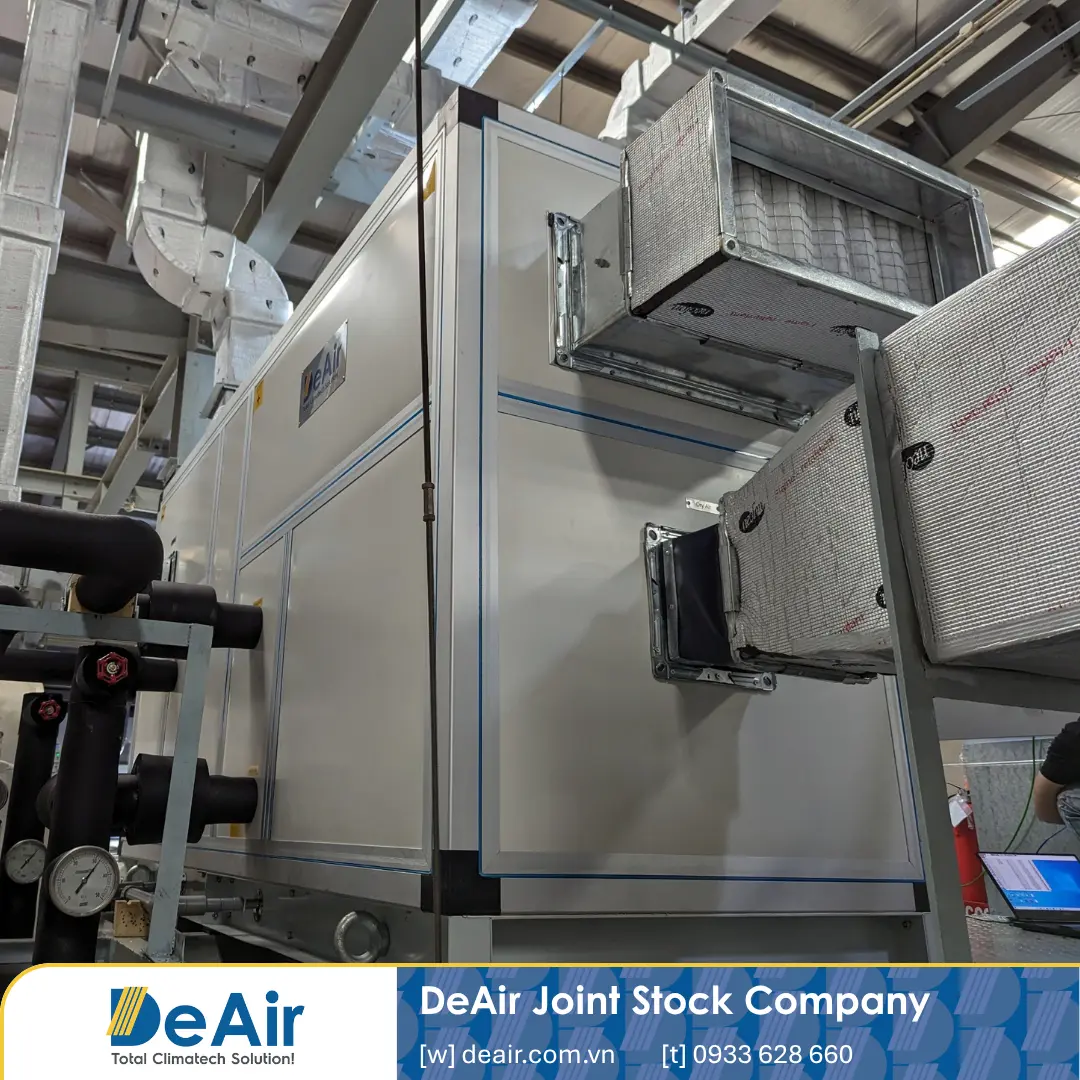
DeAir field mechanical crews positioning the Dezenno chassis beside running chiller lines with millimeter clearances.
Applying heavy-duty thermal insulation and executing airtight flange connections to shield dry process air streams from ambient moisture ingress.
Precision Ductwork Modifications: We fabricated and sealed custom T-and-Y branch transitions, pairing the Dezenno process flanges directly into the primary return and supply air ducts without altering the core mechanical room layout.
External Static Pressure (ESP) Compensation: The Dezenno unit’s internal centrifugal fans were fine-tuned via variable frequency drives to balance volumetric flows (CFM) and static pressures, ensuring flawless dry air blending without causing draft drops across terminal cleanroom HEPA diffusers.
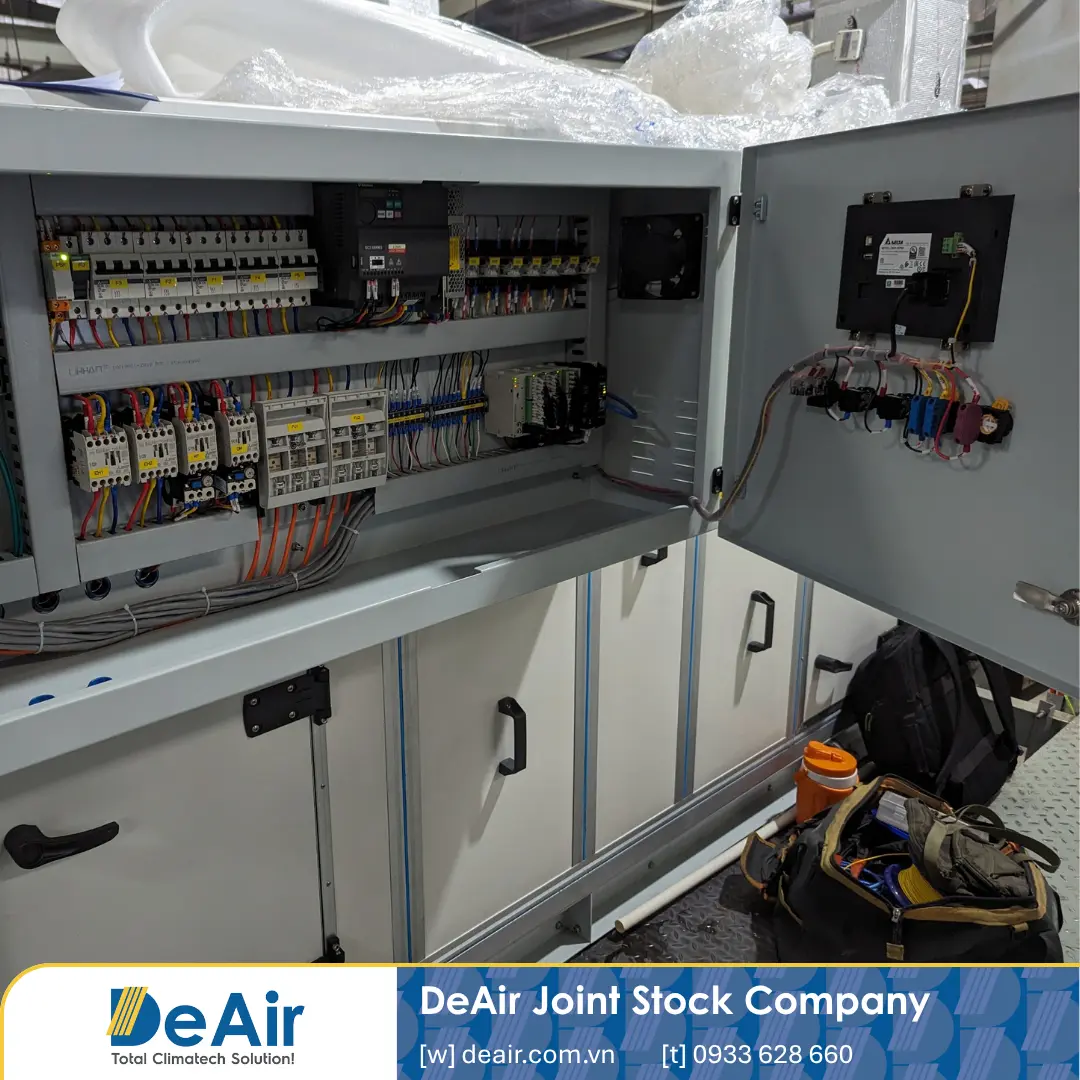
Power Distribution Alignment: High-current reactivation circuits were safely interlocked into the main electrical distribution panels, balancing line phases to handle full continuous loads smoothly.
4. Technical Commissioning, Trial Runs, and GMP Validation Handover
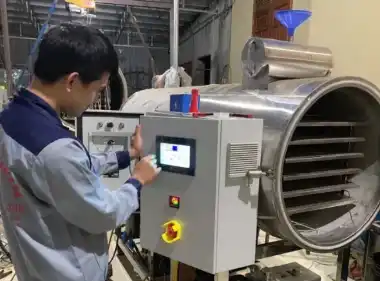
The technical commissioning phase validated our rigorous engineering equations. As the automated HMI panel initialized, the desiccant rotor began its continuous rotation, immediately pulling down the massive moisture loads in the cleanroom environment.
Fine-tuning advanced automated PID control loops on the central interface to lock down process dew points.
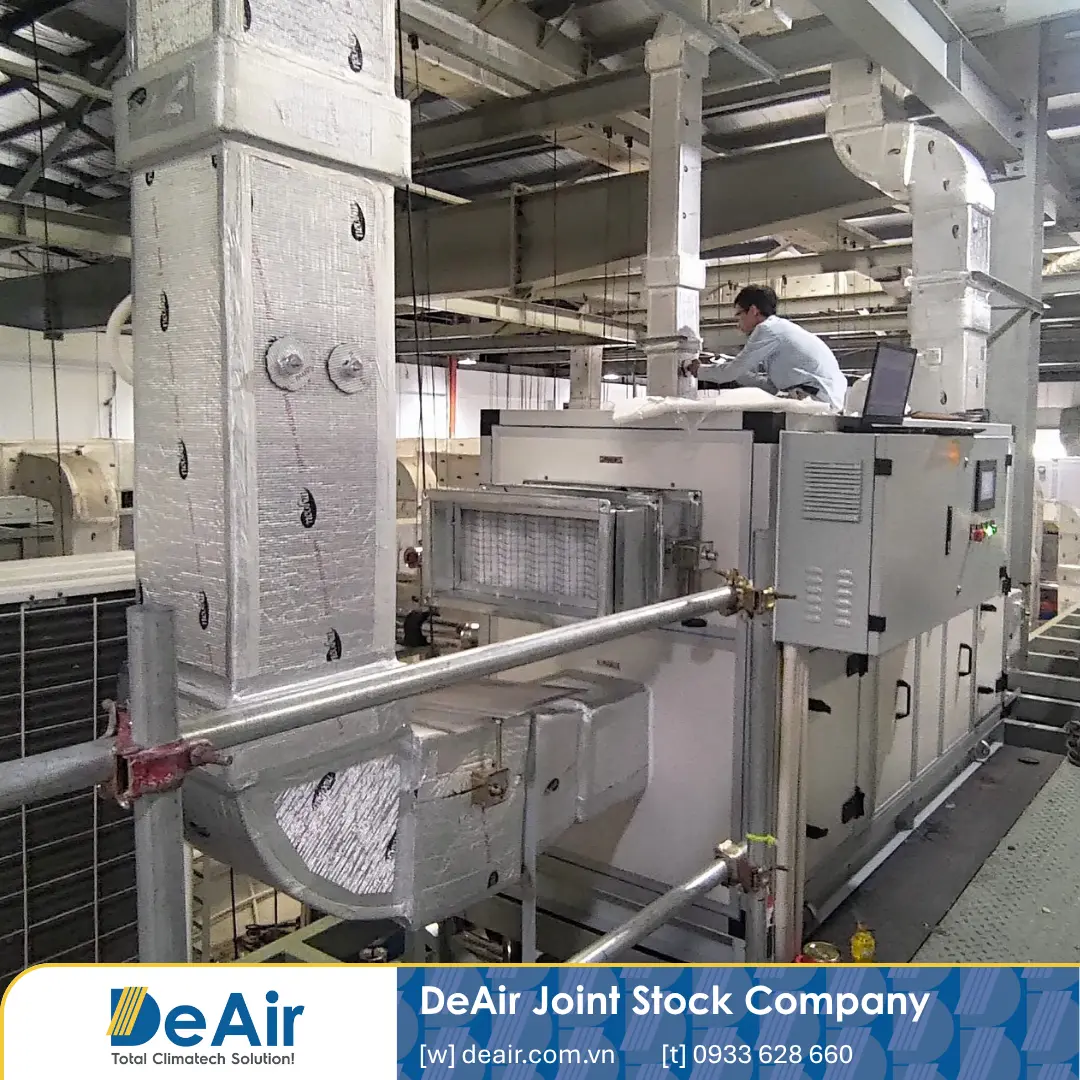
The fully commissioned Dezenno desiccant loop running in perfect synchronization with the central AHU array.
Armed with laboratory-grade chilled-mirror dew point analyzers and thermal anemometers, DeAir specialists mapped all airflow streams. Process tracking logs registered immediate pull-downs, locking the tableting suites into their precise compliance targets and fully isolating production from the tropical external weather patterns.
To review a real-world visualization of the equipment deployed for this pharmaceutical project, watch DeAir's technical field broadcast below:
Upon project finalization, DeAir delivered complete technical commissioning binders (Logbooks) and calibration certifications to the main contractor and plant management, establishing a defensible data trail for regulatory medical inspectors during GMP certification audits.
Commanding Latent Humidity Across All Climatic Zones!
The success of this flagship Mekong Delta pharmaceutical deployment validates DeAir's expertise in core electromechanical engineering. We do not simply supply heavy-duty industrial dehumidification machinery; we deliver complete System Integration solutions for the most complex cleanroom parameters on earth.
Are you a Plant Developer, MEP General Contractor, or Facility Director managing a project bound to rigorous GMP cleanroom criteria? Contact the DeAir Electromechanical Projects Division today to secure an expert psychrometric site audit, structural load calculations, and a custom Dezenno system schematic—100% free of charge!


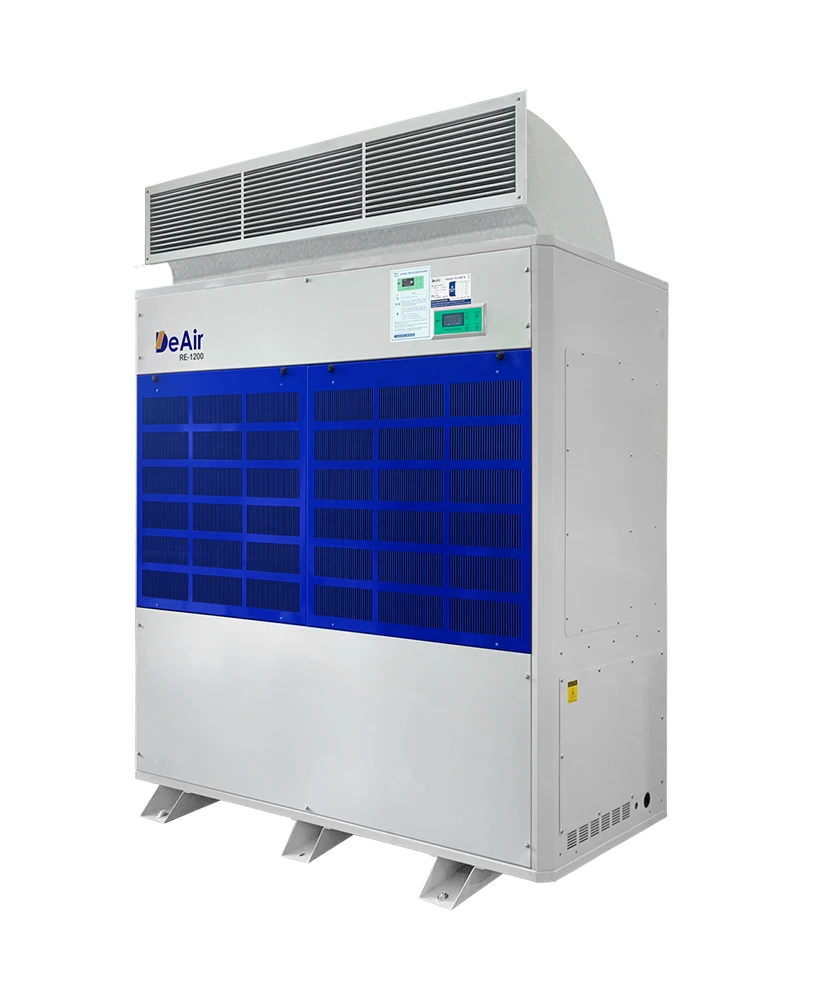 DeAir.RE
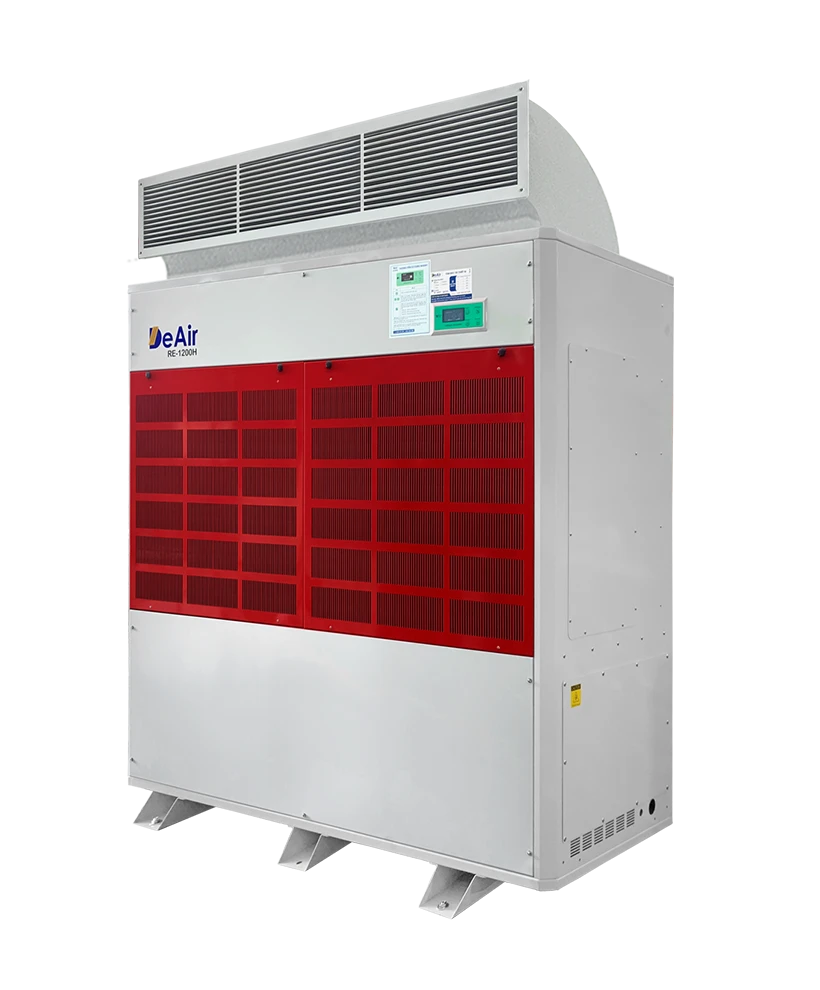 DeAir.RE-H
 DeAir.RE-INOX
 DeAir.CRE
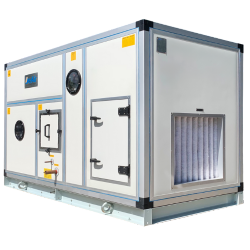 Dezenno
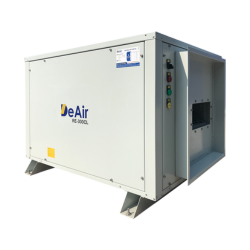 DeAir.RE-CL
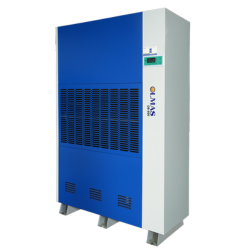 Olmas-OS
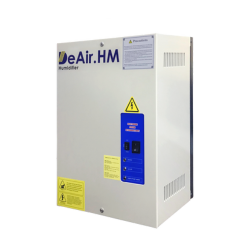 DeAir.HM
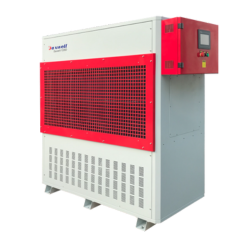 Daxwell
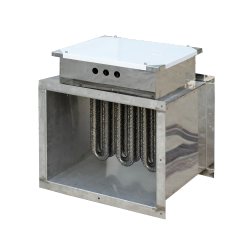 DeAir.Heat
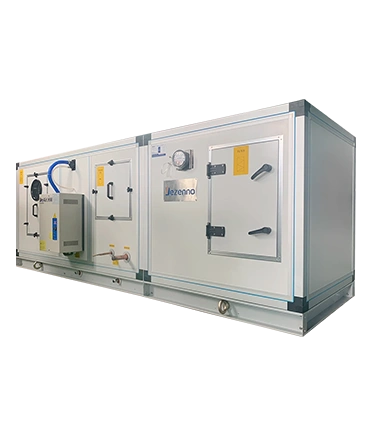 AHU
AHU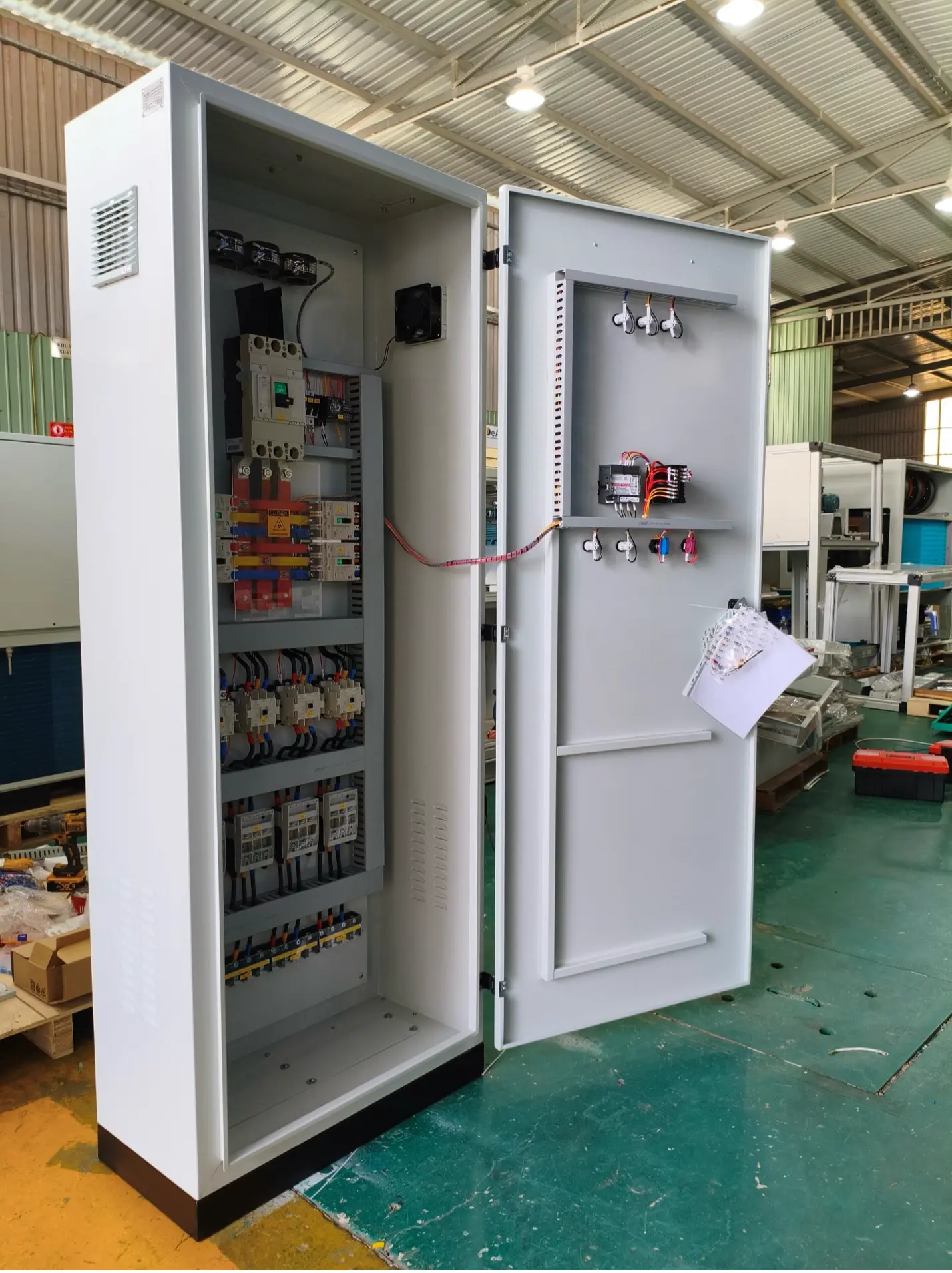






![[Case Study] DeAir Installs DeAir.De Rotor Humidity Control System for Pharmaceutical Plant in Binh Duong](https://deair.com.vn/thumbs/news/2023_04/ban_giao_may_cho_duoc_bd/[270x153-cr]image1-1024x772.jpg__cv.webp "[Case Study] DeAir Installs DeAir.De Rotor Humidity Control System for Pharmaceutical Plant in Binh Duong")

![[Review & Guide] Olmas OS-300: The New Humidity Control "Warrior" for Medium to Large Warehouses](https://deair.com.vn/thumbs/news/huong_dan_su_dung_may_olmas_21/[270x153-cr]vtm06440.png "[Review & Guide] Olmas OS-300: The New Humidity Control \"Warrior\" for Medium to Large Warehouses")