Cold Storage Humidity Control: Eradicating Frost and Ice via Desiccant Sorption Technologies
05/06/2026
Cold Storage Humidity Control: Eradicating Frost and Ice via Desiccant Sorption Technologies
Summary:
The Vacuum Effect: Rapid air cooling inside cold storage causes volume contraction, generating a continuous negative pressure zone that aggressively draws warm, humid ambient air through vestibule doors and structural micro-fissures.
The Defrost Penalty Loop: Infiltrated latent loads condense and freeze directly onto evaporator coils, necessitating frequent defrost cycles. This introduces secondary thermal shocks and forces compressors into an energy-intensive (compensation) loop, inflating power consumption by 15% to 25%.
DeAir Stratified Mitigation: Intercept structural humidity by pairing a DeAir.CRE Isothermal Dehumidifier at the loading dock (establishing a dry-air positive pressure barrier) with a heavy-duty Dezenno Desiccant Rotor Dehumidifier engineered for deep moisture extraction in sub-zero environments.
In cold chain logistics and temperature-controlled warehousing, maintaining stable thermal psychrometrics is only half the battle. Based on thermodynamic whitepapers—most notably "Humidity Control in Cold Storage Using Sorption Technologies" —uncontrolled latent loads represent the primary driver of structural degradation and system inefficiencies. This article analyzes the physics behind cold storage "negative pressure," details the compounding operational penalties of the defrost cycle, and presents a stratified humidity control framework developed by DeAir.
1. Thermodynamic Principles & The "Negative Pressure Trap"
In active cold storage facilities characterized by high-frequency inventory turnover, the predominant latent heat gain originates externally rather than from the product load. From a thermodynamic standpoint, as warm ambient air is abruptly chilled inside a cold envelope, its volume contracts significantly while its mass density increases. This localized volumetric contraction induces a continuous internal negative pressure zone (Vacuum Effect).
This pressure differential acts as a mechanical pump, continuously driving warm, moisture-laden ambient air into the facility through wall joints, panel seams, and dock seals during door openings. Empirical data shows that conventional mechanical dock seals cannot achieve a 100% airtight barrier during truck coupling. The extreme density gradient, atmospheric pressure variance, and door duty cycles form the critical input data used by DeAir engineers to model total latent infiltration loads for precise system sizing.
Industrial dehumidification system engineered by DeAir—providing complete climate and humidity control infrastructure for logistics centers across Vietnam.
2. Psychrometric Standards for Confectionery Preservation
Confectionery manufacturing and logistics demand highly accurate environmental tolerances. Psychrometric deviations lead to moisture absorption, causing sugar liquification (sugar bloom) or fat separation in chocolate matrices (fat bloom). Below are the precise technical preservation thresholds across various candy formulations (Storage temperature normalized to 48°F ~ 8.9°C):
Candy Type
Relative Humidity (%)
Storage Life (Months)
Sweet chocolate
40%
6
Milk chocolate
40%
2
Lemon drops (hard)
40%
4
Chocolate-covered peanuts
40% - 45%
4
Peanut brittle
40%
1.5
Coated nut rolls
45% - 50%
3
Uncoated peanut rolls
45% - 50%
2
Nougat bars
50%
3
Hard creams
50%
6
Sugar bonbons
50%
6
Coconut squares
50%
3
Peanut butter taffy
40%
3
Chocolate-coated products:
- Cream centers
50%
3
- Soft centers
50%
3
Plain caramels
50%
6
Fudge
65%
5
Gumdrops
65%
6
Marshmallows
65%
3
3. The Defrost Penalty Loop & Structural Cascading Failures
When a humid air stream infiltrates the storage volume, airborne water vapor undergoes desublimation toward the evaporator surfaces—the zones of lowest surface temperature. This instigates a series of severe operational inefficiencies:
The Defrost Energy Penalty Loop: Frost forms an insulating layer over copper tubes and aluminum fins, degrading the evaporator's thermal transmittance. To prevent complete airflow blockage, the system must trigger electric or hot-gas defrost cycles. During defrosting, substantial heat is injected directly back into the envelope. Once concluded, the refrigeration compressors must execute an extended high-load compensation pull-down to neutralize this added thermal energy, compounding energy loss.
Occupational Safety Hazards: When humid, ambient air contacts sub-zero floors, walls, and ceilings, immediate freezing occurs. This converts warehouse floors into low-traction surfaces that compromise forklift stability. Concurrently, ceiling-bound ice formations present unpredictable falling hazards, compromising personnel safety.
Packaging Failure: Corrugated cardboard containers absorb excess ambient moisture, reducing their compression strength. This causes localized structural failure under stack loads, leading to pallet collapse and barcode degradation.
4. Why Compression Refrigeration Fails at Latent Removal
Mechanical refrigeration dehumidifies by dropping air temperatures below the dew point to condense water vapor into liquid. However, inside sub-zero envelopes (0°C to -30°C), the air's dew point sits far below the freezing point of water. Moisture contacting a standard refrigeration coil instantly transitions to solid ice, choking air circulation and completely neutralizing mechanical dehumidification capacity.
👉 The Only viable solution: Solid Desiccant Sorption Technology utilizing active Rotor matrices.
To resolve these mechanical and thermodynamic challenges, DeAir implements a stratified climate control architecture designed to handle specific environmental boundaries:
5.1. The Perimeter Interface: Antechambers & Loading Docks
Loading docks and transition antechambers typically maintain moderated temperatures above 15°C. This zone represents the ideal application point for the DeAir.CRE Isothermal Dehumidifier.
Positive Pressure Generation: The DeAir.CRE system draws in incoming warm, humid air currents and extracts bulk latent water before it crosses into the facility. This processed dry air stream is continuously supplied to the staging zone to establish a dry-air positive pressure envelope, acting as a pneumatic shield that repels unconditioned ambient moisture.
5.2. The Core Envelope: Sub-Zero Freezer & Cold Storage Volumes
Where operating conditions dip below freezing (0°C to -30°C), isothermal condensation systems are restricted by the physical boundaries of frost formation. For these zones, the installation of a Dezenno Desiccant Rotor Dehumidifier is mandatory.
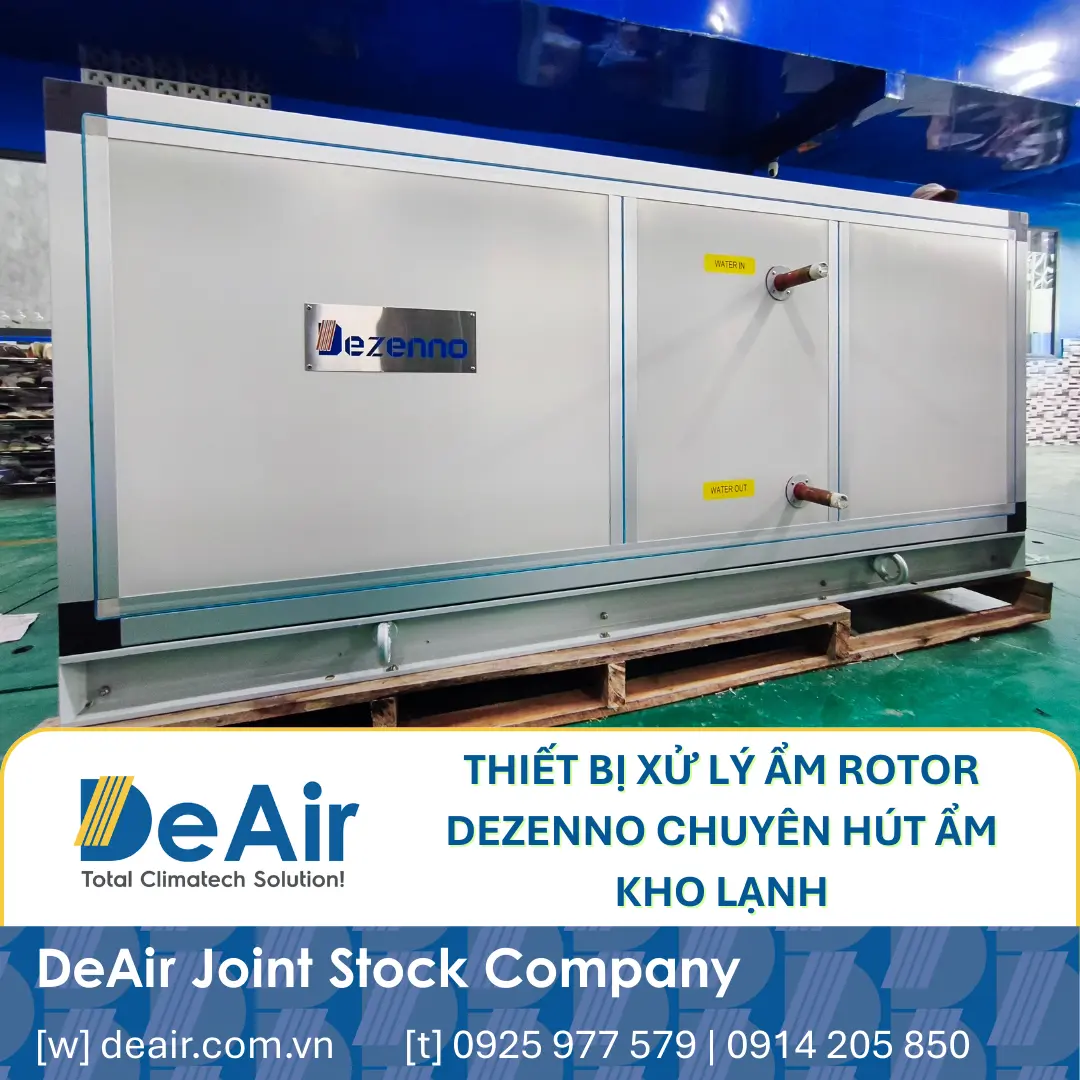
This platform utilizes a high-density, synthesized silica gel honeycomb wheel matrix. Infiltrating water vapor is bound at the molecular level via adsorption, producing a deeply dehumidified process air stream with sub-zero dew points. An independent, high-temperature reactivation loop continuously drives collected moisture out of the building envelope without disrupting the internal thermal conditions, eliminating frost formation and vapor misting.
*Engineering Note from DeAir Systems: Suppressing latent infiltration loads leads directly to reduced defrost frequency. This reduces the primary thermal load on refrigeration compressors, extending equipment lifespans while providing a 15% to 25% reduction in monthly facility utility expenditures.*
Optimize Your Cold Chain Logistics Today
Eliminating water vapor at the facility perimeter is the most effective method for controlling frost risks, slip hazards, and defrost energy loss. Contact DeAir's mechanical engineering group to schedule psychrometric load calculations and custom system designs for your logistics network.


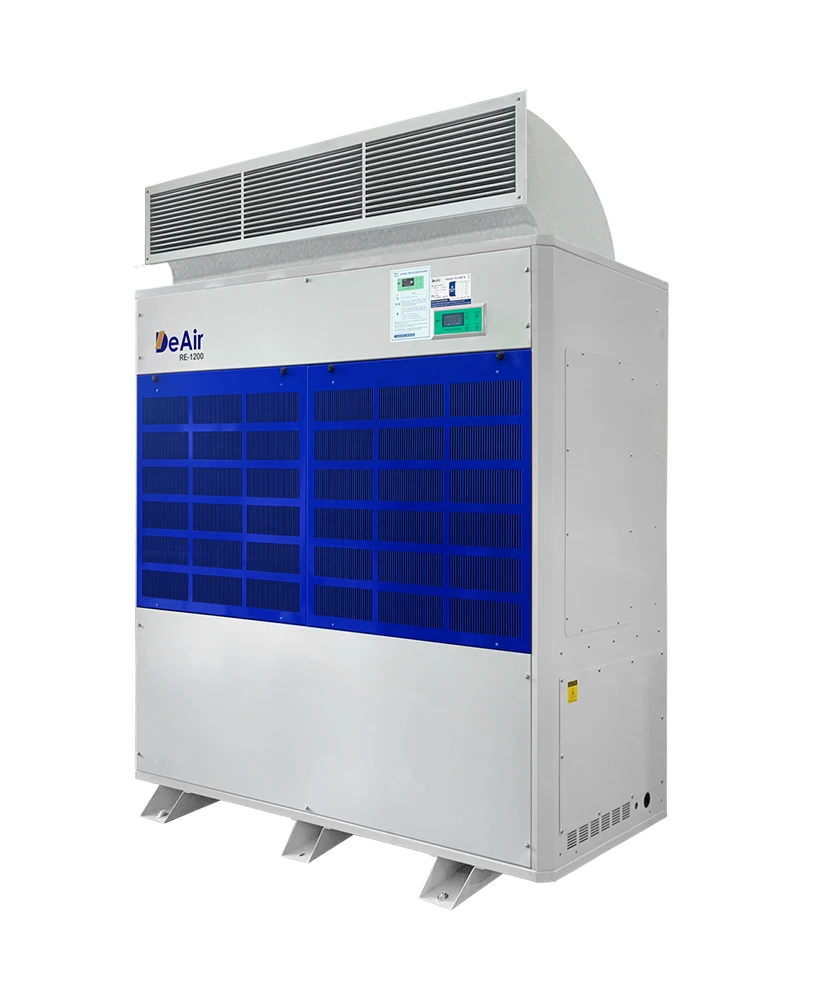 DeAir.RE
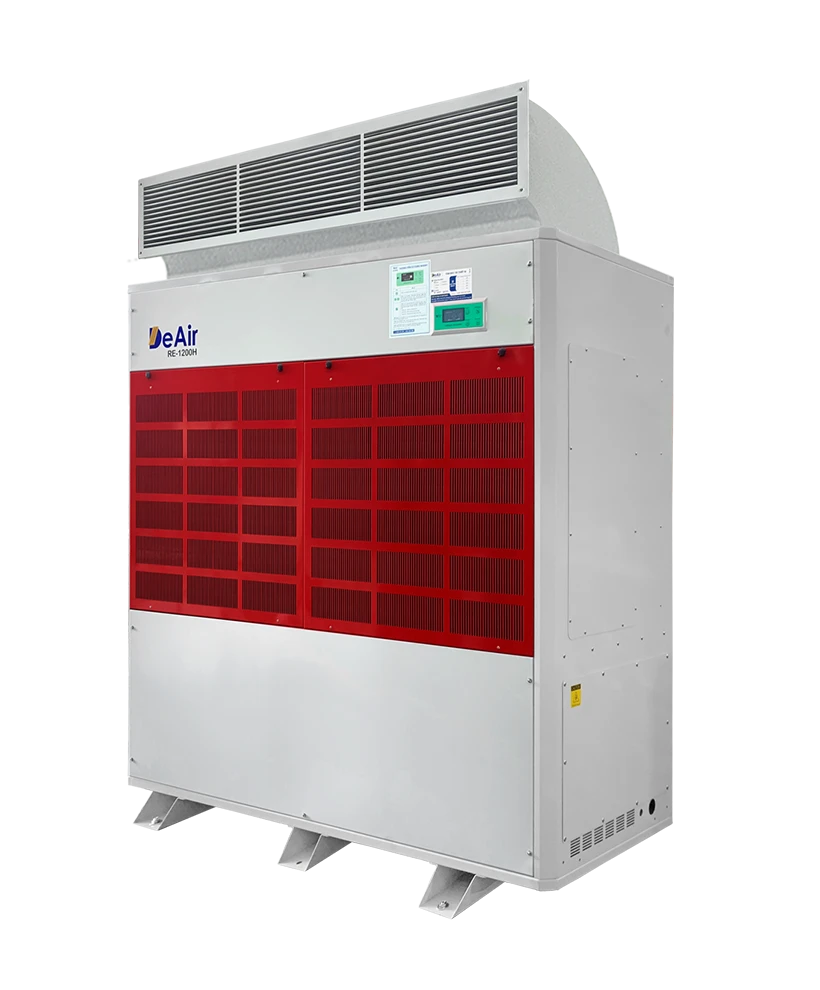 DeAir.RE-H
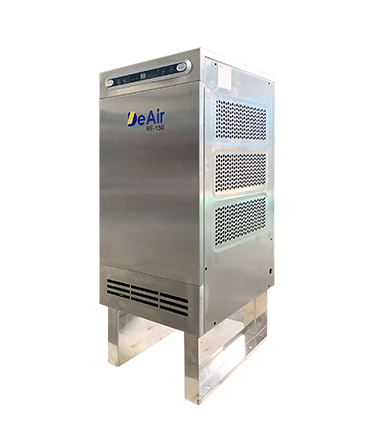 DeAir.RE-INOX
 DeAir.CRE
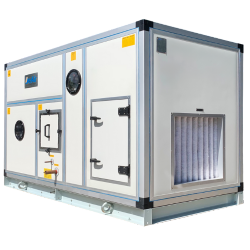 Dezenno
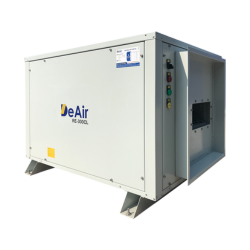 DeAir.RE-CL
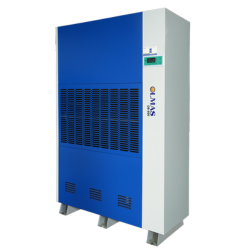 Olmas-OS
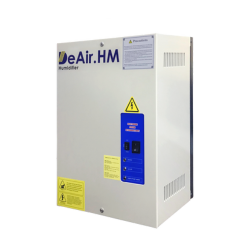 DeAir.HM
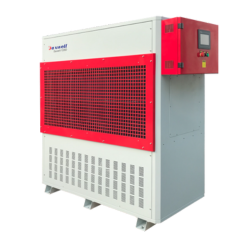 Daxwell
 DeAir.Heat
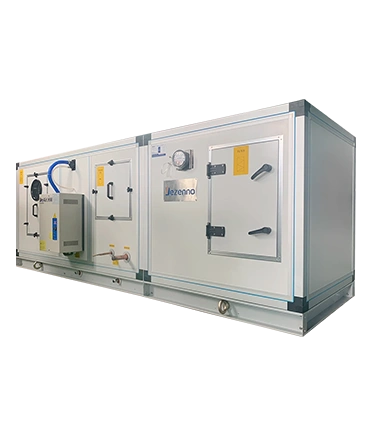 AHU
AHU








![[Case Study] DeAir Installs DeAir.De Rotor Humidity Control System for Pharmaceutical Plant in Binh Duong](https://deair.com.vn/thumbs/news/2023_04/ban_giao_may_cho_duoc_bd/[270x153-cr]image1-1024x772.jpg__cv.webp "[Case Study] DeAir Installs DeAir.De Rotor Humidity Control System for Pharmaceutical Plant in Binh Duong")

![[Review & Guide] Olmas OS-300: The New Humidity Control "Warrior" for Medium to Large Warehouses](https://deair.com.vn/thumbs/news/huong_dan_su_dung_may_olmas_21/[270x153-cr]vtm06440.png "[Review & Guide] Olmas OS-300: The New Humidity Control \"Warrior\" for Medium to Large Warehouses")