Why Do Restaurants Need Dehumidifiers for Hygiene and Food Quality?
30/03/2026
A restaurant is a complex environment with many sources of moisture: steam from the cooking area, steam from the dishwashing area, humidity from the food storage, and even the breath of diners. When air humidity exceeds 60% RH, a series of negative problems will occur. Therefore, proactively controlling humidity with restaurant dehumidifiers is a smart investment, helping to completely solve the above problems and ensuring a clean, safe, and professional business environment.
What are the effects of high humidity in the kitchen and dining area?
The impact of high humidity is present in every corner of the restaurant, from the logistics area to the places directly in contact with customers.
In the kitchen: This is the most severely affected area. Steam from cooking, boiling, steaming, and dishwashing constantly rises, causing humidity to soar. The consequences are:
Risk of occupational accidents: Wet and slippery floors can easily cause employees to slip and fall.
Equipment damage: Kitchen equipment made of stainless steel and iron corrodes and rusts faster.
Degradation of ingredient quality: Spices, flour, sugar, and salt clump together, making them difficult to use. Vegetables and roots quickly become waterlogged and rot.
In the dining area:
Poor customer experience: Musty odors and stuffy air create an uncomfortable feeling. Wooden furniture may blister, and walls can turn yellow.
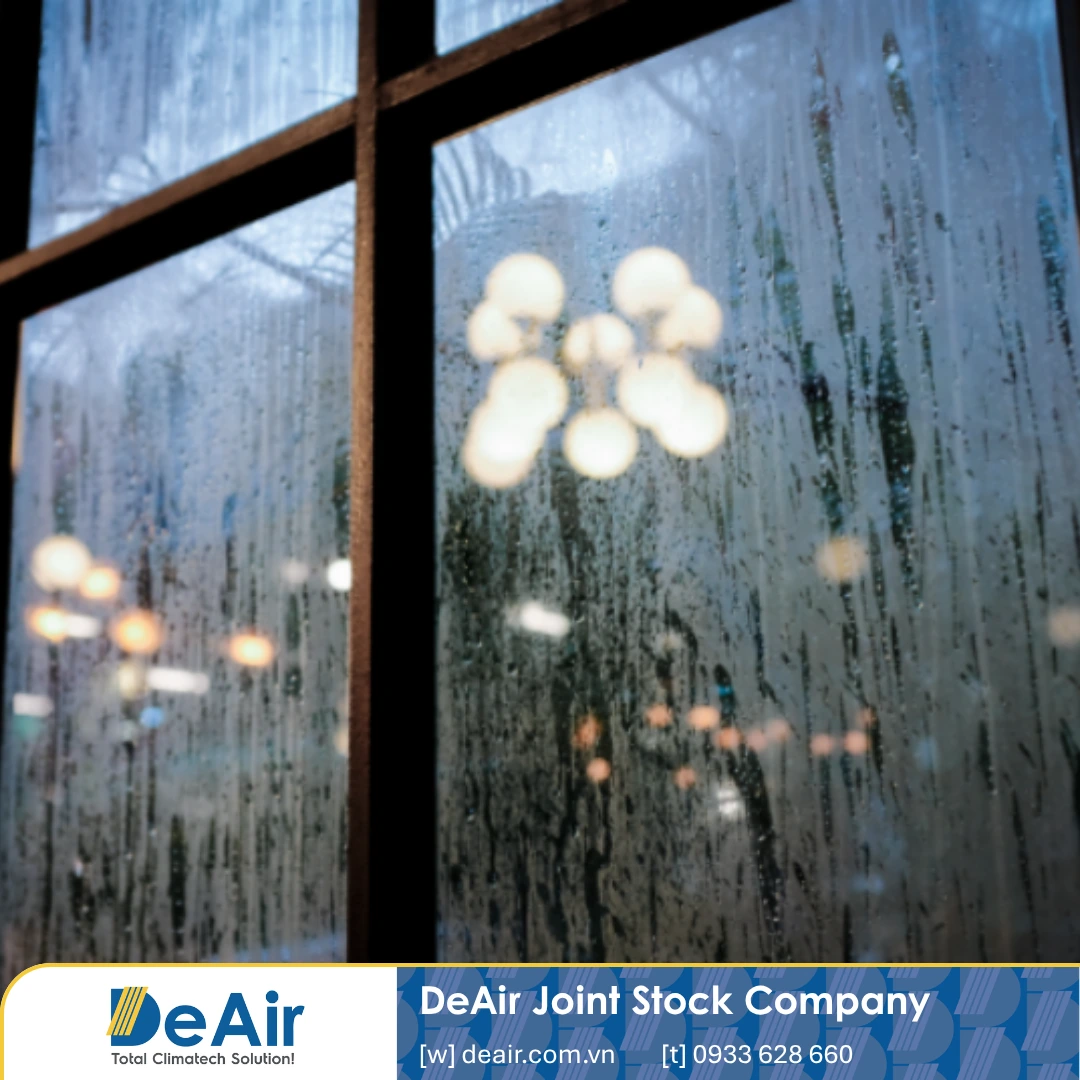
Condensation on glass doors: Glass doors and cold surfaces "sweat", looking unsightly and creating an unclean feeling. This phenomenon is especially obvious in seafood restaurants with live tanks.
Glass doors in seafood restaurants are prone to condensation when humidity is high
Most moisture-prone areas needing dehumidification in a restaurant
To control effectively, it is necessary to correctly identify the humidity "hot spots" in the restaurant to have appropriate treatment solutions.
Dishwashing area: This is the largest source of steam and humidity due to the use of hot water and commercial dishwashers. The humidity here is frequently at saturation level.
Central kitchen (cooking area): Steam rising from cooking pots, frying pans, and steamers is a continuous source of moisture. Even with an exhaust system, a large amount of moisture remains in the air.
Food storage (dry and cold): Dry storage requires low humidity to preserve food, nuts, flour, and spices. Cold storage, despite low temperatures, can still suffer from moisture condensation every time the door is opened, causing frost buildup on the evaporator coils and affecting ingredients.
Bar area: Ice makers, refrigerators, and continuous glass washing also generate a significant amount of moisture.
Private dining rooms, VIP rooms: These spaces are less ventilated, and humidity can rise due to the breath of many people in a confined space.
The cooking area is the most moisture-prone spot in a restaurant
Types of dehumidifiers suitable for each restaurant space
No single dehumidifier can solve all the problems for every restaurant. The choice depends on the scale, design, and specific needs of each area. Common types include mini dehumidifiers for small spaces, commercial dehumidifiers for main operational areas, and aesthetic solutions like ceiling-mounted or wall-mounted dehumidifiers. Each type has its own advantages and applications. Understanding their features is the first step to building an effective humidity control system that meets the restaurant's functional, financial, and aesthetic requirements.
Mini dehumidifiers for private dining rooms and small areas
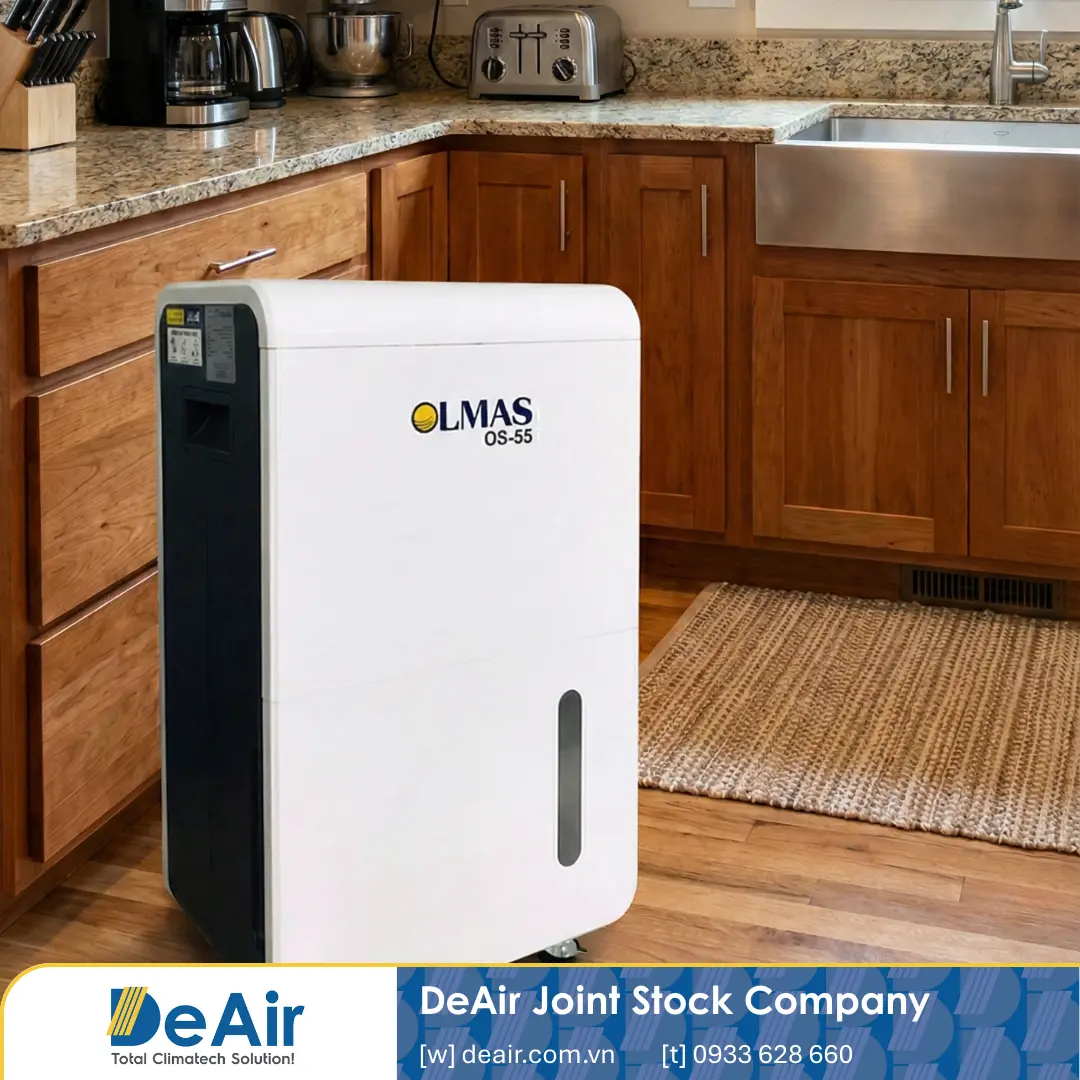
Mini dehumidifiers are portable, low-capacity devices designed for spaces with limited area (usually under 30-40 m²). They are ideal solutions for the following needs in a restaurant:
VIP rooms, small banquet rooms: These spaces require quietness and privacy. A mini dehumidifier can operate smoothly, maintaining dry and comfortable air for diners without causing noise.
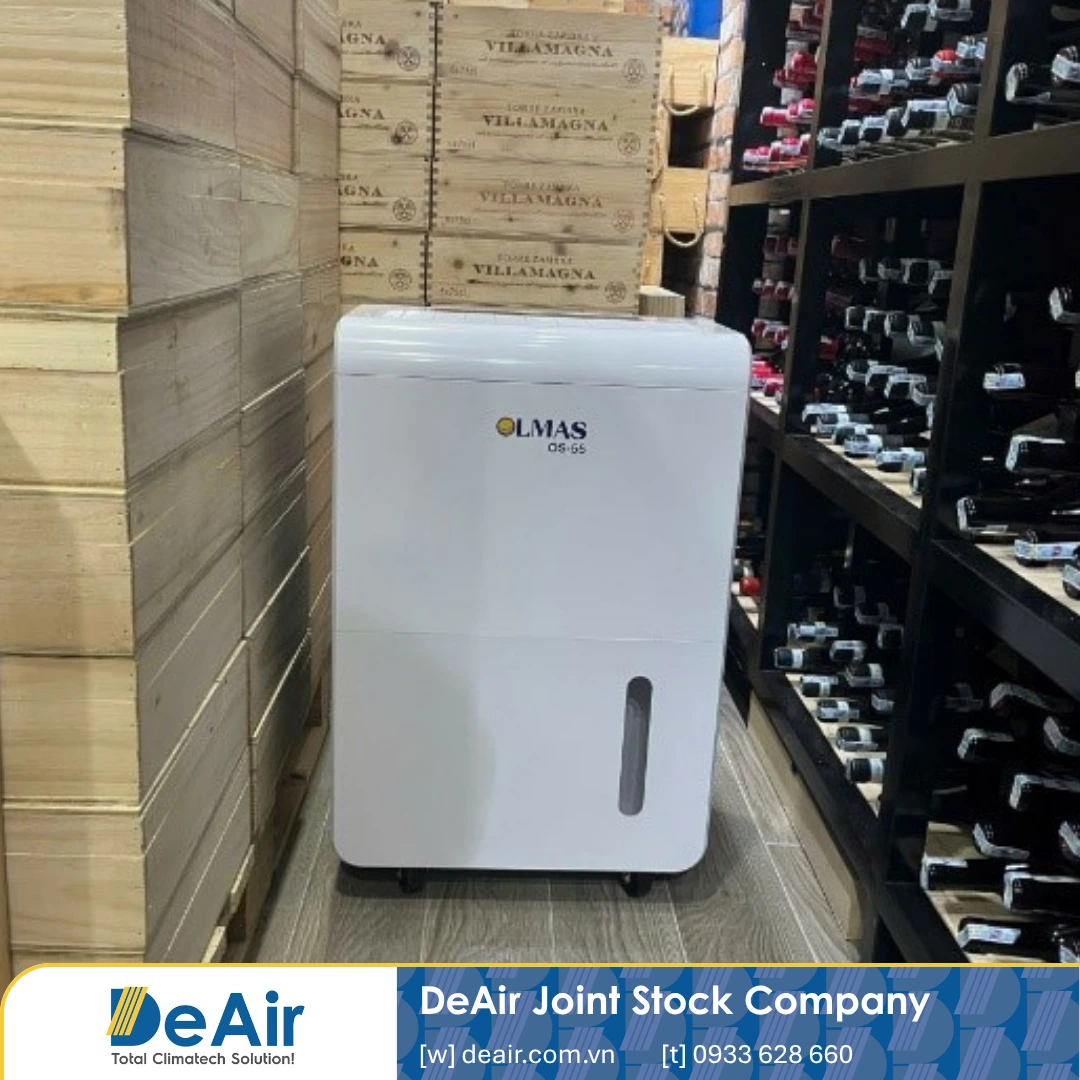
Wine cellars: Preserving wine requires humidity to be controlled within a certain range (usually 60-70% RH) so the cork does not dry out or mold. Mini dehumidifiers can accurately maintain this humidity level.
Staff locker rooms or small offices: Keep the space dry, avoiding musty odors on uniforms and documents.
Pros: Low investment cost, easy to move and use, no complex installation required. Cons: Small capacity, unsuitable for large areas with high humidity like kitchens.
Effective and precise wine preservation with Olmas dehumidifiers
Commercial dehumidifiers for central kitchens and large restaurants
This is the core solution for most medium and large-scale restaurants. Commercial dehumidifiers are designed to operate in harsh environments, handle large amounts of moisture, and run continuously 24/7.
Main applications:
Central kitchens: Process the massive amount of steam generated from cooking, ensuring the kitchen space is dry and safe.
Dining spaces of buffet restaurants: Prevent displayed food (especially fried dishes and salads) from getting soggy or watery, maintaining quality throughout the service.
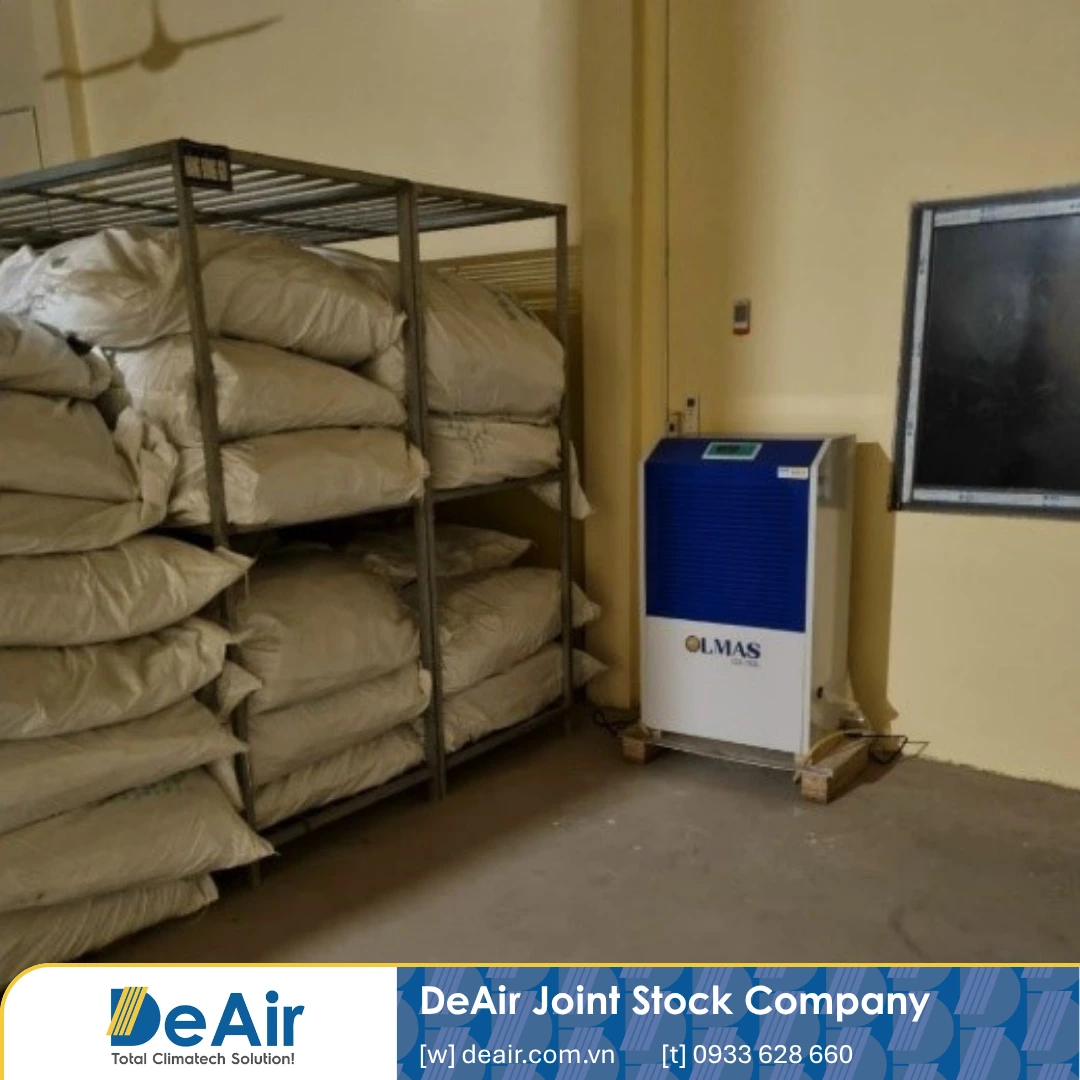
Large dry food storage: Preserve large quantities of rice, flour, sugar, and spices from mold.
Features: Large dehumidifying capacity (from 50 liters/day upwards), sturdy metal casing (powder-coated steel or stainless steel), large wheels for easy movement, and precise electronic control systems.
Application of commercial dehumidifiers to protect ingredients in food storage
Ceiling-mounted and wall-mounted dehumidifiers – space-saving solutions
For restaurants with high aesthetic requirements that need to optimize floor space, ceiling-mounted dehumidifiers or wall-mounted units are the top choices.
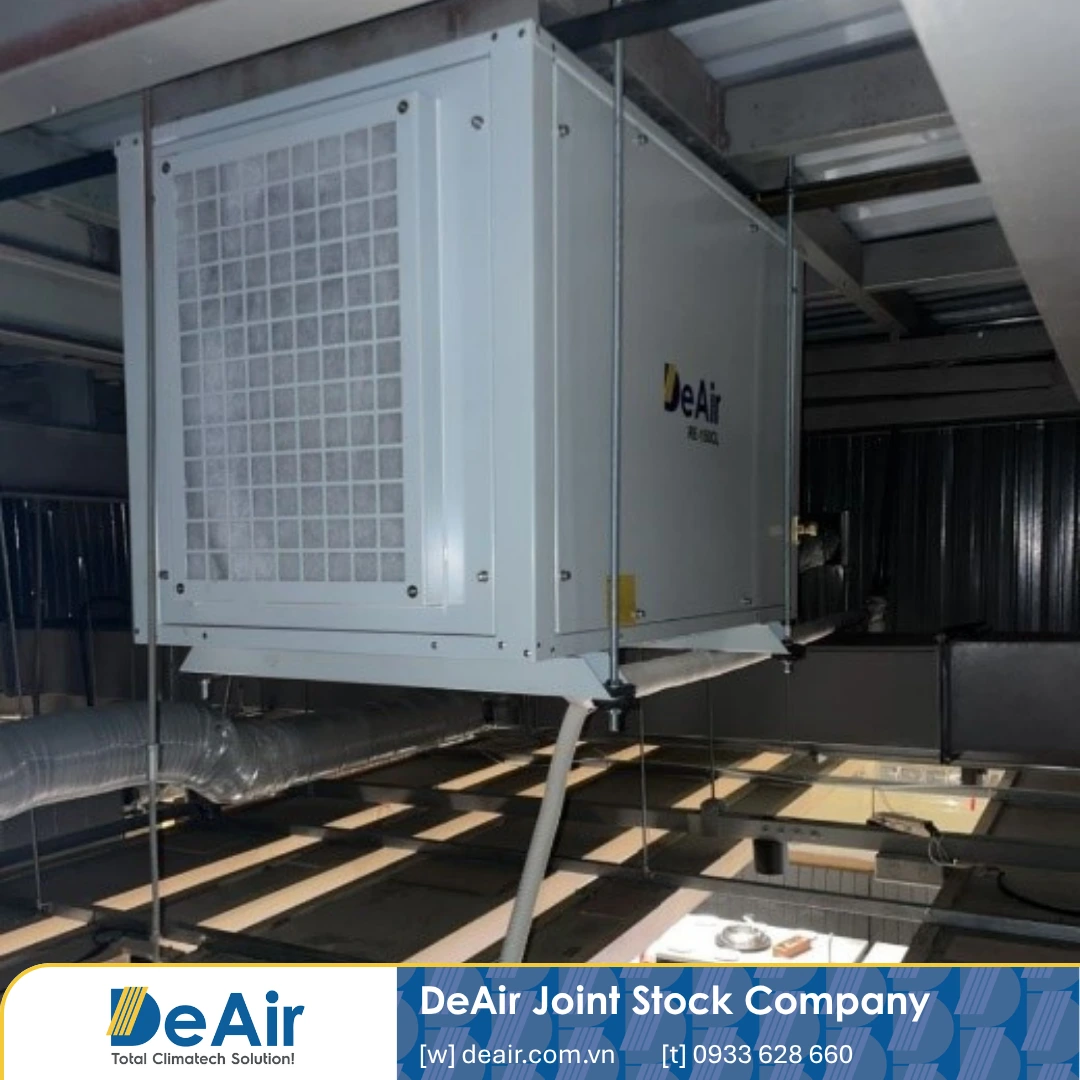
Principle: These machines are installed hidden above the plaster ceiling or mounted on the wall, connected to a duct system to draw moist air from the room and return dry air. The entire device is hidden, revealing only the air grilles.
Pros:
High aesthetics: Does not take up floor space, nor affects the interior design of the restaurant.
Quiet operation: Because the machine is placed in the ceiling, noise is minimized, not disturbing the diners.
Even air distribution: The duct system helps dry air to be spread evenly throughout the space, bringing higher efficiency than portable machines.
Applications: Ideal for luxurious customer service spaces, lobbies, or areas with limited floor space.
Ceiling-mounted dehumidifiers are extremely suitable for restaurants with high aesthetic requirements
Effective installation and layout of dehumidifiers in restaurants
The placement of a dehumidifier should be considered as part of the restaurant's overall air control system, not as a standalone device. Furthermore, combining dehumidifiers with existing systems like ventilation fans, exhaust hoods, and air conditioning will create a comprehensive solution that controls humidity while ensuring fresh air, providing a safe working environment and an ideal dining space for customers.
Reasonable equipment distribution for kitchens, dining areas, and food storage
There is no one-size-fits-all formula for every restaurant, but the basic rule is to place the dehumidifier as close to the source of moisture as possible.
Kitchen and dishwashing area: A high-capacity commercial dehumidifier should be placed in this area. The location must be away from direct open flames but positioned in the airflow moving from the cooking area to the exhaust vent.
Dining area: If using a portable machine, it should be placed in a corner where it does not obstruct walkways. If using a ceiling-mounted machine, the intake and exhaust grilles must be arranged to create air circulation throughout the room.
Food storage: The dehumidifier should be placed in the center of the warehouse to ensure dry air circulates evenly, avoiding damp corners.
Combining with ventilation and deodorization for optimal efficiency
A dehumidifier is not an omnipotent device. It needs to work in parallel with other systems.
Ventilation/Exhaust Fan System: This system is responsible for extracting heat, smoke, and a large portion of moisture from the kitchen. The dehumidifier will handle the remaining moisture that the ventilation system cannot entirely remove. This combination reduces the load on both systems.
Air conditioning: Air conditioners also have a dehumidifying function, but it is not their primary purpose. On days that are not too hot but highly humid, running the AC continuously just to dehumidify will be very costly. In that case, using a dedicated dehumidifier will be much more economical and efficient. The combination of both devices helps optimize control of both temperature and humidity simultaneously.
Reputable places to buy restaurant dehumidifiers and reference quotes
Once you have identified your needs and solutions, the final step is to choose a reliable supplier. The market has many providers of restaurant dehumidifiers, but product and service quality varies greatly. Therefore, when choosing, you should consider established brands in the market and the supplier's after-sales policies. Brands like DeAir and Olmas are prominent names in providing professional moisture control solutions for commercial and industrial applications.
DeAir and Olmas brands specialized for restaurants
When searching for dehumidifiers, you will encounter many brands. DeAir is proud to be a specialist in consulting and distributing products from top reputable brands, ensuring quality, durability, and performance. We thoroughly understand the specific requirements of the restaurant industry, from anti-corrosion material requirements for seafood restaurants to low noise and aesthetic requirements for luxury dining spaces. Our team will help you choose the most suitable product, from mini dehumidifiers for wine cellars to commercial systems for central kitchens.
The DeAir team will help you choose the most suitable multi-space moisture control solution
Warranty, installation, and technical support policies
This is the decisive factor for customer peace of mind. At DeAir, we commit to:
Free consultation and survey: We will come to your site to understand your needs and provide the optimal solution.
Competitive and transparent quoting: Providing detailed quotes with no hidden costs. The cost for a restaurant dehumidifier system can range from a few million VND for a mini machine to tens or hundreds of million VND for a complex industrial system.
Professional installation: An experienced team of technicians will ensure the system is installed technically correctly and safely.
Genuine warranty: All products come with a standard warranty of up to 24 months.
Prompt technical support: We understand that time is money. Our team is always ready to assist when you need it.
For a professional and safe business environment, start by controlling the humidity today.
COMPREHENSIVE RESTAURANT DEHUMIDIFIER SOLUTIONS
Don't let humidity ruin your customer experience and food quality. Contact us now for a site survey and consultation on the most suitable equipment for your restaurant space!


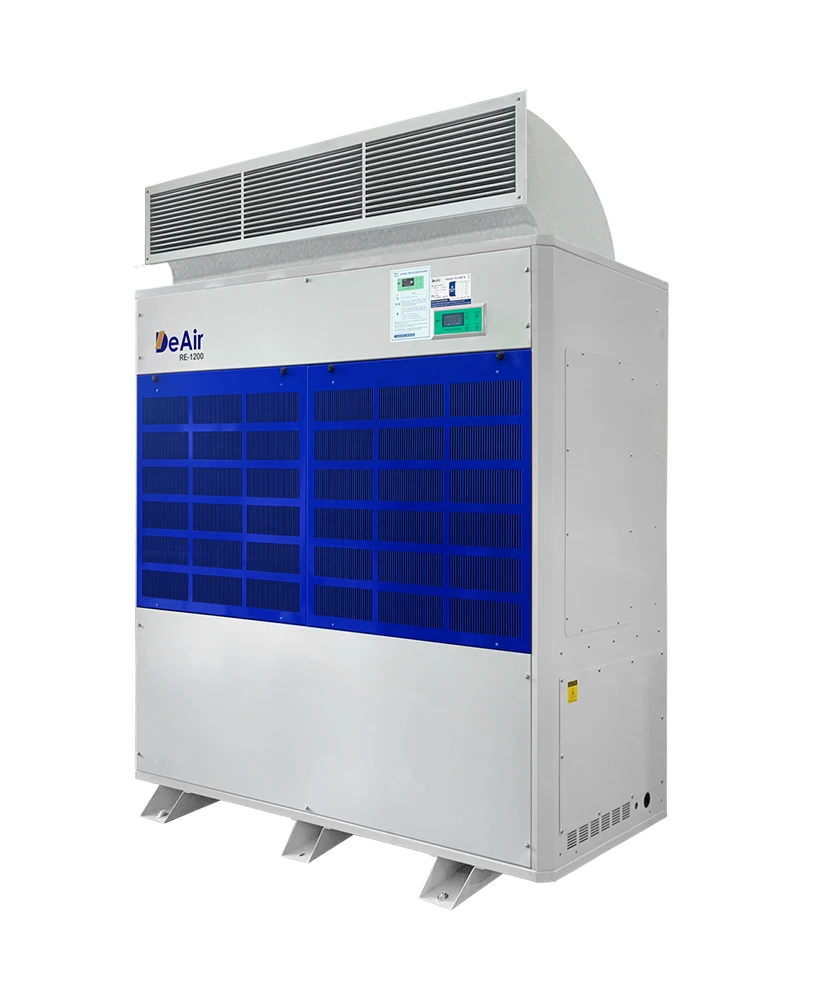 DeAir.RE
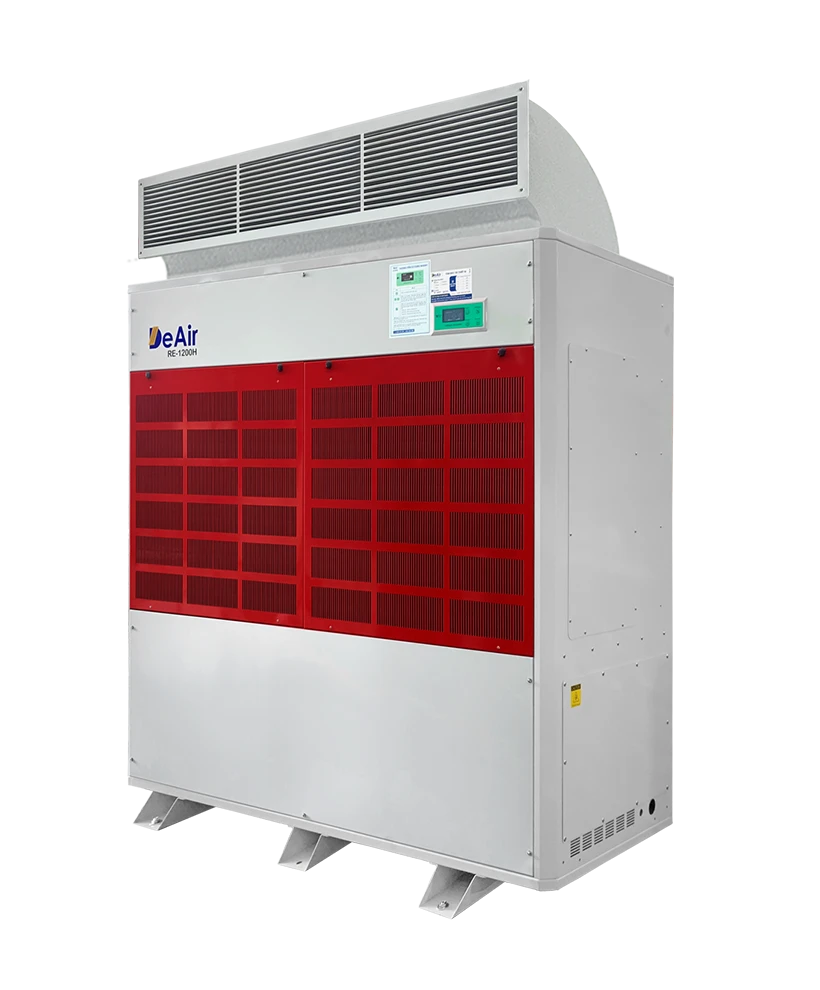 DeAir.RE-H
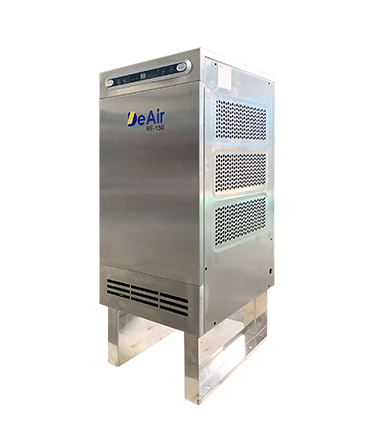 DeAir.RE-INOX
 DeAir.CRE
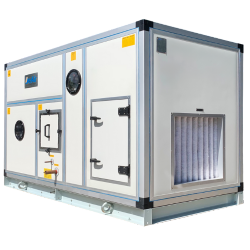 Dezenno
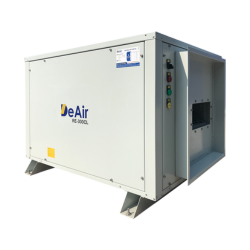 DeAir.RE-CL
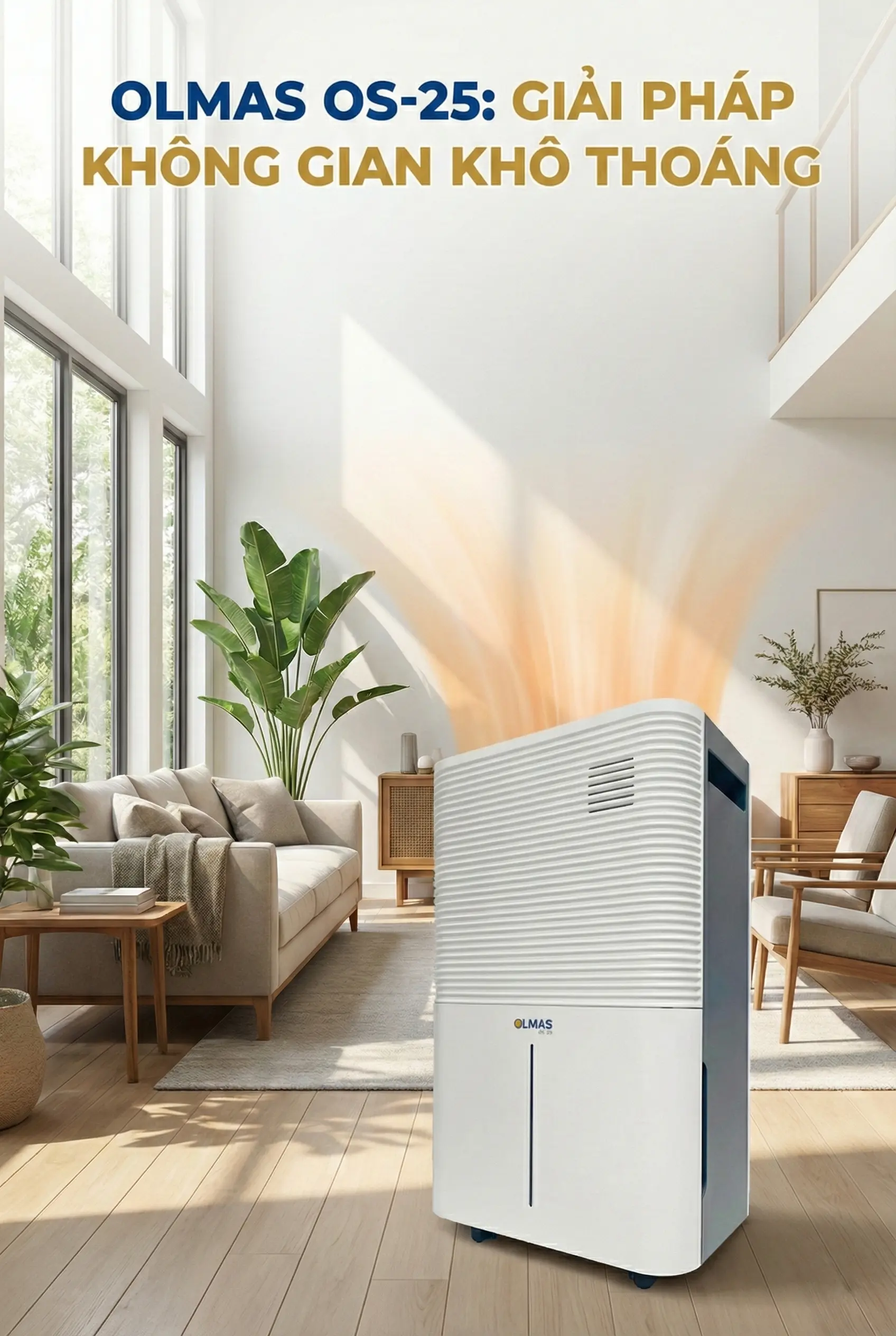
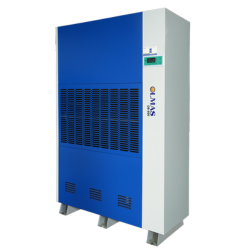 Olmas-OS
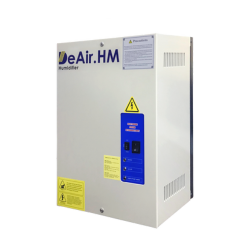 DeAir.HM
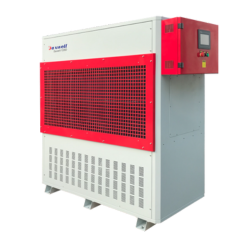 Daxwell
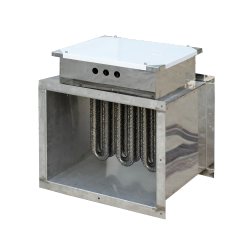 DeAir.Heat
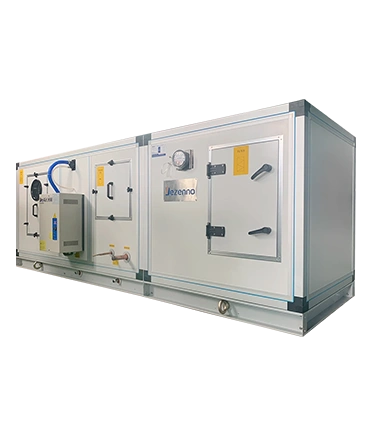 AHU
AHU






![[Case Study] DeAir Installs DeAir.De Rotor Humidity Control System for Pharmaceutical Plant in Binh Duong](https://deair.com.vn/thumbs/news/2023_04/ban_giao_may_cho_duoc_bd/[270x153-cr]image1-1024x772.jpg__cv.webp "[Case Study] DeAir Installs DeAir.De Rotor Humidity Control System for Pharmaceutical Plant in Binh Duong")
![[Review & Guide] Olmas OS-300: The New Humidity Control "Warrior" for Medium to Large Warehouses](https://deair.com.vn/thumbs/news/huong_dan_su_dung_may_olmas_21/[270x153-cr]vtm06440.png "[Review & Guide] Olmas OS-300: The New Humidity Control \"Warrior\" for Medium to Large Warehouses")