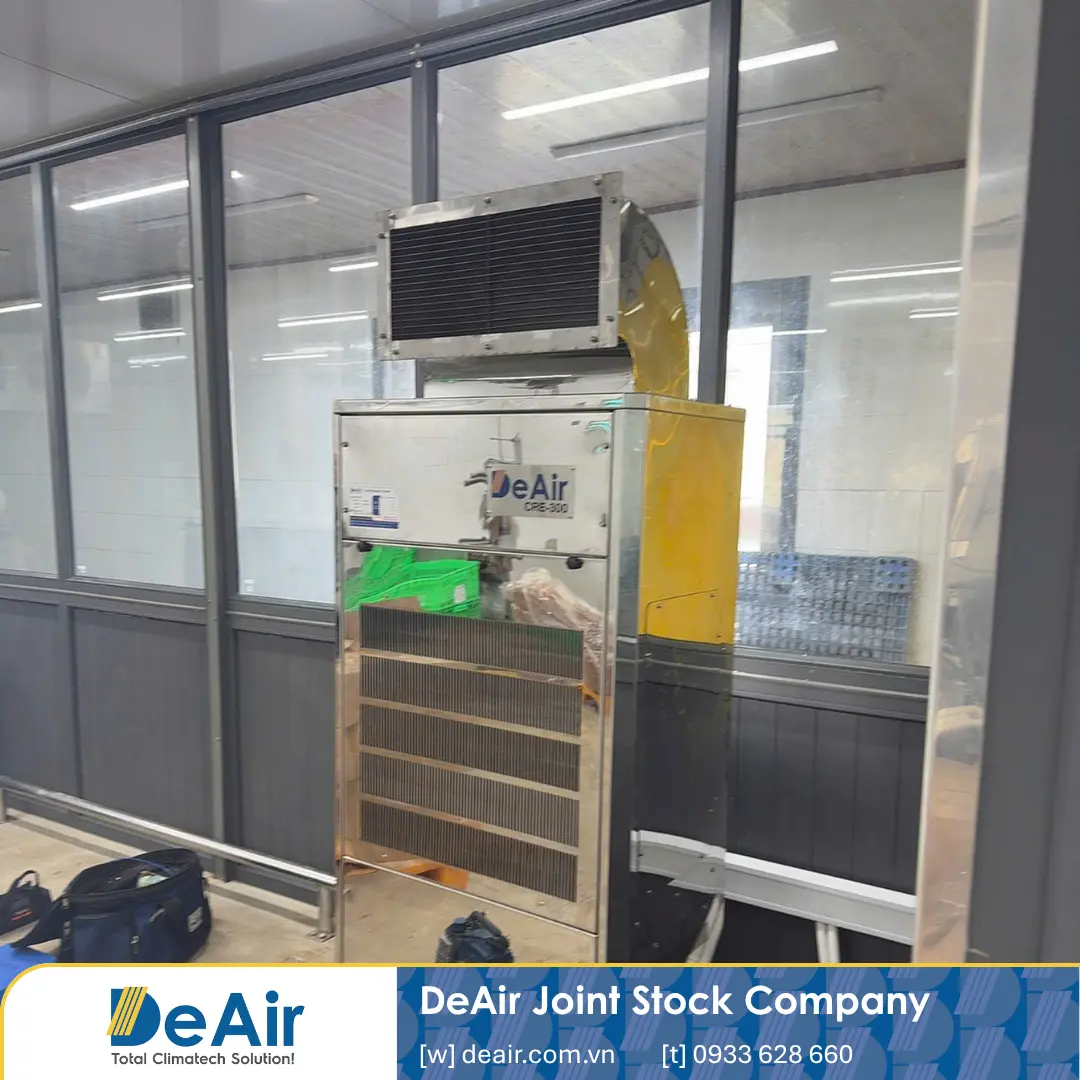
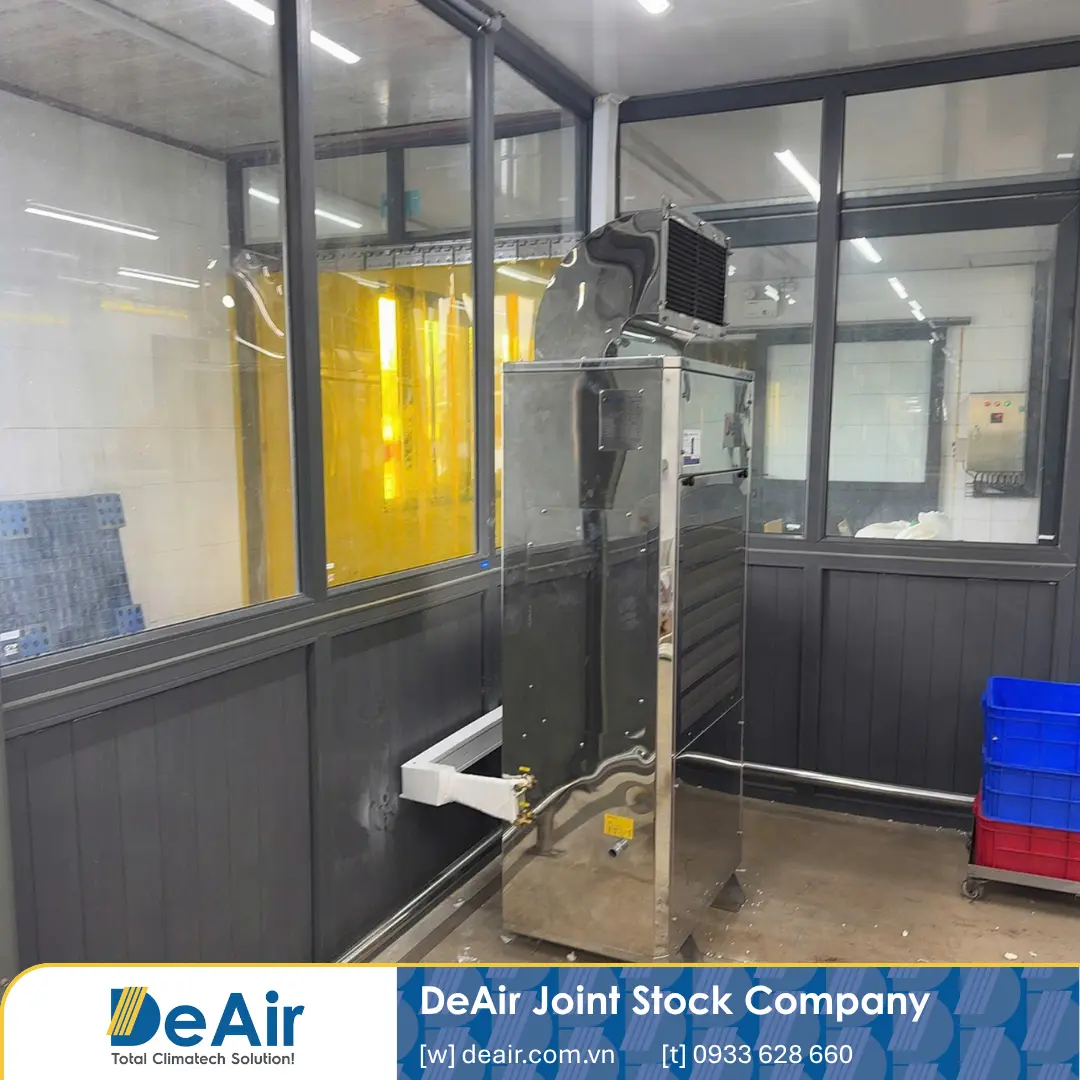
The isothermal DeAir.CRE-300 stainless steel dehumidifier installed in a spice production room, corrosion-resistant and easy to clean.
💡 Executive Summary
Client: A large-scale spice manufacturing plant (pepper, chili, cinnamon, star anise, five-spice...).
Specific Challenges: Fine spice dust infiltrates equipment, aroma loss due to high temperatures, machine housing corrosion, and control cabinet short circuits.
"Tailor-made" Solution: Isothermal dehumidifier DeAir.CRE-300 stainless steel with control cabinet installed OUTSIDE the production room.
Result: Stable humidity control at 35-45% RH, full aroma retention, electronic equipment protection, and easy operation and maintenance.
1. The Harsh Realities of Spice Production Rooms
1.1. Three "Enemies" of Equipment in Spice Rooms
🚨 THE HARSH ENVIRONMENT
1. Ultra-fine spice dust: When ground, pepper, chili, cinnamon, and star anise create dust particles <5µm, infiltrating every gap and adhering to heat exchangers and electronic circuit boards.
2. Mild corrosiveness: Some spices (chili, pepper) have mild acidic properties, corroding standard powder-coated machine housings within 6-12 months.
3. Strong aromas & cross-contamination: If not properly controlled, spice aromas cling to equipment and transfer to other batches.
1.2. Stringent Technical Requirements
Humidity: 30-45% RH (per the "Recommended Temperature and Humidity Conditions" document - Spice/herb storage: 15°C, 30% RH).
Temperature: 15-24°C, must NOT increase temperature because spices are heat-sensitive, easily losing aroma and altering flavor.
Hygiene: Must meet HACCP/GMP, machine housing easy to clean, dust-free.
Safety: Control cabinets must be protected from explosive dust (some spice dusts are explosive at certain concentrations).
1.3. Consequences of Using Conventional Dehumidifiers
Standard condensation units: Discharge hot air (+5-8°C), raising room temperature → spices lose aroma, reducing quality.
Powder-coated housing: Corroded and peeled after 6-12 months, not GMP compliant.
On-machine control cabinet: Spice dust infiltrates → short circuits circuit boards, damages sensors, causes explosions.
2. Why DeAir.CRE-300 Stainless Steel is the Perfect Solution?
2.1. Isothermal Technology – The "Secret Weapon"
🌡️ ISOTHERMAL TECHNOLOGY
Unlike conventional dehumidifiers that discharge hot air, DeAir.CRE controls humidity WITHOUT increasing air temperature. The air temperature at the outlet is almost identical to the inlet, and in some conditions even 2-3°C lower.
Aroma preservation: Spices are not "cooked" by heat, retaining their signature aroma.
No thermal shock: Sensitive products (essential oils, herbs) are absolutely protected.
Energy savings: No air conditioning needed to compensate for heat generated by the dehumidifier.
2.2. SUS304 Stainless Steel Housing – The "Armor" Against Corrosion
Material: High-grade SUS304 stainless steel, corrosion-resistant against acidic spice dust.
Surface: Smooth, dust-free, easy to clean with water and cleaning chemicals.
GMP/HACCP compliant: Does not generate dust, rust-free, food safety assured.
Lifespan: 10-15 years in harsh environments, compared to 2-3 years for powder-coated housing.
2.3. External Control Cabinet – A Technical "Breakthrough"
🎯 EXTERNAL CABINET SOLUTION – A BREAKTHROUGH INNOVATION
DeAir redesigned the control system: The entire control cabinet (PLC, inverter, circuit boards, sensors) is housed in a separate cabinet installed OUTSIDE the production room, with only the dehumidifier body and air ducts inside.
Absolute protection: The control cabinet is free from spice dust infiltration, no short circuits, 3-5x longer lifespan.
Fire/explosion safety: Eliminates the risk of electrical sparks in explosive dust environments.
Easy operation: Staff adjust parameters from the outside, no need to enter the room (reduces cross-contamination).
Easy maintenance: Technicians repair and replace components without stopping production or donning protective gear for clean rooms.
Cost reduction: No need to periodically replace dust-damaged circuit boards, saving 50-70% on maintenance costs.
3. Technical Specifications of the DeAir.CRE-300 (Custom)
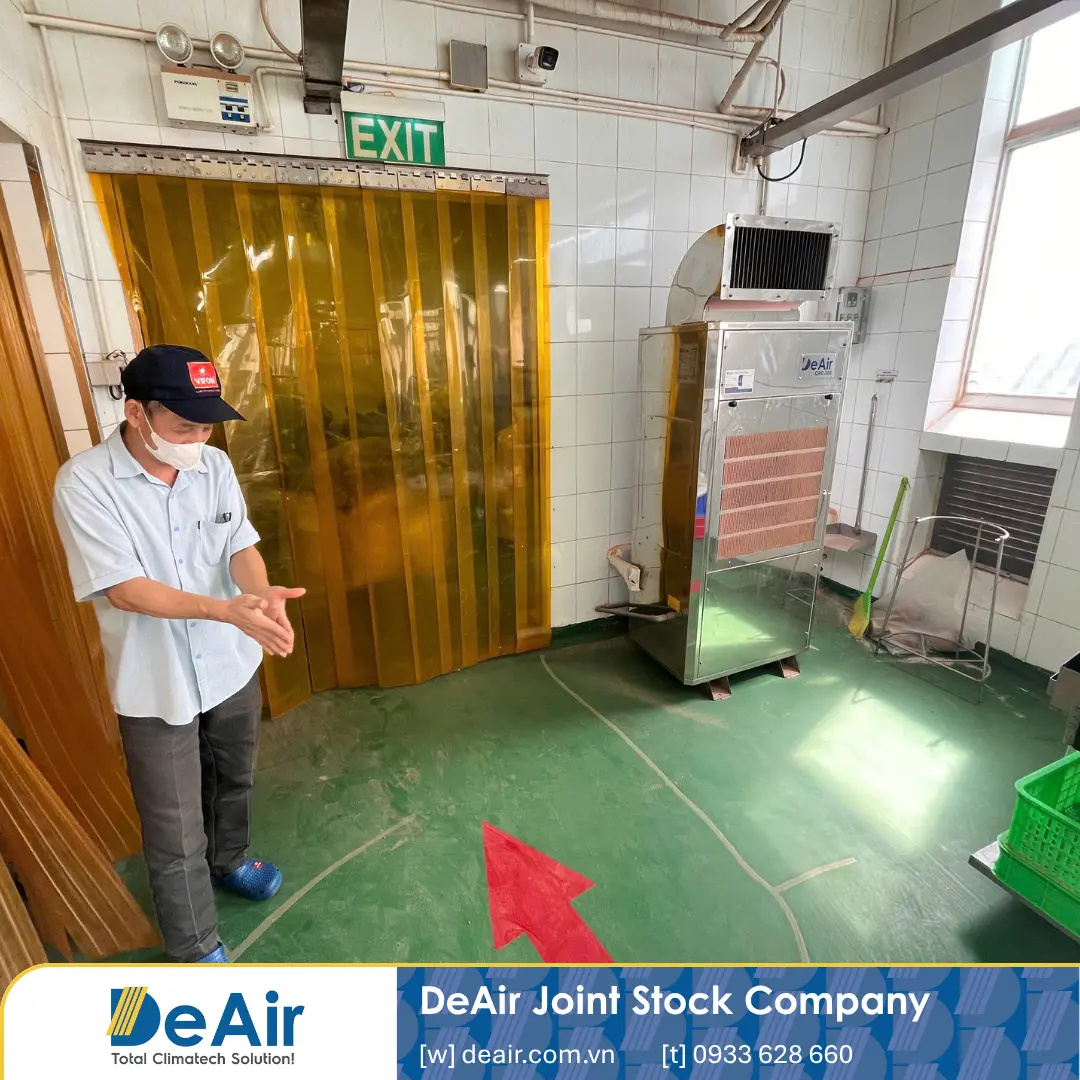
4.1. DeAir.CRE-300 Stainless Steel Dehumidifier in the Production Room
The shiny stainless steel DeAir.CRE-300 machine, corrosion-resistant against spice dust.Supply/return air ducts connected to the distribution system in the production room.
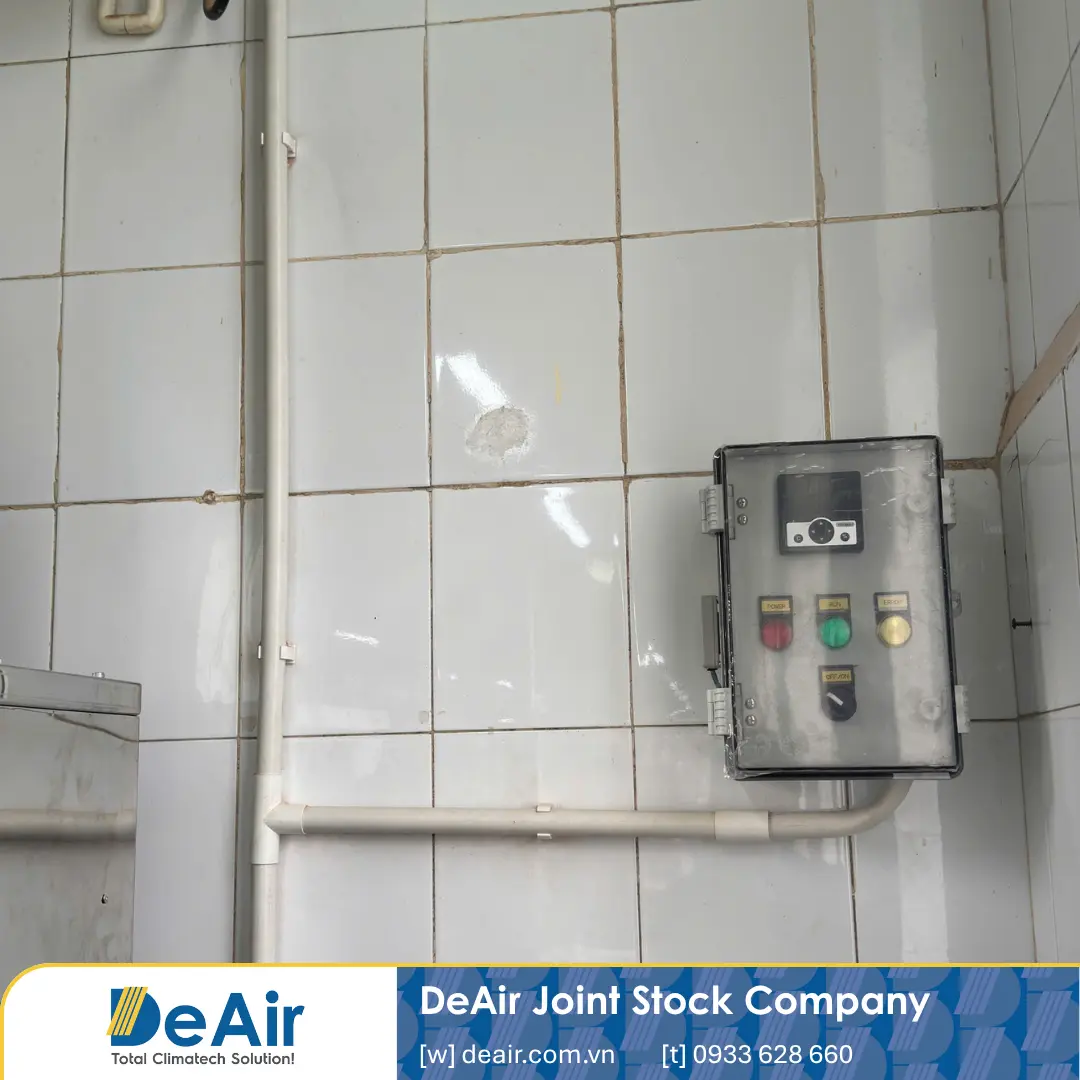
4.2. External Control Cabinet
The IP54 cabinet installed outside the room, absolutely protecting circuit boards from spice dust.
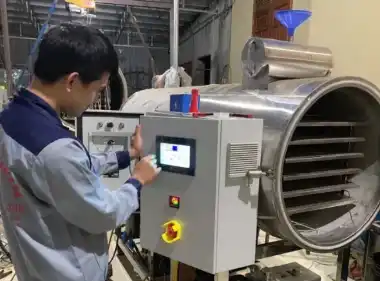
The control cabinet is installed outside the production room, with only control cables running inside. The HMI screen displays parameters (temperature, humidity, status), and all control buttons and status lights are protected within the IP54 cabinet, allowing technicians to easily operate and maintain the system without entering the room.
5. Infographic: Conventional Solutions vs. DeAir
📊 COMPARING DEHUMIDIFICATION SOLUTIONS FOR SPICE ROOMS
Criteria
Conventional Dehumidifiers
DeAir.CRE-300 Stainless + External Cabinet
Technology
Condensation (discharges hot air)
Isothermal (no temp increase)
Aroma impact
❌ Aroma loss due to heat
✅ Full aroma retention
Machine housing
Powder-coated (corrodes in 6-12 months)
SUS304 (10-15 years lifespan)
Control cabinet
On-machine (dust infiltrates)
External (absolute protection)
Circuit board lifespan
1-2 years (due to dust)
5-7 years
Maintenance costs
High (periodic board replacement)
Low (50-70% reduction)
Fire/explosion safety
⚠️ Spark risk inside the room
✅ Absolutely safe
Operation
Must enter the room (cross-contamination)
External control
GMP compliance
⚠️ Limited
✅ Fully compliant
6. The "Tailor-Made" Consulting & Installation Process
Step 1: Current Status Survey
Measure room volume and assess spice dust sources. Inspect existing machines (if any) to identify failure causes. Measure actual humidity and temperature at multiple locations.
Step 2: Analysis & Solution Proposal
Calculate moisture load based on: raw material, personnel, machinery, and external infiltration. Propose DeAir.CRE-300 stainless steel + external cabinet. Clearly explain advantages and compare with conventional solutions.
Step 3: Detailed Design
Draw layout diagrams for the machine, air ducts, and control cabinet. Calculate duct diameters and control cable lengths. Create technical drawings for client approval.
Step 4: Manufacturing & Installation
Manufacture machines according to custom specifications (stainless steel, external cabinet). Install the machine in the room, run air ducts, and install the external cabinet. Connect control cables, power cables, and condensate drain pipes.
Step 5: Test Run & Training
Test run for 24-48 hours, measuring humidity and temperature at multiple locations. Train staff on operation, maintenance, and cleaning. Hand over documentation and a 24-month warranty certificate.
7. Achieved Results
✅ OUTSTANDING RESULTS
Humidity: Stable at 35-45% RH, meeting spice preservation standards.
Temperature: No increase, maintains 20-22°C, preserving full aroma.
Equipment: Shiny stainless steel housing after 12 months, no corrosion.
Control cabinet: Clean, dust-free, circuit boards operate stably.
Costs: 50-70% reduction in maintenance costs, no circuit board replacements.
Quality: Spices retain full aroma, no cross-contamination, meet export standards.
8. Frequently Asked Questions (FAQ)
Q1: Why are conventional dehumidifiers unsuitable for spice production rooms?
Conventional machines discharge hot air (+5-8°C), raising room temperature, causing spices to lose aroma and alter flavor. Additionally, powder-coated housing corrodes quickly, and on-machine control cabinets are infiltrated by spice dust causing short circuits. DeAir.CRE with isothermal technology and external cabinets thoroughly resolves these issues.
Q2: Does an external control cabinet affect machine performance?
No. DeAir uses specialized control cables with stable signals up to 50m. External cabinets protect circuit boards from dust, increasing lifespan by 3-5 times and reducing maintenance costs.
Q3: Is stainless steel housing more expensive than powder-coated housing?
Initial investment costs are 20-30% higher, but the lifespan is 10-15 years compared to 2-3 years for powder-coated. Annual costs are 50-60% lower, not to mention reduced maintenance and replacement costs. This is a profitable long-term investment.
Q4: Can DeAir customize solutions for other production rooms (pharmaceuticals, chemicals...)?
YES. DeAir specializes in "tailor-made" solutions for each industry: pharmaceuticals (stainless steel, HEPA filters), chemicals (special corrosion resistance), food (GMP/HACCP), electronics (anti-static). Each industry has unique requirements, and DeAir will survey and propose optimal solutions.
Don't Let Spice Dust "Destroy" Your Equipment and Product Quality!
Let DeAir "tailor-make" the perfect dehumidification solution, protecting your long-term investment in your production facility.
Contact us now for a free site survey and consultation!


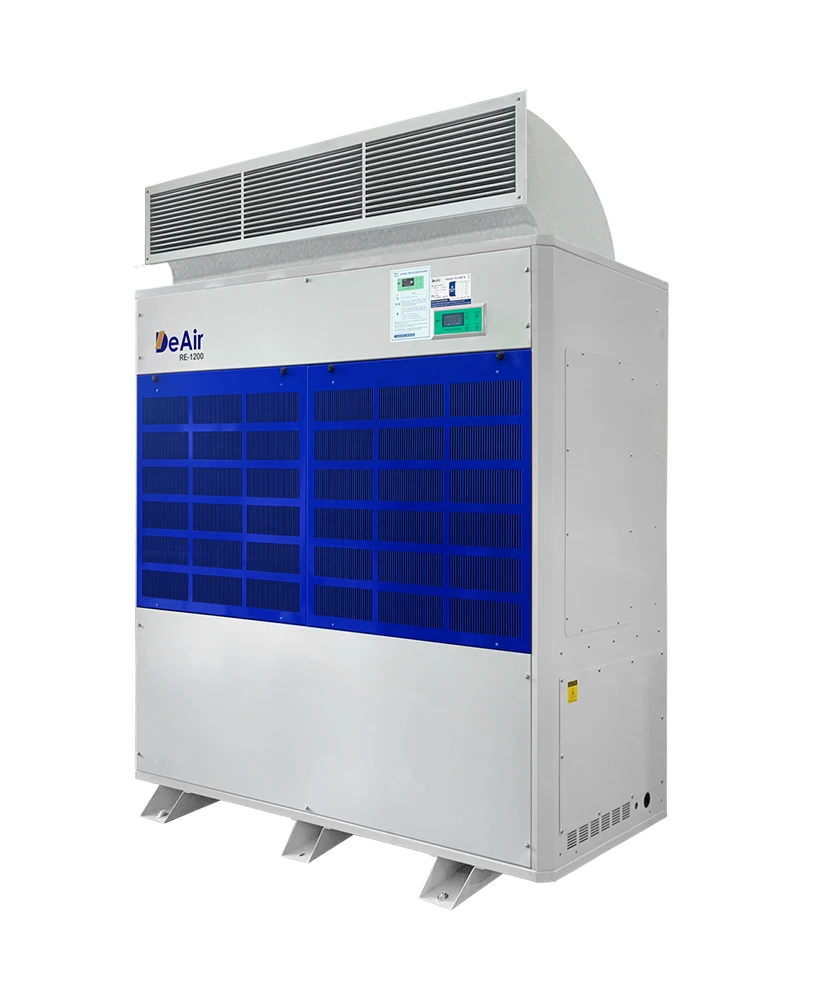 DeAir.RE
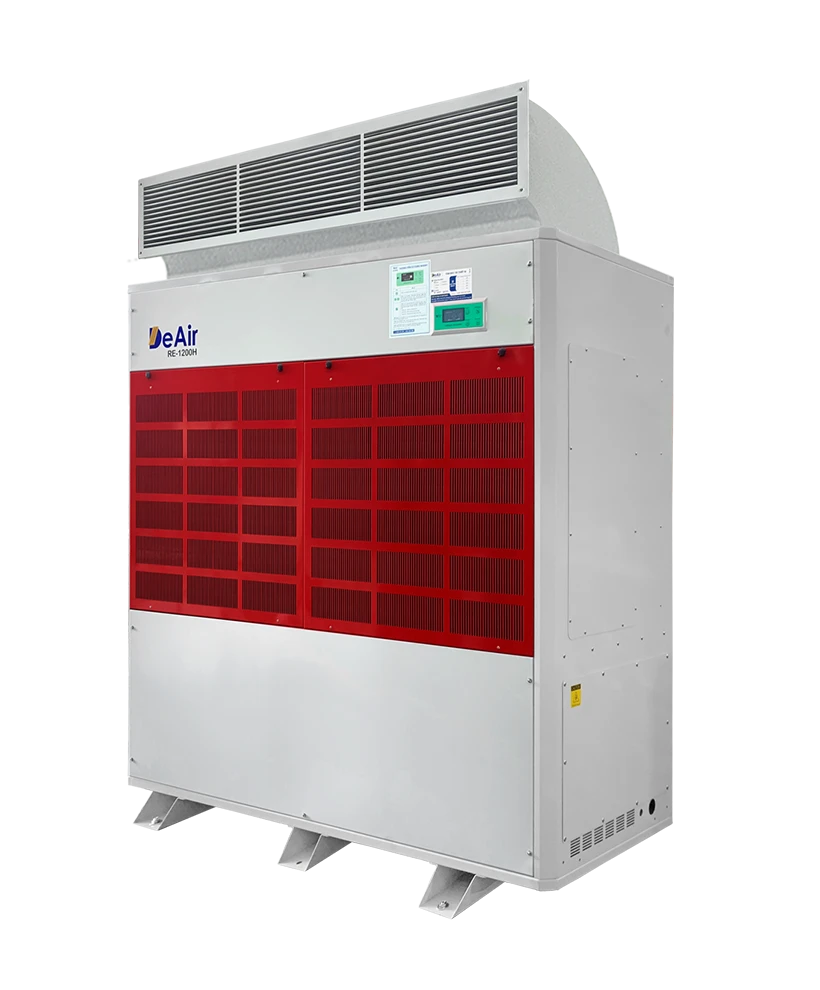 DeAir.RE-H
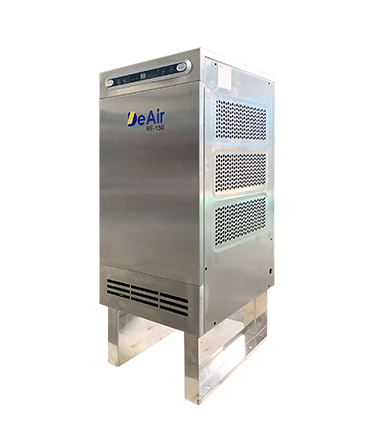 DeAir.RE-INOX
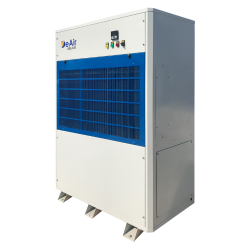 DeAir.CRE
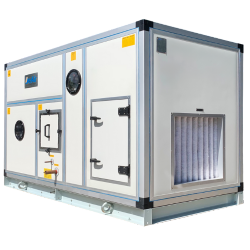 Dezenno
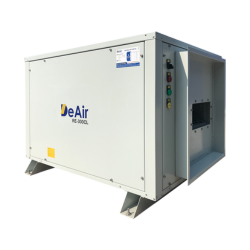 DeAir.RE-CL
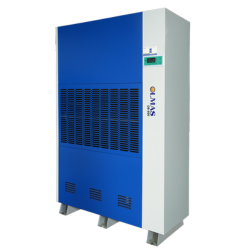 Olmas-OS
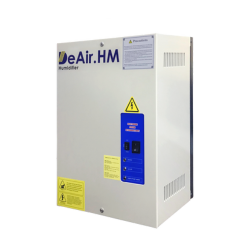 DeAir.HM
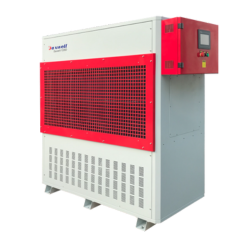 Daxwell
 DeAir.Heat
 AHU
AHU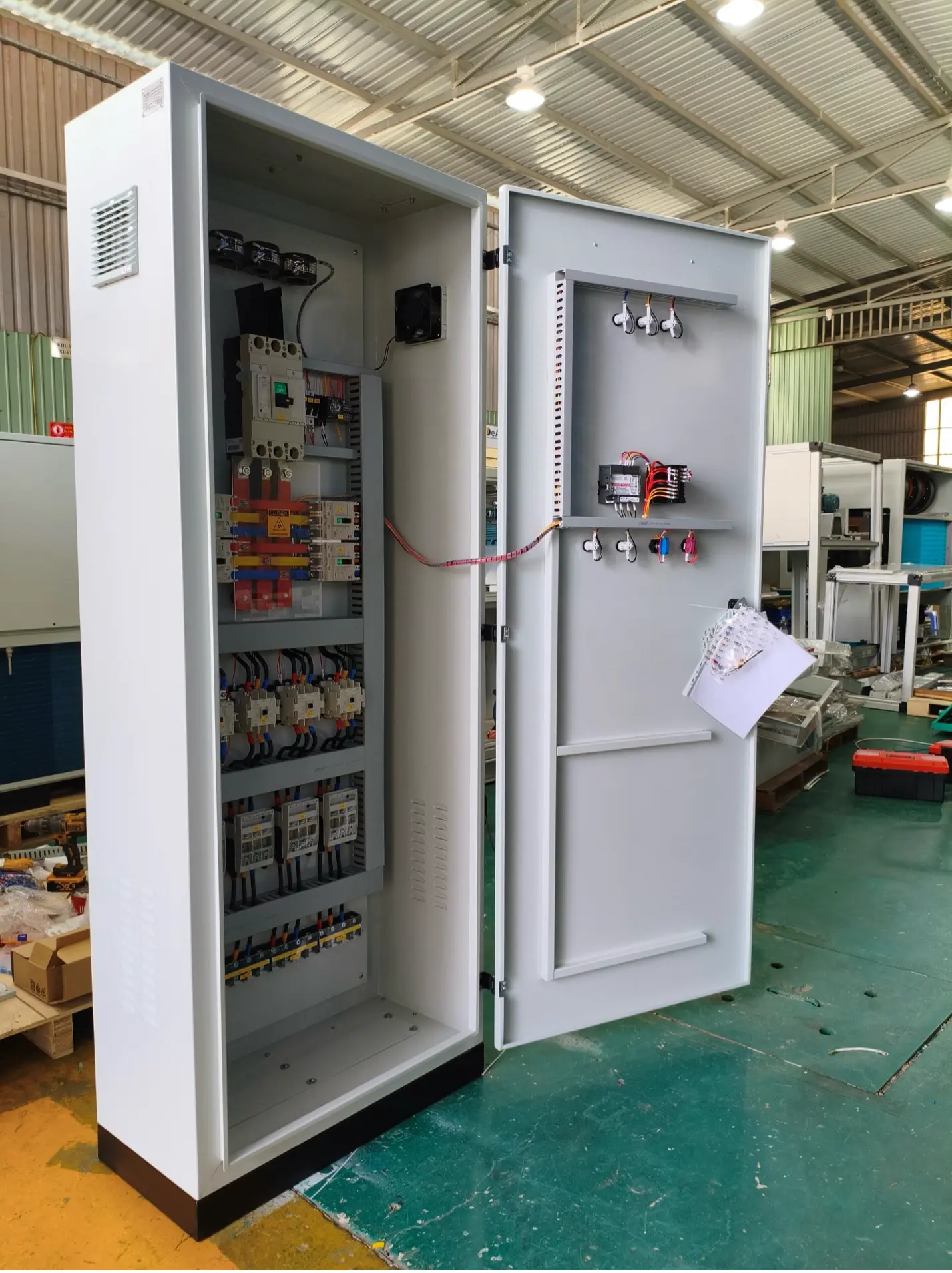





![[Case Study] DeAir Installs DeAir.De Rotor Humidity Control System for Pharmaceutical Plant in Binh Duong](https://deair.com.vn/thumbs/news/2023_04/ban_giao_may_cho_duoc_bd/[270x153-cr]image1-1024x772.jpg__cv.webp "[Case Study] DeAir Installs DeAir.De Rotor Humidity Control System for Pharmaceutical Plant in Binh Duong")
![[Review & Guide] Olmas OS-300: The New Humidity Control "Warrior" for Medium to Large Warehouses](https://deair.com.vn/thumbs/news/huong_dan_su_dung_may_olmas_21/[270x153-cr]vtm06440.png "[Review & Guide] Olmas OS-300: The New Humidity Control \"Warrior\" for Medium to Large Warehouses")