Surviving the Humid Season: A 5-Step Preparation Checklist for Manufacturing & Logistics Businesses
03/03/2026
When Humidity Becomes the Silent "Profit Thief" of Your Business
In March 2026, Northern Vietnam is experiencing a prolonged humid season (locally known as "Nồm") with air humidity frequently anchoring at >90%. For residents, this humidity is an annoyance. But for manufacturing plants and logistics warehouses, high humidity is a silent and devastating "profit thief".
Billions of VND can "evaporate" overnight: electronic components short-circuit, iron and steel rust, carton boxes collapse, and agricultural products get moldy and have to be discarded. Don't wait until the damage is done. This article provides Factory Managers and Directors with a "Survival Checklist" and the core solution using industrial dehumidifiers to navigate the humid season safely.
According to ISO 9001 on Quality Management, failing to control the storage environment is a major risk leading to product defects. When the humidity in the factory >70%, businesses will face these 3 "disasters":
Damage to Raw Materials & Finished Goods: In the garment industry, fabrics easily develop green mold and foul odors. In the food industry, dried goods (like sweet potatoes, fruits) quickly reabsorb moisture, losing crispness and fermenting. The packaging (Carton) industry will see boxes turn mushy, reducing their Box Compression Test (BCT) strength by 50%, leading to pallet collapse.
Reduced Machinery Lifespan (Corrosion): Water vapor in the air always carries a slight amount of salt or acid. These adhere to metal mechanical parts causing severe rust. Especially with SMT lines (electronic circuit board manufacturing), high humidity causes short circuits and microscopic component failures.
Loss of Occupational Safety & Reduced Productivity: Epoxy-coated factory floors, when exposed to high humidity, accumulate water and become as slippery as grease, posing severe accident risks for forklifts and moving workers. A stuffy, oppressive atmosphere also reduces worker productivity by 15-20%.
2. 5-Step Preparation & Response Checklist for Managers
To minimize damage, warehouse managers must strictly implement the following 5 "survival" steps:
Sealing the Space: This is rule #1. Re-inspect all roller doors, PVC strip curtains, window rubber seals, and exhaust fans. Absolutely do not open factory doors or turn on exhaust fans when outdoor humidity is higher than indoors. Inducing air convection at this time is inviting water into the building.
Isolating Goods: Do not let any goods touch the floor or walls directly. Use plastic/wooden pallets to elevate goods (minimum 15cm from the floor) and keep them at least 30cm away from the walls to allow airflow.
Preventative Machinery Maintenance: Wipe down production line surfaces to keep them dry, and apply anti-rust grease to critical mechanical joints before the humid spell hits.
Monitoring with Hygrometers: Install hygrometers at various locations in the factory (especially in blind spots and areas storing sensitive goods) to monitor real-time humidity. If humidity exceeds 60%, an alert must be triggered immediately.
ACTIVE Dehumidification: The above 4 steps are merely passive defense. To "attack" and fully control the microclimate, businesses must equip themselves with specialized industrial dehumidification systems.
MISTAKE: USING CENTRAL AC TO DEHUMIDIFY LARGE WAREHOUSES
Comparison Criteria
HVAC System (AC Dry Mode)
DeAir Industrial Dehumidifier
Design Purpose
Cooling (Temperature control). Water separation is merely a side effect.
Water removal (Precise %RH humidity control).
Ambient Temp Impact
Deeply cools the warehouse -> Increases risk of condensation on ducts/floors.
Blows dry, warm air (+2°C to +4°C) -> Completely eradicates floor condensation.
Operating Cost
Extremely high electricity consumption. Compressors are constantly overloaded.
Maximizes energy savings thanks to Heat-pump technology.
Conclusion (ROI): The electricity wasted using AC for dehumidification in just one humid season is enough to buy a brand new industrial dehumidifier system!
4. The Ultimate Shield: DeAir Industrial Dehumidifiers
For factories and warehouses with volumes ranging from thousands to tens of thousands of cubic meters, DeAir provides deep moisture treatment solutions, ensuring absolute safety for your inventory.
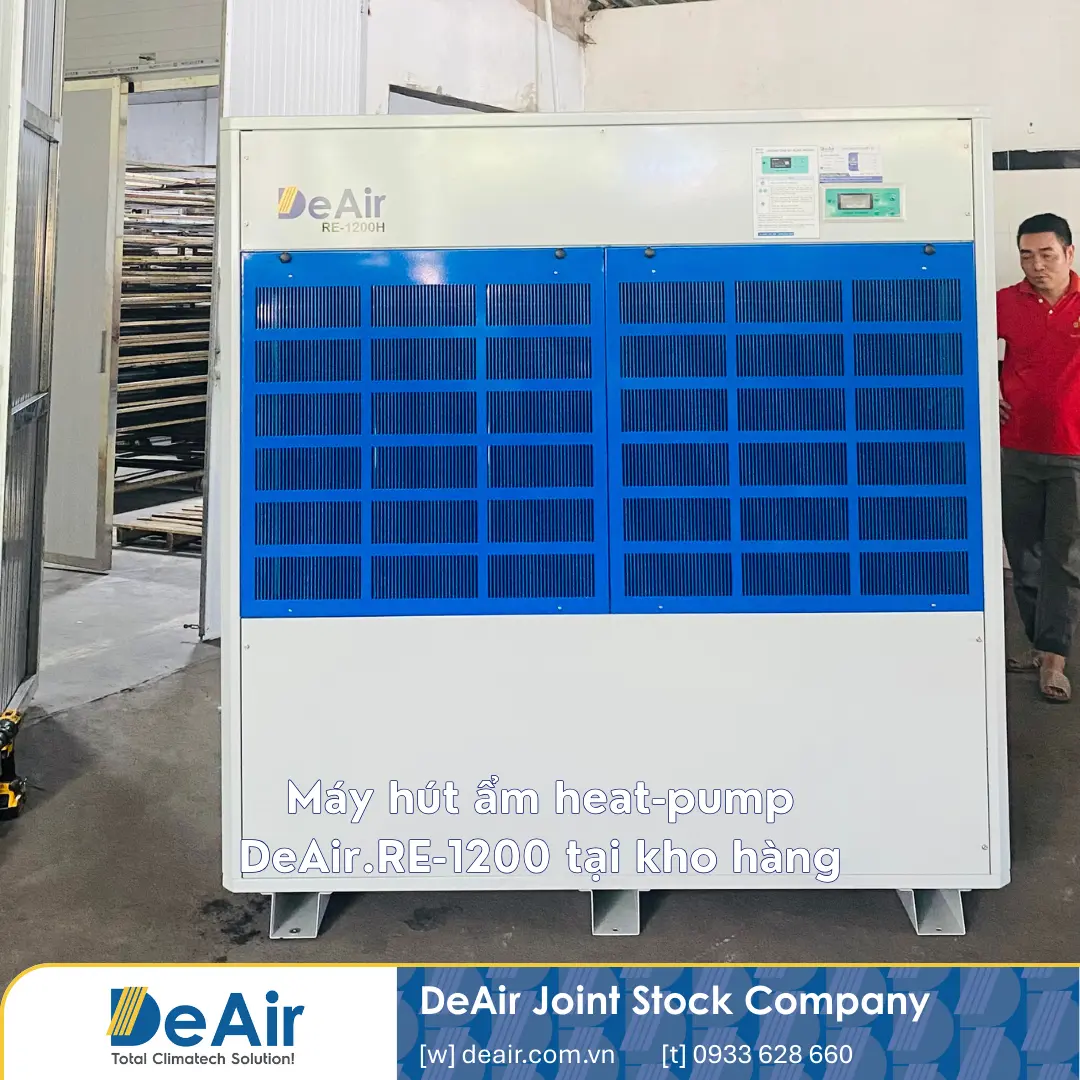
The DeAir.RE-1200 acts as a solid "shield" at the packaging warehouse, protecting carton boxes from turning mushy due to high humidity.
The DeAir.RE-1200 series operates durably in environments with high organic dust, such as agricultural warehouses (dried sweet potatoes).
The Power of DeAir Series (E.g., DeAir.RE-1200)
Ultra-fast Dehumidification Capacity: Capable of extracting hundreds, even thousands of liters of water per day (from 100L/day to 4000L/day), the machine quickly brings warehouse humidity to safe levels (40% - 60%) even when it's drizzling outside with 95% humidity.
Advanced Heat-Pump Technology: Reuses condensation heat to warm up the dry airflow before blowing it out into the factory. This process absolutely prevents floor condensation and saves 40-50% in electricity compared to electrical resistance heating.
"Rock Solid" Durable Operation: Thick powder-coated steel frame prevents rust. Utilizing compressors from world-leading brands (Panasonic/Copeland) allows the machine to operate stably 24/7 in harsh, dusty industrial environments (like garment factories, paper warehouses, animal feed storage).
How do I know what capacity dehumidifier my factory needs?
Capacity selection is not just based on floor area (m²), but must be based on spatial volume (m³) (Area x Ceiling Height). Additionally, DeAir engineers must calculate other moisture sources: Number of workers, frequency of loading dock doors opening, forklift traffic, effectiveness of PVC strip curtains, and the hygroscopic nature of the stored goods.
My factory has many exhaust fans. Will running a dehumidifier be a waste?
Yes, absolutely a waste. Exhaust fans suck dry air out of the factory while pulling in highly humid (95%) outdoor air to compensate. This creates an infinite "moisture load," forcing the dehumidifier to run 24/7 without ever reaching the set humidity. During highly humid weather, you must turn off exhaust fans to create a sealed environment for the dehumidifier to operate effectively.
Conclusion: Investing in an industrial dehumidifier is a "Risk Insurance" with an incredibly high Return on Investment (ROI). The cost of purchasing the machine and electricity is miniscule compared to the value of goods damaged by mold and rust.
Professional process: DeAir engineers conduct direct on-site surveys and measurements at the factory before proposing a customized humidity treatment solution.
Free Factory Moisture Load Survey & Calculation
Don't let humidity corrode your profits! DeAir's engineering team is ready to visit your factory to measure and consult on the most optimal dehumidification system.


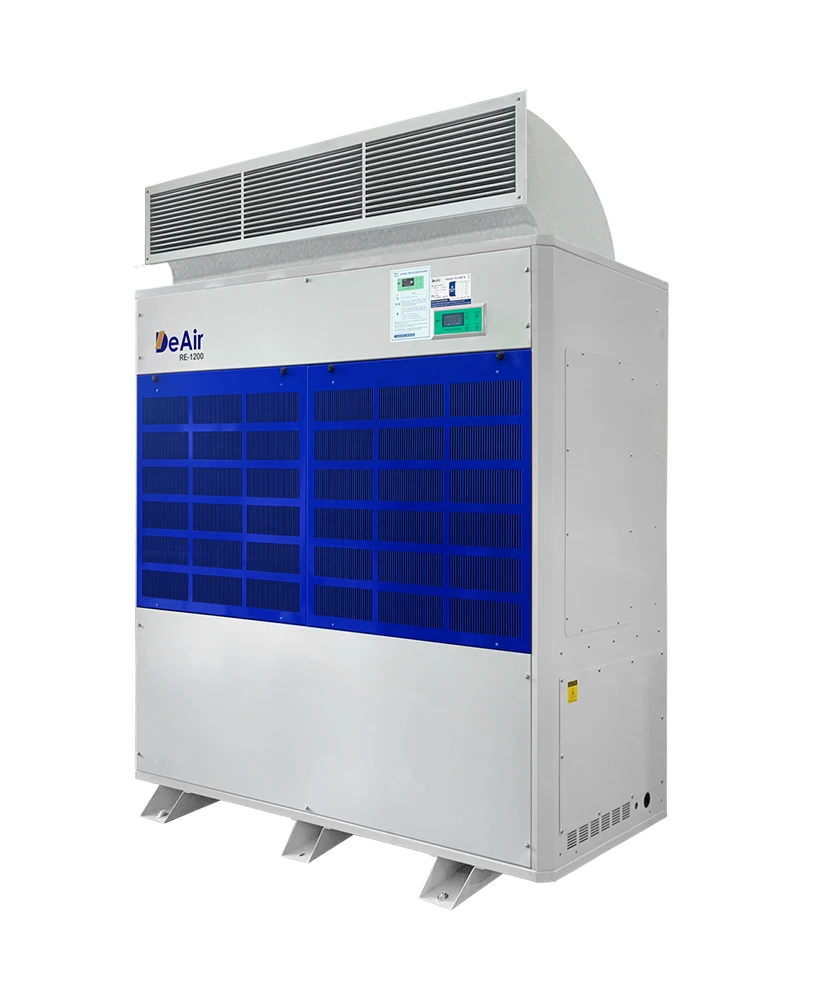 DeAir.RE
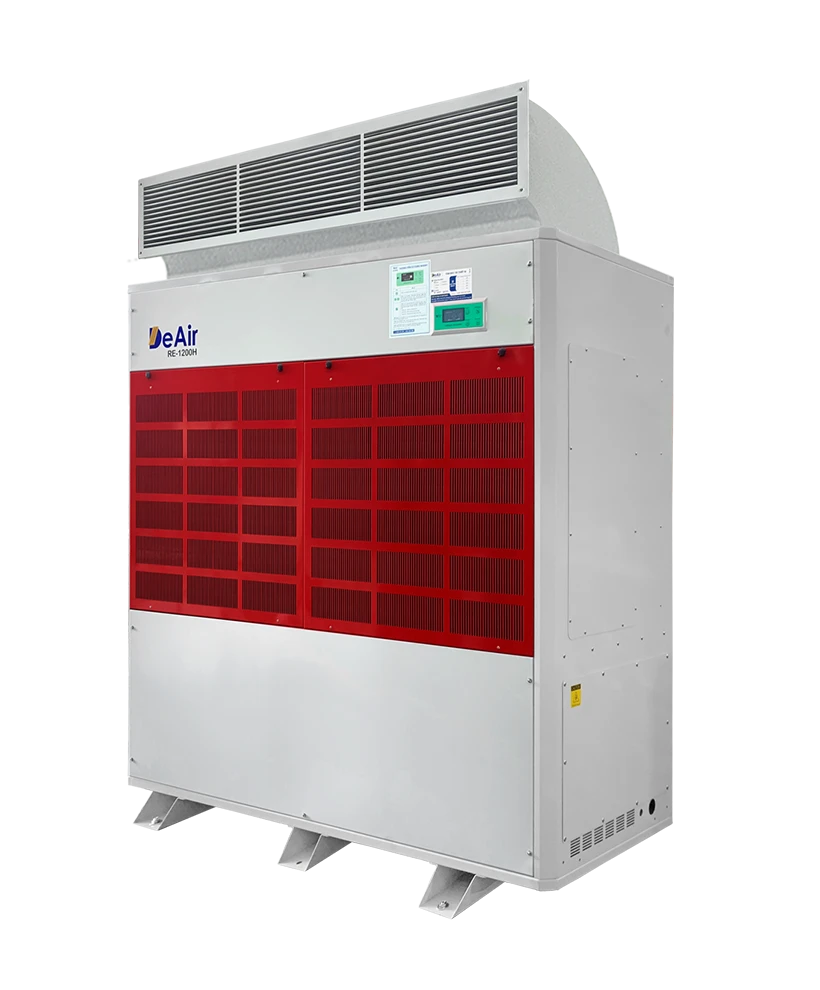 DeAir.RE-H
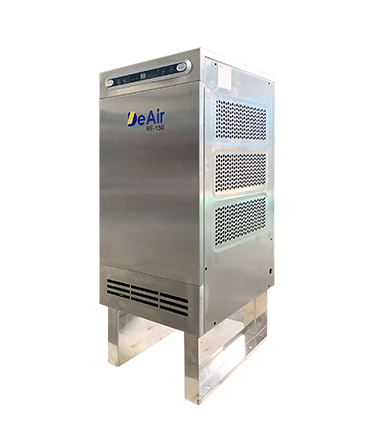 DeAir.RE-INOX
 DeAir.CRE
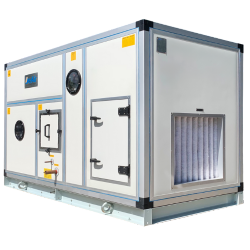 Dezenno
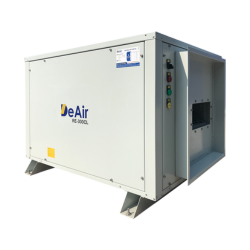 DeAir.RE-CL
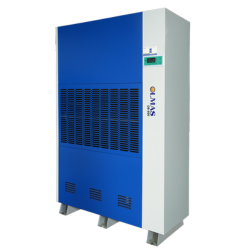 Olmas-OS
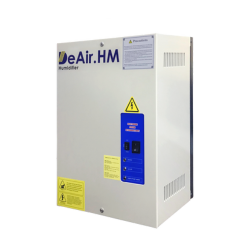 DeAir.HM
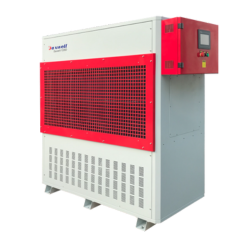 Daxwell
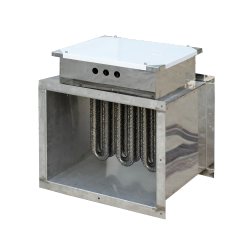 DeAir.Heat
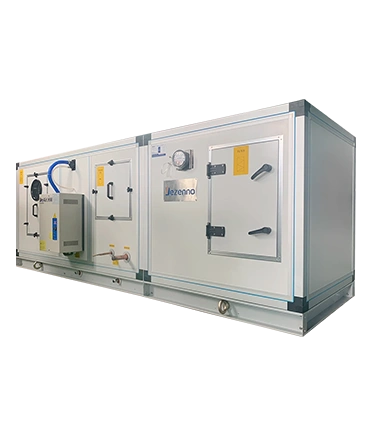 AHU
AHU








![[Case Study] DeAir Installs DeAir.De Rotor Humidity Control System for Pharmaceutical Plant in Binh Duong](https://deair.com.vn/thumbs/news/2023_04/ban_giao_may_cho_duoc_bd/[270x153-cr]image1-1024x772.jpg__cv.webp "[Case Study] DeAir Installs DeAir.De Rotor Humidity Control System for Pharmaceutical Plant in Binh Duong")

![[Review & Guide] Olmas OS-300: The New Humidity Control "Warrior" for Medium to Large Warehouses](https://deair.com.vn/thumbs/news/huong_dan_su_dung_may_olmas_21/[270x153-cr]vtm06440.png "[Review & Guide] Olmas OS-300: The New Humidity Control \"Warrior\" for Medium to Large Warehouses")