Ninh Binh has long been renowned nationwide as a hub for traditional craft villages producing export-grade rattan, bamboo, and sedge handicrafts. However, to pass the rigorous quality inspections of demanding markets like the US, EU, and Japan, these enterprises must solve a critical survival equation: absolute moisture control to eradicate mold vectors. Recently, DeAir successfully commissioned a practical project in Ninh Binh, applying a closed-loop, two-stage microclimate process that delivered outstanding economic efficiency.
1. The Export Challenge and the Post-Drying "Moisture Regain" Trap
Traditional sun-drying or rudimentary wood-fired kilns have long exposed fatal flaws when processing export-grade goods. During prolonged monsoon seasons, inadequately dried rattan quickly falls victim to black spot mold, discoloration, and wood-boring insects. Conversely, aggressive forced-air drying using high-heat wood fires induces severe thermal stress, causing the rattan fibers to become brittle, snap easily, and lose the natural, glossy golden hue expected of premium handicrafts.
Furthermore, rattan and bamboo possess highly hygroscopic properties after drying. If these products are transferred to a tempering room or packaging warehouse without controlled humidity, they aggressively re-absorb moisture from the ambient air—a phenomenon known as "moisture regain." High warehouse humidity also targets the corrugated carton packaging, softening the cellulose fibers. This causes a total loss of compressive strength, leading to crushed pallets during container stacking and ruined export labels.
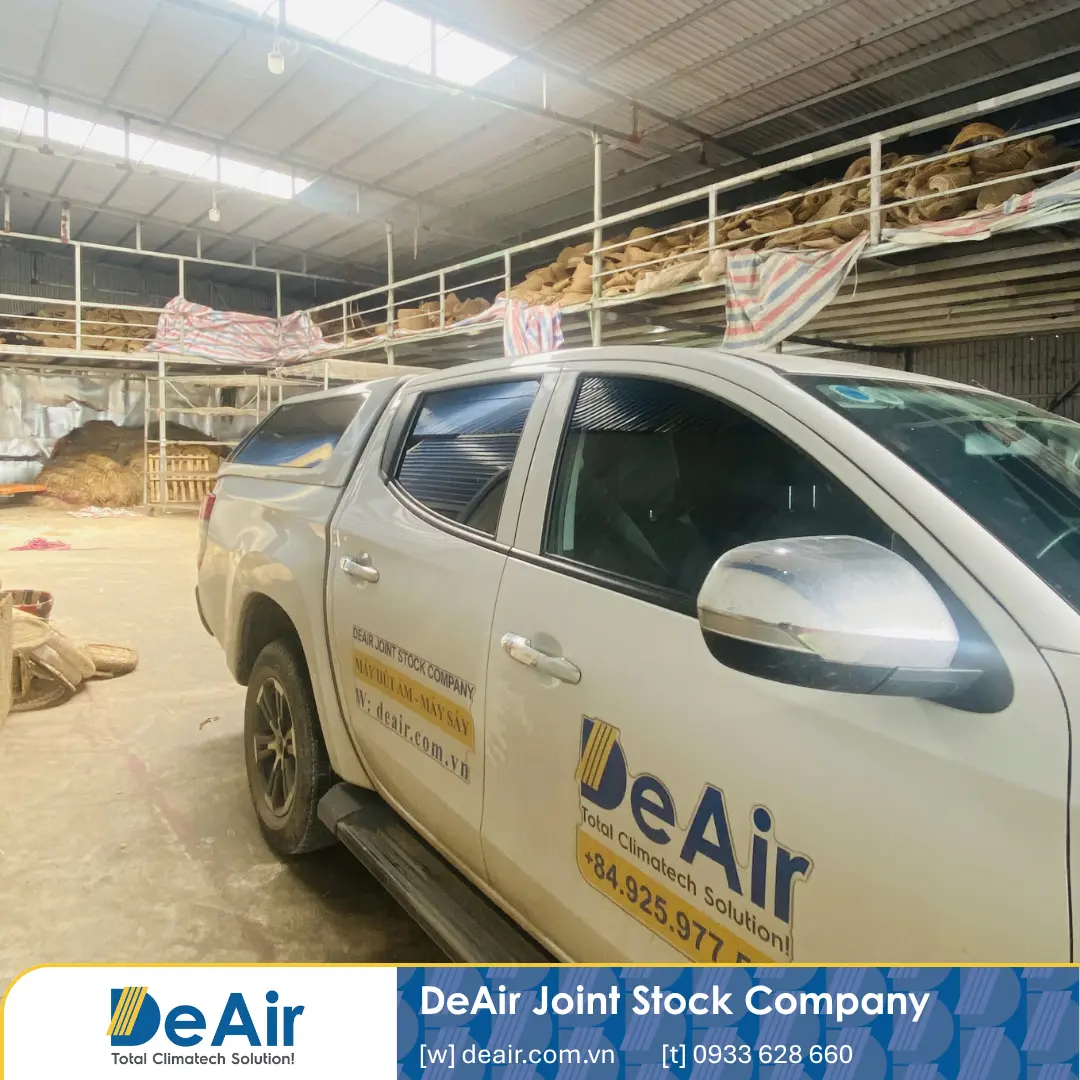
The DeAir engineering team conducting on-site surveys and psychrometric measurements at the main warehousing facility in Ninh Binh.
2. Stage 1 - The Core Drying Chamber: The Gentle Power of DeAir.RE-600H
To thoroughly extract internal moisture from the core of the rattan and bamboo without compromising their physical and mechanical structure, DeAir installed the DeAir.RE-600H Heat-Pump Dryer for the primary kiln zone.
This system operates within an optimal medium-temperature spectrum (between 40 degrees C and 60 degrees C), drawing moisture out from the core of the fiber smoothly and evenly. The 100% closed-loop drying cycle preserves the material's natural flexibility, preventing surface cracking and warping, while locking in the original, vibrant straw-yellow color. This intelligent heat-reclaim technology allows the enterprise to cut energy consumption by up to 70% compared to traditional electric-resistance drying, whilst ensuring a clean output free from smoke, soot, and toxic sulfur residues.
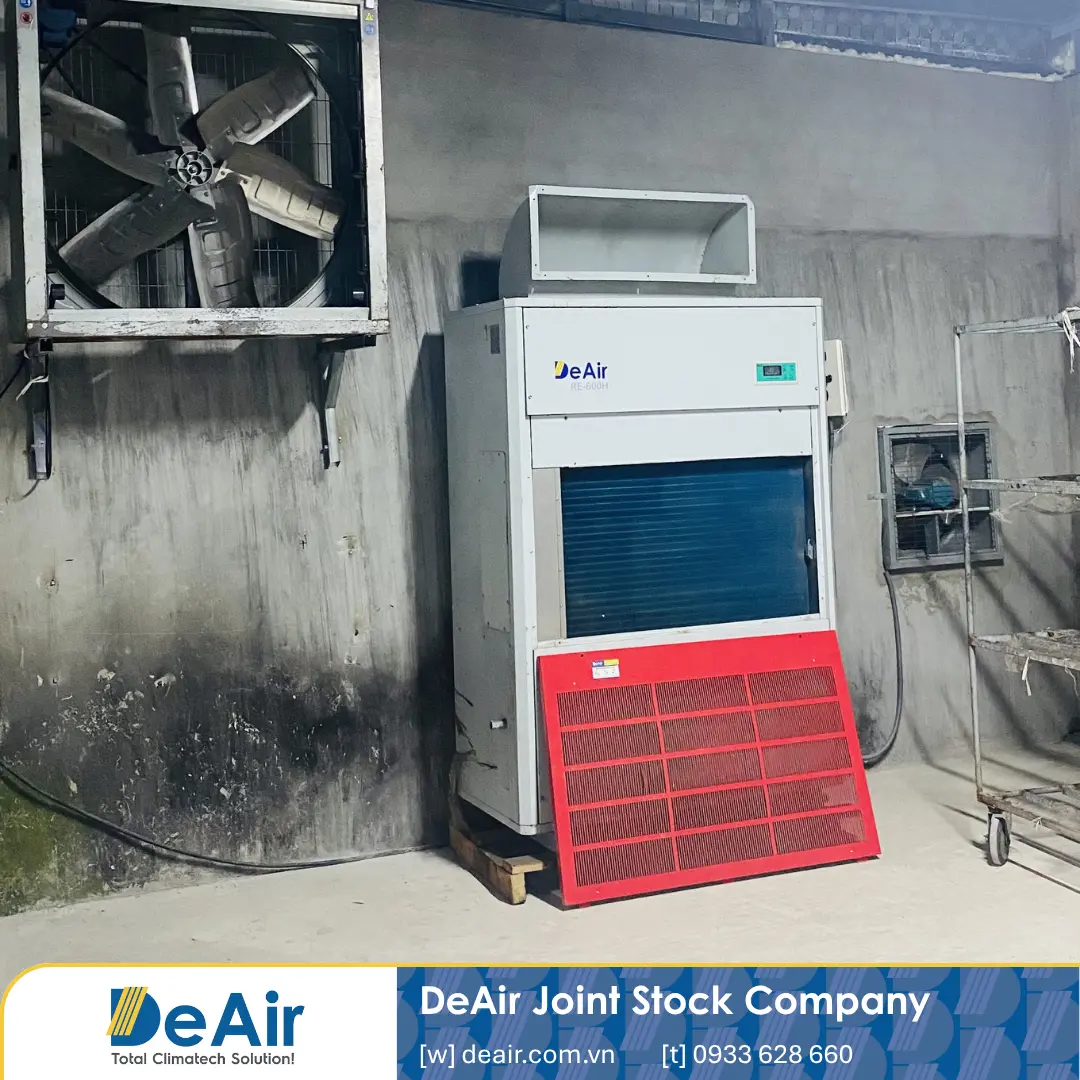
The DeAir.RE-600H heat-pump drying unit being positioned inside the core product drying cabin.
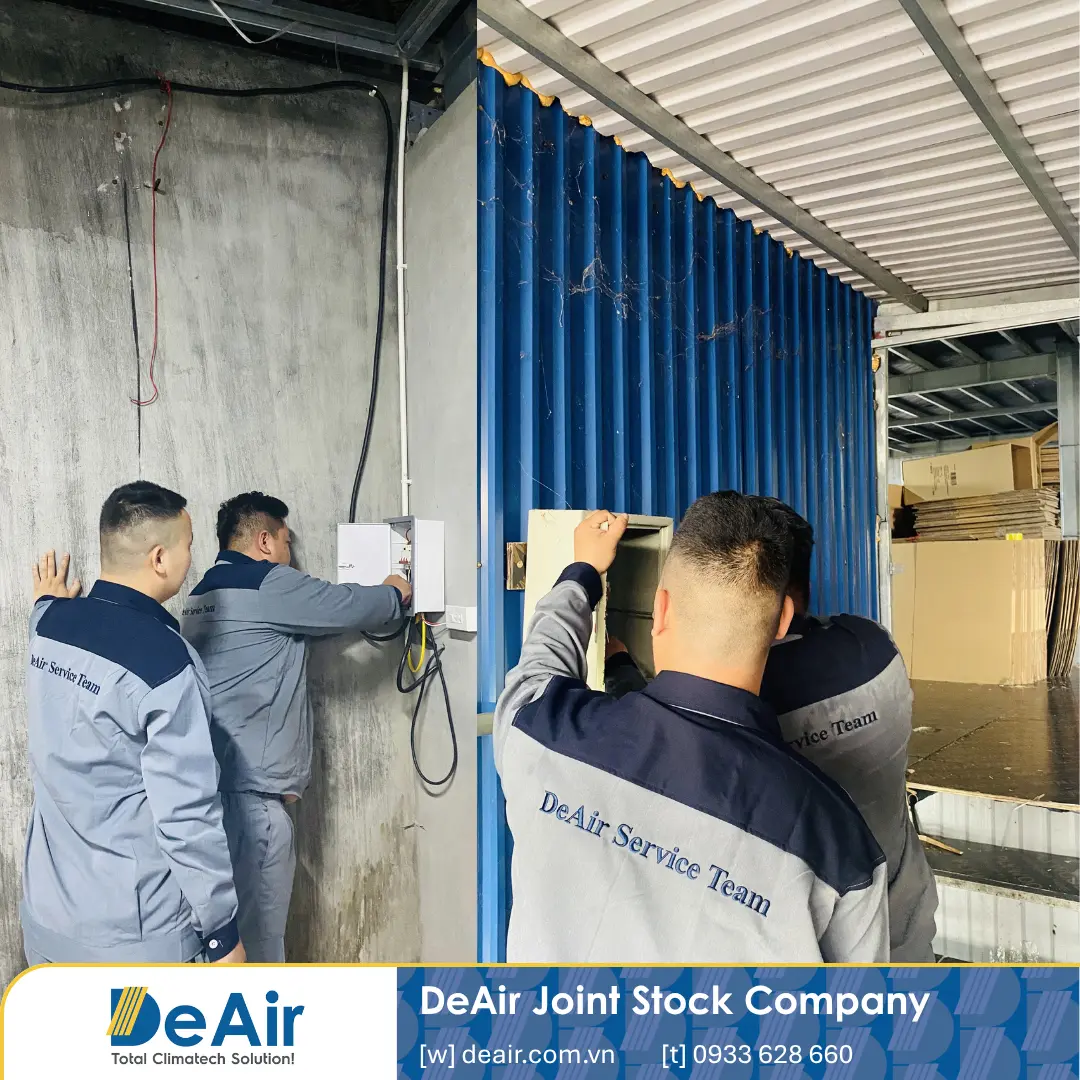
A DeAir electrical engineer wiring the smart automated control panel for the drying chamber system.
3. Stage 2 - Tempering and Carton Storage: The Vital Role of Olmas OS-500
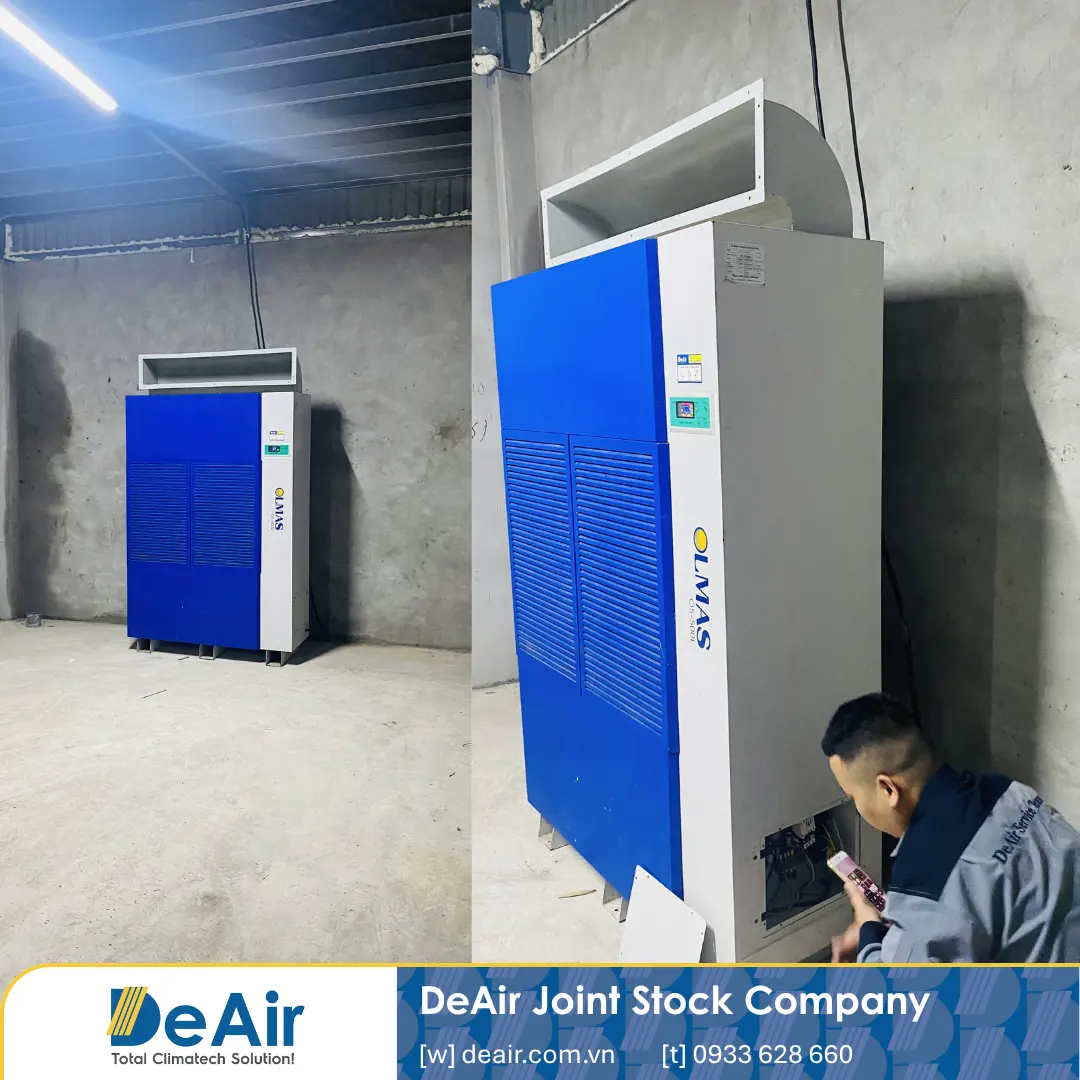
Immediately exiting the drying kiln, rattan products require a cooling and stabilization period within a strictly controlled iso-humid environment (tempering room) prior to final carton packaging. For the tempering room and the adjacent carton storage zones, DeAir configured the Olmas OS-500 Industrial Dehumidifier.
This heavy-duty unit operates continuously to anchor the warehouse's relative humidity safely within the 50% - 60% RH threshold. The Olmas OS-500 completely neutralizes the risk of moisture regain in the rattan, ensuring product surfaces remain bone-dry. Concurrently, the machine protects the cellulose structure of the corrugated carton boxes, maintaining their rigidity and compressive strength to prevent moisture-induced collapse when stacked into massive pallet blocks.
The Olmas OS-500 industrial dehumidifier extracting water continuously, securing a safe base humidity for the carton storage facility.
4. Expert Engineering Advisory: Optimizing Energy Efficiency for Tempering Rooms
The Ninh Binh project utilized the standard Olmas OS-500 for the finished goods warehouse due to its highly accessible initial capital expenditure (CAPEX), perfectly aligning with the facility's current budget. However, from a long-term operational expenditure (OPEX) perspective, DeAir offers a critical technical recommendation for investors designing similar infrastructures:
💡 ENGINEERING UPGRADE ADVISORY: For expansive handicraft warehouses experiencing high-frequency loading cycles, upgrading to the DeAir.RE Heat-Pump Industrial Dehumidifier Series yields vastly superior economic performance compared to standard condensation units like the Olmas OS-500.
Leveraging an advanced closed-loop thermodynamic cycle, the DeAir.RE Heat-Pump dehumidifiers deliver aggressive moisture extraction while slashing monthly operational energy costs by 50% to 70% versus older mechanical technologies. This represents a rapid-ROI solution that enterprises focusing on green transitions and sustainable energy conservation should prioritize during the initial facility design phase.
Modernize Your Craft Village Infrastructure with DeAir
The seamless integration between precision drying chambers and climate-controlled storage is the golden key that empowers handicraft enterprises to maintain 365-day autonomous production, eliminate weather dependency, and drop mold-related rejection rates from 15% to under 0.5%.
Factory owners and handicraft enterprises in Ninh Binh and surrounding provinces seeking energy-efficient drying and preservation strategies, contact the DeAir Projects Division today to schedule a site survey and secure the ultimate technical blueprint.


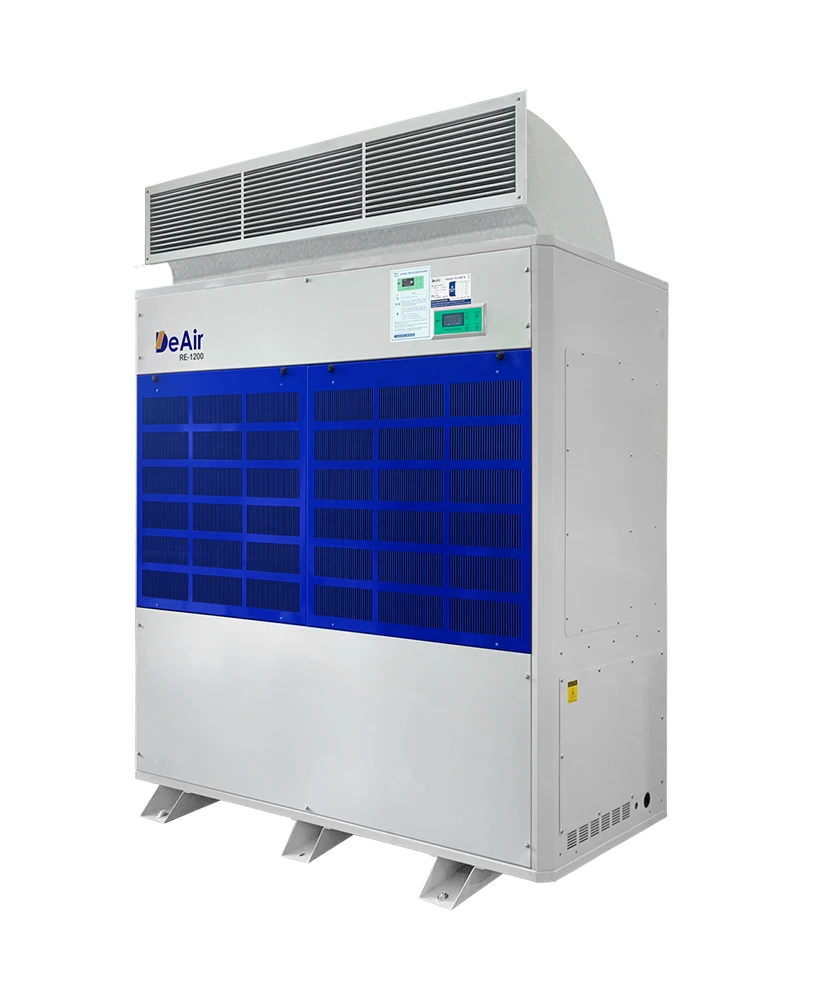 DeAir.RE
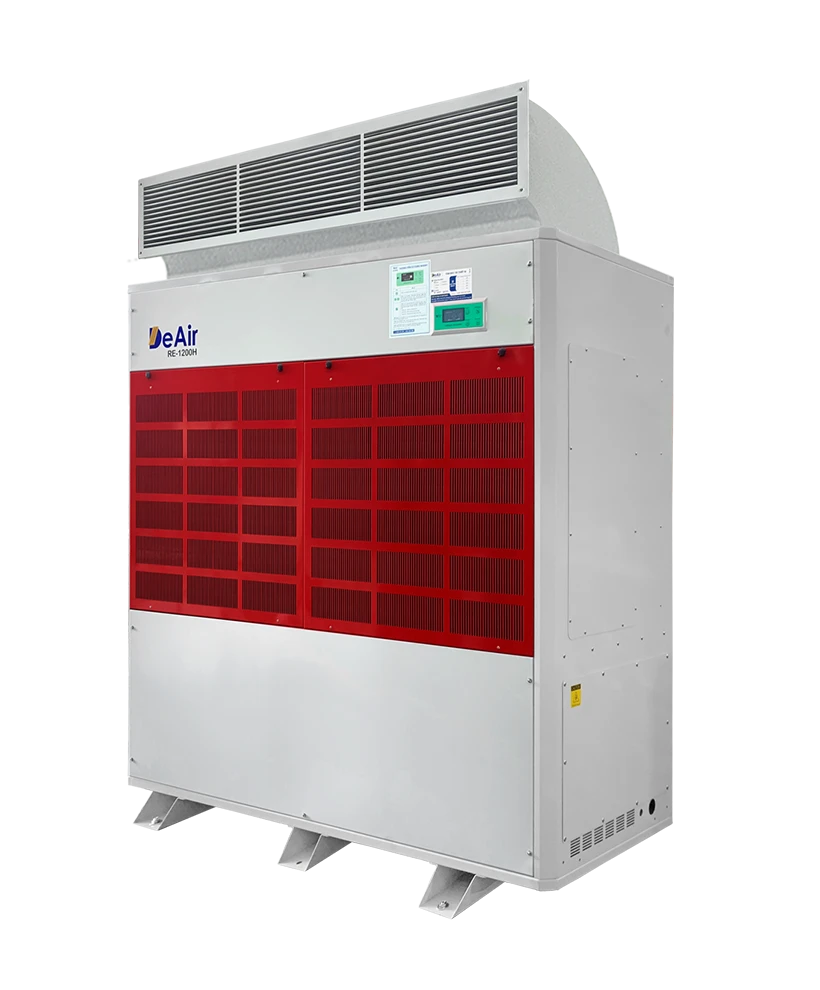 DeAir.RE-H
 DeAir.RE-INOX
 DeAir.CRE
 Dezenno
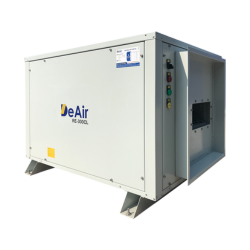 DeAir.RE-CL
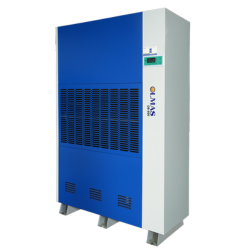 Olmas-OS
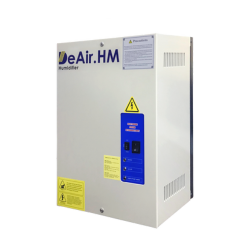 DeAir.HM
 Daxwell
 DeAir.Heat
 AHU
AHU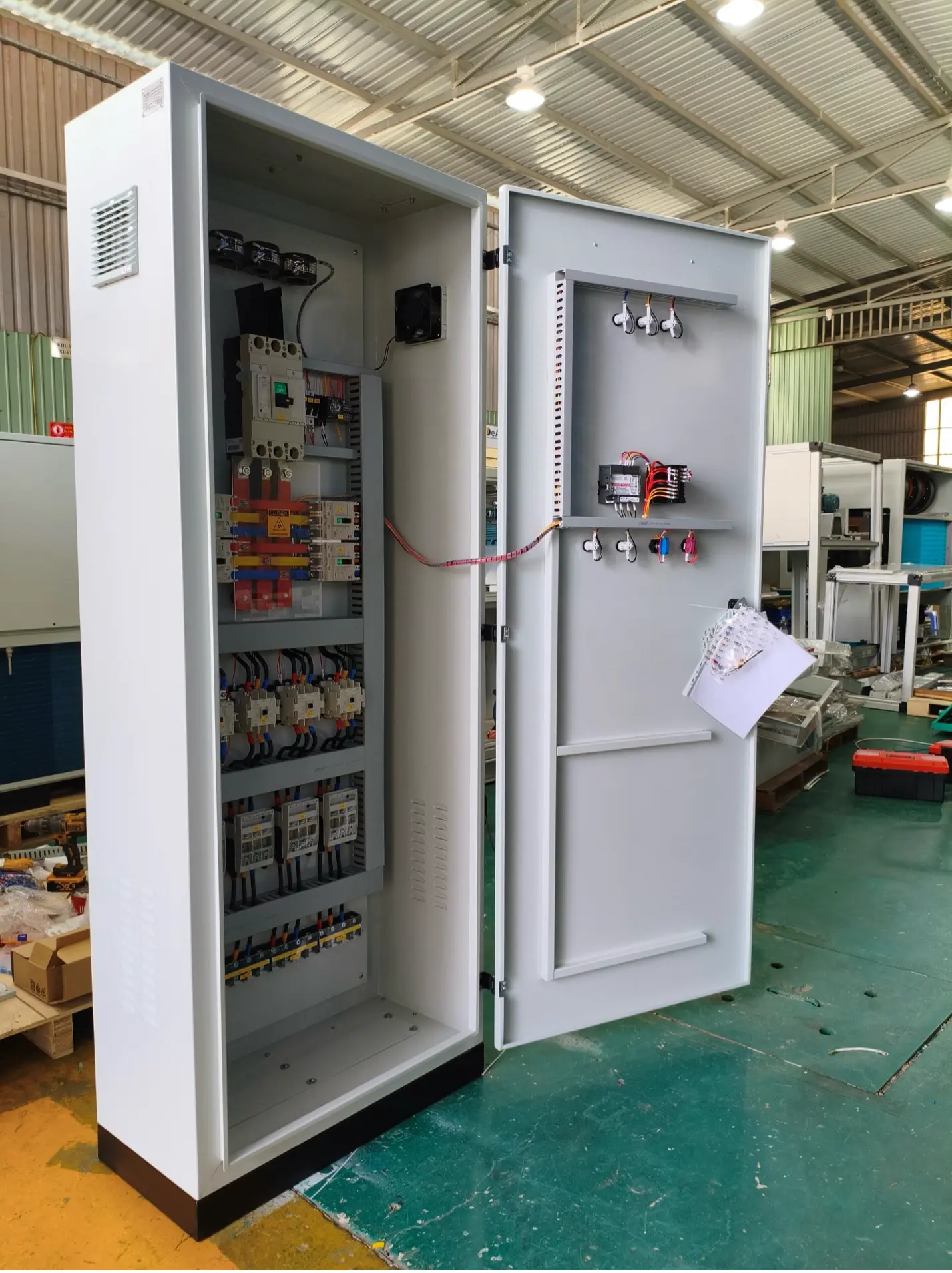






![[Case Study] DeAir Installs DeAir.De Rotor Humidity Control System for Pharmaceutical Plant in Binh Duong](https://deair.com.vn/thumbs/news/2023_04/ban_giao_may_cho_duoc_bd/[270x153-cr]image1-1024x772.jpg__cv.webp "[Case Study] DeAir Installs DeAir.De Rotor Humidity Control System for Pharmaceutical Plant in Binh Duong")

![[Review & Guide] Olmas OS-300: The New Humidity Control "Warrior" for Medium to Large Warehouses](https://deair.com.vn/thumbs/news/huong_dan_su_dung_may_olmas_21/[270x153-cr]vtm06440.png "[Review & Guide] Olmas OS-300: The New Humidity Control \"Warrior\" for Medium to Large Warehouses")