Context: Global energy crisis, rising electricity costs, and the urgent need for carbon emission reduction and sustainable development.
The Problem: Traditional technologies (electric resistance, boilers, direct combustion) are increasingly revealing limitations in efficiency and operating costs.
The Solution: Heat-Pump technology emerges as a revolution, boasting a superior Coefficient of Performance (COP), typically ranging from 3.0 to 5.0.
DeAir's Role: DeAir is a pioneer in applying and developing comprehensive Heat-Pump solutions for the Vietnamese market.
1. What is Heat-Pump Technology? Why is it the Future?
1.1. Definition and Operating Principle
A Heat-Pump does not "create" heat; rather, it "moves" heat from one place to another (from a low-temperature source to a high-temperature sink). Based on the reverse thermodynamic cycle (the same principle as an air conditioner), it captures and utilizes the heat rejected at the condenser instead of wasting it.
🔧 THE COP (COEFFICIENT OF PERFORMANCE) ADVANTAGE
Electric Resistance: COP ≈ 1.0 (1 kW of electricity = 1 kW of heat)
Heat-Pump: COP ≈ 3.0 - 5.0 (1 kW of electricity = 3 to 5 kW of heat)
Conclusion:Saves 60-80% on electricity costs
1.2. Global Trends
The EU, USA, and Japan are aggressively transitioning to Heat-Pump technology to achieve Net-Zero goals. This is no longer just a trend; it is a mandatory requirement for sustainable development.
Heat-Pump technology – The superior energy-saving solution for the future.
2. Detailed Comparison: Heat-Pump vs. Traditional Solutions
2.1. Efficiency and Operating Cost Comparison
📊 COMPREHENSIVE TECHNOLOGY COMPARISON
Criteria
Electric Resistance
Boiler (Gas/Oil)
Solar Thermal
Heat-Pump
Efficiency (COP)
1.0
0.7 - 0.9
2.0 - 3.0*
3.0 - 5.0
Operating Cost
Highest (100%)
High (60-70%)
Moderate (40-50%)
Lowest (20-30%)
Initial Investment
Lowest
High
Highest
Moderate to High
Return on Investment (ROI)
N/A
24 - 36 months
36 - 60 months
12 - 24 months
Weather Dependency
No
No
Yes (requires backup)
No
Safety
Fire risk
Explosion/Fire risk
Safe
Absolutely Safe
CO₂ Emissions
High
Very High
Low
Very Low
Automation
Basic
Requires manual labor
High
High (PLC/HMI)
*Solar thermal systems typically require an electric resistance backup.
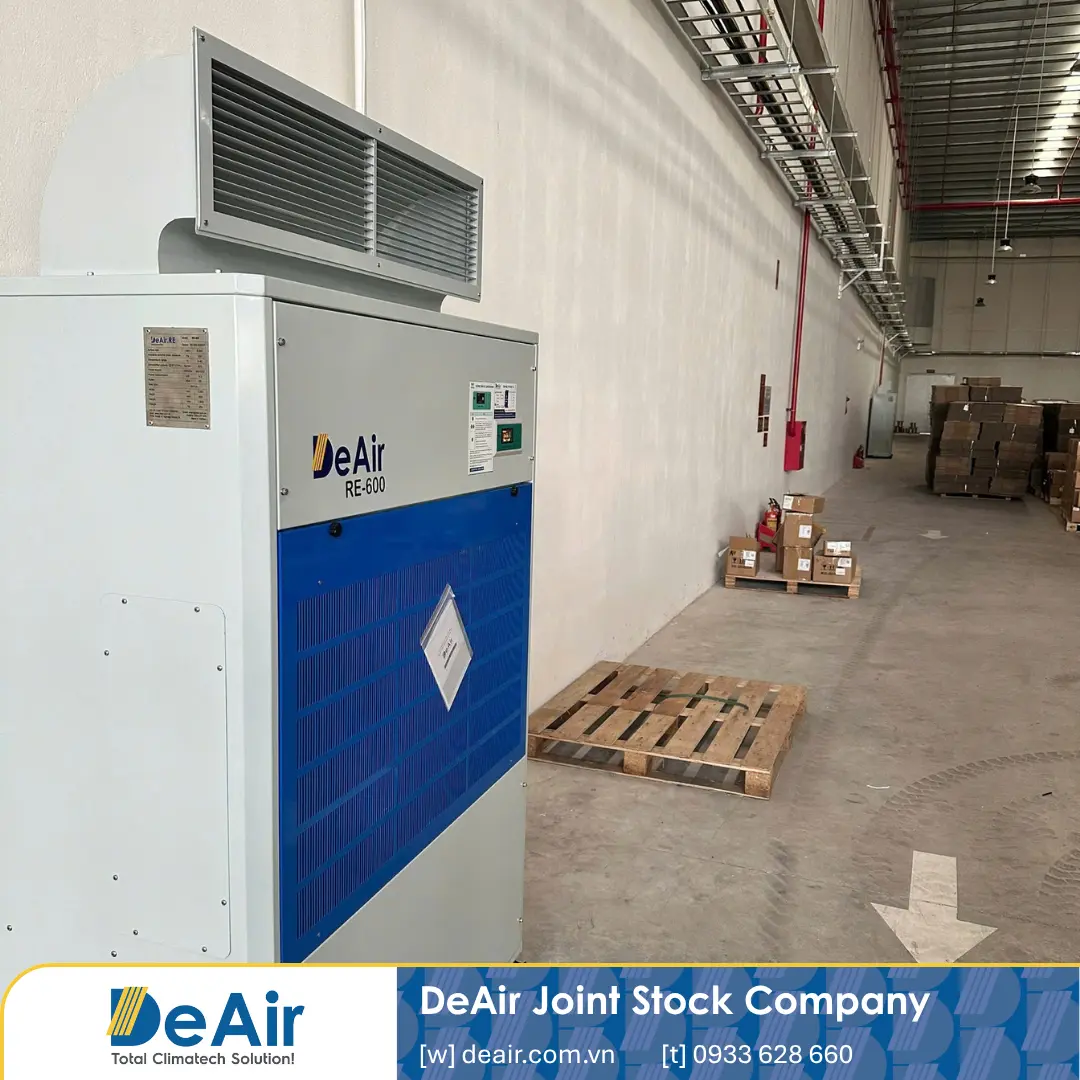
DeAir.RE-600 heat-pump dehumidifier applied in a cable warehouse for optimal humidity control.
Principle: Utilizes the heat from the condenser (which is typically wasted in standard air conditioners) to reheat the air after moisture has been extracted.
🌟 KEY BENEFITS
Warm, dry air output: Prevents the uncomfortable "chilling" effect common with standard dehumidifiers.
40-50% energy savings: Compared to conventional dehumidifiers.
Applications: Warehouses, garment factories, museums, and general storage.
3.2. Rotor Dehumidifiers with Heat-Pump Regeneration (Dezenno + Heat Pump)
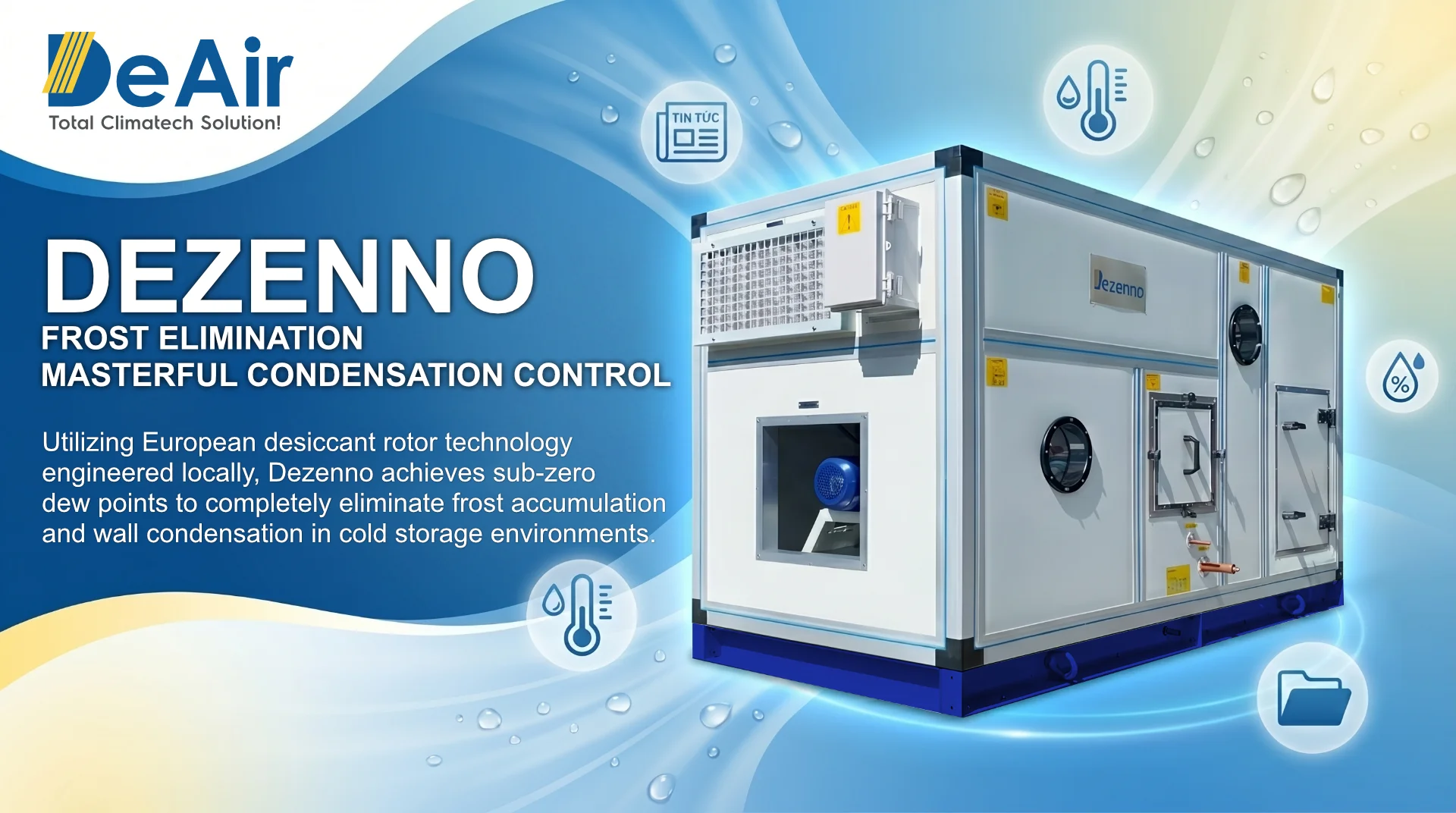
The Problem with Traditional Rotors: They require massive electric resistance heaters (tens of kW) to regenerate the desiccant rotor, leading to exorbitant electricity costs.
🔧 THE DEAIR SOLUTION
Replaces electric heaters: Uses a Heat-Pump (hot gas) system for rotor regeneration.
60-70% electricity savings: Specifically for the regeneration phase.
Precise temperature control: Optimizes the regeneration temperature for maximum efficiency.
3.4. Central Heat-Pump Water Heating Systems (Imported Complete Units from Copeland)
Strategic Partner:Copeland (USA) – The world's leading brand in refrigeration compressors.
🏢 KEY APPLICATIONS
Hotels & Resorts: Require 24/7 hot water supply.
Hospitals, Schools, Factories: Require process hot water.
Swimming Pools: Efficient pool water heating.
✅ SUPERIOR ADVANTAGES
Saves 70-80% on costs: Compared to electric resistance heating.
Saves 50% on costs: Compared to gas or oil boilers.
Absolute safety: No risk of gas leaks or explosions.
High durability: Stable operation in all weather conditions.
4. Infographic: Annual Operating Cost Comparison
💰 ASSUMPTION: DAILY HEAT DEMAND OF 1,000 kWh
ELECTRIC RESISTANCE
100%
Highest cost (1,000 kWh electricity)
GAS BOILER
60-70%
Fluctuating fuel costs
SOLAR THERMAL
40-50%
Amortized CAPEX + backup
DEAIR HEAT-PUMP
20-30%
Lowest cost (200-300 kWh electricity)
* Costs calculated based on average electricity prices in Vietnam.
5. Frequently Asked Questions (FAQ)
Q1: Do Heat-Pumps work well in winter or cold weather?
Yes. DeAir utilizes Inverter technology and next-generation refrigerants (R410A, R32), allowing the system to operate efficiently even at low ambient temperatures (down to 5-10°C, depending on the model). Some models are also equipped with automatic defrost cycles to maintain peak performance in freezing conditions.
Q2: Is the initial investment for a Heat-Pump system high?
The initial capital expenditure is about 2-3 times higher than electric resistance. However, the Return on Investment (ROI) is very fast (typically 12-24 months) due to massive monthly electricity savings. After the payback period, the system generates net profit through reduced operating costs. It is a profitable investment, not just an expense.
Q3: What makes Copeland compressors special?
Copeland is the "heart" of the global refrigeration industry, with over a century of expertise. Copeland compressors are renowned for: (1) Exceptional durability, (2) Superior efficiency, (3) Low failure rates, and (4) Easy availability of replacement parts. DeAir is proud to be a strategic partner of Copeland in Vietnam, providing complete, imported central water heating systems with international quality standards.
Q4: Does DeAir provide customized Heat-Pump solutions for specific business needs?
Absolutely. DeAir offers comprehensive consulting services: on-site surveys, precise heat/humidity load calculations, ROI analysis, and tailored recommendations (dehumidification, drying, or water heating). We commit to delivering a "tailor-made" solution that perfectly aligns with your operational needs and budget.
Do Not Let Energy Costs "Erode" Your Profits!
Transition to Heat-Pump technology today to save 60-80% on energy costs and contribute to environmental protection.
Contact us now for a free site survey and consultation!


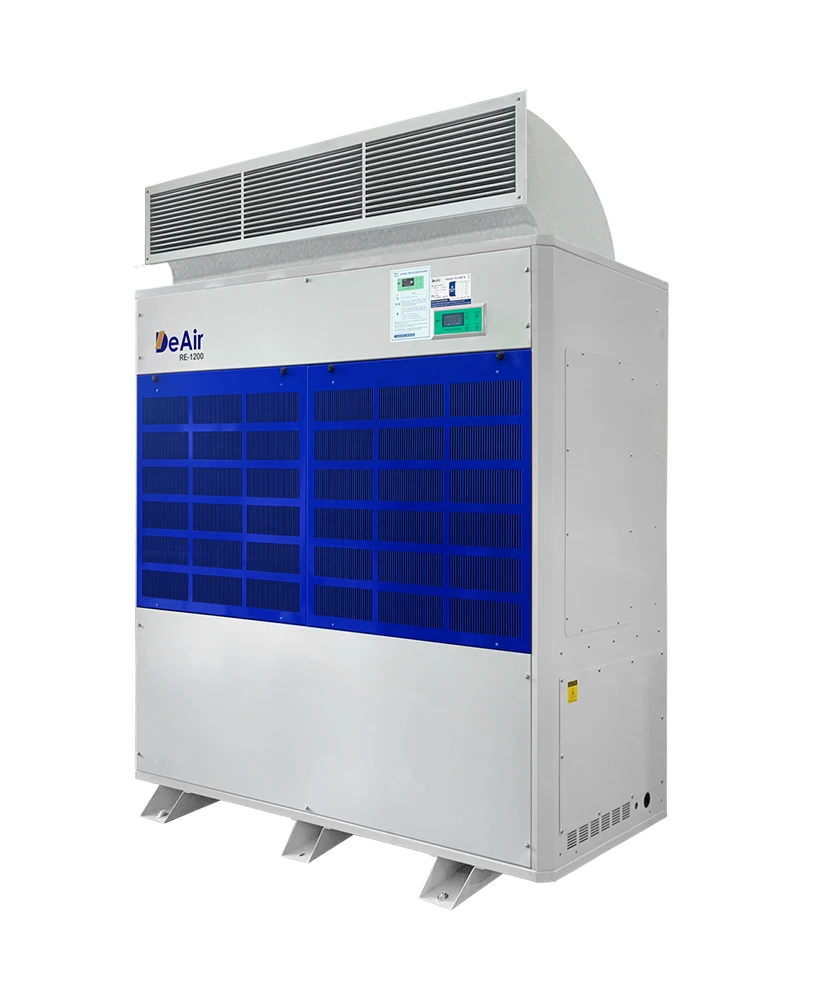 DeAir.RE
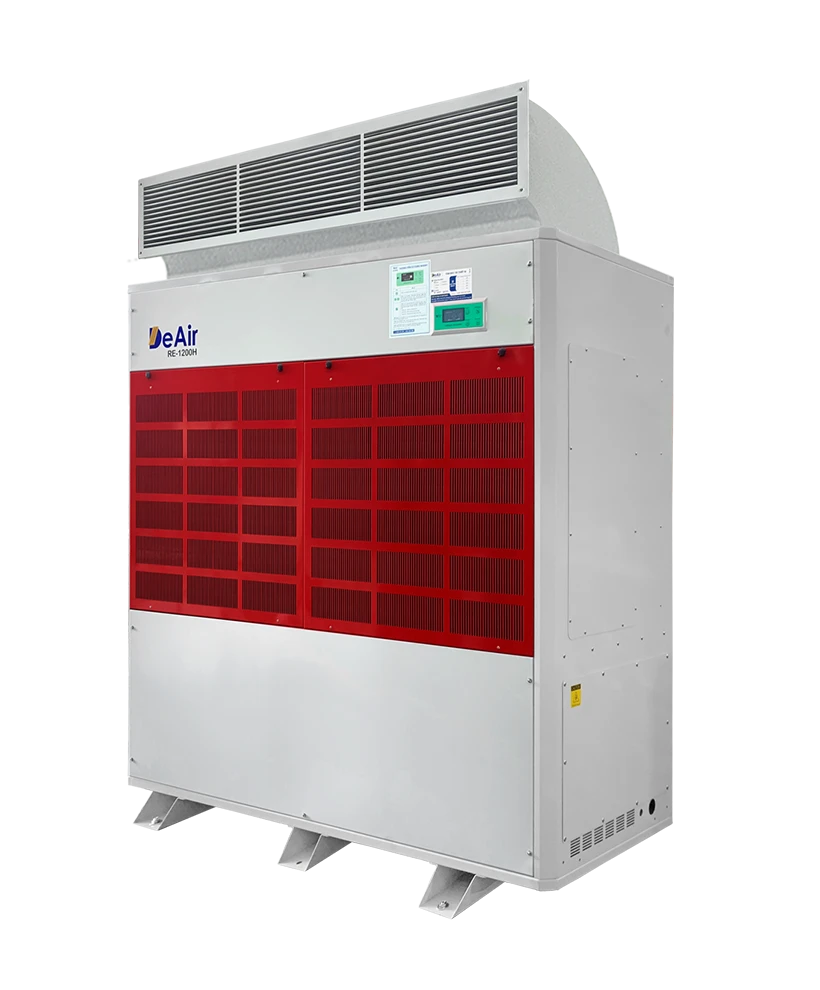 DeAir.RE-H
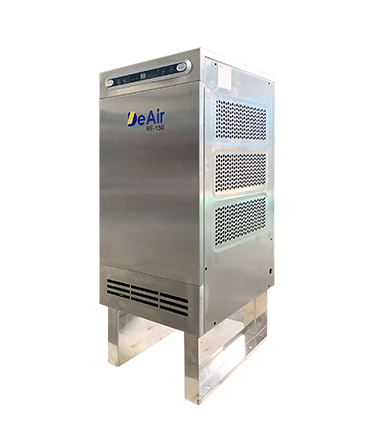 DeAir.RE-INOX
 DeAir.CRE
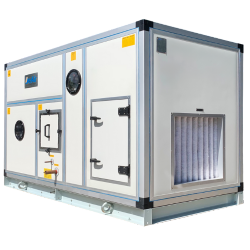 Dezenno
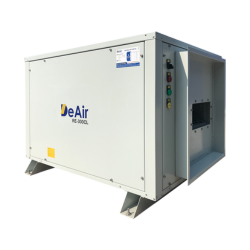 DeAir.RE-CL
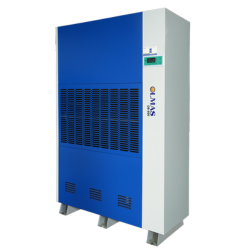 Olmas-OS
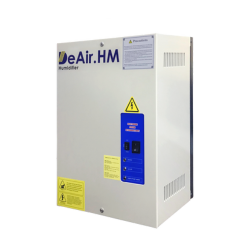 DeAir.HM
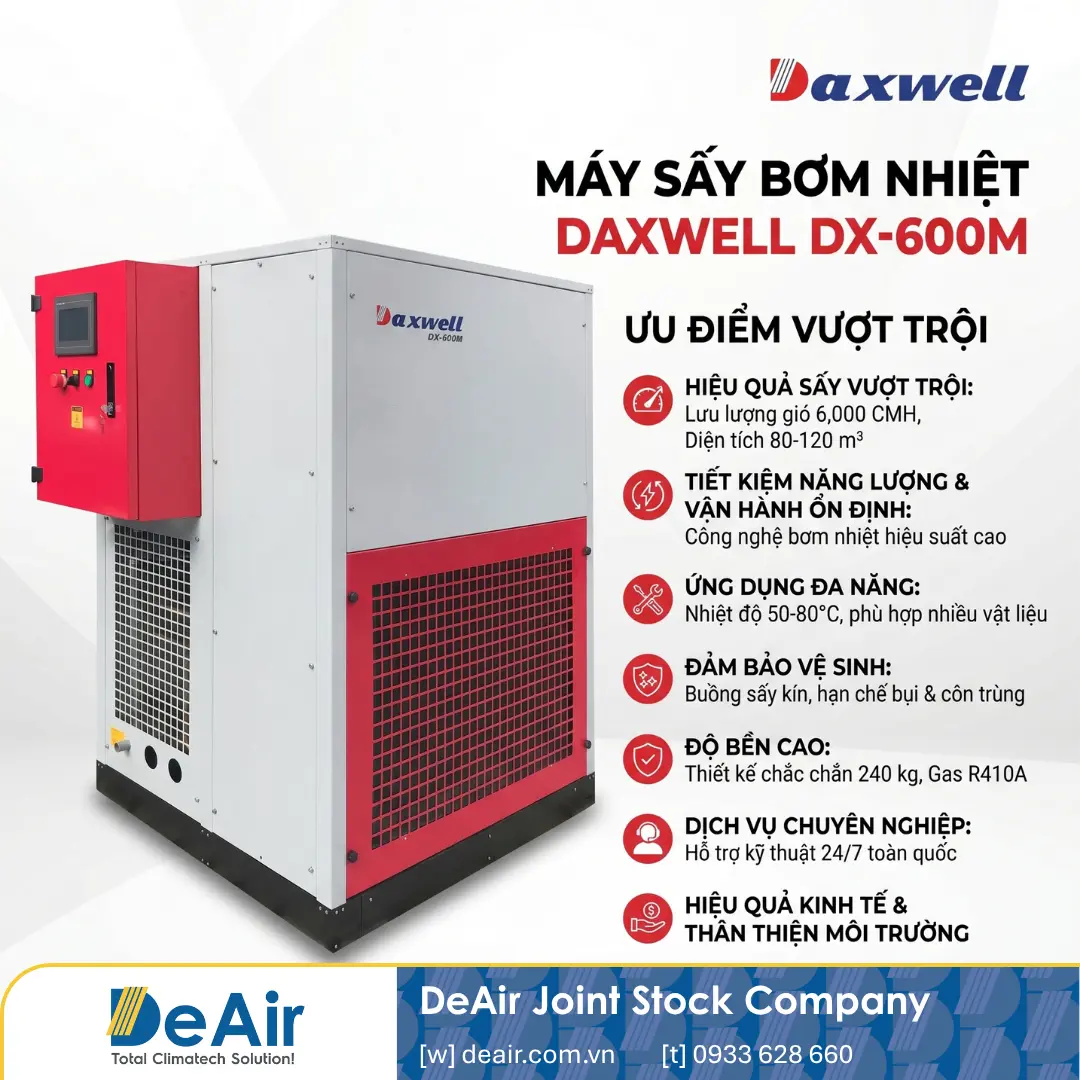
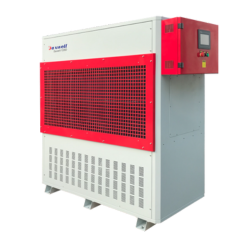 Daxwell
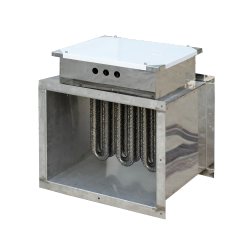 DeAir.Heat
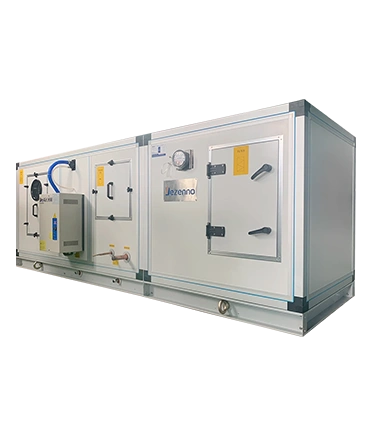 AHU
AHU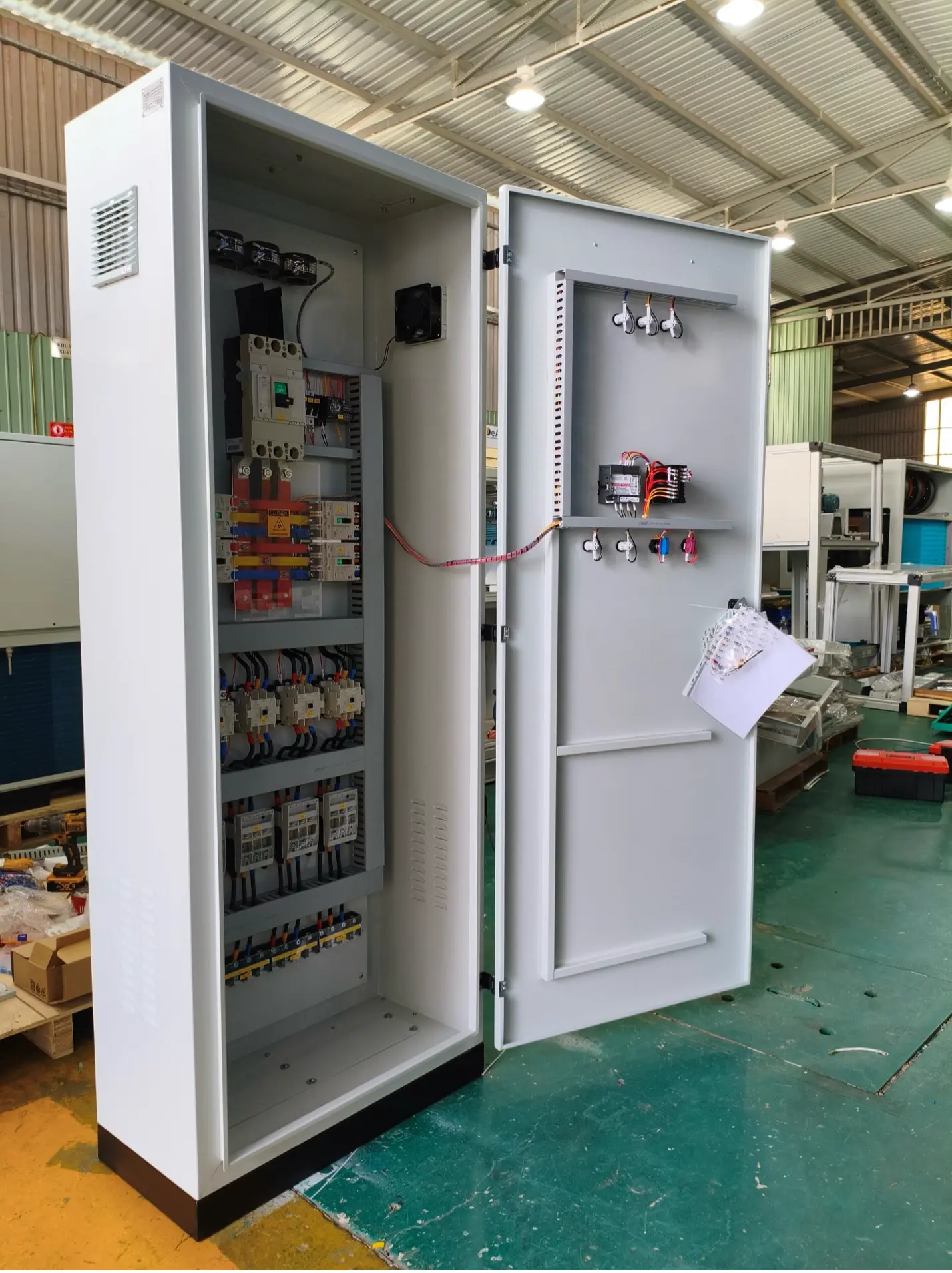





![[Case Study] DeAir Installs DeAir.De Rotor Humidity Control System for Pharmaceutical Plant in Binh Duong](https://deair.com.vn/thumbs/news/2023_04/ban_giao_may_cho_duoc_bd/[270x153-cr]image1-1024x772.jpg__cv.webp "[Case Study] DeAir Installs DeAir.De Rotor Humidity Control System for Pharmaceutical Plant in Binh Duong")

![[Review & Guide] Olmas OS-300: The New Humidity Control "Warrior" for Medium to Large Warehouses](https://deair.com.vn/thumbs/news/huong_dan_su_dung_may_olmas_21/[270x153-cr]vtm06440.png "[Review & Guide] Olmas OS-300: The New Humidity Control \"Warrior\" for Medium to Large Warehouses")