Harvesting Water Hyacinth Value: From Environmental Solution to "Golden Fiber" in a Circular Economy
12/05/2026
Harvesting Water Hyacinth Value: From Environmental Solution to "Golden Fiber" in a Circular Economy
Key Takeaways:
Dual Role: Water hyacinth is not just a natural "water filter" for environmental treatment; it is also a source of precious eco-fiber for the handicraft, fashion, and interior industries.
Mandatory Process: Post-environmental treatment, water hyacinth must be harvested and biologically processed correctly to prevent rotting, which causes secondary pollution in water sources.
Elevating Value: Beyond basic weaving, extracting and drying water hyacinth into "bio-fiber" creates products with extremely high surplus value.
Technological Solution: Utilizing the Daxwell Heat-pump dryer ensures even drying, sterilization, mold prevention, and preserves a natural golden-straw color for export.
In the pursuit of a circular economy, no material is truly waste. Water hyacinth—an aquatic species once considered a "disaster" for clogging waterways—is now proving its immense value. Especially with the support of modern industrial drying technology, water hyacinth is being "transformed" into premium raw fibers, generating significant foreign currency for handicraft export enterprises.
1. From Aquatic Plant to Valuable "Green" Material
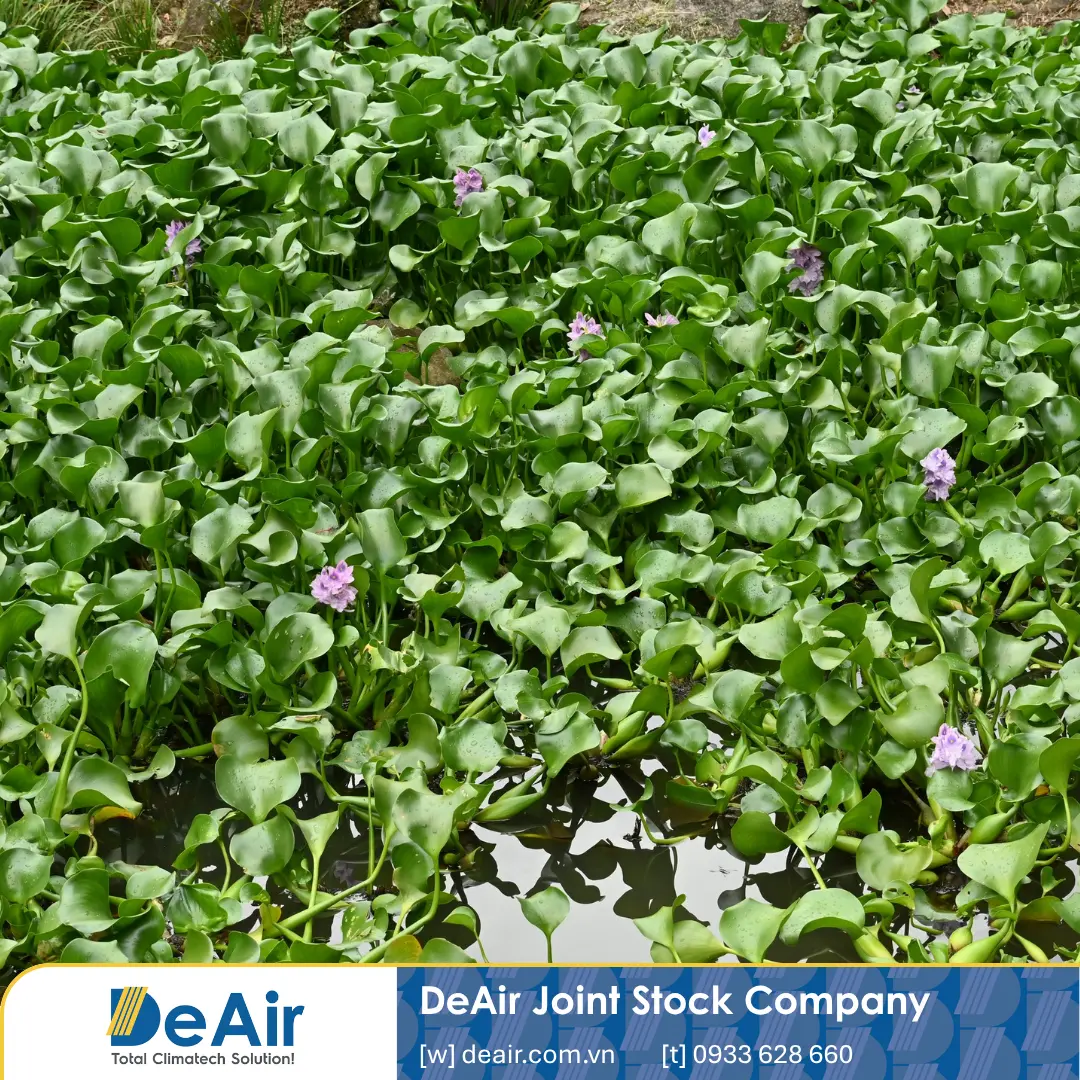
Water hyacinth absorbs heavy metals, acting as a natural biological filter for rivers.
Environmental Mission: Scientists call water hyacinth a biological "water filter." Their massive root systems have an extraordinary ability to absorb impurities, excess fertilizers, and especially heavy metals (lead, mercury) from polluted water sources.
Economic Vision: Upon completing its cleaning mission, the water hyacinth stalk provides a large amount of biomass. With its porous, tough, and lightweight structure, water hyacinth is highly sought after by the green materials industry to replace synthetic plastic fibers.
2. Multi-Level Benefits of Water Hyacinth
Harvesting water hyacinth not only solves waterway congestion but also creates a diverse ecosystem of products:
Product Ecosystem from Water Hyacinth
🌿
Premium Fiber & Fabric
Extracting xylems for weaving, fine art paper, and eco-acoustic composite materials.
👜
Handicraft Export
Weaving handbags, baskets, rugs, and furniture for EU, US, and Japan markets.
🌱
Organic Agriculture
Chopped and dried for mushroom substrate, bio-fertilizer, and animal feed.
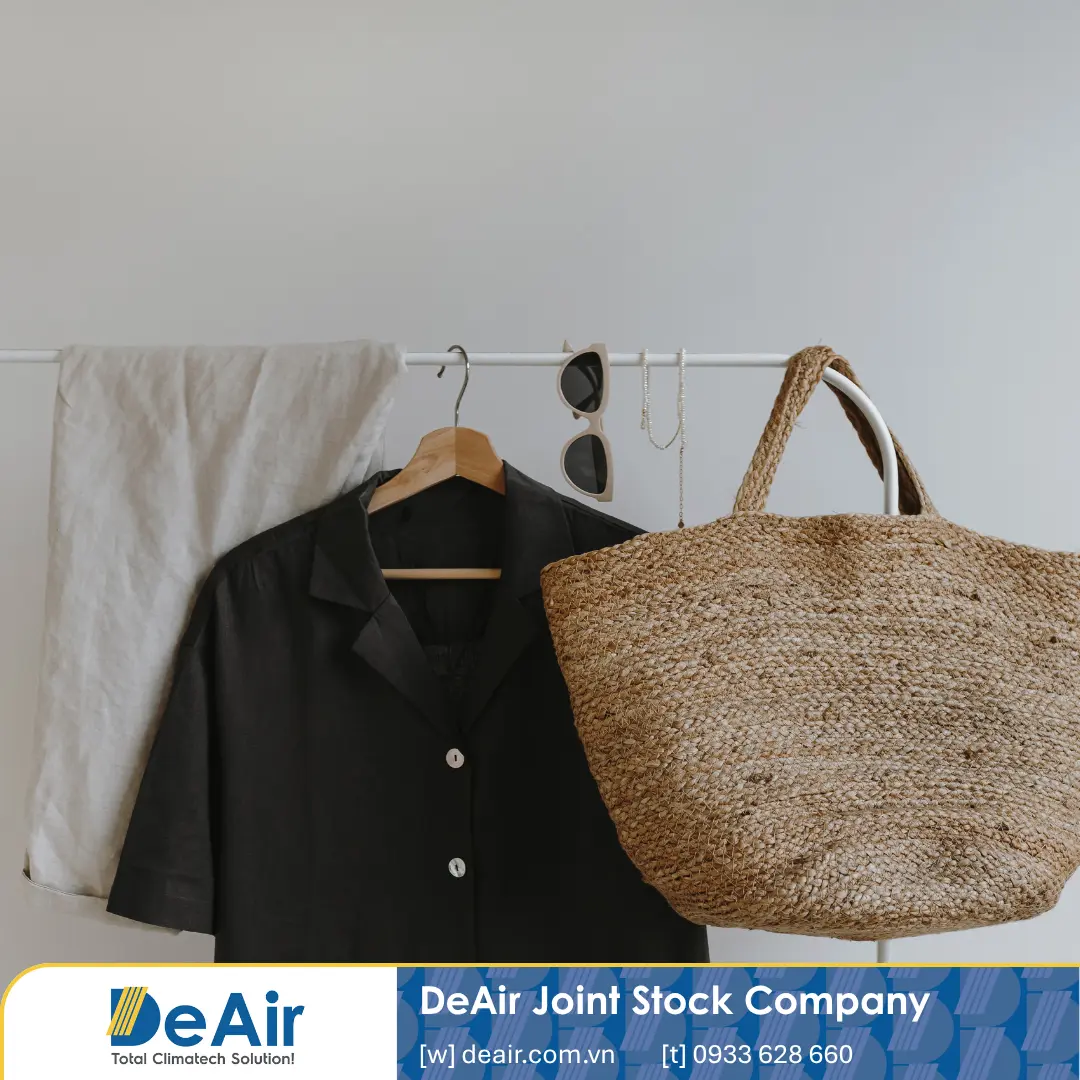
Water hyacinth fibers are crafted into fashion and interior products with extremely high economic value.
3. The Harvesting Puzzle Post-Environmental Treatment
Mandatory Process: Many projects using water hyacinth for wastewater treatment make a critical error: letting the plants age, die, and rot directly in the water. At this point, the entire load of heavy metals and toxins absorbed by the plant is released, causing secondary pollution back into the environment.
Therefore, water hyacinth must be harvested after its water-cleaning phase. This biomass is then transported to centralized processing points. Here, the roots (containing most impurities) are removed for composting, while the stalks (petioles) are cleaned, surface-disinfected, and moved to the drying stage to become fiber.
4. The Role of DeAir/Daxwell Heat-pump Dryers in the Value Chain
Fresh water hyacinth is over 90% water. Traditional sun-drying poses many risks: weather dependency, fibers rotting from the core, brittleness, and inconsistent, dull coloring.
To meet the strict standards for export fiber, cooperatives and processing enterprises are shifting to Daxwell Heat-pump dryers or industrial DeAir.RE-H drying rooms, offering 4 key advantages:
Preserve Natural Golden Color: Heat-pump technology extracts moisture at mild temperature ranges (40°C - 55°C). This prevents the stalks from wilting or scorching, maintaining a beautiful straw-yellow hue.
Maintain Flexibility & Strength: PLC screens precisely control the moisture extraction rate, ensuring fibers dry evenly from core to shell. This preserves the fiber structure, allowing weavers to bend and weave without breakage.
Sterilization & Mold Prevention: The closed-loop drying process eliminates mold spores and bacteria lingering on plants harvested from natural environments, completely removing muddy odors.
75% Energy Savings: Thanks to circulating heat recovery, Daxwell dryers consume significantly less power than electric resistance dryers, providing excellent profit margins for manufacturers.
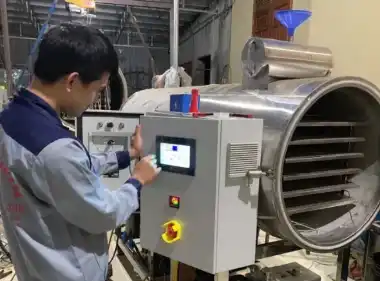
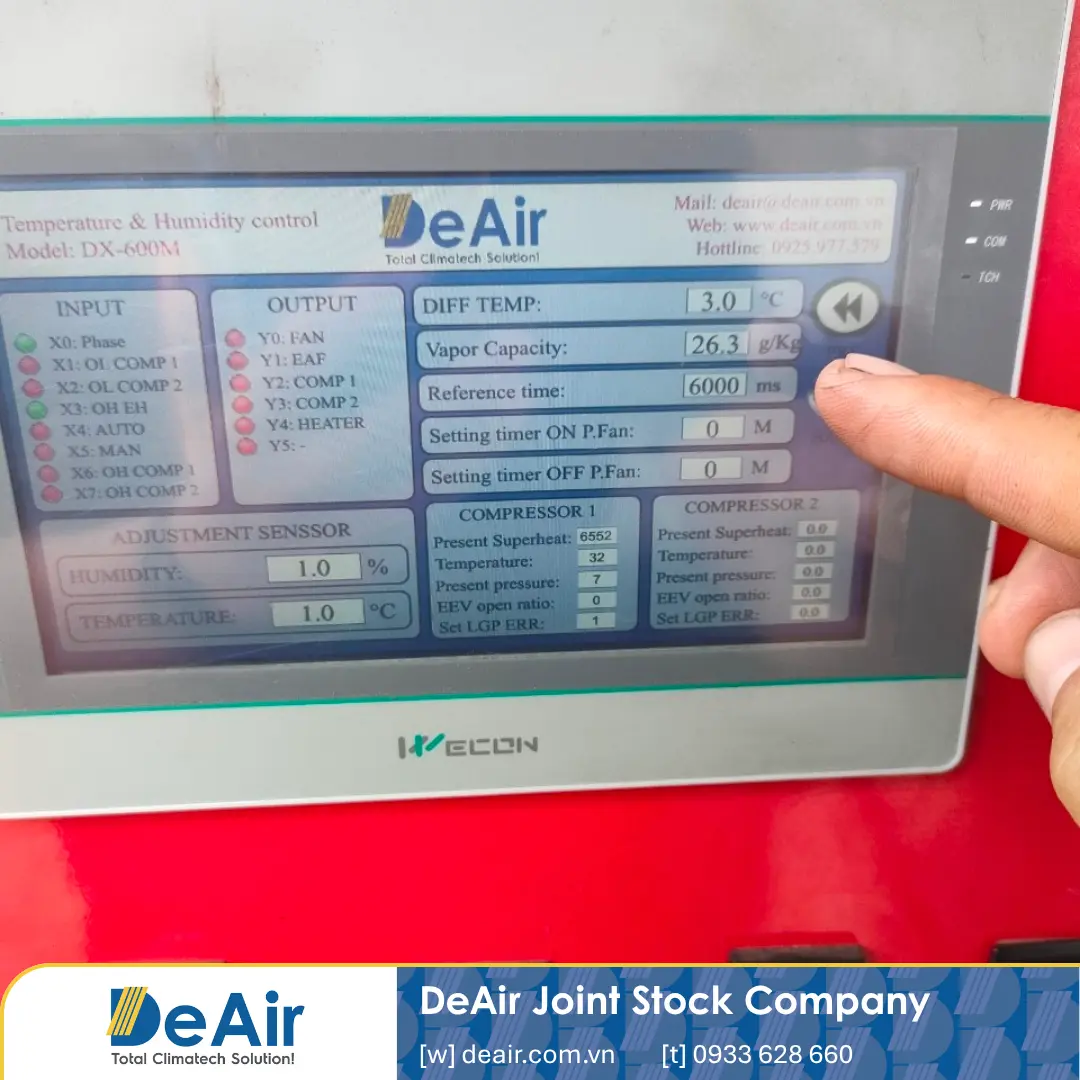
Daxwell's intelligent control system allows setting specific drying profiles for each water hyacinth batch.
5. Process of Turning Water Hyacinth into High-Value Products
Watch the practical video below to visualize the potential of industrial dryers in processing agricultural and ecological materials:
5 Standardized Steps:
Harvesting: Periodic collection of plants from rivers, lakes, or wastewater treatment areas.
Preparation: Removing roots and leaves, selecting mature stalks (60-90cm). Wash and surface-disinfect with a mild saline solution.
High-Tech Drying: Place stalks on stainless steel mesh trays and into the Daxwell Heat-pump dryer. Set temperature to 50°C until moisture reaches 12-15%.
Fiber Extraction: Dried stalks pass through a splitting machine to separate them into fine, tough fibers.
Final Product: Fibers are bundled for export or sent to workshops for weaving textiles or handicrafts.
6. Frequently Asked Questions (FAQ)
Q1: How much fresh hyacinth is needed for 1kg of dry fiber?
Answer: Water hyacinth has extremely high water content. On average, it takes 10-12kg of fresh stalks (excluding roots/leaves) to yield 1kg of export-standard dry fiber.
Q2: Why does my dried hyacinth often become brittle and break during weaving?
Answer: This happens when drying at excessive temperatures (over 65°C) or over-drying (moisture below 10%). Daxwell Heat-pump dryers feature smart humidity limits, automatically stopping when ideal flexibility (12-15%) is reached.
Q3: Is hyacinth harvested from polluted water safe for making handbags?
Answer: Heavy metals primarily accumulate in the roots. During preparation, the roots are completely removed. The stalks, after rinsing and undergoing a closed-loop heat-pump drying process, are safe and sterile for crafting handicrafts and furniture.
Creating Profit from a Circular Economy
Optimizing the water hyacinth value chain is not just a way for businesses to join hands in environmental protection; it's a smart step to dominate the global green materials market.
Let DeAir experts accompany your project. Contact us today for industrial drying system designs and bring your hyacinth samples for a free Test-run!


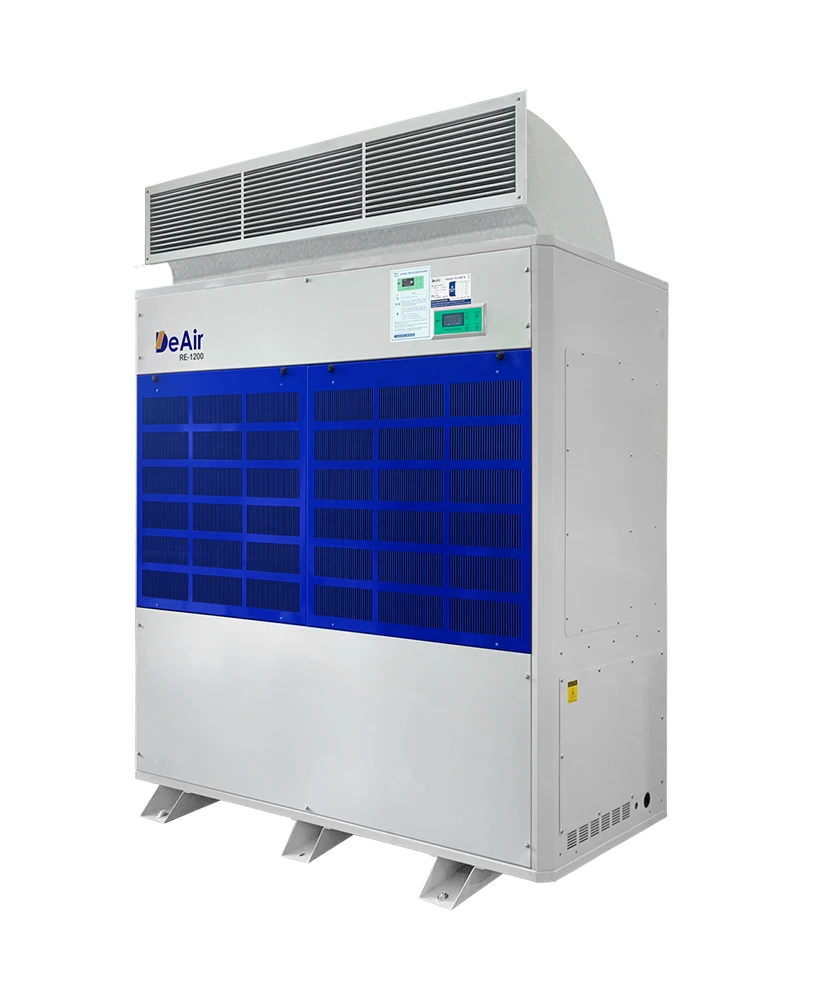 DeAir.RE
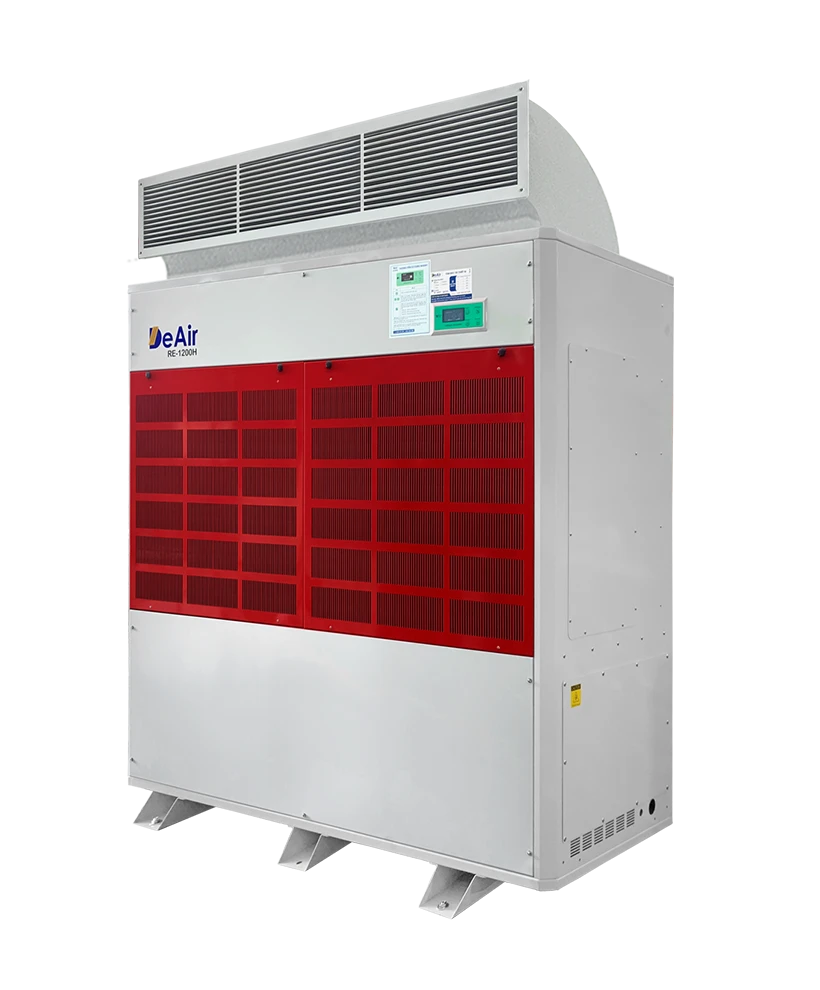 DeAir.RE-H
 DeAir.RE-INOX
 DeAir.CRE
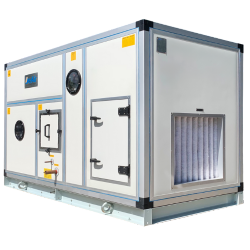 Dezenno
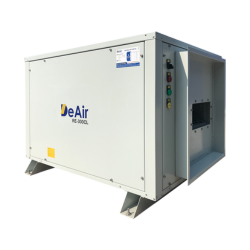 DeAir.RE-CL
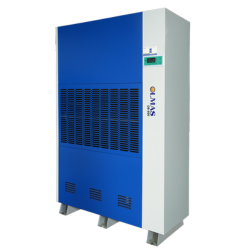 Olmas-OS
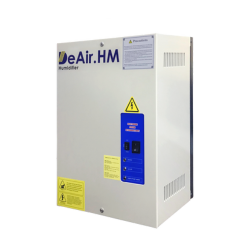 DeAir.HM
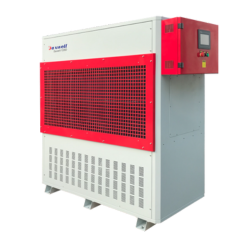 Daxwell
 DeAir.Heat
 AHU
AHU



![[Case Study] DeAir Installs DeAir.De Rotor Humidity Control System for Pharmaceutical Plant in Binh Duong](https://deair.com.vn/thumbs/news/2023_04/ban_giao_may_cho_duoc_bd/[270x153-cr]image1-1024x772.jpg__cv.webp "[Case Study] DeAir Installs DeAir.De Rotor Humidity Control System for Pharmaceutical Plant in Binh Duong")
![[Review & Guide] Olmas OS-300: The New Humidity Control "Warrior" for Medium to Large Warehouses](https://deair.com.vn/thumbs/news/huong_dan_su_dung_may_olmas_21/[270x153-cr]vtm06440.png "[Review & Guide] Olmas OS-300: The New Humidity Control \"Warrior\" for Medium to Large Warehouses")