Fluctuating Weather: Why Your House "Sweats" More When It Gets Warm & How to Fix It
03/03/2026
"The Weather is Warmer, So Why is the House Soaking Wet?" - The March Nightmare
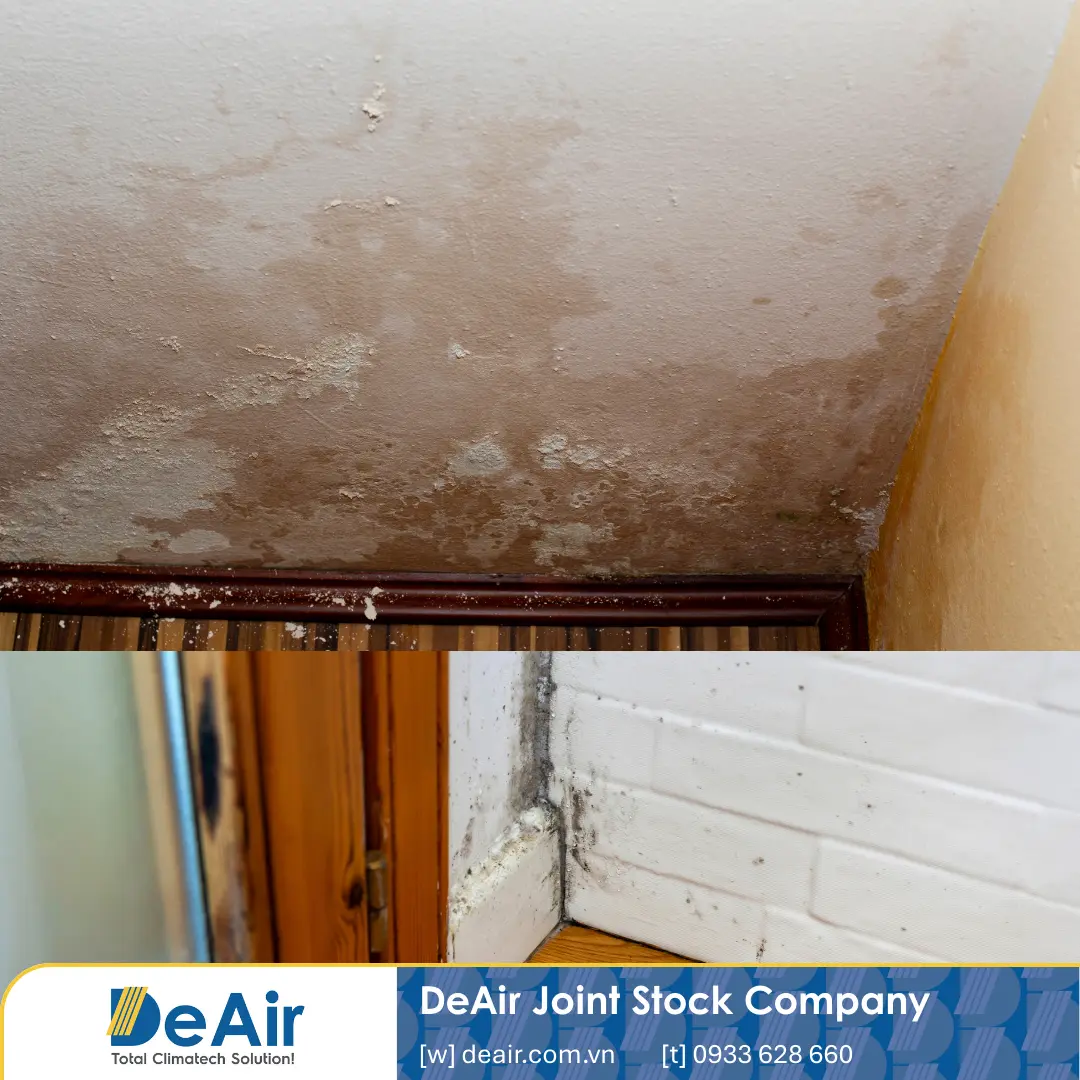
Entering the first days of March 2026, residents in Northern Vietnam are experiencing a highly uncomfortable weather pattern: continuous fluctuations between hot and cold. Many mistakenly believe that when the severe cold spell passes and the weather warms up, the high humidity (known locally as "Nồm") will end. However, the reality is exactly the opposite: The more suddenly the weather warms up after a cold spell, the more the house "sweats" profusely.
Why does this paradoxical phenomenon occur? From a meteorological perspective, let's decode the causes with DeAir and find a "rescue" solution for your home with specialized residential dehumidifiers.
1. Meteorological Decoding: Why Do Hot/Cold Swings Worsen Humidity?
Many people blame the "wind blowing water into the house," but in reality, indoor dampness is the result of physical condensation when there is a large difference in temperature and high humidity. This process occurs in 3 stages:
Stage 1 (Cold Accumulation): During prolonged deep cold spells, the entire material structure inside the house, such as tiled floors, walls, glass, and furniture, becomes "infected with cold," and their temperature drops significantly.
Stage 2 (Moist Wind Invasion): When the cold air weakens, Southeastern winds bring air masses from the sea inland. This air mass is very warm and contains a massive amount of water vapor (humidity > 90%).
Stage 3 (Condensation): The air temperature rises rapidly, but the surface temperature of the floor remains very cold (it hasn't had time to absorb the heat). The water vapor in the warm air immediately condenses into millions of tiny water droplets upon touching the freezing cold tile surfaces. This is the "sweating" floor phenomenon.
Therefore, the more abrupt the weather change from COLD to WARM, the wetter the floor gets.
2. Infographic: The Mechanism of "Sweating" Floors
THE PHYSICAL PRINCIPLE OF THE "NỒM" PHENOMENON
❄️
1. Cold Floor
After a cold snap, wall/floor temperatures drop low (e.g., 15°C).
+
🌬️
2. Warm & Moist Wind
Southeastern winds bring 25°C air with 95% humidity into the house.
➔
💧
3. Condensation
Warm air hitting the cold floor drops below the "Dew Point," condensing water on the surface.
3. March 2026 Forecast: The Peak of the "Nồm" Season
Humidity > 90% causes puddles on the floor, posing risks of slipping and electrical shorts.
According to meteorological data, March and April every year are the "nightmare" humidity seasons in the North with a frequency of 4 - 5 spells per month.
Specifically, forecasting the first week of March 2026, the Northern region will continue to receive successive new cold air masses interspersed with warming periods. This alternating hot-cold state will maintain dense fog and prolonged high humidity. Air humidity will frequently "anchor" at very high levels, above 90%.
4. Break the Humidity Cycle with Olmas Dehumidifiers
You cannot change the weather outside, but you can completely master your indoor microclimate. The only method to break this condensation phenomenon is: Drain the water vapor from the air before it has a chance to touch the floor. That is why you absolutely must have a dehumidifier.
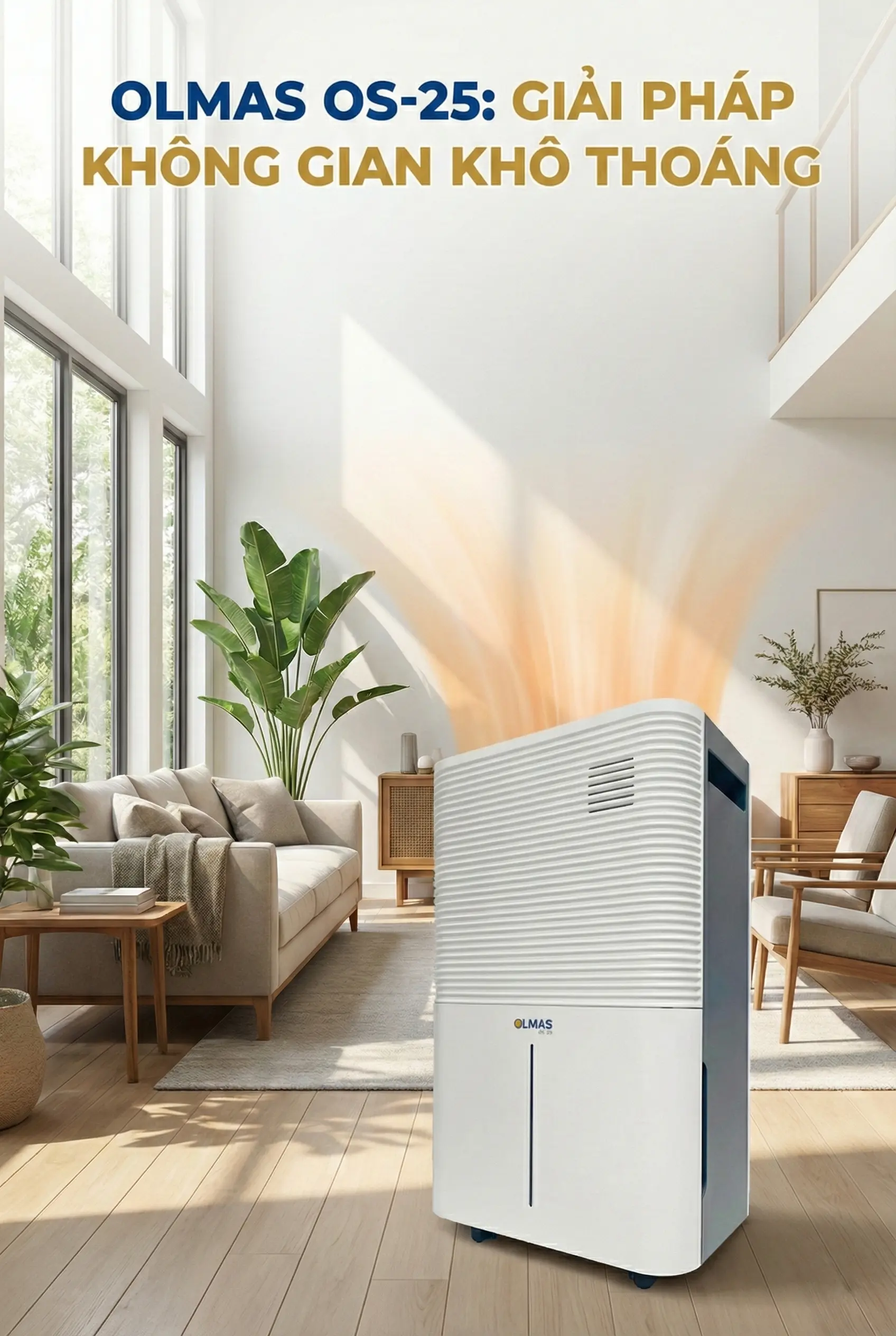
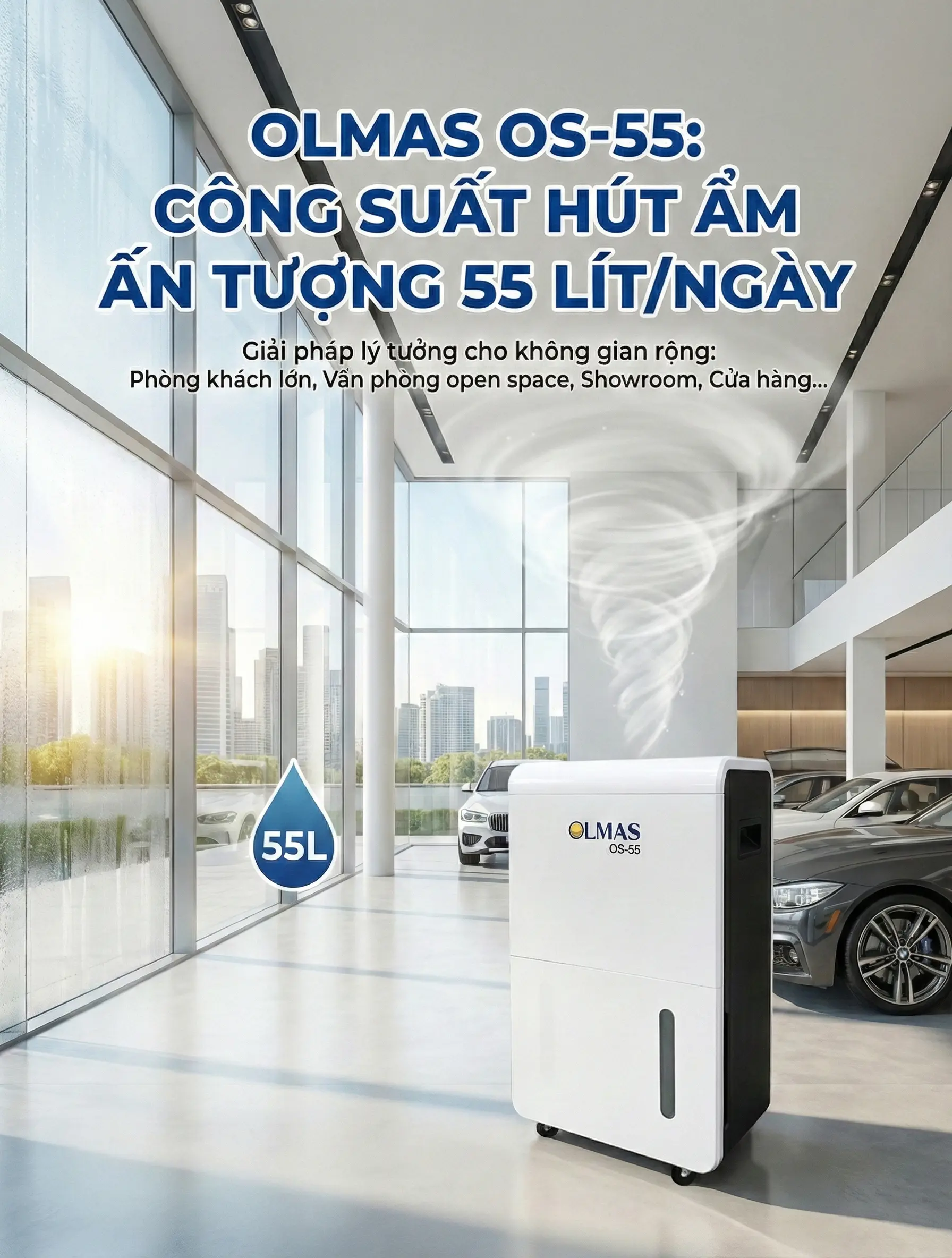
The Olmas residential dehumidifier series is specially designed for Vietnam's climate, bringing far superior efficiency compared to turning on the air conditioner:
Bone-dry floors in 30 minutes: The machine draws humid air in, condenses it into water that flows into a tank, and simultaneously blows out a stream of warm air. The surface temperature difference is eliminated, and the floor immediately dries.
Drying clothes: The "Laundry" feature turns the dehumidifier into a miniature clothes dryer, banishing the musty smell from clothes during drizzly days.
Energy saving: With a smart humidity sensor, the machine auto-shuts off when the room humidity reaches the ideal level (50-60%), saving up to 70% in electricity compared to running an AC on Dry mode.
5. FAQ: Common Mistakes When Dealing with Condensation
Does turning on a fan help the house dry faster when it's humid?
Absolutely NOT. Turning on a fan does not remove water vapor from the room. Conversely, the airflow from the fan pushes the humid air mass to move faster, crashing into cold surfaces (walls, floors) more frequently, causing the condensation (sweating) process to occur even more intensely, making the house wetter and more slippery.
If I see warm sunshine, can I open the windows to ventilate the house?
You shouldn't. Even if it warms up, outdoor humidity is still > 90%. If you open the door, you are "inviting" massive amounts of water vapor into the house. Your indoor floors are still very cold from the recent chilly weather; meeting this warm wind will immediately cause condensation. Keep the doors tightly closed and turn on the dehumidifier.
Protect Your Family from March Mold
Soaking wet floors, damaged furniture, children getting respiratory infections... Don't endure it anymore! Invest in an Olmas dehumidifier today.


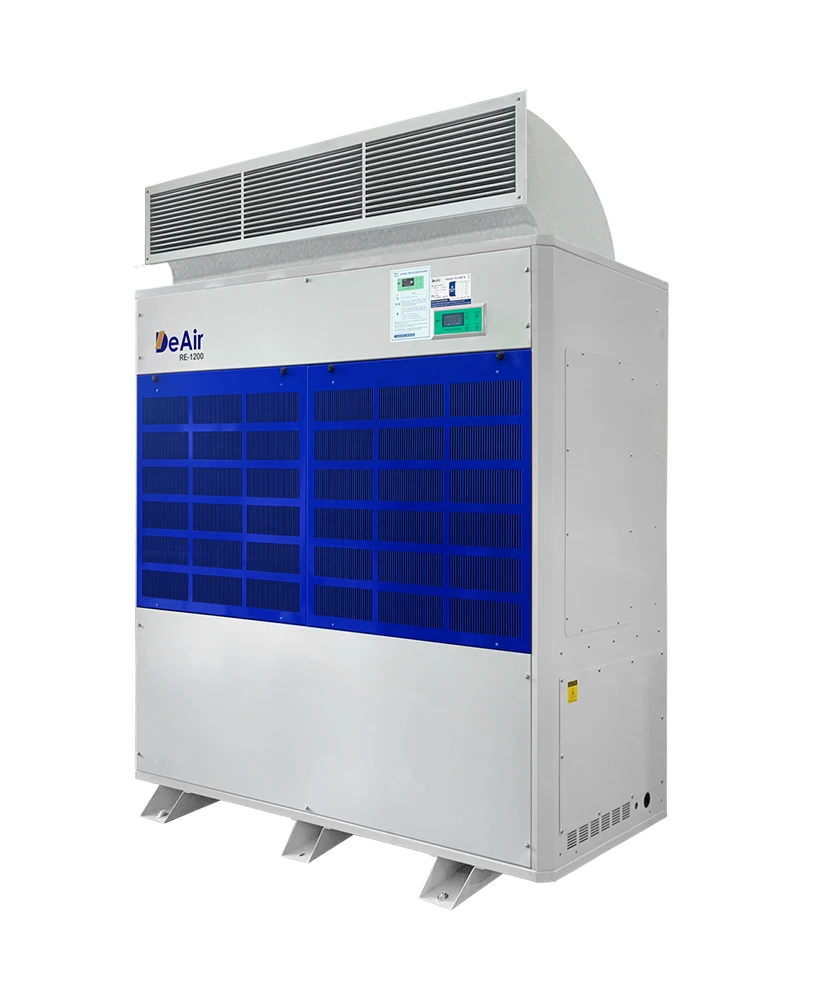 DeAir.RE
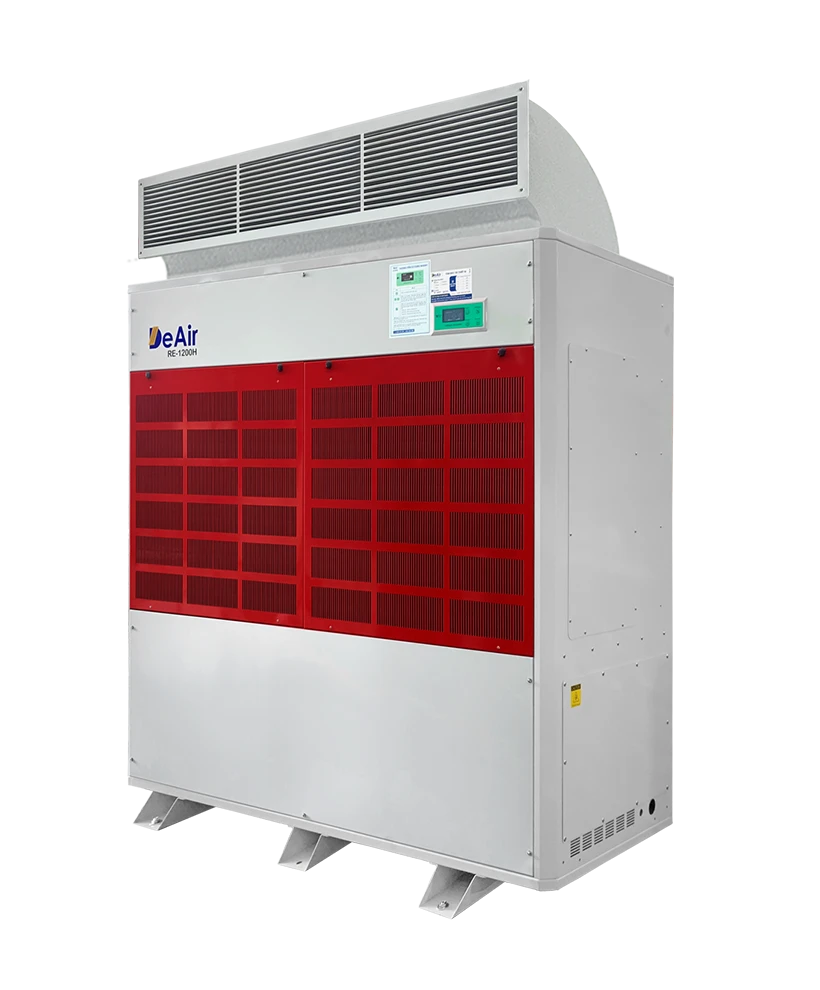 DeAir.RE-H
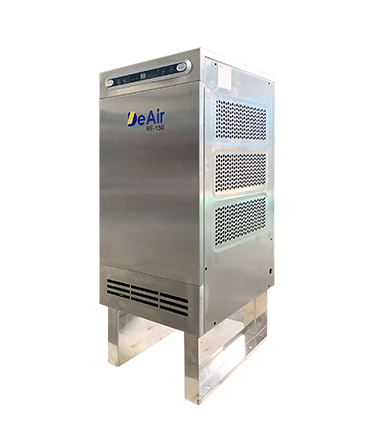 DeAir.RE-INOX
 DeAir.CRE
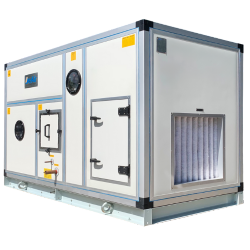 Dezenno
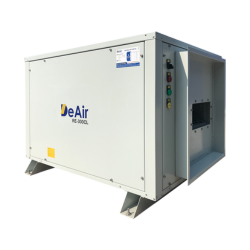 DeAir.RE-CL
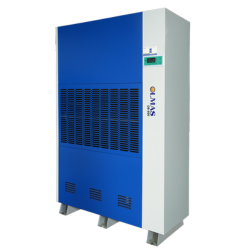 Olmas-OS
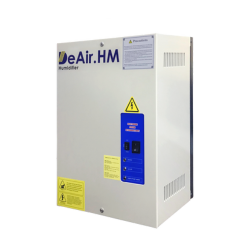 DeAir.HM
 Daxwell
 DeAir.Heat
 AHU
AHU







![[Case Study] DeAir Installs DeAir.De Rotor Humidity Control System for Pharmaceutical Plant in Binh Duong](https://deair.com.vn/thumbs/news/2023_04/ban_giao_may_cho_duoc_bd/[270x153-cr]image1-1024x772.jpg__cv.webp "[Case Study] DeAir Installs DeAir.De Rotor Humidity Control System for Pharmaceutical Plant in Binh Duong")

![[Review & Guide] Olmas OS-300: The New Humidity Control "Warrior" for Medium to Large Warehouses](https://deair.com.vn/thumbs/news/huong_dan_su_dung_may_olmas_21/[270x153-cr]vtm06440.png "[Review & Guide] Olmas OS-300: The New Humidity Control \"Warrior\" for Medium to Large Warehouses")