The Humid Season: A Battle to Protect Health & Living Spaces
Every spring (especially from February to April), Northern Vietnam faces a notoriously unpleasant weather phenomenon: the "Nồm" (high humidity) season. From the perspective of an expert with years of experience in air treatment systems, I understand that high humidity does not just cause a sticky, uncomfortable feeling; it creates a real "battle" to protect the health and property of every family.
1. The Hidden Dangers of Damp Air
When air humidity exceeds 70%, mold and bacteria begin to multiply. If humidity crosses the 85% threshold, this growth becomes explosive.
- Health Impacts: Reports on indoor air quality by the World Health Organization (WHO) indicate that damp environments are ideal for dust mites and mold to thrive. They float in the air and enter the respiratory system directly, becoming a leading cause of frequent illnesses, bronchitis, asthma, and allergies, especially dangerous for young children and the elderly.
- Property Damage: Moisture is a silent "destroyer." Floors become dangerously slippery, expensive leather sofas grow mold, and wooden floors warp. Even more dangerously, moisture infiltrates the circuit boards of TVs, refrigerators, and high-end audio systems, posing severe risks of short circuits and major damage.
2. 3 "Classic" Mistakes When Dealing with High Humidity
Many families inadvertently make their humidity problems worse due to these harmful misconceptions:
- Opening windows wide: Hoping to catch a breeze to dry the house, but in reality, you are inviting massive amounts of water-logged air inside. The #1 rule during humid weather is to keep doors and windows tightly closed.
- Mopping with a wet rag: Repeatedly wiping floors with water only makes them wetter. Use a highly absorbent dry mop instead.
- Overusing the AC "Dry" mode: Although it removes some water from the air, this mode lowers the room temperature significantly, making the space freezing cold, risking colds, and consuming a massive amount of electricity.
3. Infographic: AC "Dry" Mode vs. Specialized Dehumidifier
MOISTURE REMOVAL EFFICIENCY COMPARISON
| Criteria |
Air Conditioner (Dry Mode) ❄️ |
Olmas Dehumidifier 💧 |
| Mechanism |
Cools the condenser to separate water. Makes the room cold. |
Separates water and blows out warm air. Balances temperature. |
| Electricity |
High consumption (runs a large compressor). |
Energy-saving (consumes only 1/3 of an AC). |
| Humidity Control |
Cannot set an exact % RH level. |
Smart sensor, auto-shuts off when target % RH is reached (e.g., 50%). |
| Mobility |
Fixed to one room. |
Has wheels, easily moves to the living room, kitchen, or storage. |
4. The Optimal Solution: Be Proactive with Olmas Dehumidifiers
To solve the root of the problem safely and economically, the equipment you truly need is a dedicated home dehumidifier. Tropicalized to specifically treat Vietnam's harsh humid climate, the Olmas brand dehumidifiers are the perfect solution. Below are 3 powerful "bodyguards" helping you master your living space:
Olmas OS-16: Restoring Peace to the Bedroom
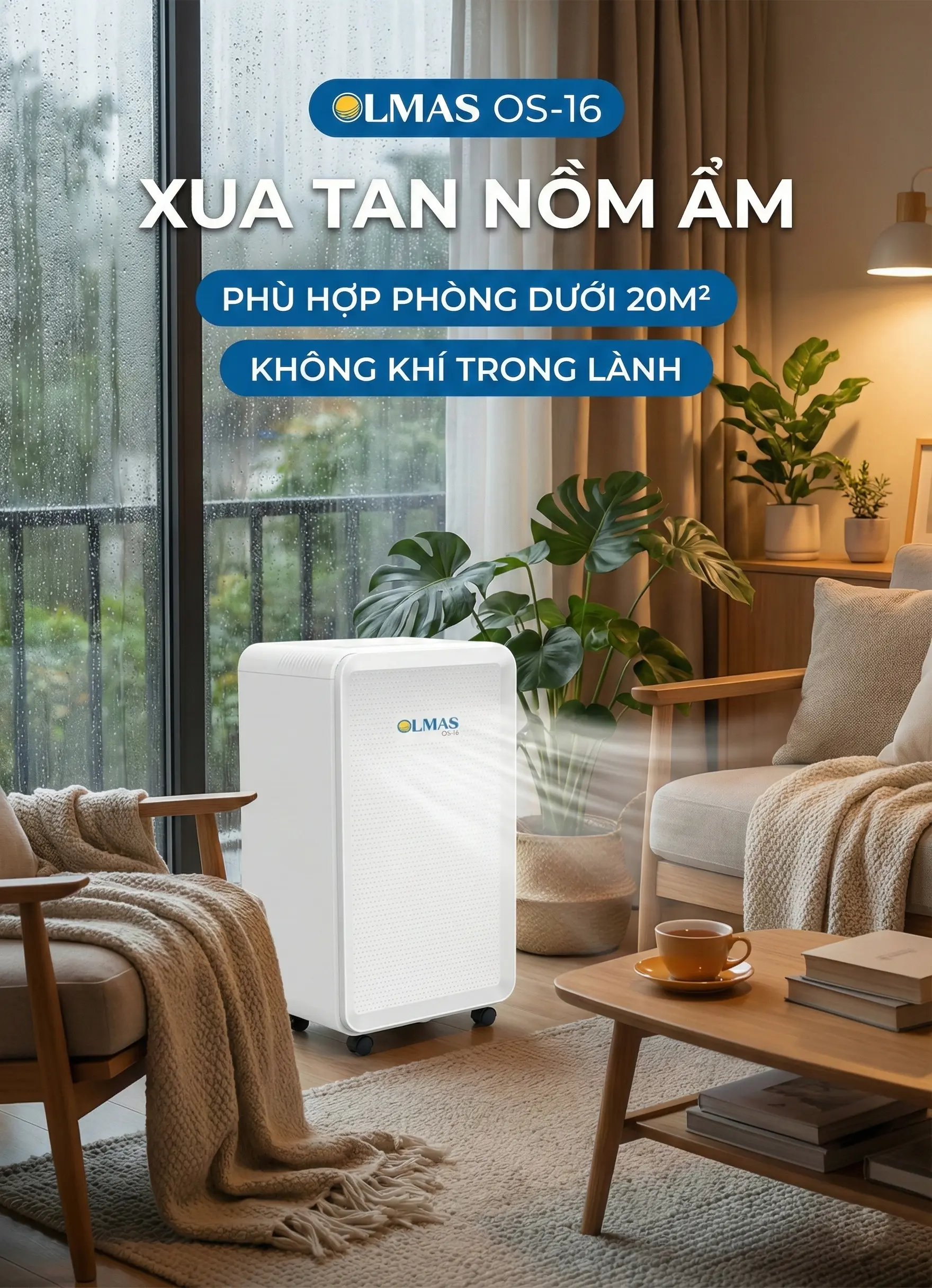
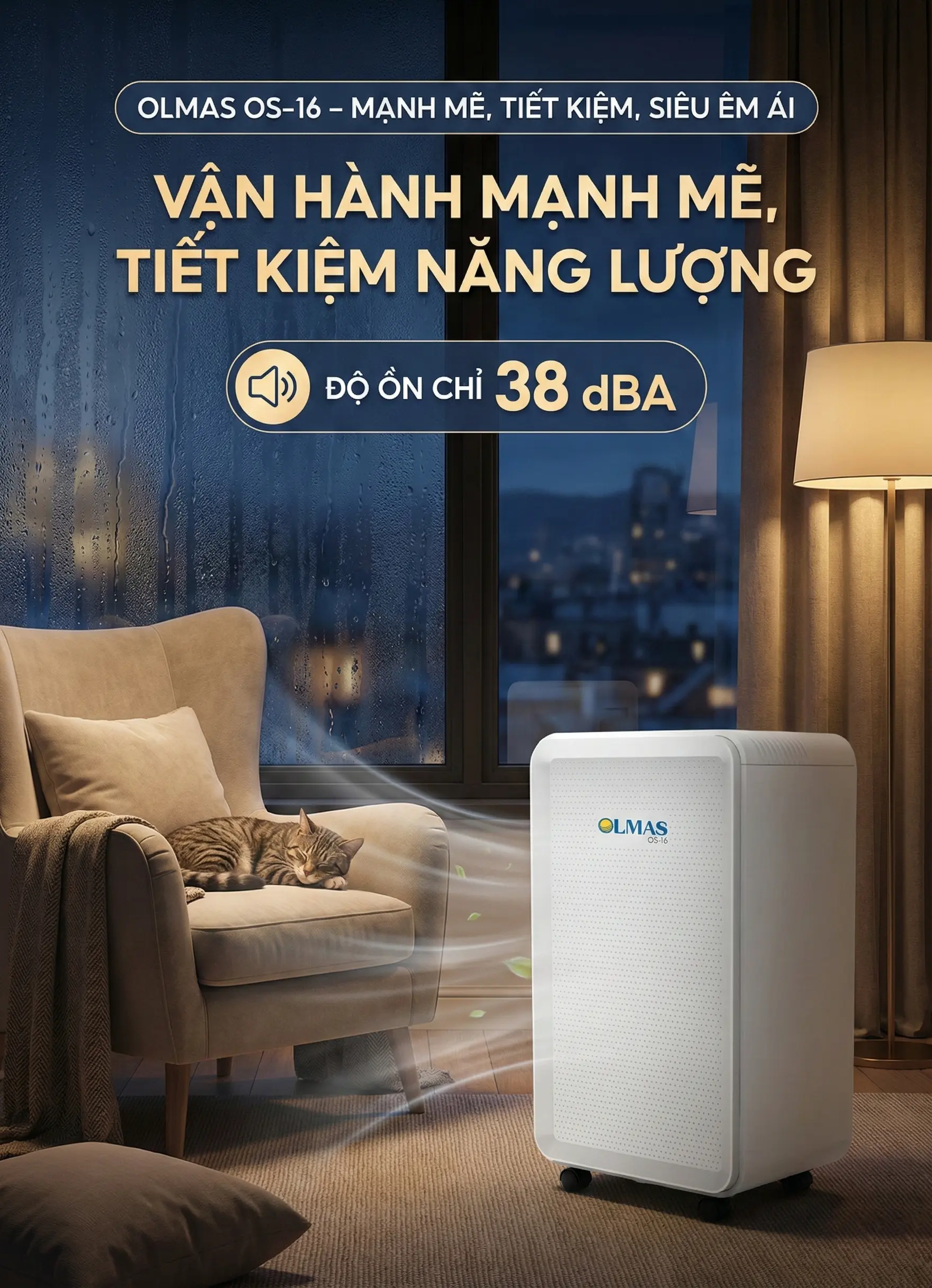
Designed for spaces under 20m², the Olmas OS-16 is a brilliant addition to bedrooms or home offices. Its most valuable feature is the whisper-quiet operation system, which won't disturb a child's sleep. The machine completely eliminates the sticky feeling on bedsheets, combining with a dust filter to keep the air dry and pure.
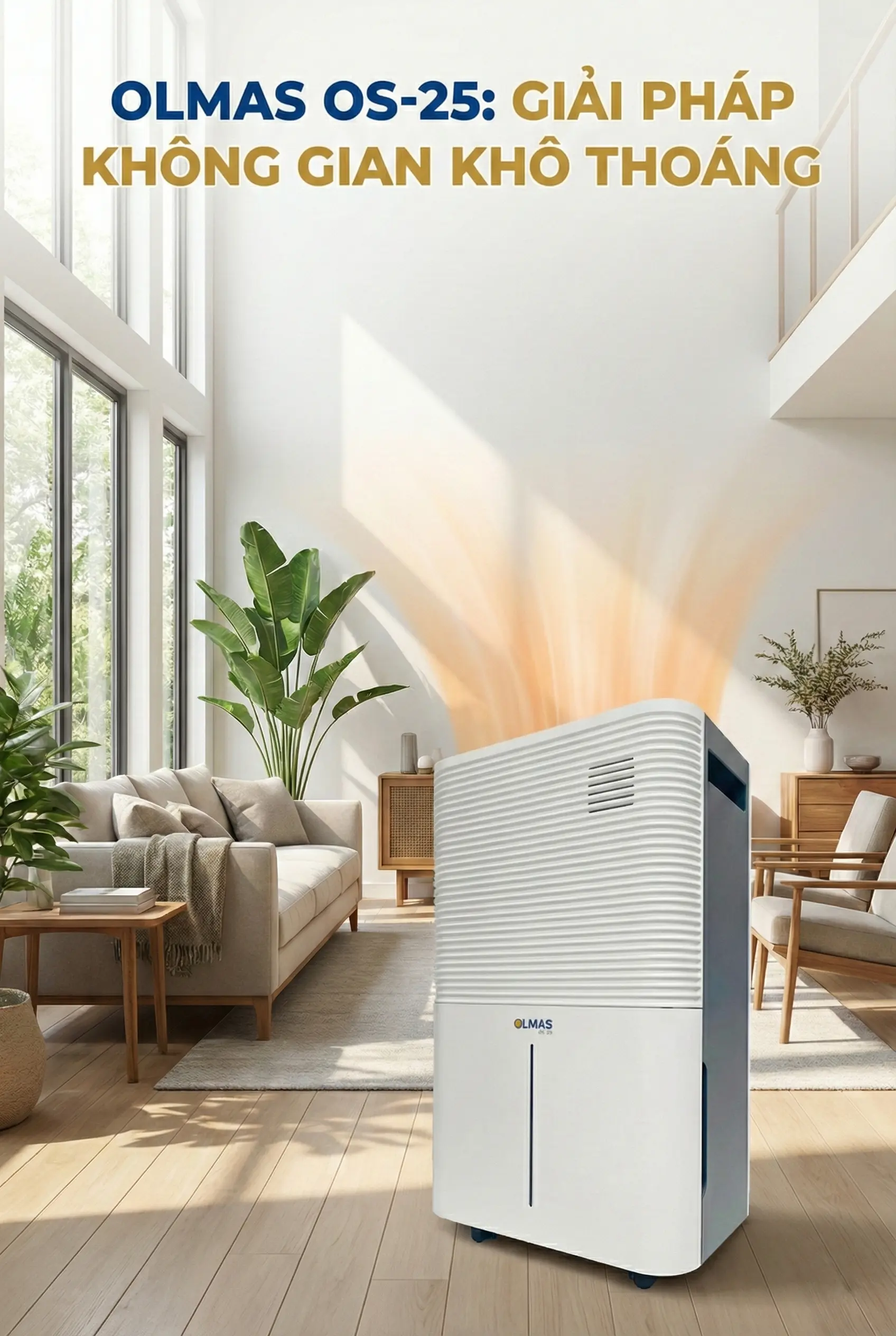
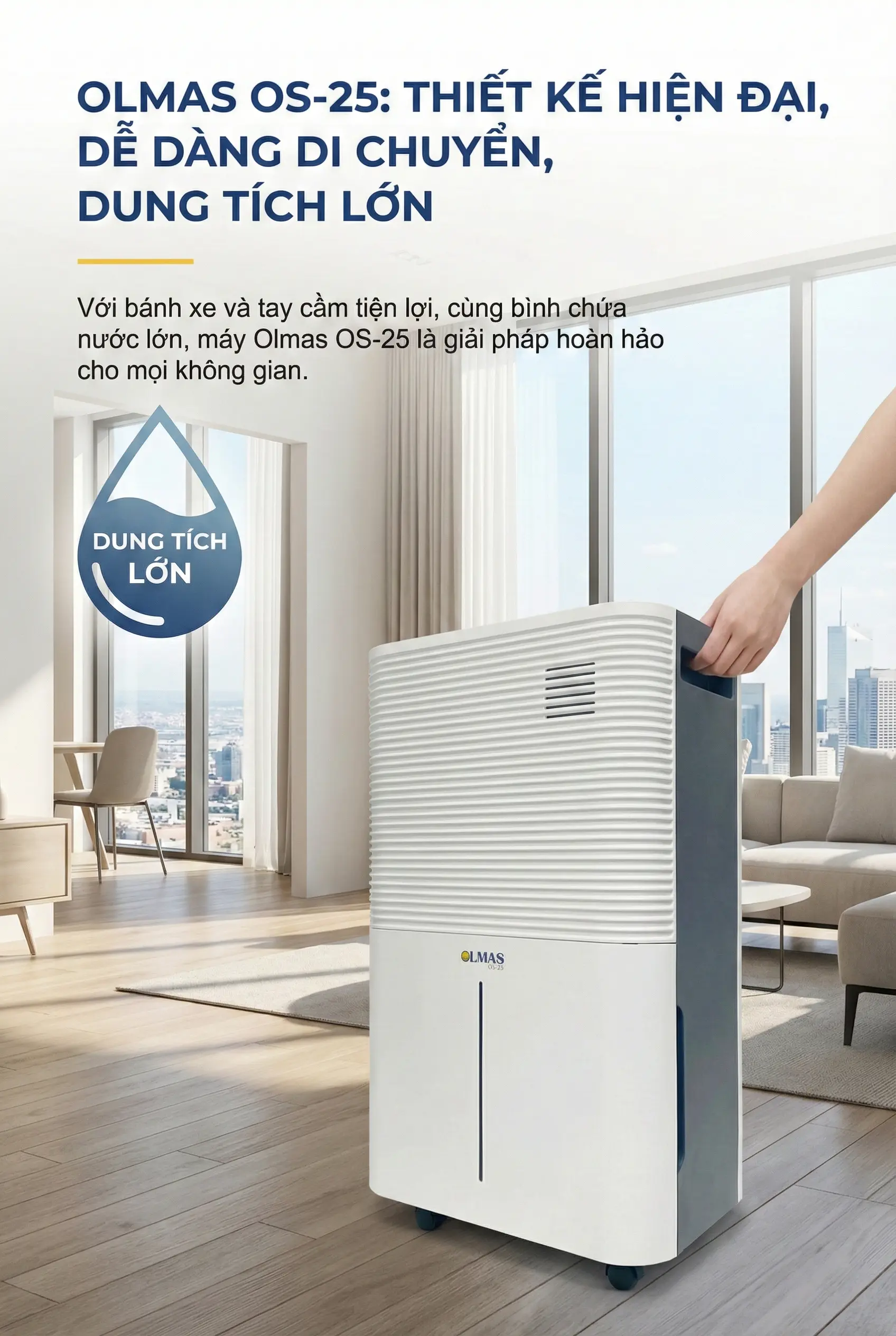
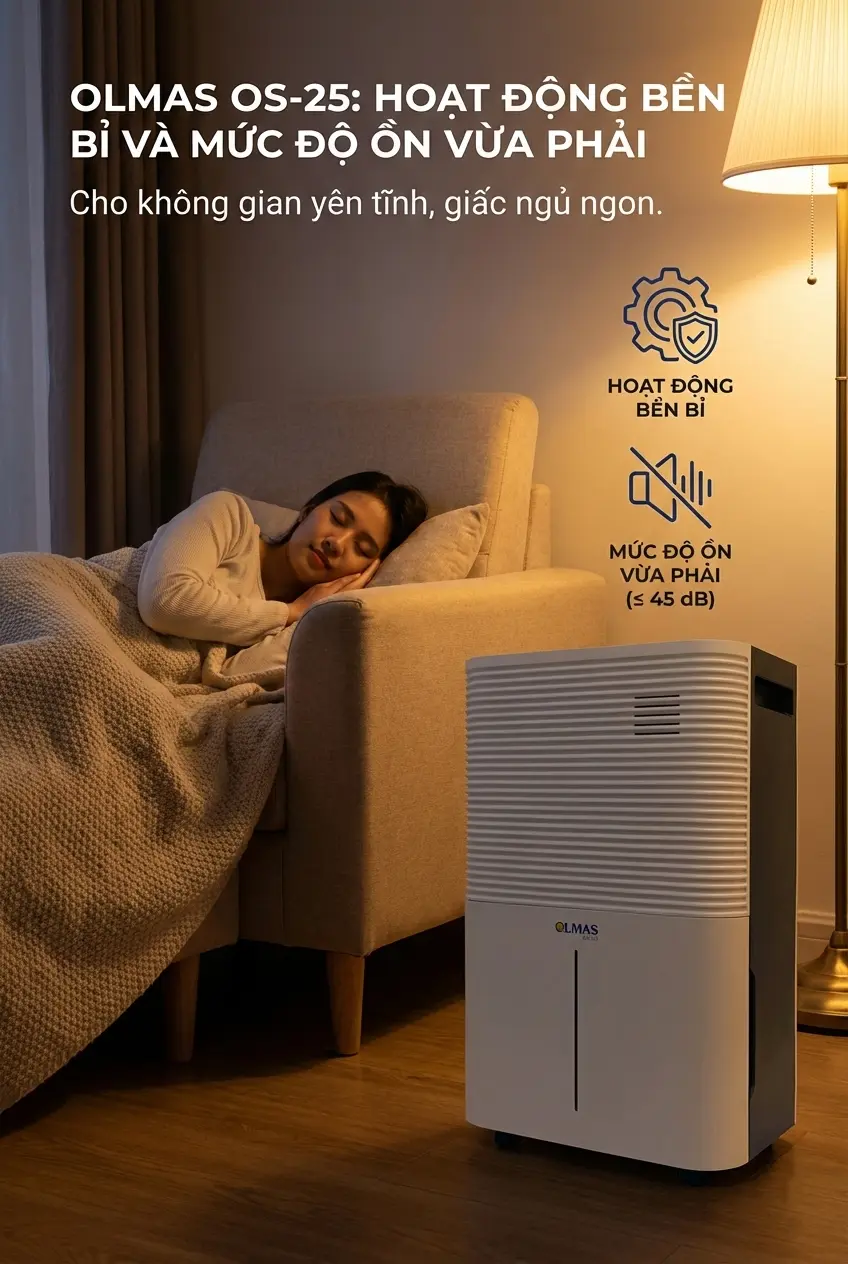
Olmas OS-25: Versatile "Housekeeper" for Common Areas
For living rooms, kitchens, or apartments from 30m² - 50m², the Olmas OS-25 is a highly worthwhile investment. The nightmare of musty, damp clothes will completely disappear thanks to its specialized Laundry drying mode, which blows out warm air to keep clothes fresh despite the drizzle. Smart sensors allow the machine to auto-run/stop based on actual humidity, maximizing electricity savings.
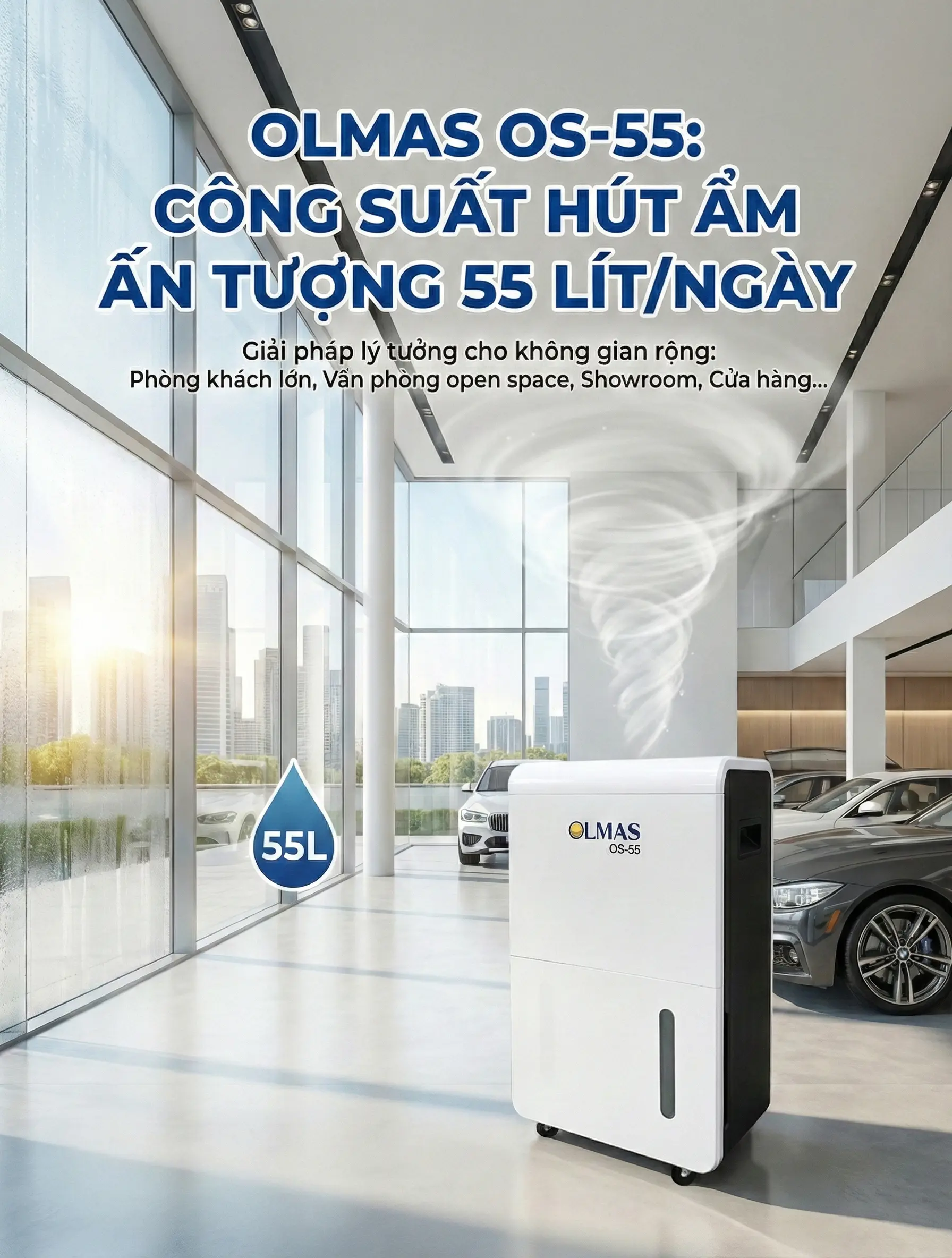
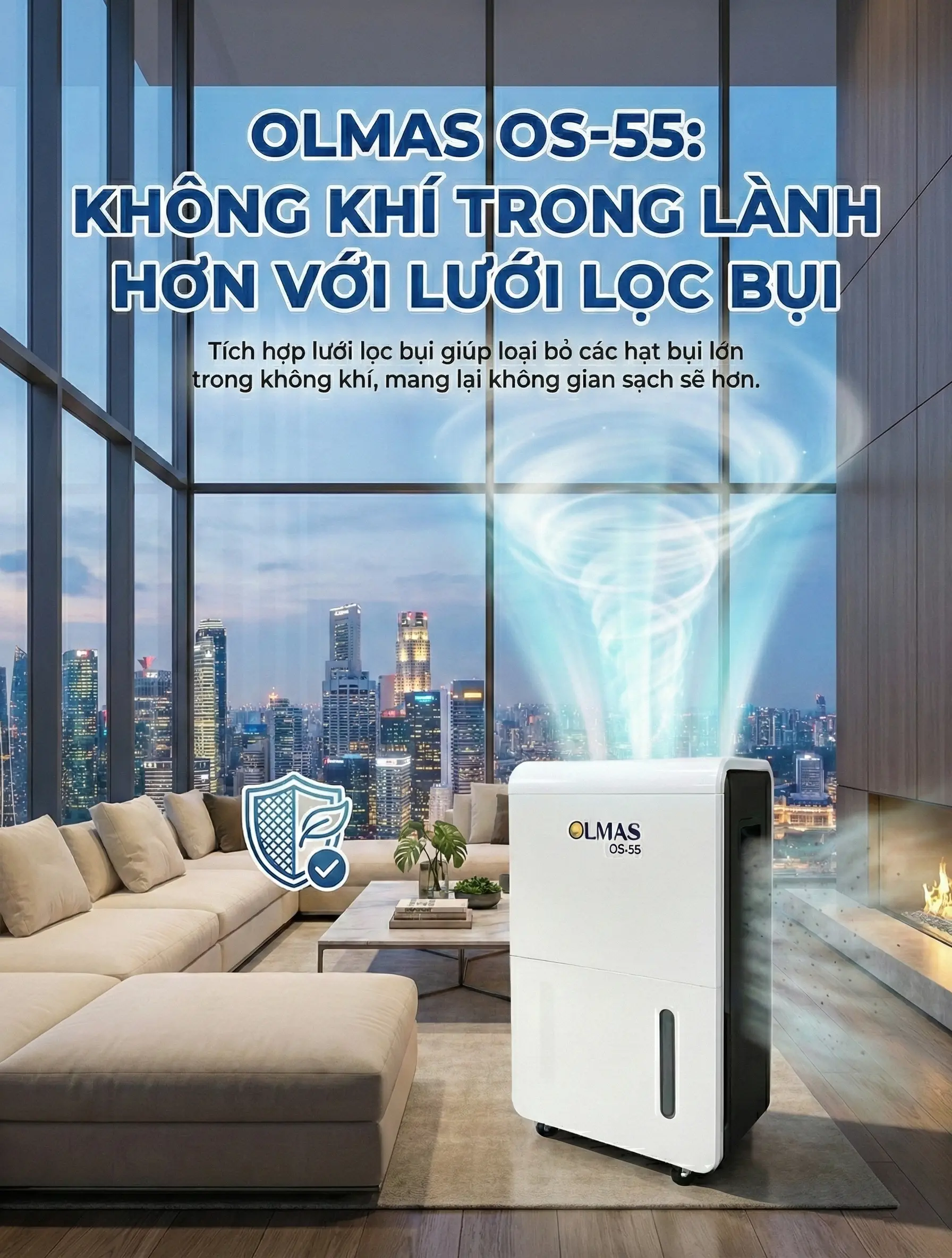
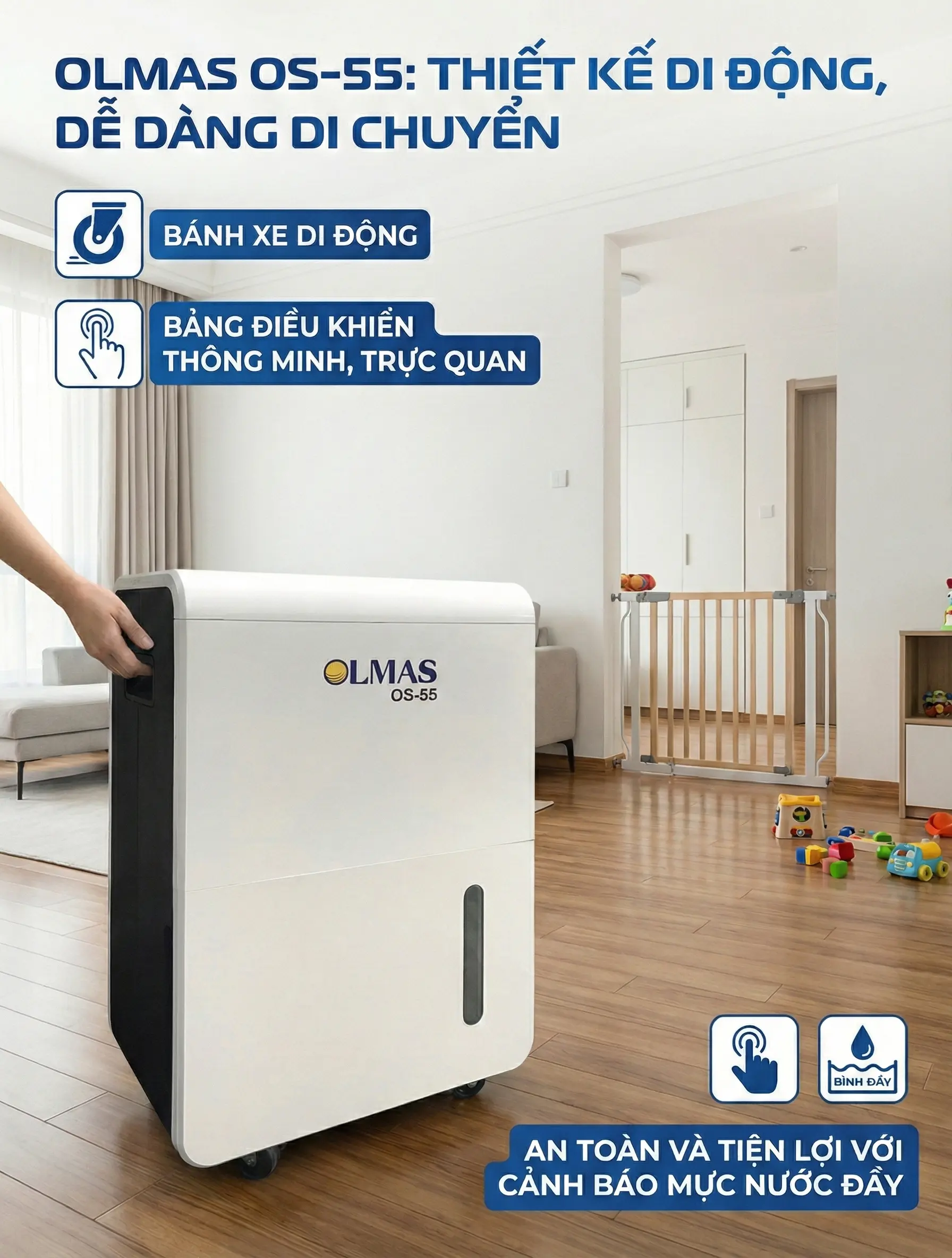
Olmas OS-55: Heavy-Duty Expert for Large Spaces
Specifically tailored for split-level townhouses, villas, or office lobbies (from 70m² - 100m²), the Olmas OS-55 boasts an extremely powerful dehumidification capacity. It provides super-fast drying over large areas, offering absolute safety for electrical systems and expensive interiors. Notably, an ultra-large water tank combined with a direct drainage hose port allows the machine to operate durably 24/7 without you ever needing to worry about emptying the tank.
5. FAQ About Home Dehumidifiers
Should I leave my dehumidifier on all day?
You don't need to run it continuously if you select Auto mode. Olmas models feature smart sensors: When room humidity drops to the set level (e.g., 50%), the machine will auto-shut off the compressor to save electricity. When humidity rises again, it will automatically restart.
Is the water collected by the dehumidifier clean? Can I use it for other purposes?
The discharged water is essentially distilled water (condensed from air moisture). However, it may contain fine dust from the air or the cooling coils. You should not use it for drinking or cooking, but it is excellent for watering plants, mopping floors, or flushing toilets.
Conclusion: Investing in a residential dehumidifier is not a liability, but a smart purchasing decision to protect the health and precious assets of your family. Do not let the humid season control your life.
Get Free Humidity Control Consulting
Check out genuine Olmas products today for a safe, clean living space!
Scientific References:
[1] WHO guidelines for indoor air quality: dampness and mould (World Health Organization).
[2] A Brief Guide to Mold, Moisture, and Your Home (U.S. Environmental Protection Agency - EPA).


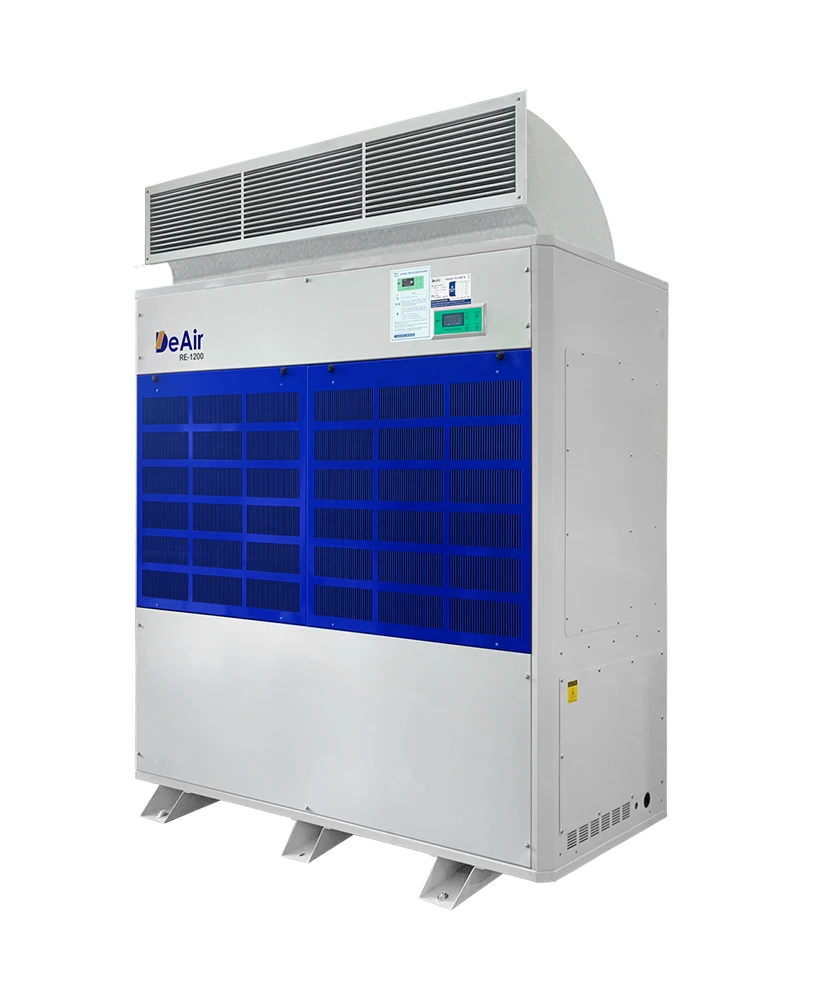 DeAir.RE
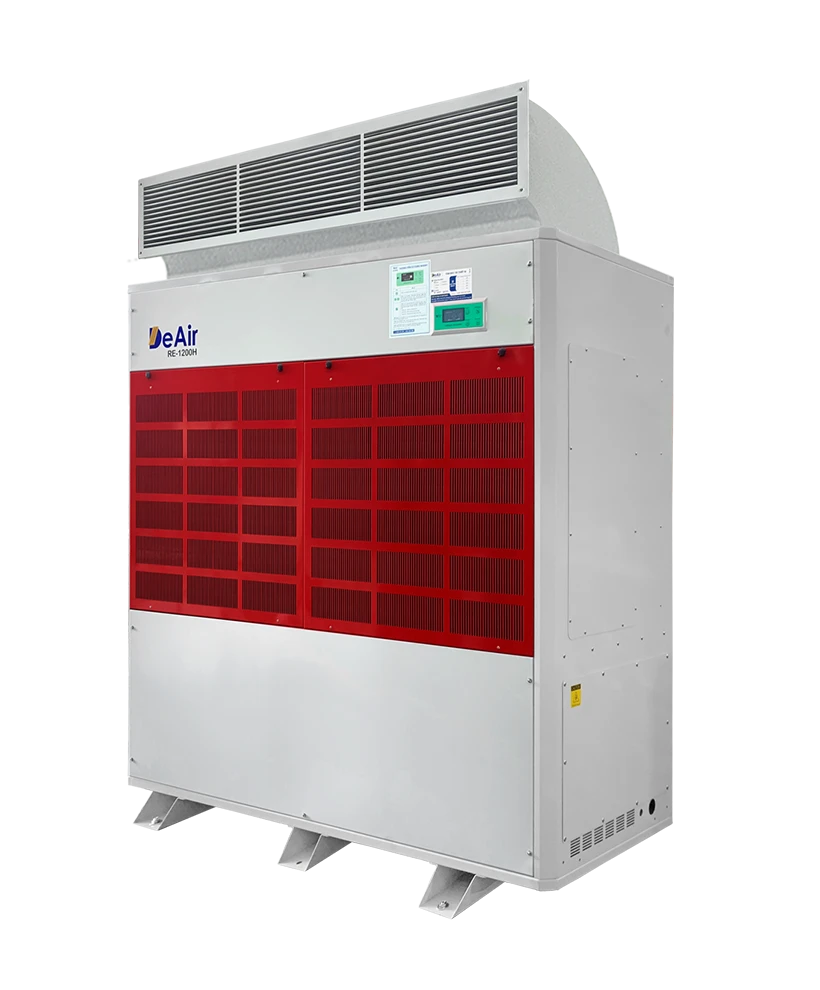 DeAir.RE-H
 DeAir.RE-INOX
 DeAir.CRE
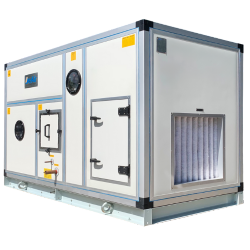 Dezenno
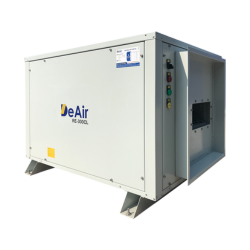 DeAir.RE-CL
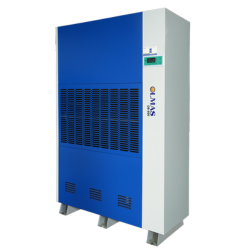 Olmas-OS
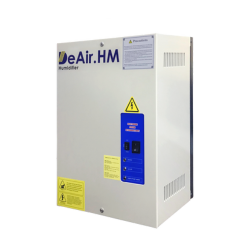 DeAir.HM
 Daxwell
 DeAir.Heat
 AHU
AHU






![[Case Study] DeAir Installs DeAir.De Rotor Humidity Control System for Pharmaceutical Plant in Binh Duong](https://deair.com.vn/thumbs/news/2023_04/ban_giao_may_cho_duoc_bd/[270x153-cr]image1-1024x772.jpg__cv.webp "[Case Study] DeAir Installs DeAir.De Rotor Humidity Control System for Pharmaceutical Plant in Binh Duong")

![[Review & Guide] Olmas OS-300: The New Humidity Control "Warrior" for Medium to Large Warehouses](https://deair.com.vn/thumbs/news/huong_dan_su_dung_may_olmas_21/[270x153-cr]vtm06440.png "[Review & Guide] Olmas OS-300: The New Humidity Control \"Warrior\" for Medium to Large Warehouses")