Context: The global "bamboo instead of plastic" trend is booming to solve the plastic waste crisis and move towards Net-Zero.
Challenge: Bamboo/rattan fibers are hydrophilic. If not dried with precisely controlled humidity, bioplastic composites will suffer from reduced strength, warping, and mold.
Solution: Applying Daxwell heat-pump dryers (DX-xxxS/M/D series) with precise temperature-humidity control and 50-70% energy savings compared to traditional methods.
Result: Bamboo/rattan raw materials meet bioplastic production standards, ensuring a green manufacturing process, reduced carbon footprint, and a complete "green" product lifecycle.
1. The "Bamboo Instead of Plastic" Trend and Strict Raw Material Requirements
1.1. The Potential of Bamboo Bioplastics
Based on the latest scientific research, Bamboo molecular plastics (BM-plastics) are revolutionizing the sustainable materials industry:
✅ SUPERIOR ADVANTAGES
Outstanding durability: Stronger than both bioplastics (PLA, PHA) and fossil-based plastics (PET, ABS).
High heat resistance: >180°C, suitable for industrial injection molding and casting.
Complete biodegradability: Fully decomposes in 50 days under natural conditions (25°C),彻底 solving the microplastic problem.
Feasible cost: ~$2,300/ton, scalable for industrial production.
According to a report by VnExpress, Chinese scientists have successfully created a new type of plastic from bamboo without additional blending, yet it is more durable than fossil-based plastics. This is hailed as a "bamboo-to-plastic" revolution, opening new pathways for sustainable alternatives.
Furthermore, scientific research from NCBI (National Center for Biotechnology Information) confirms that bamboo fiber has a tensile strength of 140-800 MPa, an elastic modulus of 11-35.9 GPa, and a low density of 0.6-1.1 g/cm³ (2-3 times lighter than steel). Bamboo grows up to 20 meters in just 60 days (compared to 60 years for timber), making it a highly sustainable renewable resource.
1.2. The Technical Bottleneck: Moisture in Bamboo Fibers
⚠️ TECHNICAL CHALLENGES
Hydrophilic nature: Natural bamboo/rattan fibers contain high levels of lignin, pectin, and especially moisture.
Poor compatibility: When combined with plastics (which are hydrophobic), excess moisture causes delamination.
Quality degradation: Reduced tensile/flexural strength and air bubble formation during injection molding or extrusion.
Mandatory requirement: Bamboo/rattan raw materials must be dried to a target humidity level (typically 40-50% RH or lower, depending on the stage) uniformly, without altering the fiber structure.
2. Why Daxwell Heat-Pump Dryers are the "Key" to a Green Process?
2.1. Introduction to the Daxwell Dryer Line
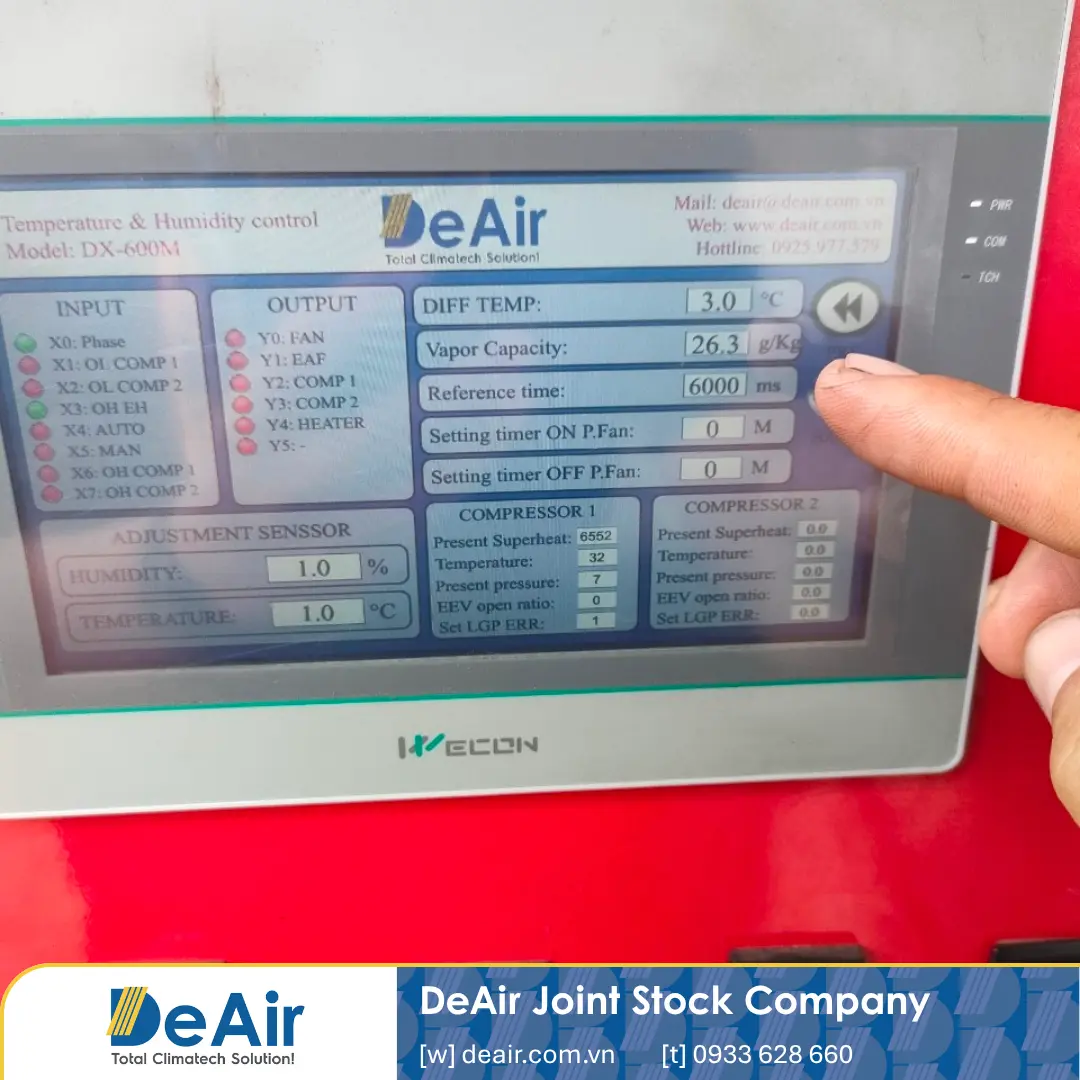
The Daxwell heat-pump dryer is a flagship product line of DeAir, integrating a PLC control cabinet and HMI screen, allowing flexible programming of drying curves tailored to specific raw materials.
🔧 4 SUPERIOR ADVANTAGES FOR THE BIOPLASTICS INDUSTRY
Precise temperature-humidity control: Maintains a stable temperature range (25-80°C depending on the model) and uniform humidity, preventing the "dry outside, wet inside" phenomenon that causes fiber cracking or warping.
Maximum energy savings (Net-Zero Enabler): Heat-pump technology recycles condensation heat, reducing electricity consumption by 50-70% compared to electric resistance or coal/wood drying. This is the key factor in reducing the carbon footprint of the entire product lifecycle.
Safe and eco-friendly: No direct open flames, no on-site toxic emissions, ensuring hygiene and safety for biological raw materials.
High automation: Minimizes human intervention, ensuring consistent batch quality, suitable for large-scale industrial production.
3. Standardized Bamboo/Rattan Drying Process with Daxwell Dryers
Step 1: Pre-processing and Sorting
Bamboo/rattan is cut into small pieces, impurities are removed, and the material is evenly arranged on stainless steel trolleys (without overlapping to ensure 3D airflow distribution).
Step 2: Setting the Drying Curve on the HMI
The Daxwell dryer allows detailed programming of a 3-stage drying curve:
📋 3-STAGE DRYING CURVE
Stage 1 (Start-up): Low temperature (35-40°C), medium humidity control to evenly warm the raw material and avoid thermal shock.
Stage 2 (Acceleration): Increase temperature to 50-60°C, strong dehumidification to remove free water.
Stage 3 (Finishing): Maintain stable temperature, gradually reduce dehumidification airflow to reach the final equilibrium moisture content, preserving the fiber structure.
The HMI screen allows programming and monitoring of detailed drying curves for specific bamboo/rattan materials.
Step 3: Cooling and Storage
After drying, the raw material is cooled in a controlled environment before being mixed with bioplastic granules.
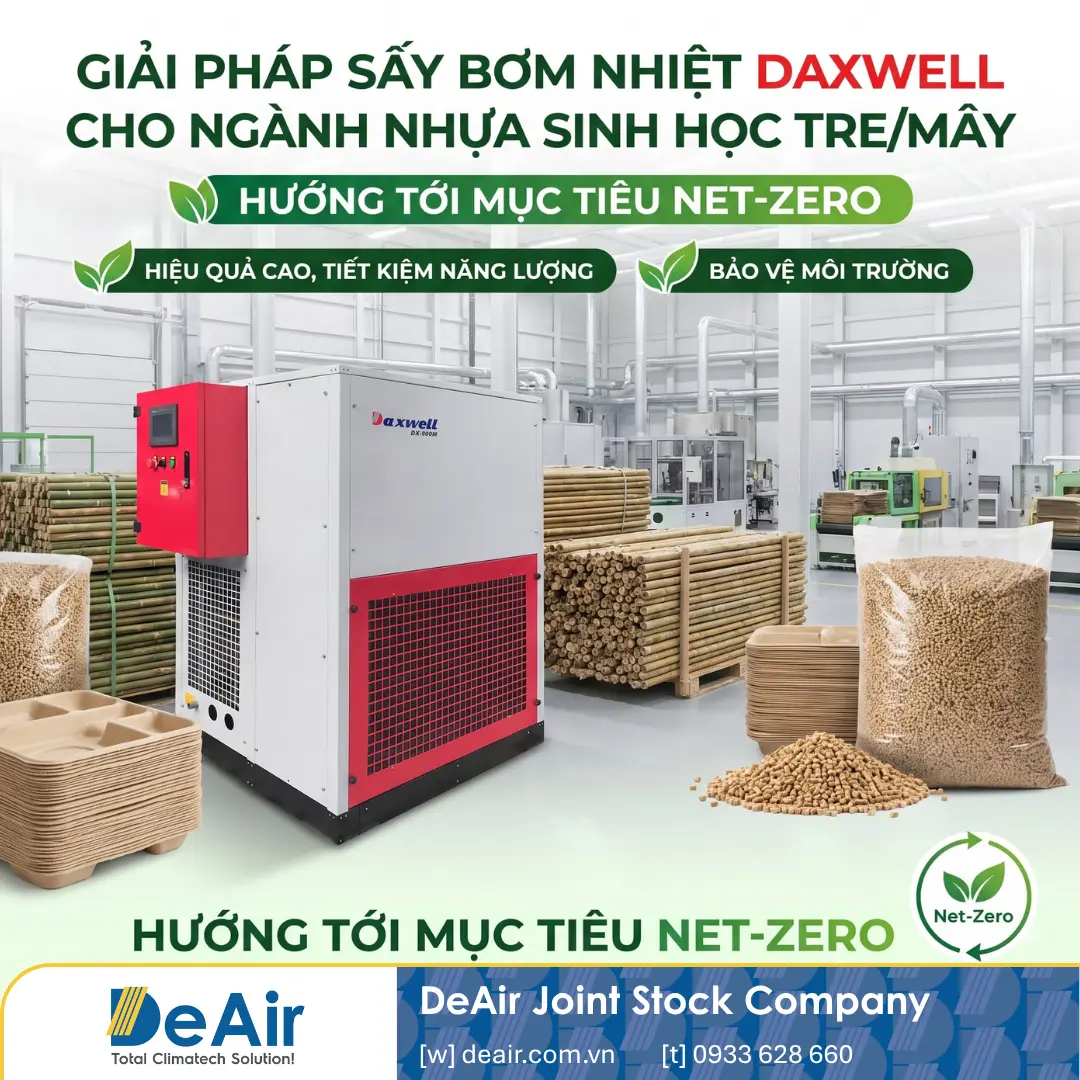
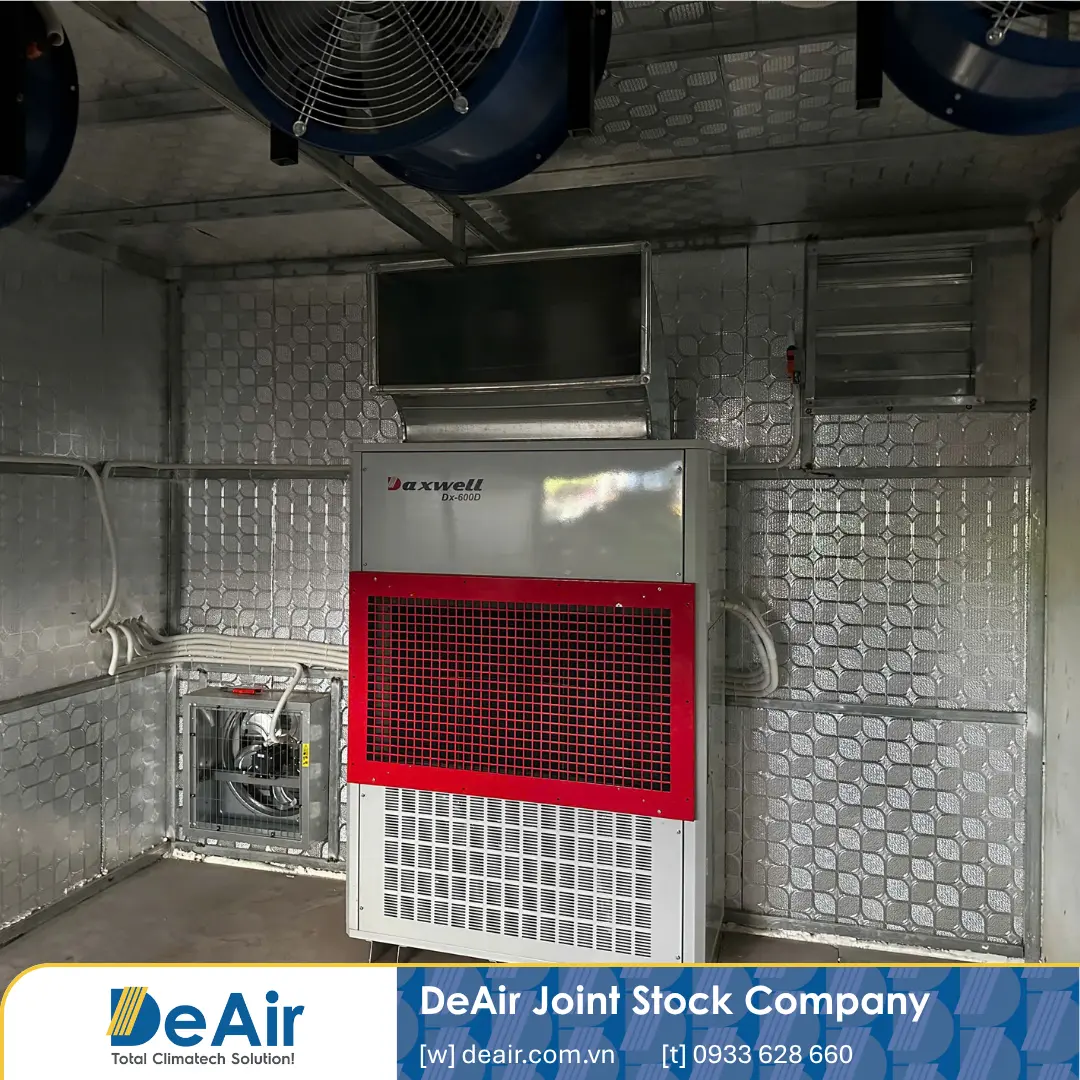
Daxwell dryers applied to dry bamboo/rattan for the bioplastics industry, aiming for Net-Zero goals.
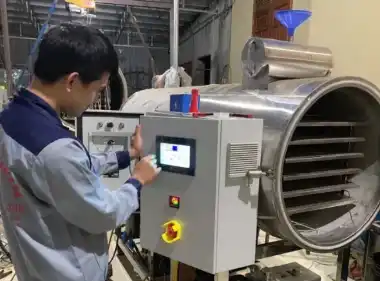
Daxwell DX-600D heat-pump dryer installed in a Quang Ngai incense drying room – a practical application in drying biological raw materials.
4. Infographic: The "Green" Lifecycle of Bamboo Bioplastics
🔄 COMPLETE "GREEN" LIFECYCLE FROM BAMBOO TO BIOPLASTICS
🌱
STAGE 1: BAMBOO CULTIVATION
Absorbs CO₂, rapid regeneration (20m in 60 days)
🔥
STAGE 2: RAW MATERIAL DRYING
Daxwell Heat-Pump Dryer Saves 50-70% energy Zero direct emissions
🏭
STAGE 3: MANUFACTURING
High durability, heat resistance >180°C Injection molding, casting
♻️
STAGE 4: USE & DECOMPOSITION
Fully biodegradable in 50 days Completes the Net-Zero cycle
5. Achieved Results and Benefits
5.1. Product Quality
Bamboo/rattan fibers retain their natural color and high mechanical strength.
Perfect compatibility with the plastic matrix, eliminating product defects.
Meets input standards for premium bioplastic production.
5.2. Economic Benefits
Significant energy cost (OPEX) reduction: Saves 50-70% electricity compared to traditional drying.
Fast Return on Investment (ROI): Typically achieved within 12-18 months.
Reduced defect handling costs: Uniform raw materials lead to lower defect rates.
5.3. Environmental & Brand Benefits
Meets ESG standards: (Environmental, Social, and Governance).
Easier access to export markets: EU, US, complying with Carbon Border Adjustment Mechanism (CBAM) regulations.
Builds a green brand image: Attracts customers focused on sustainable development.
Contributes to Net-Zero: Reduces the carbon footprint across the entire product lifecycle.
6. Frequently Asked Questions (FAQ)
Q1: Can the Daxwell heat-pump dryer reach the necessary temperature to completely dry bamboo/rattan fibers?
Yes. The Daxwell dryer line operates within a temperature range of 25-80°C (depending on the S/M/D model), fully meeting the requirements for drying bamboo/rattan fibers. Crucially, its precise temperature and humidity control ensures the material reaches the target moisture content without degrading the fiber structure.
Q2: How does heat-pump technology help reduce carbon emissions (Net-Zero) in bioplastic manufacturing?
Heat-pump technology recycles heat from the condensation process to reheat the dehumidified air, reducing electricity consumption by 50-70% compared to electric resistance drying. This directly reduces CO₂ emissions from electricity generation, contributing to the Net-Zero goal of the entire bioplastic product lifecycle.
Q3: Can the Daxwell dryer customize drying curves for different types of bamboo/rattan with varying thicknesses and initial moisture levels?
Absolutely. With its PLC controller and HMI screen, the Daxwell dryer allows flexible programming of drying curves (temperature, humidity, time) for specific raw materials. DeAir's technical team will assist in setting the optimal parameters based on the characteristics of each bamboo/rattan type.
Q4: Does DeAir support heat load calculations and drying room design tailored to the factory's scale?
Yes. DeAir provides comprehensive consulting services: on-site surveys, precise heat load calculations, optimal drying room design (dimensions, ductwork, stainless steel trolleys), and operational training. We commit to delivering a "tailor-made" solution that best fits your needs and budget.
Partner with DeAir to Build a Green Future!
Transform bamboo into a sustainable plastic alternative, contributing to Net-Zero goals and protecting the planet for future generations.
Contact us now for optimal drying solution consultation!


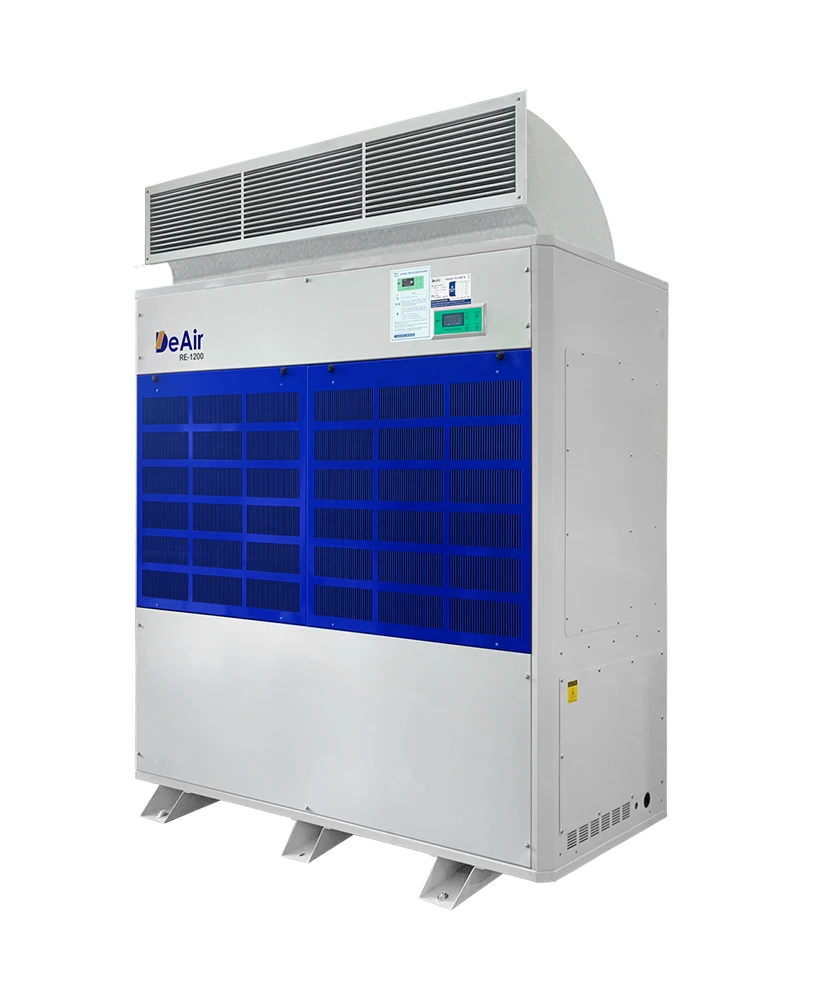 DeAir.RE
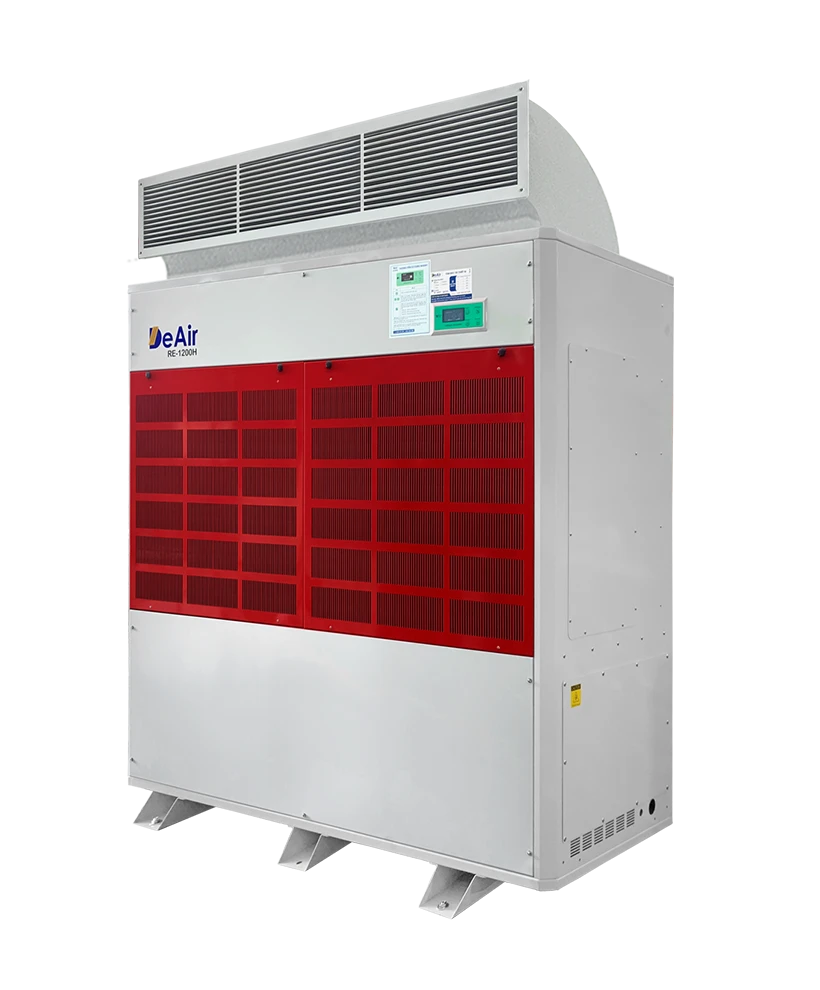 DeAir.RE-H
 DeAir.RE-INOX
 DeAir.CRE
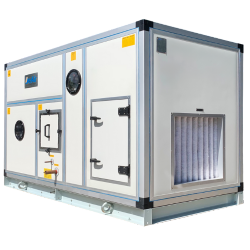 Dezenno
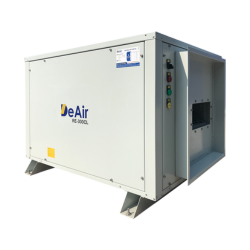 DeAir.RE-CL
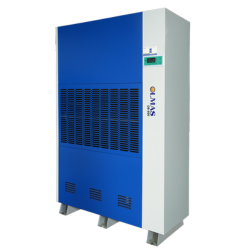 Olmas-OS
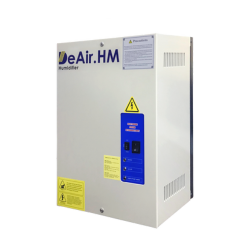 DeAir.HM
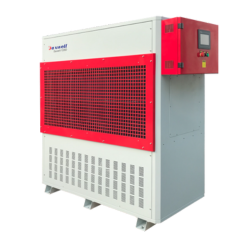 Daxwell
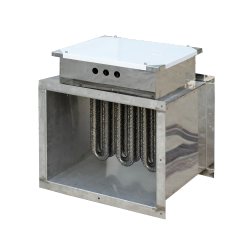 DeAir.Heat
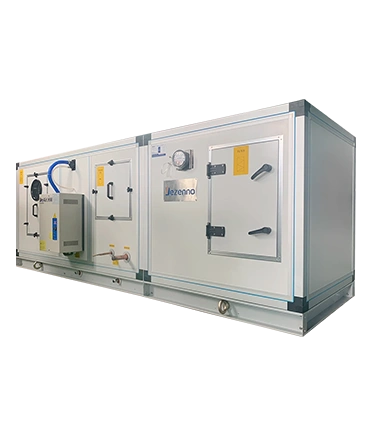 AHU
AHU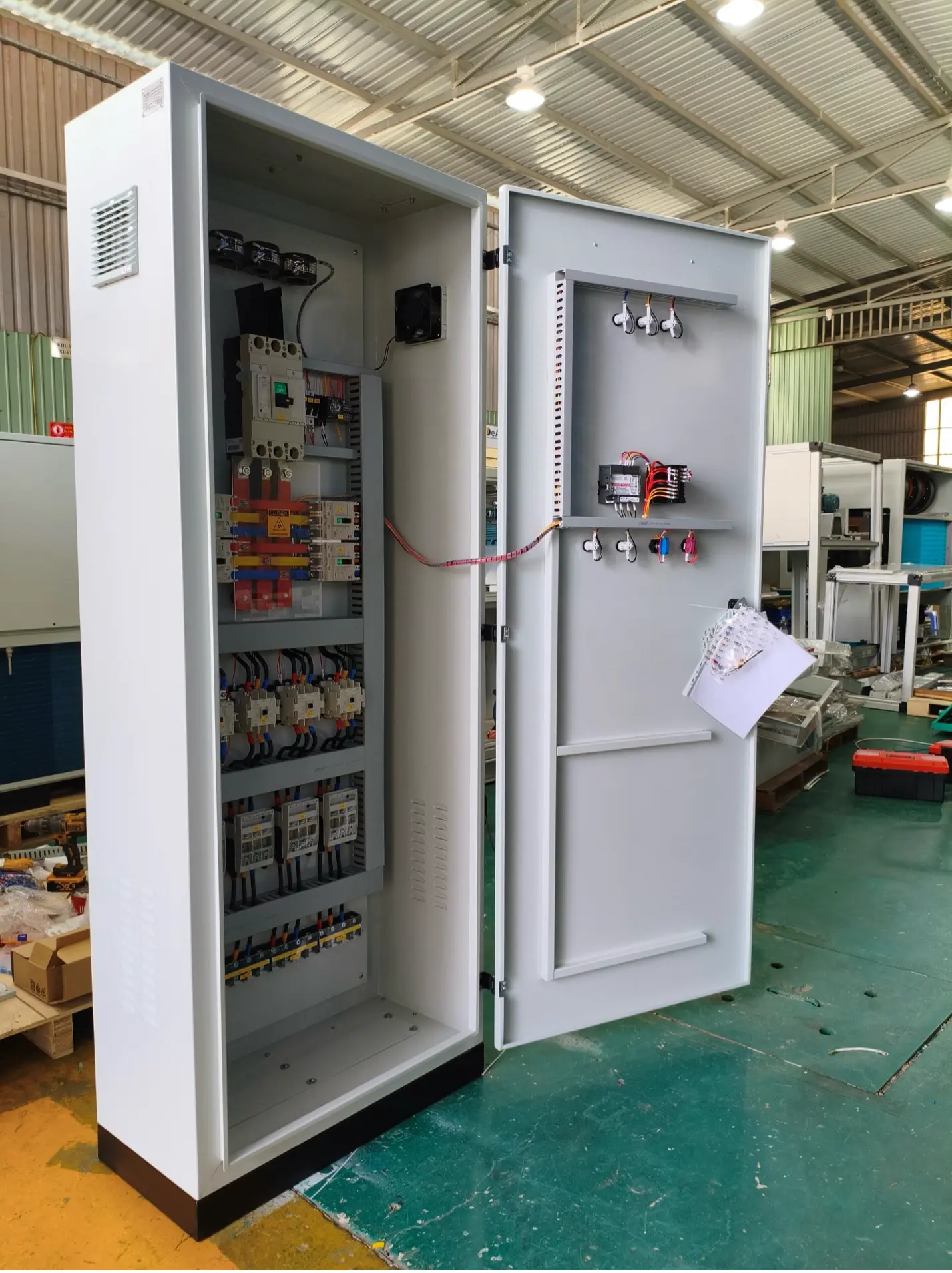




![[Case Study] DeAir Installs DeAir.De Rotor Humidity Control System for Pharmaceutical Plant in Binh Duong](https://deair.com.vn/thumbs/news/2023_04/ban_giao_may_cho_duoc_bd/[270x153-cr]image1-1024x772.jpg__cv.webp "[Case Study] DeAir Installs DeAir.De Rotor Humidity Control System for Pharmaceutical Plant in Binh Duong")
![[Review & Guide] Olmas OS-300: The New Humidity Control "Warrior" for Medium to Large Warehouses](https://deair.com.vn/thumbs/news/huong_dan_su_dung_may_olmas_21/[270x153-cr]vtm06440.png "[Review & Guide] Olmas OS-300: The New Humidity Control \"Warrior\" for Medium to Large Warehouses")