1. Devastating Effects of Humidity on the Electronics Industry
1.1. Electrolytic Corrosion
Electrolytic corrosion is one of the most severe issues in the electronics industry. This process occurs when moisture and soluble impurities are present, creating the electrolyte necessary for electrochemical reactions.
According to technical research, the critical humidity threshold is 45%RH. When humidity exceeds this level, the corrosion rate increases dramatically, especially in environments with industrial air pollution.
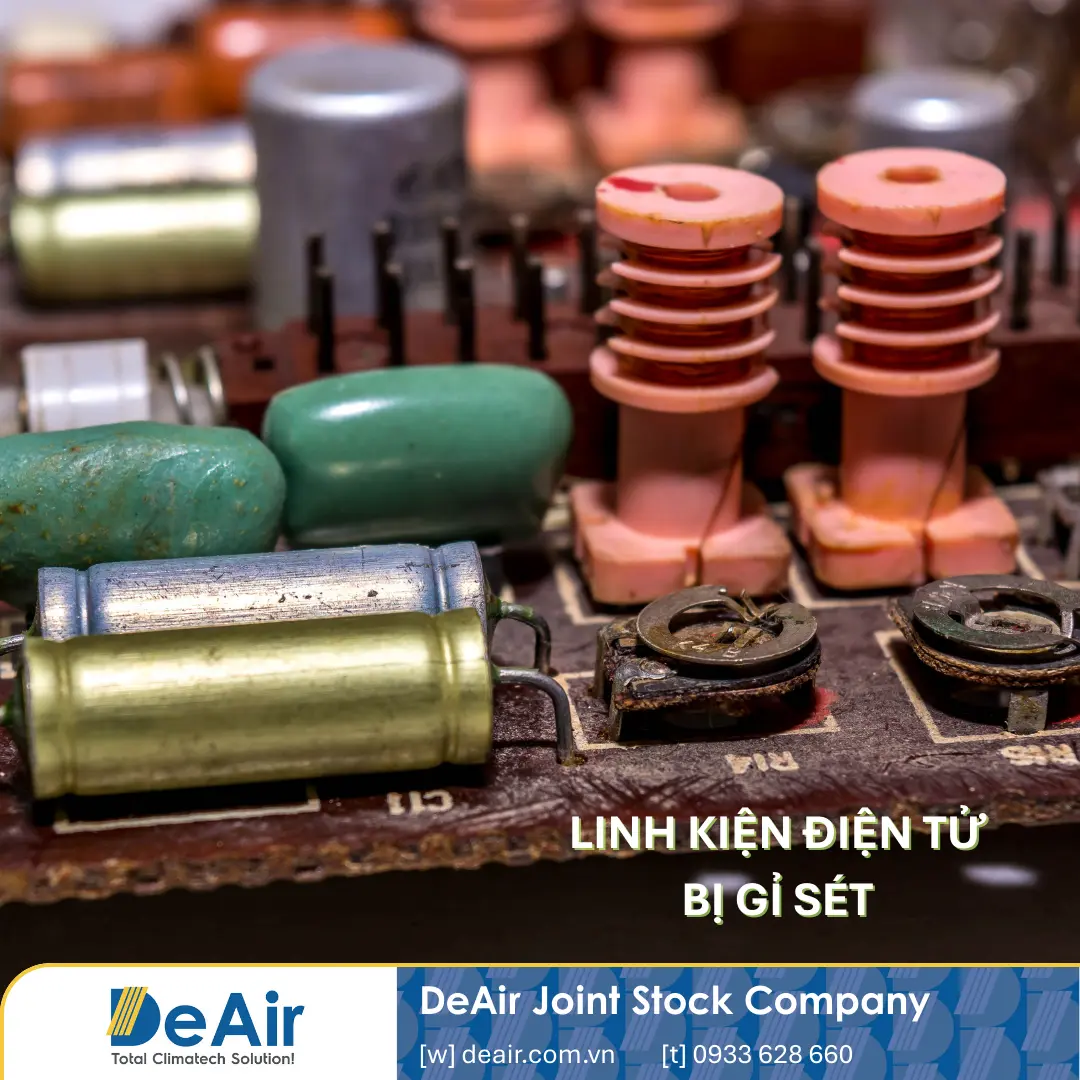
Electronic components rusted due to uncontrolled high humidity
Corrosion Mechanism on PCBs:
An invisible moisture film forms on the PCB surface.
Surface resistance increases, altering the frequency of oscillator circuits.
Overheating and short circuits occur due to corrosion.
Electromigration of metal across gaps, causing short circuits.
1.2. Electrostatic Discharge (ESD) Damage - The Dual Problem
This is a complex issue that many electronics manufacturers face:
When humidity is HIGH (>60%RH): Risk of corrosion and mold growth.
When humidity is LOW (<30%RH): Static electricity increases dramatically.
Static voltage can reach up to 20KV when RH <30% (a person walking on a carpet).
Sensitive MOSFET components can be destroyed at voltages as low as 30V.
Latent failures are difficult to detect immediately.
Solution: Maintain humidity at 40-55%RH to balance anti-corrosion and anti-static properties. At this level, static voltage drops to approximately 1.5KV.
1.3. Issues with PCBs and Composite Materials
Delamination: High humidity weakens the bond between PCB layers.
Outgassing during soldering: Moisture absorbed in the resin is released as gas during high-temperature soldering, causing blowholes and voids in solder joints.
Internal circuit breaks in multilayer PCBs: Rupturing of plated through-holes.
1.4. Absorption and Desorption
PCB polymers absorb moisture from the environment during storage. When powered on, the generated heat releases moisture from the board and components into the air inside the device enclosure, creating a localized high-humidity environment. When the temperature drops, condensation occurs on the component surfaces.
1.5. Mold and Microorganism Growth
Growth conditions: RH >60%
Mold and bacteria thrive in high-humidity environments, causing:
Metal corrosion
Etching of glass
Hardening of grease, damaging paint coatings
In most cases, bacterial growth can be arrested if RH is maintained below 45%.
2. Humidity Requirements by Electronics Application
Each application in the electronics industry has specific humidity requirements. Below are the recommended parameters based on practical experience and industry standards:
2.1. Component Manufacturing
Application
Temperature (°C)
Humidity (%RH)
Semiconductor Assembly
20
40-45
Transistor Manufacturing
22-24
25-40
Precision Assembly
22
35-40
Lithium Battery Room
21-22
0.5-1 (Ultra-low!)
Cable Winding
27
5-20
2.2. Electrical Equipment Manufacturing
Application
Temperature (°C)
Humidity (%RH)
Electrical Control Panels
20
35
Transformer Coil Winding
22
15
Household Electrical Appliances
22
15
Lightning Protection Assembly
20
20-40
2.3. Component Storage
Application
Temperature (°C)
Humidity (%RH)
Electronic Component Storage
22
35
Thermal Battery Workbench
24
2
Transformer Storage
32
10-20
2.4. Cleanrooms & Laboratories
Application
Temperature (°C)
Humidity (%RH)
Production Laboratory (Electrical)
21
40-50
Humidity Sensor Calibration
24
50-55
Computer Room (Data Center)
22
45
3. Comprehensive Humidity Control Solutions from DeAir
DeAir provides a diverse range of humidity control solutions, specifically designed to meet the stringent requirements of the electronics industry. Depending on the specific application, we will advise on the most suitable product line.
3.1. DeAir.RE Heat-Pump Dehumidifiers
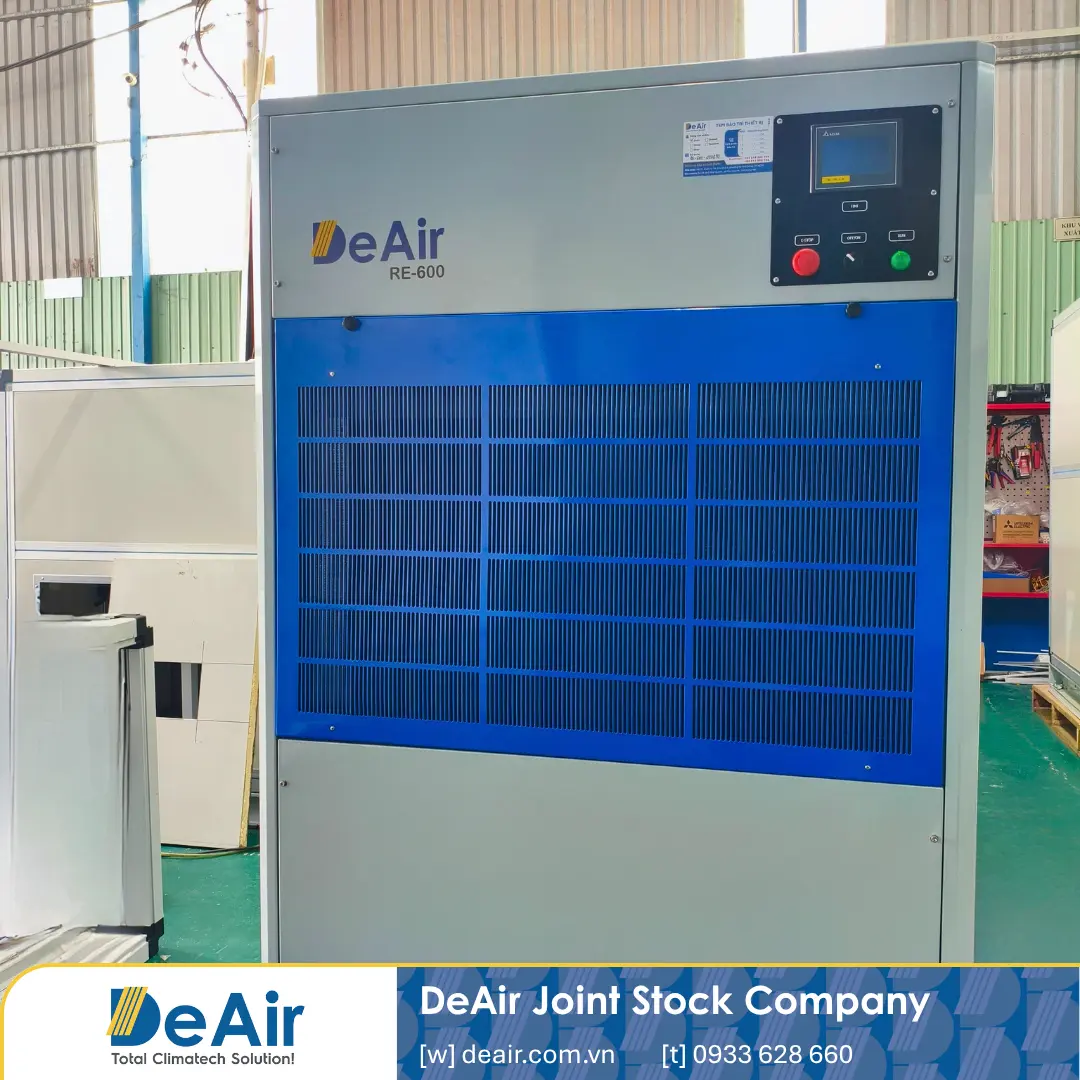
DeAir.RE Heat-Pump Dehumidifier floor-standing model with BMS integration capability
Suitable for: Component warehouses, assembly rooms, quality control rooms.
Humidity control range: 35-60%RH
Operating temperature: 15-60°C
Diverse capacities: From 60 to 1,200 kg/day
Heat-Pump Technology: Saves 40% energy compared to conventional condensation dehumidifiers.
Advantages: Stable operation at low temperatures, minimal impact on ambient room temperature.
Systems that automatically switch between dehumidification and humidification.
Precise humidity maintenance in the 20-60%RH range.
Smart central controllers.
Suitable for applications requiring stable humidity year-round.
Electronics Industry Humidity Control - Precise, Efficient, Comprehensive
Don't let uncontrolled humidity reduce your product quality and increase your defect rates. DeAir is ready to accompany you with comprehensive solutions from consultation, design to installation and maintenance.
Are electronics manufacturers looking for optimal humidity control solutions?


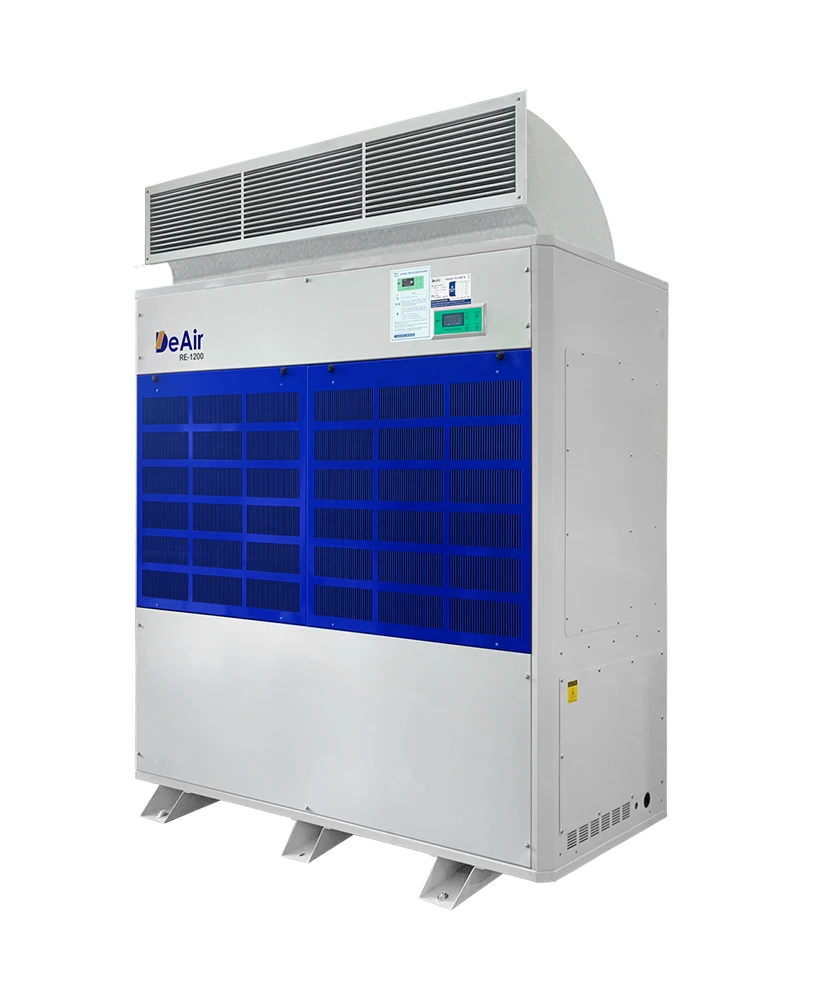 DeAir.RE
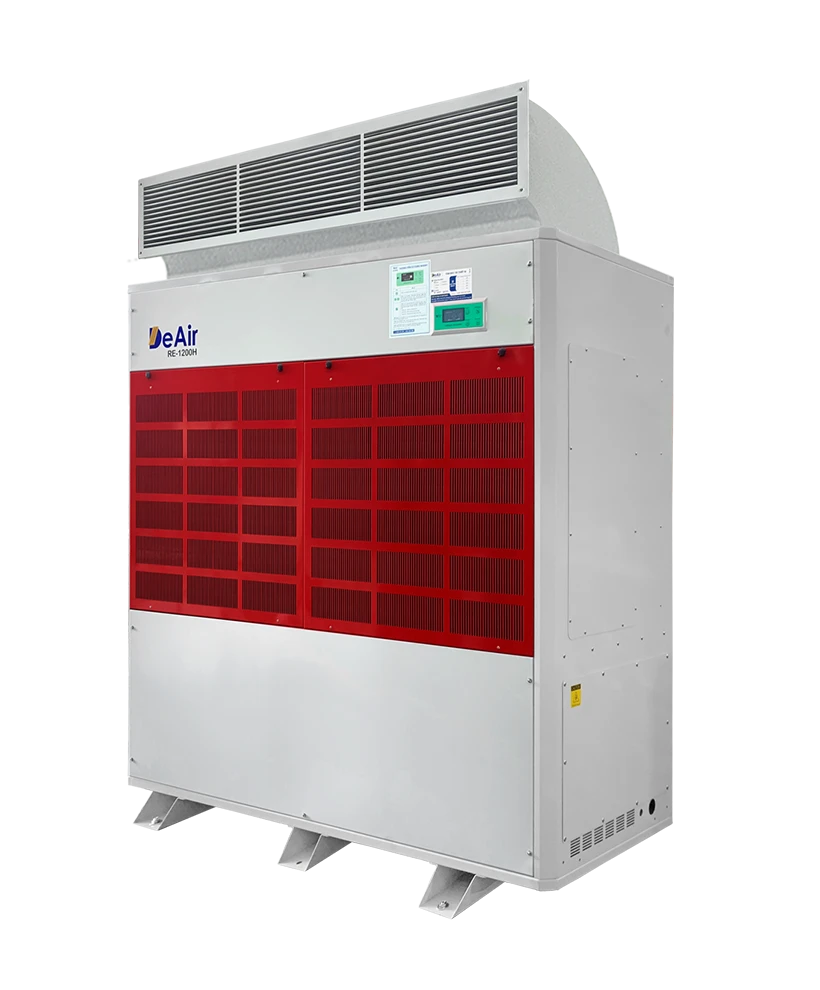 DeAir.RE-H
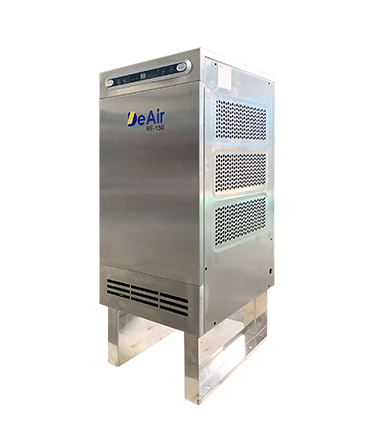 DeAir.RE-INOX
 DeAir.CRE
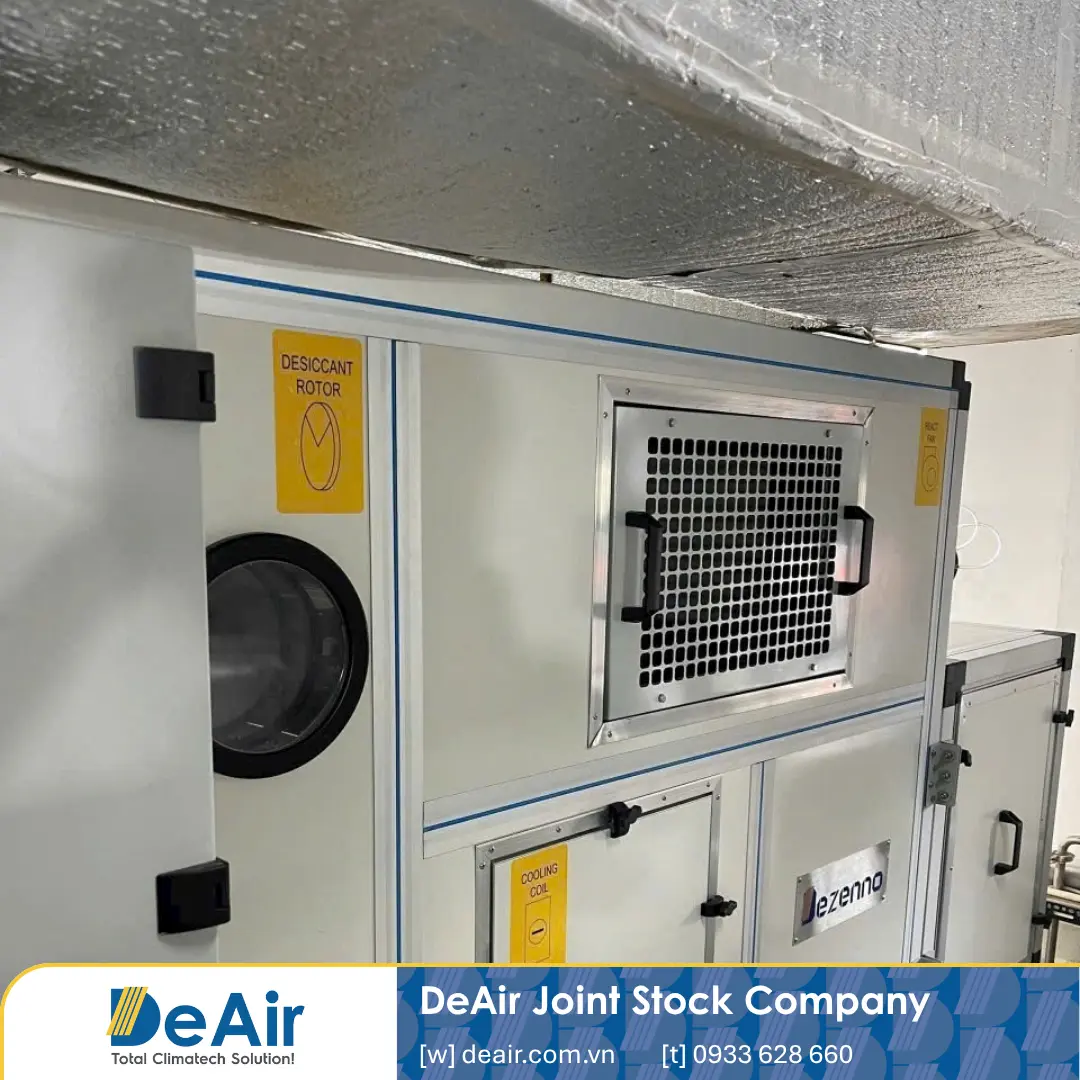
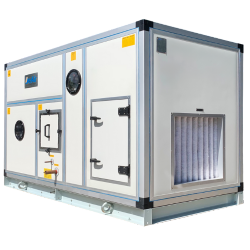 Dezenno
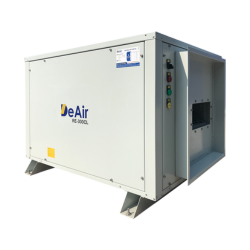 DeAir.RE-CL
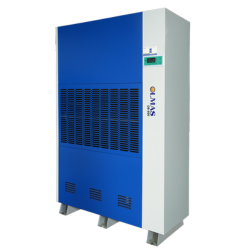 Olmas-OS
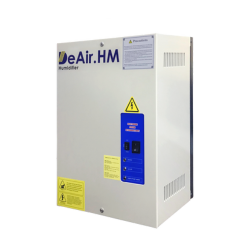 DeAir.HM
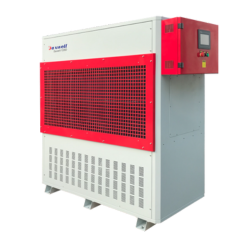 Daxwell
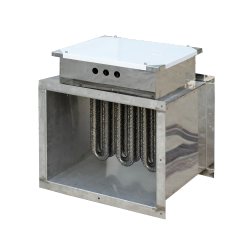 DeAir.Heat
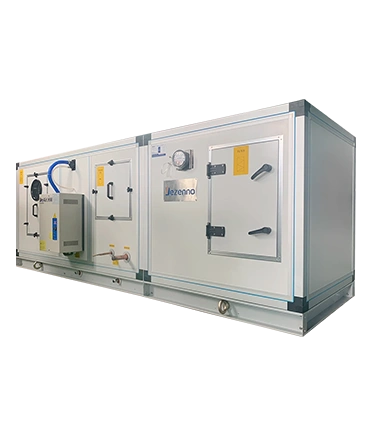 AHU
AHU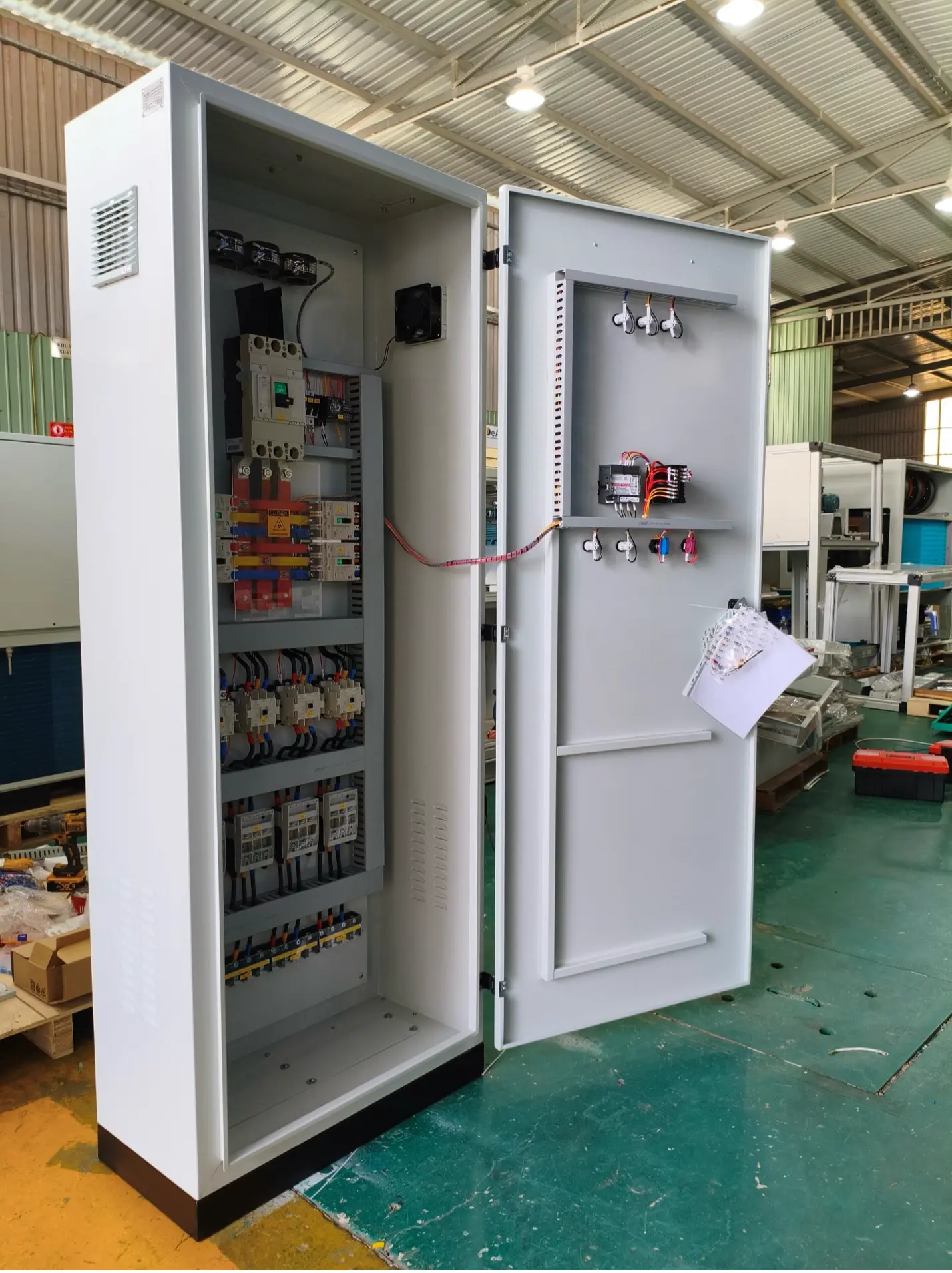





![[Case Study] DeAir Installs DeAir.De Rotor Humidity Control System for Pharmaceutical Plant in Binh Duong](https://deair.com.vn/thumbs/news/2023_04/ban_giao_may_cho_duoc_bd/[270x153-cr]image1-1024x772.jpg__cv.webp "[Case Study] DeAir Installs DeAir.De Rotor Humidity Control System for Pharmaceutical Plant in Binh Duong")

![[Review & Guide] Olmas OS-300: The New Humidity Control "Warrior" for Medium to Large Warehouses](https://deair.com.vn/thumbs/news/huong_dan_su_dung_may_olmas_21/[270x153-cr]vtm06440.png "[Review & Guide] Olmas OS-300: The New Humidity Control \"Warrior\" for Medium to Large Warehouses")