Storing Coffee Waiting for Price Hikes: Don't Let Mold & Moisture Regain "Evaporate" Your Profits
09/12/2025
The Coffee Farmer's Gamble: Store or Sell Early?
Fluctuating coffee prices make the strategy of "storing goods, waiting for price hikes" a popular way for farmers and agents to optimize profits. However, this is also a risky gamble. You have spent effort drying coffee to the standard 12-13% moisture content, but after only 1-2 months of storage, upon opening the bags, the coffee has turned dark, moldy, or smells "oily."
The main cause is uncontrolled humidity in the warehouse, leading to the phenomenon of "Moisture Regain". This article will provide in-depth technical solutions to protect your "goldmine" from this invisible enemy.
Green coffee beans stored in a warehouse, waiting for a good price to export.
Coffee beans are porous (hygroscopic) materials with a very strong ability to absorb moisture. According to the principle of Equilibrium Moisture Content (EMC), coffee beans will continuously exchange moisture with the surrounding environment until equilibrium is reached. If the bean moisture is 12-13% (export standard) but the air humidity in the warehouse is high (80-90% during the rainy season), the beans will automatically absorb water from the air, increasing the bean moisture content.
Economic & Health Consequences
Loss of Commercial Value: Coffee turns black, moldy, loses its characteristic aroma, is classified as scrap, and loses 50-70% of its value.
Deadly Toxins: According to the Food and Agriculture Organization (FAO), when bean moisture exceeds 14-15%, the mold Aspergillus ochraceus develops and produces Ochratoxin A (OTA). This is a carcinogen strictly banned in exports to the EU and US. Just a small amount of OTA can cause a shipment of hundreds of tons to be rejected or destroyed.
Mold not only spoils coffee but also produces dangerous Ochratoxin A.
2. Infographic: Risks When Warehouse Humidity Rises
Risk Chart by Relative Humidity (RH)
SAFE
RH < 60%
Coffee maintains good quality. Mold does not grow.
WARNING
RH 60% - 70%
Beans start absorbing moisture. Insects (weevils) become active.
DANGEROUS
RH > 75%
Mold outbreak. Ochratoxin A production. Beans ferment and turn sour.
3. Common Mistakes in Agricultural Storage
Many warehouses still apply "traditional" but erroneous methods:
Using strong exhaust fans: This is the biggest mistake during the rainy/humid season. Fans suck saturated moist air from outside into the warehouse, causing indoor humidity to spike and accelerating moisture regain in coffee.
Closing doors without dehumidification: Moisture accumulating from the floor, walls, and the coffee beans' own respiration cannot escape, causing "sweating" on the ceiling and localized mold in corners.
Using lime/husk/charcoal: Extremely low moisture absorption efficiency compared to hundreds of tons of coffee, labor-intensive to replace, and causes dust.
4. DeAir Solution: Industrial Dehumidifier - The Warehouse "Bodyguard"
Operating Principle: The machine actively removes excess water vapor from the air, maintaining warehouse humidity at a safe level (55% - 60% RH) regardless of outside weather conditions.
Superior Benefits:
Stop Mold: At <60% humidity, mold cannot grow.
Maintain Quality: Coffee retains its green color and aroma, avoiding sour fermentation or oily smells.
Control Selling Time: You can safely store goods for 6 months to 1 year to wait for the best price without worrying about spoilage or price squeezing.
Video: DeAir industrial dehumidifier operating in a storage warehouse, effectively controlling humidity.
5. Guide to Choosing Dehumidifiers for Agricultural Warehouses
Selection depends on warehouse volume and air tightness. DeAir suggests suitable DeAir.RE (Condensing technology) models:
Warehouse Scale
Proposed Capacity
Suggested Model
Small (< 50m²)
60 - 100 Liters/day
DeAir.RE-60
Medium (100 - 200m²)
150 - 240 Liters/day
DeAir.RE-150 / RE-300
Large (Hundreds of tons)
480 - 1000 Liters/day
DeAir.RE-600 / RE-1200 System (Industrial)
Note: Place the machine centrally or where airflow is good. The warehouse should be relatively sealed (minimize air leaks) for the machine to work efficiently and save electricity.
6. Frequently Asked Questions (FAQ)
1. What is the ideal storage humidity for green coffee beans?
According to the International Coffee Organization (ICO), green coffee bean moisture should be at 12-12.5%. The storage environment needs to maintain relative humidity (RH) at 50-60% and a cool temperature (below 25°C) to prevent mold and preserve flavor.
2. Does a dehumidifier consume a lot of electricity?
Very little compared to a dryer. The dehumidifier only runs in maintenance mode (compressor shuts off when humidity is reached). Compared to the billions of VND value of coffee stock, the electricity cost to protect it is negligible.
3. Besides coffee, what else can this machine preserve?
DeAir.RE dehumidifiers are suitable for preserving most dry agricultural products such as: rice, cashews, pepper, soybeans, corn... helping to effectively prevent mold and weevils.
Protect Your Hard-Earned Harvest!
Don't let a season's effort go to waste because of mold. Contact DeAir today for a free warehouse survey and advice on the most economical dehumidification solution.


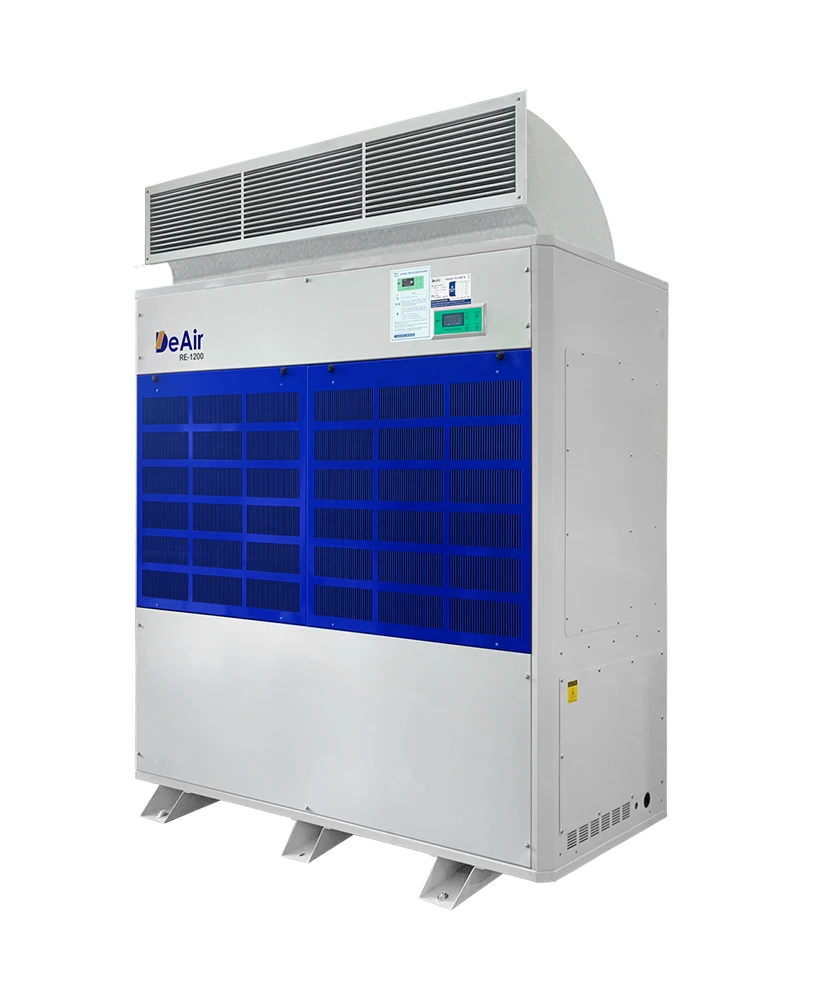 DeAir.RE
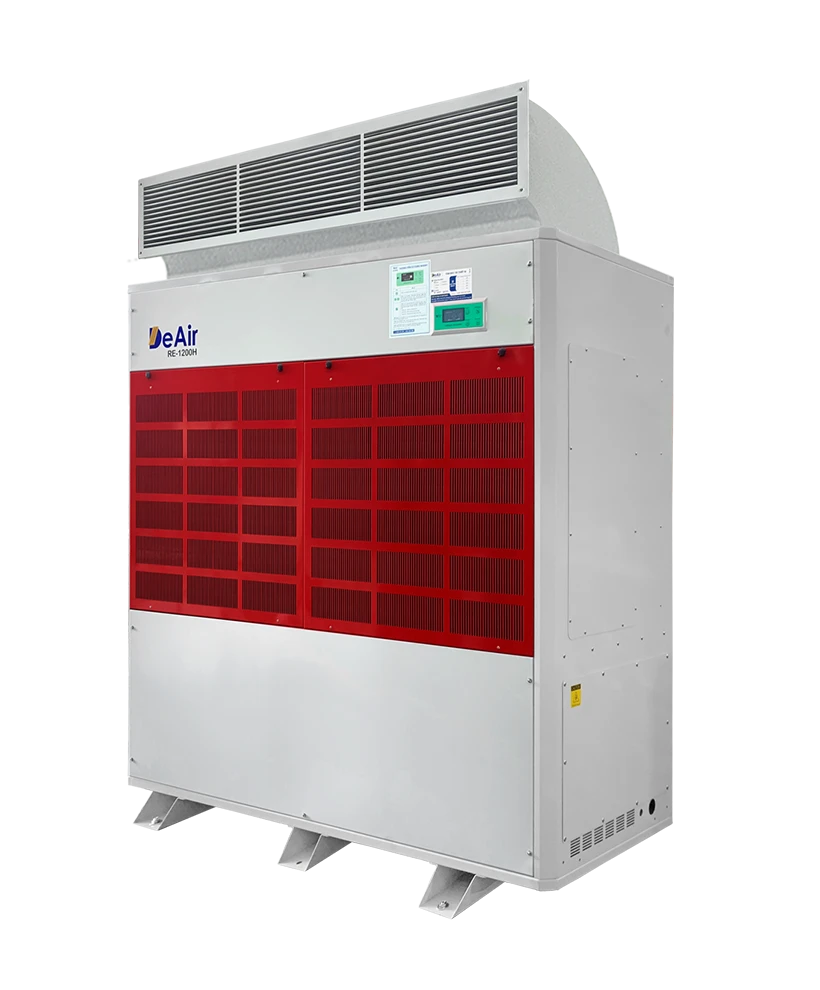 DeAir.RE-H
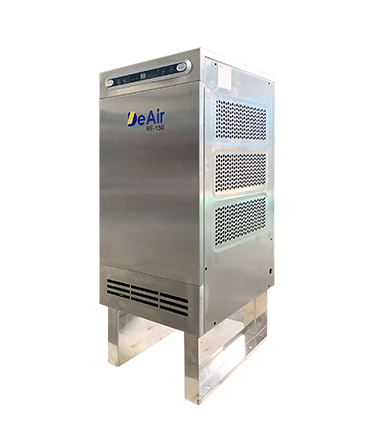 DeAir.RE-INOX
 DeAir.CRE
 Dezenno
 DeAir.RE-CL
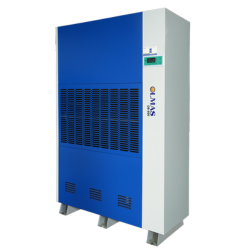 Olmas-OS
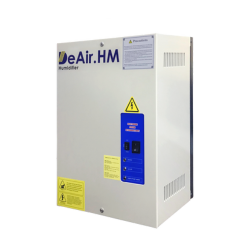 DeAir.HM
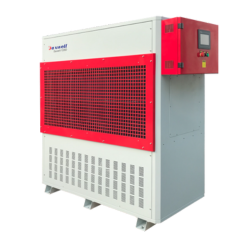 Daxwell
 DeAir.Heat
 AHU
AHU








![[Case Study] DeAir Installs DeAir.De Rotor Humidity Control System for Pharmaceutical Plant in Binh Duong](https://deair.com.vn/thumbs/news/2023_04/ban_giao_may_cho_duoc_bd/[270x153-cr]image1-1024x772.jpg__cv.webp "[Case Study] DeAir Installs DeAir.De Rotor Humidity Control System for Pharmaceutical Plant in Binh Duong")

![[Review & Guide] Olmas OS-300: The New Humidity Control "Warrior" for Medium to Large Warehouses](https://deair.com.vn/thumbs/news/huong_dan_su_dung_may_olmas_21/[270x153-cr]vtm06440.png "[Review & Guide] Olmas OS-300: The New Humidity Control \"Warrior\" for Medium to Large Warehouses")